Loading Admission Guardian content
Loading Admission Guardian content
Provisional score based on available data. It may change as more information is verified.
Selected ranking categories, with the recorded year beside each result. Open all records for the complete history.
27 published records · Lower numeric ranks are stronger
NIRF
B.Tech
#182023
THE
Overall
#8012023
IIRF
B.Tech · public
#162022
Indiatoday
B.Tech · public
#92023
Find a program, read its fee details and explore the admission requirements.
Summary of the programs shown below. Programs record different fee periods. Compare the individual amounts and their notes below.
| Course | Stream | Fees |
|---|---|---|
| Master of Science [M.Sc] | Science | 40000 |
| Master of Arts [MA] (Society and Culture) | Arts | 48500 |
| Bachelor of Technology [B.Tech] | Engineering | 229426 |
| Bachelor of Technology [B.Tech] + Master of Technology [M.Tech] | Engineering | 229426 |
| Master of Technology [M.Tech] | Engineering | 400000 |
Specializations
All accepted exams
Eligibility: Graduation + IIT JAM
Specializations
Eligibility: Graduation with 55%
Specializations
All accepted exams
Eligibility: 10+2 with 75% + JEE Advanced
Specializations
All accepted exams
Eligibility: 10+2 with 75% + JEE Advanced
Specializations
All accepted exams
Eligibility: Graduation with 55% + GATE
2 exams with cutoff data available
 Accolite
 Altair
 Amnex Infotechnologies Private Limited
 AVTEC Ltd
 Banas Dairy
 Bank of India
 Bharat Forge Limited
 Bharat Petroleum Corporation Limited (BPCL)
 Bosch Rexroth (India) Pvt. Limited
 Cadila Pharmaceuticals Ltd
 Capital Dynamics
 Deshpande Foundation
 DRDO
DRDO Ericsson India Pvt Ltd
 Finisar Corporation
 Flipkart
 Fluidyn India
 Goldman Sachs
 Grasim Industries Limited
 HDFC Bank
 Hero Motocorp
 HPCL
HPCL HSBC Bank
 Indian Oil Corporation Ltd (IOCL)
 Infosys
 Intel
Intel ISRO
ISRO ITC
ITC J Sagar & Associates
 JCB
JCB John Deere
 KPIT
KPIT Larsen & Toubro Ltd.
 Magneti Marelli
 Mahindra & Mahindra
 Maruti Suzuki
 Mediatek
 Microsoft
 National Instruments
 ONGC
ONGC Oyo Rooms
 Purdue University
 Qualitrol
 R Systems
 Ricoh Innovations
 Samsung
 Sanofi
 Sapient
 Tata Motors
 Tata Power
 Tata Trust
 TCS
TCS Technoforte Software
 Texas Instrument
 Thornton Tomasetti
 Timetooth
 Trident
 Tridiagonal Solutions Pvt
 UnderWriters Laboratory India
 United Health Group
 Virtusa
 Wipro
Wipro ZS Associates
63 named recruiters in the recorded data. Company names are deduplicated.
IIT Gandhinagar is a study in contrasts. It’s a second-generation IIT, founded in 2008, that has rapidly built a reputation not just for engineering rigor but for a genuinely different campus culture. While its NIRF 2024 rank of 18th in Engineering places it firmly among the top 20, what students talk about more is the lack of hierarchy, the acclaimed hostel rooms, and a mandatory five-week Foundation Program where freshmen don't touch a textbook. The 2023-24 placement season, however, delivered a reality check with a reported placement rate dipping to around 46%, a stark contrast to the 81% of the previous year—a clear signal of the global tech slowdown's impact even here. That's the IITGN story: a forward-thinking, human-centric institute navigating the same market pressures as everyone else.
The B.Tech program, with a total intake of 400 seats, covers the core branches—Computer Science, Electrical, Mechanical, Chemical, Civil—alongside newer offerings like Artificial Intelligence and Materials Engineering. The new Integrated Circuit (IC) Design & Technology branch for 2024 shows a focus on emerging industry needs. But the academic identity here is defined by flexibility and breadth. The liberal branch change policy (CPI ≥ 6.5, no backlogs) is one of India's most student-friendly. You can pursue a double major or a dual degree with an extra year. And then there's the Foundation Program: a full five weeks where incoming engineers do everything but engineering—theater, pottery, sports, ethics workshops. Some students love it as a unique bonding experience. Others, in reviews, call it a waste of time that delays core subjects.
The faculty, around 180-200 strong, are almost entirely PhDs from top global universities. Postgraduate options are solid, with M.Tech, M.Sc, and a unique M.A. in Society and Culture. The 'Start Early PhD' initiative, allowing third-year B.Tech students to begin doctoral work, is a standout research pathway. The academic load is considered heavy, with particular student grumbling aimed at mandatory first-year courses like Design, Innovation and Prototyping (DIP) and a suite of Humanities and Social Science credits. You'll either appreciate the well-rounded philosophy or find it an irritating diversion from your engineering goals.
The 2024-25 placement report is the essential context. The institute reported an average package of ₹18.20 LPA and a median of ₹14.43 LPA, with the highest domestic offer at ₹63 LPA. For Computer Science, the average is cited in a range between ₹22.73 and ₹27.73 LPA. Top recruiters like Google, Amazon, Microsoft, Goldman Sachs, and Texas Instruments regularly visit. The sectoral split was about 31% in IT/Software and 21% in Core Engineering & Tech.
But the headline number is the placement percentage—reportedly around 46% for the 2024 cycle. That's a significant drop from 81% in 2024, and student sentiment on forums reflects the anxiety. It's a clear indicator of the market correction. The institute's smaller alumni network (being younger) might offer less buffer than older IITs during downturns. The data suggests that while the quality of offers for the placed students remains strong, securing those offers became markedly more competitive. It's a crucial reality check for anyone comparing pre-2024 placement brochures with today's climate.
The fee structure is standardized for IITs. For General and OBC category B.Tech students, tuition is ₹1,00,000 per semester. Hostel rent and utilities add another ₹17,250 - ₹20,000 per semester, with mess charges typically between ₹18,000 - ₹22,000. All in, the total cost for four years lands in the ₹12-14 Lakhs range.
Financial aid is robust and based on family income. Students from SC/ST/PH categories and those with a family income below ₹1 lakh per annum receive a full tuition fee waiver. For incomes between ₹1-5 lakhs, a two-thirds waiver applies. Merit-cum-Means scholarships provide a ₹1,000 monthly stipend plus a tuition waiver. It's a system that effectively minimizes financial barriers for admitted students.
Admission to the B.Tech program is exclusively through the Joint Entrance Examination (JEE) Advanced, followed by counseling via the JoSAA portal. The 2024 closing ranks (Round 6, General category) show the demand hierarchy clearly: Computer Science & Engineering closed at 1708, the new Artificial Intelligence branch at 2309, Electrical Engineering at 4055, Mechanical at 6344, and Civil Engineering at 10234. These cutoffs are competitive but generally a bit more accessible than the very oldest IITs for comparable branches, reflecting the institute's age and ranking.
For postgraduate studies, M.Tech admissions require a GATE score (via COAP), M.Sc programs need an IIT JAM score, and admissions to the M.A. and PhD programs are based on institute-specific written tests and interviews.
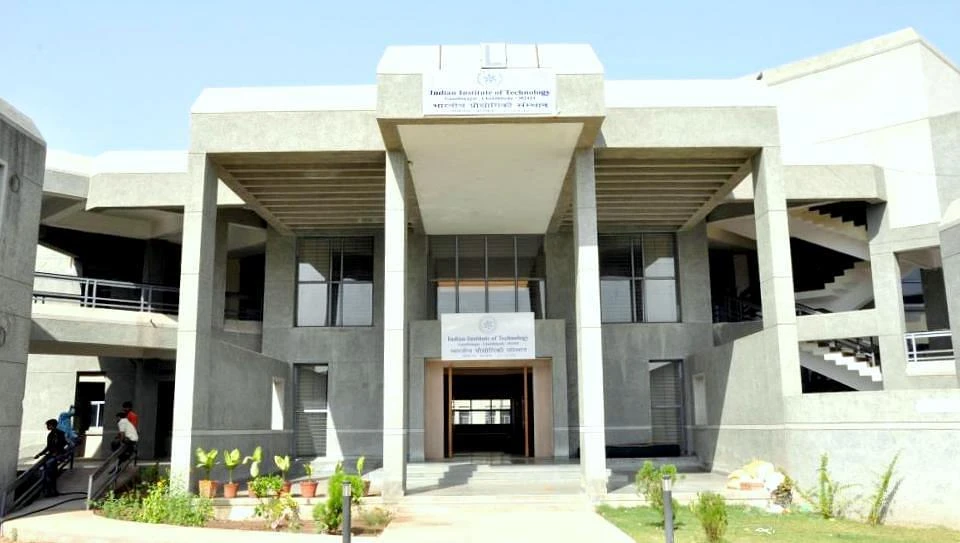
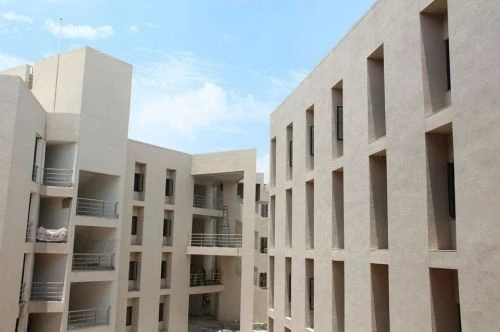
This is where IITGN consistently wins student praise. The infrastructure is modern and thoughtfully designed. All 12 hostels are centrally air-conditioned—a huge perk—though the AC is typically operational from 9 PM to 6 AM. Single rooms are common for seniors. The food, backed by that unique 5-star FSSAI 'Eat Right' rating, is frequently called the best in the IIT system, with separate Veg, Non-Veg, and Jain sections in the main messes.
The sports facilities are extensive: an Olympic-sized swimming pool, floodlit cricket and football grounds, a synthetic athletic track, and indoor courts. The 24/7 library and high-speed 1 Gbps internet backbone with LAN in every room support academic needs. The campus leverages its 400-acre riverside location with spaces like 'Panchvati' for relaxation and the 'Maker Bhavan' for hands-on project work. The major lifestyle challenge is the climate; Gandhinagar summers are notoriously hot, exceeding 45°C.
The consensus from student forums is strikingly consistent on several points. The positives are powerful: a pervasive liberal culture where students call professors by their first names and ragging is genuinely absent. The hostel quality and mess food are rated as top-tier. The Foundation Program is polarizing—seen as either a transformative icebreaker or an academic delay.
The criticisms are equally clear. Beyond the 2024 placement concerns, students mention a heavy academic load, with specific courses like DIP considered poorly structured. The mandatory Humanities/Social Science credits feel excessive to some engineering-focused minds. And that brutal summer heat, with AC restricted to night hours in hostels, is a genuine quality-of-life issue for part of the year. The tone of reviews suggests students feel heard and respected by the administration, even when complaining.
IIT Gandhinagar is an excellent choice for a specific kind of student. If you value a progressive, informal campus culture over century-old tradition, and if you appreciate a curriculum that forces you to look beyond pure coding or circuits, this is arguably the best IIT for that experience. The hostel and food facilities are best-in-class. However, you must enter with clear eyes. Its placement record, while strong, is more volatile than at the top-7 IITs, as the 2025 data shows. Its alumni network is still growing. Choose IITGN if you want a modern, holistic, and human-centric engineering education and are confident in your ability to leverage its opportunities despite a less established brand name. If your sole, non-negotiable priority is the historical weight and vast network of the oldest IITs, an older institute might be a safer, if more conventional, bet.
In this preview: 5 photos · 0 videos
For research opportunities and modern infrastructure, IIT Gandhinagar is considered excellent and competitive. However, the older IITs (often referred to as the Top 7) still maintain an edge in terms of legacy and the strength of their alumni networks.
The branch change policy at IIT Gandhinagar is very liberal. It requires students to maintain a CPI of 6.5 and have no failing grades. Due to this policy, most students are able to successfully switch to their preferred engineering branch.
Yes, all 12 student hostels at IIT Gandhinagar are centrally air-conditioned. The air conditioning is typically active during the night hours to ensure a comfortable living environment for students.
The mess food at IIT Gandhinagar is highly rated, holding the distinction of being the only IIT with a 5-star FSSAI "Eat Right" rating. Students generally rate the food quality very highly, around 4.5 out of 5.
The Foundation Program is a unique 5-week non-academic induction for incoming freshmen. It is designed to allow new students to explore diverse fields such as arts, sports, and ethics before their formal engineering coursework begins.
Share what future students should know about IIT Gandhinagar.
Student voices are not rewritten by colleges. We remove spam and abuse.
Wider admission question? Community PulseWhat should future students know?
Tell us which course you're considering. We'll help you work out the next step.
Get instant Partner access after mobile verification. Your public edits are reviewed before they go live.
Claim this college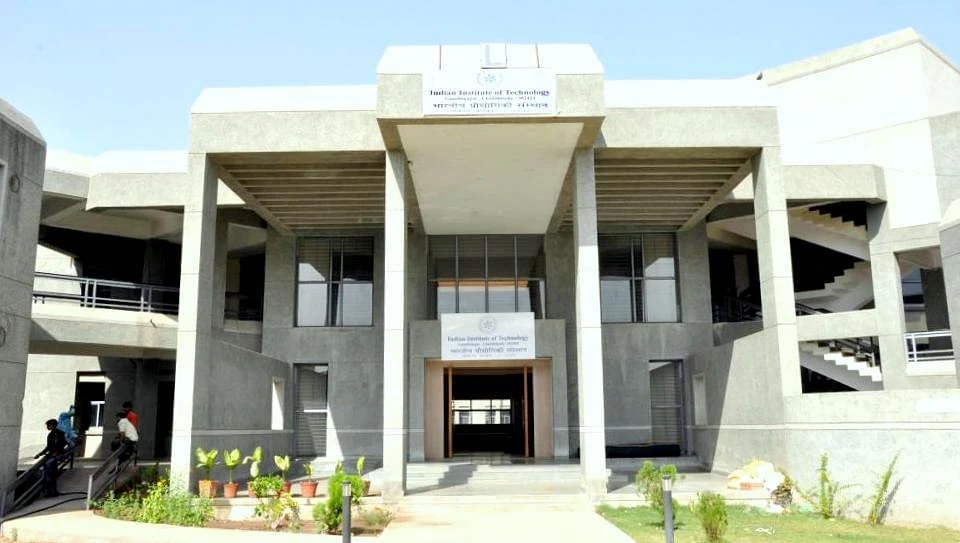
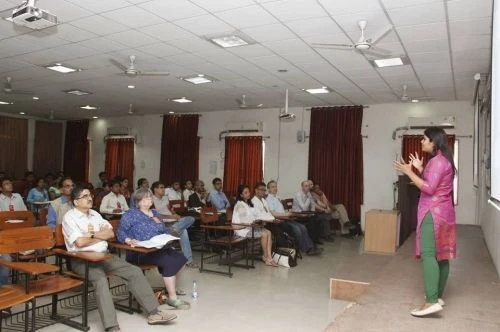
 Auditorium
 Cafeteria
 Computer Labs
 Hostel
 Medical
 Science Labs
 Sports Complex
 Study Library