Loading Admission Guardian content
Loading Admission Guardian content
4 programmes · 1 institution. Check the admission year and requirements.
4 programmes · 1 institution. Check the admission year and requirements.
See each program's fee period below.
Showing 5 courses
Specializations
Listed entrance exams
Eligibility: Graduation + IIT JAM
Specializations
Eligibility: Graduation with 55%
Specializations
Listed entrance exams
Eligibility: 10+2 with 75% + JEE Advanced
Specializations
Listed entrance exams
Eligibility: 10+2 with 75% + JEE Advanced
Specializations
Listed entrance exams
Eligibility: Graduation with 55% + GATE
See courses and fees at other colleges.
Explore collegesLoading programmes and admission routes.
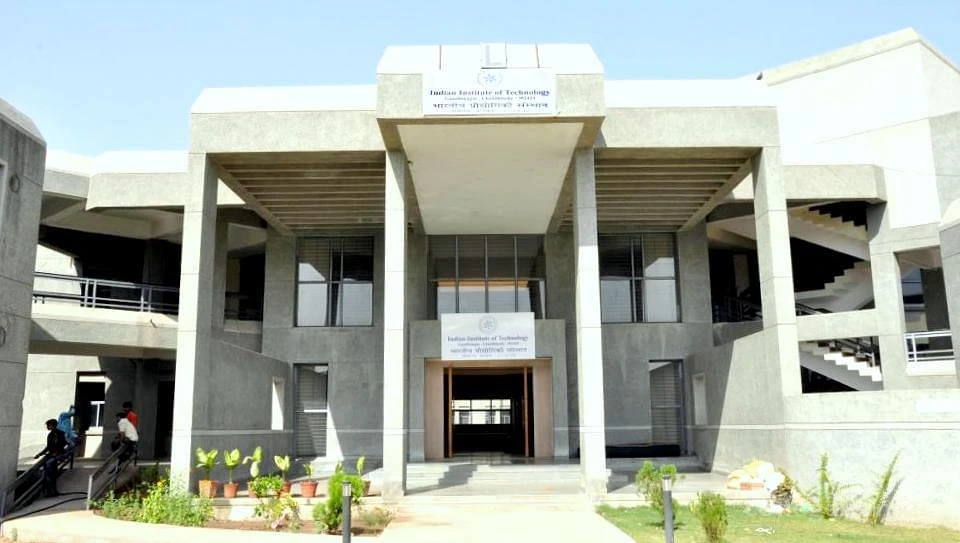
IIT Gandhinagar’s current academic directory spans engineering, sciences, humanities and design. It lists B.Tech, M.Tech, M.Sc., M.A. in Society and Culture, M.Des and Ph.D. programmes, among other academic offerings. Each degree has its own duration, prerequisites, selection route and fee basis; the B.Tech curriculum or fee guidance cannot be applied to a master’s or doctoral offer. Start with the official page for the exact programme and academic year, then verify that the notice matches your qualification and intended entry term. IITGN academics
The B.Tech page lists eight four-year disciplines: Artificial Intelligence, Chemical Engineering, Civil Engineering, Computer Science and Engineering, Electrical Engineering, Integrated Circuit Design and Technology, Materials Engineering and Mechanical Engineering. Their names represent separate admissions choices. Before ranking them, read the course catalogue and the discipline curriculum: a specialization label does not guarantee that a particular elective will run in your term or that seats will be available. B.Tech programmes
IITGN’s published curriculum says B.Tech students complete an institute-level curriculum alongside discipline-specific courses. The institute page lists a total graduation requirement of 169 to 175 credits, depending on the programme structure. It includes a shared foundation: humanities and social sciences, science, mathematics, computing, engineering, design and project work. For example, the page assigns 28 credits to the Humanities and Social Sciences basket, including two required writing courses, and describes an open project course that students may complete after their first year. It also lists 16 open-elective credits. Use these figures as the published curriculum structure, not as a guarantee that every elective or external project is offered in a specific semester. B.Tech curriculum
The common core creates room to explore beyond a chosen branch, but it also means applicants should check the actual requirements rather than assume a narrow professional curriculum. A B.Tech student in a discipline will still take the institute’s listed institute-level courses and discipline-specific requirements. The curriculum page currently identifies four semesters of physical education, a comprehensive viva each semester and at least one open project course. The structure can change; check the newest curriculum notice and individual course catalogue before relying on credit totals or course sequencing. B.Tech curriculum
The programme page lists the Foundation Programme as a mandatory four-week start for undergraduate students. This is part of the academic experience rather than a separate degree, and the schedule is cohort-specific. The institute’s 2026-27 B.Tech notice records July 20, 2026 for on-campus registration and July 18 for hostel availability; these dates are closed and should not be used to plan a later intake. B.Tech programmes · B.Tech admission notice
For the 2026-27 admission page, IITGN lists M.Tech disciplines including Biological Engineering, Chemical Engineering, Civil Engineering, Computer Science and Engineering, Artificial Intelligence, Earth Sciences, Electrical Engineering, Integrated Circuit Design and Technology, Mechanical Engineering, Materials Engineering and Maritime Engineering. Its published minimum eligibility is a relevant four-year BE/B.Tech/BS, M.Sc. or equivalent with 55% or 5.5 CGPA/CPI, with a 50% or 5.0 threshold stated for SC/ST/PwD candidates. A valid GATE score is an ordinary eligibility route; IIT B.Tech graduates with CPI 8.0 or above may apply without GATE under the stated exception. The institute says departments may set higher shortlisting cutoffs, so the minimum is not an admission guarantee. M.Tech programmes and eligibility
The M.Tech page describes selection as potentially involving GATE, an interview, a written test or a combination, depending on the discipline’s process. It asks regular applicants to register with COAP, with an exception for the stated IIT graduate group, and says offers are accepted through COAP. Check both the discipline notice and the correct COAP cycle; a previous year’s cutoff or interview pattern is not a promise for the next admission round. The page also states a ₹12,400 monthly scholarship for admitted full-time M.Tech students and says PGDIIT students do not receive that stipend. This is a programme-specific support statement, separate from fee remission and living costs. M.Tech programmes and eligibility
The M.A. in Society and Culture page describes a two-year degree for applicants from any disciplinary background, built around humanities and social-science methods, theoretical study and fieldwork. Its 2026 intake page says admission uses a valid GATE score and sets a minimum bachelor’s result of 55% or equivalent CPI/GPA to apply; meeting the minimum does not guarantee admission because the committee may shortlist above it. Treat those as 2026 intake conditions. IITGN’s separate international-admissions page says international M.Sc. and M.A. applicants may apply in the next cycle scheduled for June 2027. That date is specific to the international admissions notice, not a universal deadline; other applicants should follow the current programme call. M.A. in Society and Culture · International and postgraduate admissions
IITGN’s international-admissions pages publish an estimated fee structure for AY 2026-27. For international M.Tech and Ph.D. students without an institute fellowship, the official admissions table separates SAARC and non-SAARC categories: academic fees are listed as ₹2,20,000 and ₹4,00,000 per year respectively, with ₹1,20,000 per year for living costs and a one-time admission-fee/refundable-deposit figure of ₹60,000. For international M.Sc. and M.A. students, the same page lists annual academic fees of ₹2,10,000 for SAARC and ₹3,90,000 for non-SAARC students, plus ₹1,00,000 living costs and ₹60,000 one-time charges. These are international-student AY 2026-27 estimates, not domestic fees, and the page says amounts are indicative and may change. International admissions and estimated fees
For international postgraduate students with fellowships, that page lists ₹50,000 per year in academic fees and ₹1,20,000 in living costs for M.Tech and Ph.D., alongside monthly fellowship amounts of ₹12,400 for M.Tech and ₹37,000 for Ph.D. The offer letter controls: the page says fellowship and tuition-waiver details, if any, are communicated in the official offer, and an assessment may determine both admission and fellowship eligibility. Candidates admitted to M.Tech and Ph.D. are required to enrol in credit-bearing summer-term courses; winter-break enrollment is elective. Confirm the precise invoice, currency conversion, course term and award before accepting. International admissions and estimated fees · Detailed international fee schedule
The general IITGN FAQ says the institute fee covers major costs such as hostel accommodation, mess and laundry, and calls routine monthly expenses individual-specific. It does not provide a dated domestic fee schedule in the fee answer itself. Do not use the international table above as a domestic estimate or multiply a single semester’s tuition by four years to claim a complete cost: hostel charges, dining advances, one-time deposits, medical cover, aid and applicable fee rules need matching scope and period. Ask the admissions office for the current fee circular linked to your offer and inspect what is refundable, term-based or charged on actual use. IITGN FAQs
The scholarship page states that IITGN’s undergraduate financial-assistance scheme took effect in AY 2020-21: it lists complete tuition waivers for SC/ST/PwD students, full remission for annual family income below ₹1 lakh, and two-thirds remission for incomes from ₹1 lakh to ₹5 lakh. It also describes an additional reimbursement of the remaining third for incomes from ₹1 lakh to ₹2.5 lakh and access to an interest-free Vidyalaxmi loan below ₹9 lakh annual income. The same page gives a separate master’s scheme: complete waivers for SC/ST/PwD and full remission for annual parental income up to ₹2.5 lakh. These are the published scheme terms, not a personal aid award; check the current-year eligibility, application procedure and documentation before reducing your payable amount. Scholarships and financial aid
The page also lists the TML-FAP for undergraduates. Its stated conditions include a minimum CPI of 6.0 after the first year and income ceilings of ₹6.5 lakh in non-metro and ₹7.5 lakh in metro locations; beneficiaries are expected to return the support when financially independent. Confirm the current application and review conditions with the institute before treating this support as available to you. TML-FAP terms Scholarships and financial aid
Programme information: Official source · Source as of: 2026-11-01
Each route applies only to this named programme and the stated year.
JEE-Advanced: Joint Entrance Examination Advanced · 2026-27
Admission-route evidence: Official source · Source as of: 2026-11-01
Programme information: Official source · Source as of: 2026-11-01
Each route applies only to this named programme and the stated year.
JEE-Advanced: Joint Entrance Examination Advanced · 2026-27
Admission-route evidence: Official source · Source as of: 2026-11-01
Programme information: Official source · Source as of: 2026-11-01
Each route applies only to this named programme and the stated year.
JEE-Advanced: Joint Entrance Examination Advanced · 2026-27
Admission-route evidence: Official source · Source as of: 2026-11-01
Programme information: Official source · Source as of: 2026-11-01
Each route applies only to this named programme and the stated year.
JEE-Advanced: Joint Entrance Examination Advanced · 2026-27
Admission-route evidence: Official source · Source as of: 2026-11-01
4 recorded programmes · 1 institution. Admission years and conditions apply to the named programme.