Loading Admission Guardian content
Loading Admission Guardian content

24 programmes · 1 institution. Check the admission year and requirements.
24 programmes · 1 institution. Check the admission year and requirements.
National Institute of Technology Rourkela is a centrally funded technical institute in Rourkela, Odisha. Its roots are in the Regional Engineering College established on 15 August 1961 with support from the Governments of India and Odisha. It became a National Institute of Technology in 2002, and the NIT Act took effect in 2007, giving it Institute of National Importance status. The institute's identity is therefore older than its current NIT name: applicants comparing institutional histories should distinguish the founding of REC Rourkela from its later statutory status. The university's 2024-25 Annual Report documents those milestones and describes a large, multidisciplinary campus community.
NIT Rourkela is a strong fit for applicants who want a residential technical institute with choices across engineering, architecture, integrated science, management, humanities and doctoral study. Its official undergraduate list spans conventional engineering departments as well as Ceramic Engineering, Food Process Engineering, Industrial Design, Metallurgical and Materials Engineering, Mining Engineering, Engineering Physics and Mathematics and Computing. That breadth makes programme fit more important than relying on the institute name alone. A student choosing between two NITs should compare the exact branch, curriculum, location, total cost and the outcome measure for that programme, not treat one institutional rank as a proxy for every department.
The profile below uses evidence with separate reporting periods. Programme and admission information is taken from current institute pages; the fee schedule is explicitly for 2026-27; placements and student counts are tied to 2024-25; and ranking positions are labelled NIRF 2025. The NIRF 2026 submission currently visible on the institute site is data submitted by the institute, not a published 2026 ranking position. No 2027-28 admission calendar or fee schedule is established here. Confirm the applicable notice before paying or making a cycle-specific decision.
The official undergraduate programme catalogue lists B.Tech options in Biomedical Engineering, Biotechnology, Civil, Chemical, Ceramic, Artificial Intelligence, Computer Science and Engineering, Electronics and Communication, Electronics and Instrumentation, Electrical, Food Process, Industrial Design, Mathematics and Computing, Mechanical, Metallurgical and Materials, Mining, and Engineering Physics. Architecture is offered as B.Arch. The same page lists four Integrated M.Sc. subjects: Chemistry, Life Science, Mathematics, and Physics. It also names four five-year B.Tech-M.Tech dual-degree tracks: Chemical Engineering, Industrial Ceramic, Metallurgical and Materials Engineering, and Mining Engineering. The site links each programme to its syllabus, which is the right place to check curriculum and department requirements rather than inferring content from a branch label.
The institute's 2024-25 Annual Report describes offerings across 20 departments and records student strength of 7,918 for that academic session. Its graduating cohort included 1,061 B.Tech, 21 B.Arch, 39 dual-degree, 68 Integrated M.Sc., 469 M.Tech, 180 M.Sc., 43 MBA, 6 MA, 177 PhD and 1 M.Tech (Research) graduates. These figures describe a particular academic year and graduating class; they are not current seat intake or a promise of section size. The catalogue's programme list and the annual report's graduate counts answer different questions.
For a prospective student, a useful comparison begins with day-to-day academic interest. Computer Science and Artificial Intelligence are distinct listed B.Tech programmes, as are Electronics and Communication and Electronics and Instrumentation. Core branches include both conventional disciplines and specialist areas such as Ceramic, Mining, Food Process and Metallurgical and Materials Engineering. If you are drawn to a specialist area, review its syllabus, laboratory and department pages, and the exact placement cohort before comparing its outcomes with a broad B.Tech aggregate. For architecture, compare the five-year professional curriculum and its entry route separately from engineering degrees. At postgraduate level the institute's range includes M.Tech, M.Sc., MBA and MA Development Studies; their admissions and fee notices are separate from the UG JoSAA route.
For undergraduate programmes, NIT Rourkela states that admission is coordinated through JoSAA and based on JEE Main. The institute directs candidates to the current JoSAA eligibility and counselling information. Its published UG page describes the Class XII condition as at least 75% marks, or placement in the top 20 percentile of the relevant board; it states a 65% threshold for SC, ST and PwD candidates. Those are page-stated eligibility criteria, not a substitute for the current year's JoSAA business rules, subject requirements, candidate category documentation or programme-specific conditions. Check the official JoSAA portal for the active cycle before relying on any threshold.
JoSAA runs the main centralized seat-allocation process for NITs and other participating institutions. NIT Rourkela's page also explains that CSAB conducts common counselling for vacant seats remaining after JoSAA rounds. That makes the sequence important: candidates should follow the published registration, choice-filling, allotment, fee-payment and reporting instructions for the exact cycle and counselling authority. A vacancy-stage route is not an alternative guaranteed admission window, and a past year's date does not establish this year's deadline.
The UG catalogue includes B.Tech, B.Arch, Integrated M.Sc. and dual degree programmes. While they share the institute's undergraduate information area, applicants should verify the exact programme code, eligibility and route in the official seat matrix and rules. Do not assume that the same branch name or exam paper applies across all awards. The institute's postgraduate FAQ describes separate processes for M.Tech, M.Sc., MBA and MA, including CCMT/GATE, JAM and institute advertisements. These routes are not covered by JoSAA's undergraduate counselling process. For each PG course, use its own current admission notice, selection criteria and application portal; an old FAQ can explain the pathway but should not be treated as a current schedule.
NIT Rourkela's official B.Tech and dual-degree fee notice for 2026-27 gives a first-semester total of ₹1,36,500 and a second-semester total of ₹1,11,500. In the first semester, the listed components include ₹62,500 tuition, ₹5,000 other fees, ₹2,000 student activity, ₹2,000 medical, ₹5,000 hostel seat rent, ₹5,000 Hall Establishment Fee, and an approximate ₹30,000 mess advance. The first-semester total also includes one-time admission fee ₹2,500, refundable caution money ₹10,000 if the programme is completed, and a one-time Institute Emergency Fund deposit of ₹12,500. The notice lists later semester totals separately; semesters three through six are ₹1,11,500 each, semester seven ₹1,14,500, and semester eight ₹1,11,500. The schedule is an official dated estimate of billed components, not an all-in forecast of personal spending.
Tuition relief is a material part of the calculation. The 2026-27 notice says tuition is fully exempt for SC/ST/PwD candidates and students with family income below ₹1 lakh. For family income from ₹1 lakh to ₹5 lakh per year, it lists one-third tuition, shown as ₹20,833 per semester. That concession applies to the tuition component; it does not mean every fee, hostel charge or mess advance is waived. The table labels the mess advance approximate, so actual mess billing may differ. The institute also publishes separate fee tables for Integrated M.Sc., dual-degree and international-student routes; never apply the B.Tech amount to all programmes.
The institute FAQ says the full fee structure is in Appendix IV of each programme's Academic Regulations. It also provides historic admission-time totals by programme and counselling body, but those summary figures are not a replacement for the dated 2026-27 notice. Before making a budget, check the current fee notice for your course, category, residence and admission route, then separate refundable deposits, recurring semester charges and variable food/personal costs. No 2027-28 fee schedule was confirmed in the sources reviewed for this profile.
NIT Rourkela's Career Development Centre publishes programme-wise placement statistics for 2024-25. Its table reports 783 B.Tech students and 875 job offers; within that table, Computer Science and Engineering records 128 students and 144 offers, Electronics and Communication 125 and 134, Electrical 103 and 116, Mechanical 112 and 134, and Mining 34 and 37. Smaller cohorts also appear: Ceramic Engineering is listed at 41 students and 47 offers, and Food Process Engineering at 24 and 25. The total table reports 1,290 job offers across its listed programmes.
Those rows count students and offers separately. Since some students can receive more than one offer, offer count is not the same as the number or share of students placed. The page does not provide a comparable number of eligible or placement-seeking students for each programme in the excerpt shown here, so do not calculate placement percentages from offers divided by the listed students. The CDC also reports sector categories with their own student and offer counts; categories can overlap or be classified differently from programmes, so they should not be added to programme totals as if they were unique graduates.
A newer official institute announcement dated 27 August 2026 reports 1,340 placement offers and 364 six-month internship offers in the 2025-26 drive. It also reports a 95.47% B.Tech placement figure, average CTC of ₹15.33 LPA and median CTC of ₹12.50 LPA, with 374 recruiters. This announcement is an institute-wide headline; the 2024-25 CDC table below remains the latest programme-wise row set captured here. The release does not state the denominator behind its percentage, so treat that as reported rather than recalculated. See the 2025-26 institute release. The Annual Report 2024-25 gives a different institute-wide narrative: it says over 1,258 job offers, or more than 1,264 when including six-month internships that led to PPOs, and over 1,157 students secured offers. It reports average CTC of ₹13.05 LPA across programmes, ₹14.05 LPA for B.Tech, and a B.Tech placement percentage of 89.23%. These are report-stated figures with the annual report's own aggregation and wording. They do not match the CDC page's 1,290 offer total, so this overview preserves both source scopes rather than reconciling them. The annual report's B.Tech average is not a median, and neither average packages nor headline offers predict an individual student's outcome. Compare programme, year, denominator and salary statistic before drawing a branch-level conclusion.
NIT Rourkela's homepage reports its NIRF 2025 positions: 13 in Engineering, 7 in Architecture, 9 in Sustainable Development Goals, 30 in Research, and 34 Overall. These are separate NIRF categories, not a single interchangeable rank. Applicants comparing architecture should use the Architecture category; an engineering applicant should use Engineering as a broad institution-level comparison. Neither category tells you the quality of every programme, teaching group, laboratory or student experience.
The institute's NIRF page also hosts submitted institutional data for 2025 and 2026. A submission dataset is evidence about the institute's reported inputs and outcomes; it is not itself the ranking result for that year. The 2024-25 Annual Report describes 408 faculty members, 321 non-teaching staff and 7,918 students for that year. These dated counts help contextualize institutional scale, but they should not be read as a current staffing ratio or programme-level class size.
History and statutory identity can also help applicants understand the institution: the Annual Report states that REC Rourkela began in 1961, became NIT Rourkela in 2002, and was declared an Institute of National Importance after the NIT Act came into force in 2007. Those milestones describe institutional status, not a performance guarantee. For a balanced shortlist, compare the published category relevant to your course alongside the syllabus, fees, campus environment and programme-specific cohort evidence.
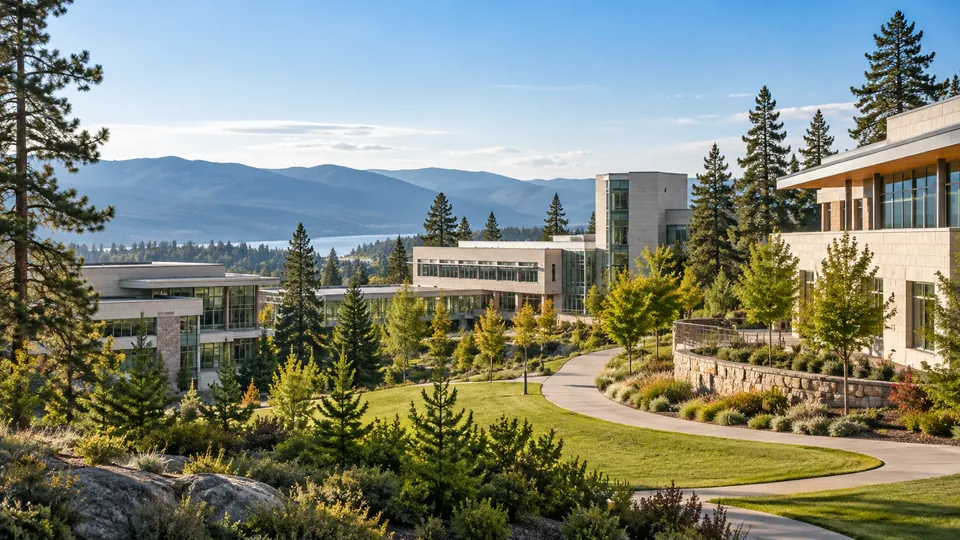
NIT Rourkela describes itself as a residential institute. Its campus page lists 11 halls of residence: seven for men, two for women and two married halls for research scholars. The Annual Report says separate hall accommodation is available for male and female students, while students may seek permission to live with parents or a local guardian in Rourkela as day scholars at the start of a semester. This is a useful planning detail for students deciding between residence and an approved local arrangement; check the current hall allocation rules and charges because the overview does not establish a particular room assignment.
Biju Patnaik Central Library has operated since 1965 and serves teaching, research and scholarly work. The institute lists sports facilities including the Dilip Tirkey Stadium, Sachin Tendulkar Cricket Ground, tennis and basketball courts, hall courts and gymnasiums. It also describes separate swimming facilities, including a 50-by-25-metre men's pool and a 25-by-12-metre women's pool; published access hours and coaching arrangements should be checked locally because these can change. These facilities are more helpful to evaluate as part of weekly life than as a list of amenities: look for whether your department, residence and activity priorities are actually served.
The campus page lists an on-campus Health Centre, a bank and ATMs, shopping centres, canteens, a post office, guest houses and the Indradhanush Day Care Centre. The institute says the Health Centre offers outpatient services and refers patients needing advanced care to designated hospitals in Rourkela. Its security duty room operates around the clock, while the institute explicitly distinguishes its watch-and-ward role from police powers. The halls page notes common rooms, dining halls and gyms, with accessibility features varying by hall. Ask the hall administration about the specific residence, current services, mobility access and emergency procedures relevant to you rather than assuming every facility is identical across campus.
The official Scholarships and Financial Assistance page says aid can come from alumni, companies, state governments and the Government of India, with applications scrutinized before approval. The page lists institute and externally administered opportunities, so students should distinguish an NIT Rourkela process from an outside scholarship portal. It directs students applying for alumni scholarships to NITRis under Academic, Scholarships, then Apply Scholarship. The exact application window, documentary requirements and award amount depend on the named scheme and cycle; verify them on the issuing authority's current notice before relying on an old page or third-party listing.
NIT Rourkela's FAQ describes state Post-Matric Scholarships for eligible SC/ST students and a Top Class Scholarship route for selected first-year SC/ST students subject to the stated income and progression conditions. The separate scholarship page includes other named schemes with their own eligibility, including academic performance, income, degree year and subject restrictions. A student may not be eligible for every scheme listed on one institutional page, and a scholarship award should not be assumed to stack with another. Ask the scholarship office which current rules apply to your category, course and year of study.
NIT Rourkela is most compelling for applicants who want a large residential technical environment, a broad range of specialist engineering choices, and access to research and student services on campus. The main planning risks are equally concrete: choose the exact programme rather than relying on an institution-wide rank; budget from the 2026-27 notice and separate one-time or approximate charges; and interpret placement figures with their source-specific denominator. For a 2027-28 entrant, the next steps are to confirm the current JoSAA rules, programme seat matrix, counselling calendar, fee notice, residence conditions and scholarship windows. The official pages linked above are the right starting point for each check.
Loading programmes and admission routes.
Selected ranking categories, with the recorded year beside each result. Open all records for the complete history.
54 published records · Lower numeric ranks are stronger
NIRF
Architecture
#72025
IIRF
Engineering · public
#302022
NIRF
Overall
#322020
Find a program, read its fee details and explore the admission requirements.
Summary of the programs shown below. First-year fee
| Course | Stream | Fees |
|---|---|---|
| Bachelor of Science [B.Sc] + Master of Science [M.Sc] | Science | 68000 |
| Master of Arts [MA] (Development Studies) | Arts | 97500 |
| Master of Technology [M.Tech] | Engineering | 111500 |
| Bachelor of Technology [B.Tech] | Engineering | 178000 |
| Master of Business Administration [MBA] | Management | 271500 |
Specializations
Eligibility: 10+2 with 75%
Specializations
Eligibility: Graduation
Specializations
All accepted exams
Eligibility: BTech with 60% + GATE
Specializations
All accepted exams
Eligibility: 10+2 with 75% + JEE Main
Specializations
All accepted exams
Eligibility: Graduation with 50% + CAT
4 exams with cutoff data available - showing recent entries
 ABB Limited
 Accenture
 Aditya Birla Group
 Aditya Birla Retail Ltd.
 Affine analytics private limited
While NIT Trichy is typically ranked higher overall, NIT Rourkela is considered superior for specific core branches such as Mining and Ceramic Engineering. The choice depends heavily on the specific academic program.
NITs enforce a strict 85% attendance rule. Students must attend at least 85% of their classes; failure to meet this requirement can result in being debarred from appearing for the semester examinations.
The quality of mess food at NIT Rourkela varies by student hall of residence and is generally described as average. There have been recent concerns regarding hygiene, particularly in the larger hostels on campus.
Admission to CSE at NIT Rourkela with a 99 percentile is possible for candidates applying under the Home State quota. However, it remains highly competitive and difficult for candidates in the Other State General category.
Yes, a bicycle is highly recommended on the NIT Rourkela campus. The campus spans approximately 1,200 acres, making walking between student hostels and academic departments quite difficult and time-consuming.
About National Institute of Technology, Rourkela.
Colleges cannot rewrite published reviews. We remove spam and abuse.
Ask the communityWhat should future students know?
Tell us which course you're considering. We'll help you work out the next step.
Get instant Partner access after mobile verification. Your public edits are reviewed before they go live.
Claim this college
 Amazon
 Amdocs
 Axis Bank
 Bajaj Auto
 Bajaj Capital
 Bharat Petroleum Corporation Limited (BPCL)
 Capgemini
 Caterpillar
 Centre for Development of Telematics (CDOT)
 Cerner
 Coca-Cola
 D. E. Shaw India Private Limited
 Dell
 Deloitte
 DRDO
 Ericsson India Pvt Ltd
 Essar E&P Ltd.
 EXL Service
 Fiat Chrysler Automobiles
 Ford Motors
 Future Group
 Goldman Sachs
 Hero Electric
 Hero Motocorp
 Hindustan Unilever Limited
 Honda
 Hyundai Motors
 IBM
 Indian Oil Corporation Ltd (IOCL)
 Infosys
 Intel
 John Deere
 JSL
 Just Dial
 KalkiTech
 KEC
 Lafarge (India)
 Larsen & Toubro Ltd.
 LINDE
 Mahindra Electric
 Maruti Suzuki
 Microsoft
 MTR Foods Pvt. Ltd.
 Mu Sigma
 National Instruments
 Nokia
 Novell Software Development (I) Pvt. Ltd.
 Oracle
 Pepsico Holdings (I) Pvt. Ltd.
 Power Grid Corporation of India
 PWC
 Qualcomm India Pvt. Ltd.
 Ramco Cements
 Reliance Industries Limited [RIL]
 Reliance Jio
 Rio Tinto
 Saint Gobain Glass
 Samsung
 SAP
 Schneider Electric
 Snapdeal.com
 Sterlite
 Sun Pharmaceuticals
 Suzuki Motors
 Swiggy
 Tata
 Texas Instrument
 Thermax
 Tredence
 Unisys
 United Health Group
 Usha Martin
 Virtusa
 Vodafone
 Whirlpool
 Wipro
 Xilinx
 Zensar
 ZS Associates
85 named recruiters in the recorded data. Company names are deduplicated.
Programme information: Official source · Source as of: 2026-11-01
Each route applies only to this named programme and the stated year.
JEE-Main: Joint Entrance Exam Main · 2026-27
Admission-route evidence: Official source · Source as of: 2026-11-01
Programme information: Official source · Source as of: 2026-11-01
Each route applies only to this named programme and the stated year.
JEE-Main: Joint Entrance Exam Main · 2026-27
Admission-route evidence: Official source · Source as of: 2026-11-01
Programme information: Official source · Source as of: 2026-11-01
Each route applies only to this named programme and the stated year.
JEE-Main: Joint Entrance Exam Main · 2026-27
Admission-route evidence: Official source
Programme information: Official source · Source as of: 2026-11-01
Each route applies only to this named programme and the stated year.
JEE-Main: Joint Entrance Exam Main · 2026-27
Admission-route evidence: Official source
Programme information: Official source · Source as of: 2026-11-01
Each route applies only to this named programme and the stated year.
JEE-Main: Joint Entrance Exam Main · 2026-27
Admission-route evidence: Official source · Source as of: 2026-11-01
Programme information: Official source · Source as of: 2026-11-01
Programme information: Official source · Source as of: 2026-11-01
Each route applies only to this named programme and the stated year.
JEE-Main: Joint Entrance Exam Main · 2026-27
Admission-route evidence: Official source
Programme information: Official source · Source as of: 2026-11-01
Programme information: Official source · Source as of: 2026-11-01
Programme information: Official source · Source as of: 2026-11-01
Each route applies only to this named programme and the stated year.
JEE-Main: Joint Entrance Exam Main · 2026-27
Admission-route evidence: Official source
Programme information: Official source · Source as of: 2026-11-01
Each route applies only to this named programme and the stated year.
JEE-Main: Joint Entrance Exam Main · 2026-27
Admission-route evidence: Official source
Programme information: Official source · Source as of: 2026-11-01
Each route applies only to this named programme and the stated year.
JEE-Main: Joint Entrance Exam Main · 2026-27
Admission-route evidence: Official source
Programme information: Official source · Source as of: 2026-11-01
Each route applies only to this named programme and the stated year.
JEE-Main: Joint Entrance Exam Main · 2026-27
Admission-route evidence: Official source
Programme information: Official source · Source as of: 2026-11-01
Each route applies only to this named programme and the stated year.
JEE-Main: Joint Entrance Exam Main · 2026-27
Admission-route evidence: Official source · Source as of: 2026-11-01
Programme information: Official source · Source as of: 2026-11-01
Each route applies only to this named programme and the stated year.
JEE-Main: Joint Entrance Exam Main · 2026-27
Admission-route evidence: Official source · Source as of: 2026-11-01
Programme information: Official source · Source as of: 2026-11-01
Each route applies only to this named programme and the stated year.
JEE-Main: Joint Entrance Exam Main · 2026-27
Admission-route evidence: Official source · Source as of: 2026-11-01
Programme information: Official source · Source as of: 2026-11-01
Each route applies only to this named programme and the stated year.
JEE-Main: Joint Entrance Exam Main · 2026-27
Admission-route evidence: Official source · Source as of: 2026-11-01
Programme information: Official source · Source as of: 2026-11-01
Programme information: Official source · Source as of: 2026-11-01
Each route applies only to this named programme and the stated year.
JEE-Main: Joint Entrance Exam Main · 2026-27
Admission-route evidence: Official source
Programme information: Official source · Source as of: 2026-11-01
Each route applies only to this named programme and the stated year.
JEE-Main: Joint Entrance Exam Main · 2026-27
Admission-route evidence: Official source · Source as of: 2026-11-01
Programme information: Official source · Source as of: 2026-11-01
Each route applies only to this named programme and the stated year.
JEE-Main: Joint Entrance Exam Main · 2026-27
Admission-route evidence: Official source · Source as of: 2026-11-01
Programme information: Official source · Source as of: 2026-11-01
Programme information: Official source · Source as of: 2026-11-01
Each route applies only to this named programme and the stated year.
JEE-Main: Joint Entrance Exam Main · 2026-27
Admission-route evidence: Official source · Source as of: 2026-11-01
Programme information: Official source · Source as of: 2026-11-01
24 recorded programmes · 1 institution. Admission years and conditions apply to the named programme.
 Auditorium
 Bank & ATM
 Cafeteria
 Campus Security
 Campus Shuttle
 Campus Wi-Fi

 Gym
 Hostel
 Medical
 Science Labs
 Smart Classrooms
 Sports Complex
 Study Library
 Swimming Pool