Loading Admission Guardian content
Loading Admission Guardian content

1 programme · 1 institution. Check the admission year and requirements.
1 programme · 1 institution. Check the admission year and requirements.
IIT Patna is an Indian Institute of Technology located at Bihta, in the Patna district of Bihar. For an applicant, the useful starting point is not the IIT label alone but the combination of an engineering and science programme catalogue, a national entrance-and-counselling route, a campus outside central Patna, and a fee schedule whose published version is several years old. Those details affect course choice, travel and budgeting differently, so they should be checked against the right authority rather than compressed into a single reputation claim.
This profile uses official institutional, counselling and ranking sources available as of 31 October 2026. It describes the most recent evidence located, not a promise about the 2027-28 intake. Programme offerings, fees, scholarships, ranking tables and placement reporting can change. Where a source is dated, the date is kept visible. Where the source does not disclose a denominator or a current rule, that limitation matters as much as the headline number.
IIT Patna's academic site publishes undergraduate course and syllabus information across engineering, science and economics. The B.Tech and related undergraduate catalogue includes Computer Science and Engineering, Electrical and Electronics Engineering, Electrical Engineering, Civil Engineering, Mechanical Engineering, Chemical Engineering, Engineering Physics and Metallurgical and Materials Engineering. It also lists Mathematics and Computing, Artificial Intelligence and Data Science, Chemical Science and Technology, and a Bachelor of Science in Economics. The catalogue includes programme names with different degree labels; it should not be reduced to a claim that every listed option is a B.Tech. The institute's undergraduate syllabus catalogue is the place to confirm the current course title and curriculum.
That breadth creates meaningful differences in what an applicant is choosing. A student interested in computing should distinguish the established Computer Science and Engineering programme from the separately named Artificial Intelligence and Data Science and Mathematics and Computing options. Their presence in the catalogue does not, by itself, establish that their curriculum, intake, seat pool or admission code is identical. A student comparing core engineering fields should inspect the programme-specific syllabus rather than assume that the degree label conveys the course sequence. The official syllabus page is useful for identifying published curricula, but a syllabus document may cover a batch or revision year; check the document's own applicability before treating it as the curriculum for a new entrant.
The course catalogue is not the same thing as a live offer of seats. For the relevant admission cycle, the JoSAA seat matrix and choice-filling portal determine which institute-programme combinations are actually offered, alongside the applicable category and seat type. IIT Patna's admissions page describes the undergraduate entry route, while the counselling authority supplies the cycle-specific seat allocation. If a course is named on an institute page but is absent from the current JoSAA matrix, do not infer that seats are open in that cycle. Likewise, a third-party directory's programme list cannot supersede the current choice form.
The undergraduate route to IIT Patna runs through JEE Advanced and JoSAA. The institute's undergraduate admissions information identifies the route; the JEE Advanced authority controls examination eligibility, and JoSAA controls counselling rules and seat allocation. An examination rank is not an admission offer. A candidate must satisfy the examination-year rules, submit choices correctly, receive an allotment under the applicable process and complete reporting requirements.
As of the evidence reviewed for this profile, the newest fully documented cycle was 2026. In that cycle, the JEE Advanced information brochure described qualification through the top 2,50,000 successful candidates in the JEE Main B.E./B.Tech paper, subject to category-wise allocation and the remaining eligibility rules. The 2026 rules also included conditions tied to the year of first Class XII appearance and the required Physics, Chemistry and Mathematics subjects. These are historical 2026 details, not a representation of 2027 eligibility. Applicants should read the whole current brochure and eligibility page when the next cycle is announced, including attempt limits, prior IIT admission restrictions, board performance provisions and candidate-specific exceptions. The official 2026 JEE Advanced brochure are responsible sources for those rules.
After qualifying, applicants use JoSAA's cycle-specific business rules, seat matrix and choice system. A prior-year closing rank can help describe past competition, but it is neither an eligibility threshold nor a forecast. A meaningful comparison must hold the programme, round, seat category, candidate category, gender pool and rank list constant. Common Rank List rank and category rank are not interchangeable. The JoSAA information bulletins and seat matrix should be checked for the actual year. Put choices in genuine preference order and review the final submitted list; do not select an order solely from an old closing-rank table.
An allotment creates further work. JoSAA's post-allotment reporting instructions explain the portal process, document upload and verification. The authority warns that an unanswered discrepancy query within the stated window can lead to a not-reported status and cancellation of the seat. Candidates should monitor their portal and registered email, respond to each query within its deadline and then follow IIT Patna's own joining notices. The 2026 reporting calendar does not establish a 2027 deadline. Keep category, disability and qualifying-examination documents ready in the form required by the live checklist; the exact list depends on the candidate's case.
The official IIT Patna fee page labels its published schedule as applying to admissions from July 2023 onwards. For Indian students, the table shows a first-semester total of ₹164,750 and ₹125,000 for subsequent semesters. It separately names one-time refundable academic and hostel components of ₹20,000 and ₹5,000, respectively, and gives annual insurance as a tentative ₹2,000. The schedule presents a different international/NRI/OCI first-semester total of ₹364,750 and subsequent-semester amount of ₹325,000. These figures belong to the published July 2023 schedule; they are not a verified 2026-27 or 2027-28 invoice. The institute's fee structure should be checked for a newer notice before budgeting.
The distinction between semester charges, one-time refundable deposits and tentative annual insurance is practical. A student should not multiply a first-semester amount across every term, assume a refundable deposit is a permanent cost, or treat an older schedule as a current payable total. The page cited here does not settle every student's full cost of attendance: applicants should verify the latest institute fee notice, hostel and mess charges, payment dates, deposit and refund terms, any category or route-specific treatment, and personal travel and living expenses. Do not add separate items together unless their period and scope match.
IIT Patna's scholarships page lists central government schemes and other support routes, including schemes for eligible Scheduled Caste students. A listed scheme is not an automatic award. The provider's current rules determine eligibility, income criteria, covered charges, documents, renewal and application deadlines. Before relying on aid to make an offer affordable, check both the institute's scholarship information and the scheme authority's current notice. This evidence establishes that routes are listed; it does not establish that any particular applicant qualifies or that a benefit will cover a specified amount.
Rankings are category-specific comparisons, not a direct measure of whether a programme fits an individual student. The Ministry's official NIRF 2025 Engineering table places IIT Patna at rank 19 with a score of 64.52; its separate 2025 Overall table places the institute at rank 36. Engineering and Overall are different categories and should not be presented as one continuous ranking series. See the institute's ranking page, the official NIRF 2025 Engineering table and the separate NIRF 2025 Overall table.
The NIRF categories use different comparison sets and measures. An overall position cannot answer how a particular department teaches, how a student will perform or what a future employer will offer. If comparing institutions, compare the same NIRF category and year, then examine programme curricula, location, student cost and the applicant's own priorities. A rank can add context, but it should not substitute for checking the live course and admission information.
IIT Patna's career development and placement site currently displays a 2025-26 selector and headline B.Tech metrics of an average package of ₹23.20 lakh per annum and placement percentage of 95.54%; it also displays separate M.Tech metrics. These are programme-labelled figures on the current institutional page, but the visible presentation does not state a denominator, the eligible or participating student count, the completion status of the cycle or the precise calculation behind the percentage. They therefore should not be compared as if they were a fully documented cohort outcome or generalized to every branch. The CCDC placement page is the source to revisit for its current underlying report and definitions. Applicants should look for the reporting year, programme, cohort, placed and eligible counts, median as well as average, and any exclusions before using a headline in a decision.
This caution does not make placement evidence useless. It tells the reader what to verify before interpreting it. An average may move with a small number of high offers; a percentage depends on who is included in the denominator; a report for one degree cannot describe all programmes. If the institute publishes a fuller final report for a cohort, that report should take precedence over a summary card. Until those definitions are visible, treat the figures above as institution-displayed indicators, not a personal salary expectation or guaranteed result.
IIT Patna's campus is at Bihta, beyond central Patna. The institute's official Find Us page describes travel from Patna airport as roughly an hour by road and gives Bihta railway station as about 4 km away; it also describes Patna Junction as roughly an hour's drive. These are practical orientation estimates, not guaranteed travel times. Road conditions, departure point and service availability can change the journey. A student or family planning arrival should confirm the current route and transport arrangements close to the travel date.
The campus location has a trade-off. Bihta rail access is closer than the main Patna railhead, while visits to central Patna involve a longer road journey. That matters for family travel, errands and connections, especially when comparing a campus within a city to one outside it. It is better to plan an arrival route from the exact station or airport than to rely on a generic claim that the campus is “near Patna.” The institute's directions and current campus notices are the appropriate starting points; confirm gate, transport and visitor procedures before setting out.
IIT Patna's hostel information describes residential facilities and shared student amenities such as reading space, indoor games, gym access, dining and Wi-Fi. The public pages are not consistent about the number of hostel buildings, so this profile does not repeat a count. Nor does a list of amenities establish room availability, current operating hours, accessibility, maintenance quality or allocation for a particular incoming batch. Students should confirm accommodation eligibility, room assignment, fees, meal arrangements and rules with current institute notices. Hostel availability and terms are separate from the academic fee figures above.
The available public evidence supports a residential campus setting, but it does not settle every aspect of student life. Applicants who need specific medical, disability, counselling, dietary or accessibility support should contact the relevant institute office and ask about current arrangements. For family members, the campus location and guest-house or visitor rules may matter; verify these before planning a stay. Avoid assuming that a facility is available to every student simply because it appears in a general amenities description.
IIT Patna is worth evaluating through the programme and route that actually match the applicant. First, identify the precise degree and branch in the current institute catalogue, then confirm the same option in the live JoSAA matrix. Second, compare the applicant's rank only with official, like-for-like historical rows, while treating them as context rather than a prediction. Third, review the current fee notice and separately establish hostel, mess, deposits, refunds and financial-aid eligibility. Finally, consider whether the Bihta location and campus arrangements suit the student's travel and support needs.
There is no single rank or placement headline that resolves those questions. The sources reviewed give a dated 2023 fee schedule, official 2025 NIRF category ranks, current but incompletely defined placement indicators, a published undergraduate catalogue and useful location directions. They do not establish next-cycle course availability, current total cost, an individual scholarship award, a fully defined placement denominator or future employment. Those gaps are reasons to verify the responsible current notice, not reasons to fill the answer with estimates.
For the next step, check IIT Patna's admissions and academic notices, the current JEE Advanced and JoSAA documents, and the latest fee and scholarship pages. When reviewing outcomes, request or locate a report that specifies programme and cohort counts. For campus planning, confirm transport and accommodation details directly. Keeping each decision tied to its own source and year gives a more dependable view than treating old numbers or broad institutional labels as guarantees.
Programme information: Official source · Source as of: 2026-10-31
Each route applies only to this named programme and the stated year.
JEE-Advanced: Joint Entrance Examination Advanced · 2026-27
Admission-route evidence: Official source · Source as of: 2026-10-31
1 recorded programme · 1 institution. Admission years and conditions apply to the named programme.
Selected ranking categories, with the recorded year beside each result. Open all records for the complete history.
34 published records · Lower numeric ranks are stronger
NIRF
B.Tech
#212021
IIRF
Engineering · public
#382022
India Today
Engineering · public
#92022
THE
Overall
#6012024
Find a program, read its fee details and explore the admission requirements.
Summary of the programs shown below. First-year fee
Showing 5 courses
Specializations
Eligibility: 10+2 with 60%
Specializations
Eligibility: 10+2 with 60%
Specializations
Listed entrance exams
Eligibility: Graduation with 60%
Specializations
Eligibility: Post Graduation with 60%
Specializations
Listed entrance exams
Eligibility: 10+2 with 75% + JEE Advanced
3 exams with cutoff data available - showing recent entries
 Accenture
 Addverb Tech
 Adobe
 Amazon
 Angel Broking
 Arcesium
 Arista Networks
 Bosch Ltd
 Cadence Design Systems
 Capgemini
 CeWIT
 Cognam Technologies
 Cognizant
 Conduent
 Endeavour – The Mobility Company
 Goldman Sachs
 Google
 Indian Oil Corporation Ltd (IOCL)
 Infosys
 Intel
 ISRO
 KEC International
 KIIT University
 Larsen & Toubro Limited
 Linked In
 Maruti Suzuki
 Mediatek
 Microsoft
 NetApp
 Optum
 RBL Bank
 Saavn
 Samsung
 Sapient
 Sigmoid
 Stanza
 Strand Life Sciences Pvt Ltd
 TCS
 Tektronix India Ltd
 TRAI
 Tricon
 Wipro
 Yellow Messenger
 ZS Associates


In this preview: 5 photos · 0 videos
Yes, IIT Patna is considered a top-tier choice for CSE among the second-generation IITs. The branch has an excellent placement record, with 100% placement and an average package exceeding 35 LPA for its graduates.
The mess food receives mixed reviews from students, with most rating it around 2.5 out of 5. While the institute has a mess committee, occasional hygiene issues are reported on social media. The campus environment is inclusive and safe, with a diverse student body.
Yes, the hybrid B.Sc. degree from IIT Patna is a valid and regular degree. It is approved by the IIT Patna Senate, is compliant with the National Education Policy (NEP) 2020, and grants successful graduates full alumni status of the institute.
The primary differences lie in their stature, resources, and scale. IIT Patna is an Institute of National Importance with higher funding and better global rankings. It also has a significantly larger 501-acre campus compared to NIT Patna's smaller city campus.
Yes, the campus is reported to be safe and inclusive for students from all regions, including South India. Students indicate that approximately 40% of a typical batch is from South India, contributing to a diverse and comfortable environment.
About IIT Patna.
Colleges cannot rewrite published reviews. We remove spam and abuse.
Ask the communityWhat should future students know?
Tell us which course you're considering. We'll help you work out the next step.
Get instant Partner access after mobile verification. Your public edits are reviewed before they go live.
Claim this college
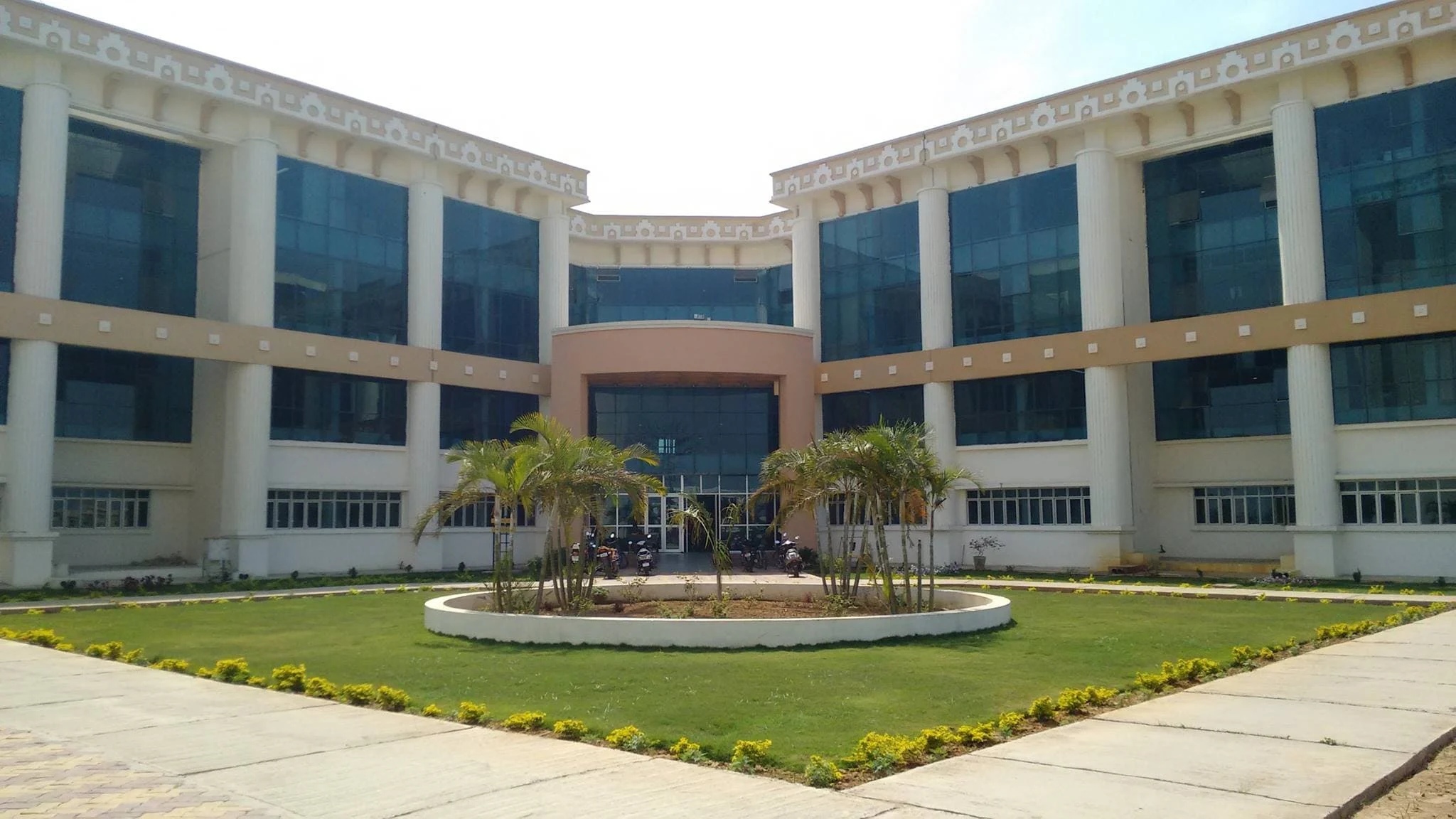
 Auditorium
 Cafeteria
 Computer Labs
 Gym
 Hostel
 Medical
 Science Labs
 Sports Complex
 Study Library