Loading Admission Guardian content
Loading Admission Guardian content

Selected ranking categories, with the recorded year beside each result. Open all records for the complete history.
93 published records · Lower numeric ranks are stronger
NIRF
Architecture
#12021
IIRF
Architecture · public
#12024
IIRF
Engineering · public
#62023
Outlook
Engineering · public
#52022
India Today
Engineering · public
#42022
Find a program, read its fee details and explore the admission requirements.
Summary of the programs shown below. Fee periods can differ by program. Check the note beside each amount before comparing costs.
| Course | Stream | Fees |
|---|---|---|
| Master of Architecture [M.Arch] | Architecture | 40100 |
| Master of Technology [M.Tech] | Engineering | 40100 |
| Ph.D | Engineering | 50100 |
| Bachelor of Architecture [B.Arch] | Architecture | 230100 |
| Bachelor of Technology [B.Tech] | Engineering | 230100 |
Eligibility: Graduation
Specializations
All accepted exams
Eligibility: Graduation + GATE
Specializations
Eligibility: Postgraduation
Eligibility: 10+2
Specializations
All accepted exams
Eligibility: 10+2 with 75% + JEE
4 exams with cutoff data available - showing recent entries
 Accenture Strategy
 Adani group
 Bank of America
 Barclays Bank
 BristleCone
 Cognizant
 Dell
Dell Deloitte
 Ernst & Young
 EXL Services
 GAIL
GAIL Godrej Infotech
 HCL
HCL HDFC Bank
 Hero Cycles
 HSBC
HSBC IBM
IBM ICICI Bank
 Infosys
 Jubilant Foodworks
 Morgan Stanley
 Mphasis
 Paytm
Paytm PWC
PWC Reliance Retail
 Tally
Tally Tata AIA
 Tresvista Financial Services
 Vedanta
 Whirlpool
 Zycus
ZycusThe oldest technical institution in Asia isn't just a historical footnote—it's a powerhouse that consistently lands in India's top 10 engineering colleges. IIT Roorkee, with its sprawling 365-acre campus and legacy dating back to 1847, offers a unique blend of academic rigor and a surprisingly relaxed student culture. It's ranked #6 in Engineering and #1 in Architecture by NIRF 2024, but ask any student and they'll tell you the real draw is the balance. You get the brand name, the stellar placements, and a campus so beautiful you might not want to leave, all without the infamous, suffocating pressure cooker environment of some of its peers. That's the IITR promise, and for many, it delivers.
IITR's academic portfolio is vast, catering to over 1,300 new undergraduates each year. The B.Tech program is the main draw, with Computer Science & Engineering (CSE) and the newer Data Science & AI (DSAI) program being the most sought-after. But its historical strength in Civil Engineering remains unmatched, and its B.Arch program is, by official ranking, the best in the country. Beyond that, they offer integrated BS-MS programs in pure sciences and economics, which are great for research-oriented students.
The faculty is top-tier—nearly 100% hold PhDs. The grading system is a mix. For large classes (over 30 students), they use statistical (relative) grading, which can feel competitive. For smaller seminars, it's absolute grading. There's a known moderation committee, and rumor has it they cap the 'A+' grades to around 10-15% of a class. That keeps the curve in check. Academically, the vibe isn't as cutthroat as some other old IITs. You'll hear students on forums call it "chill" compared to IIT Bombay or Kanpur. They find time for clubs and coding projects. But a word of caution repeated like a mantra on student forums: the Physics department has a reputation for being notoriously tough on grades. It's almost a campus meme. So, if you're in an integrated program or taking their courses, be prepared to work.
The placement numbers are impressive, but the story has layers. For the 2024-25 session, the highest international offer stood at a staggering INR 2.05 Crore from Databricks, with the top domestic package at INR 1.50 Crore. The overall average package is reported between INR 18.34 to 20 LPA, with the median around INR 19.69 LPA. Now, dig into the branches. CSE is in a league of its own, with an average of INR 34.07 LPA and placement rates touching 99%. ECE and Electrical follow strongly with averages in the low-to-mid 20s LPA.
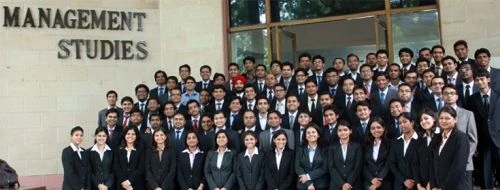
The reality check comes for core branches like Civil and Mechanical. While top recruiters like Schlumberger, Tata Steel, and Reliance Industries do visit, the placement percentage for these streams is more variable, often cited between 65% to 85%. Many core students opt for higher studies or prepare for GATE to enter PSUs, which saw a significant uptick in recruitment in 2024. The MBA program from the Department of Management Studies (DoMS) boasts a 100% placement rate with an average of INR 18.30 LPA, attracting firms like Accenture Strategy.
The recruiter list is a who's who of global tech and finance: Google, Microsoft, Amazon, Adobe, Goldman Sachs, JP Morgan Chase, and Qualcomm are regulars. The institute's strong coding culture, driven by student groups like SDS and IMG, directly feeds this pipeline. So, the placement cell is robust, but your branch still dictates your immediate opportunities.
For a premier IIT, the fee structure is heavily subsidized. General and OBC category students pay a tuition fee of INR 1,00,000 per semester. When you add hostel rent (~INR 7,500) and a mess advance (~INR 20,250), the total semester fee comes to around INR 1,53,300. That puts the total 4-year B.Tech cost at approximately INR 10-12 lakhs.
For SC/ST/PH students, there's a 100% tuition fee waiver, bringing the semester cost down to about INR 53,300 and the total degree cost to an incredibly accessible INR 3-4 lakhs. Financial aid is available through the Merit-cum-Means (MCM) scholarship and various alumni-funded initiatives like the Naveen & Anu Jain Scholarship. No student should be deterred by finances here; the system is designed to support.
Getting in is the real battle. For B.Tech and B.Arch, the only gate is JEE Advanced. The 2024 opening and closing ranks for Round 1 (General category) tell the competitive story: CSE closed at a rank of 481, the new Data Science & AI program at 680, ECE at 1424, and Electrical at 2033. Even Civil Engineering, with its larger intake, closed at 6293. These numbers shift each year but set a clear benchmark.
For postgrad, M.Tech requires a GATE score followed by the COAP counseling process. The MBA program needs a high CAT percentile (95+ for General candidates), though IIT graduates with a CGPA above 7.0 are exempt. M.Sc admissions are through the IIT JAM exam. A common student query is about branch change (DepC). It's possible after the first semester, but you need a near-perfect CGPA—think 9.8+ for CSE, 9.5+ for ECE. Only about 10% of the batch manages it.
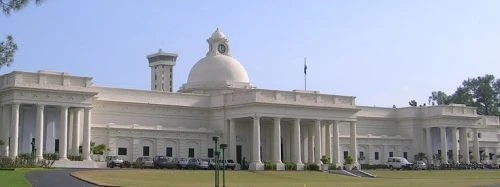
The campus is IITR's crown jewel. The iconic Thomason Building (the main building) is postcard-perfect, and the 365-acre space feels more like a lush, quiet town than a college. Infrastructure is excellent: the Mahatma Gandhi Central Library is a 24/7 haven during exams, the Tinkering Lab fuels all-night innovation, and sports facilities include an Olympic-size pool and multiple grounds.
Hostels, called 'Bhawans,' are functional. Freshers typically land in Rajendra Bhawan, which is older and involves double or triple sharing. The rooms are basic but have essential high-speed LAN/Wi-Fi. The biggest gripe across all student reviews? The mess food in Rajendra Bhawan. It's famously panned as "tasteless" or "barely edible." Upper-year hostels are reportedly better. Social life revolves around the fests: Thomso (cultural) and Cognizance (technical) are massive, drawing crowds from across the country. The unique "Chapati" culture—late-night walks and talks—is a beloved tradition. Roorkee town itself is quiet, but that fosters a strong campus community. Weekend trips to Rishikesh or Mussoorie are the standard escape.
Scouring Reddit, Quora, and review sites reveals a clear consensus. The positives are powerful. Students call it a "home away from home" primarily because of the stunning, self-contained campus. The academic pressure is perceived as more manageable than at other top IITs, allowing time for coding clubs, sports, and fests. The prestige of groups like SDS and IMG is real; students say working there provides better practical learning than some courses.
But they're candid about the negatives. The mess food complaint is universal for first-years. The administration in the Main Building can be slow and bureaucratic for paperwork. And the location, while peaceful, isn't a metropolitan hub. You trade big-city amenities for campus serenity. The most specific academic warning is the Physics department, joked about as a "CGPA killer." It's a consistent piece of advice passed down through batches.
Absolutely, but with clear contours on who it suits best. If you secure a branch in CSE, ECE, Electrical, or the flagship B.Arch, IITR is a phenomenal choice. You get a top-6 IIT brand, exceptional placements, a brilliant campus, and a balanced college life. It's arguably the best option for students who want the IIT pedigree without the extreme academic intensity. For core engineering branches, the decision depends on your career path. The brand opens doors for higher studies globally and in PSUs, but on-campus core placement percentages are more modest. If you're someone who thrives in a quiet, close-knit campus environment and values legacy and culture alongside academics, IIT Roorkee is hard to beat. If your heart is set on the relentless hustle of a Mumbai or Delhi, the Roorkee pace might feel too slow. For most who get in, it's not just a college; it's an experience that defines them.
In this preview: 5 photos · 0 videos
For Architecture and Civil Engineering, IIT Roorkee is considered the top choice. For Computer Science and Engineering (CSE), it is consistently ranked among the top 6 IITs and is often preferred over newer IITs due to its strong legacy and extensive alumni network.
Branch change, or Department Change (DepC), is possible after the first semester. It requires a very high CGPA, typically 9.8 or above for CSE and 9.5 or above for ECE. Approximately 10% of the student batch successfully changes branches each year.
The enforcement varies by professor, but the institute is generally more relaxed compared to IIT Delhi or IIT Kanpur. However, falling below the 75% attendance threshold can still result in penalties, including grade reductions.
Students frequently caution that the Physics department is known for its very tough grading standards and rigorous coursework. This can make it more challenging to maintain a high CGPA compared to other academic departments at the institute.
The campus is located very close to the Roorkee railway station, at a distance of roughly 3 kilometers. The journey by auto-rickshaw takes about 10 to 15 minutes and typically costs between INR 50 and 100.
Share what future students should know about IIT Roorkee.
Student voices are not rewritten by colleges. We remove spam and abuse.
Wider admission question? Community PulseWhat should future students know?
Tell us which course you're considering. We'll help you work out the next step.
Get instant Partner access after mobile verification. Your public edits are reviewed before they go live.
Claim this college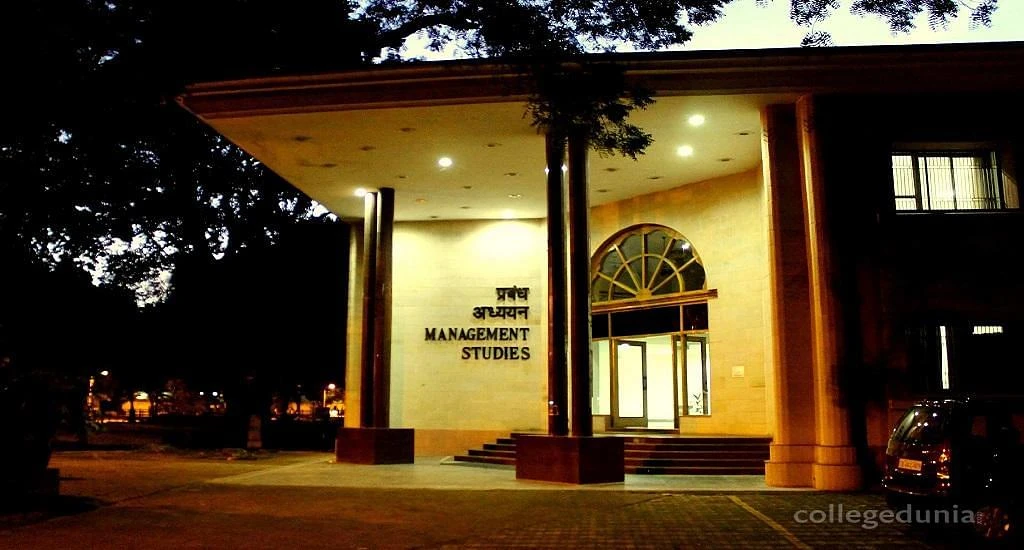
 Auditorium
 Bank & ATM
 Cafeteria
 Campus Security
 Computer Labs
 Gym
Gym Hostel
 Medical
 Science Labs
 Sports Complex
 Study Library