Loading Admission Guardian content
Loading Admission Guardian content

Find a program, read its fee details and explore the admission requirements.
Summary of the programs shown below. Fee periods can differ by program. Check the note beside each amount before comparing costs.
| Course | Stream | Fees |
|---|---|---|
| M.B.B.S. | Medical | 1200000 |
| Doctorate of Medicine [MD] | Medical | 1382105 |
| Master of Surgery [MS] | Medical | 1382105 |
| DM [Endocrinology] | Medical |
All accepted exams
Eligibility: 10+2 with 50% + NEET
Specializations
All accepted exams
Eligibility: Post Graduation
Specializations
All accepted exams
Eligibility: Graduation
Specializations
All accepted exams
Eligibility: Graduation
3 exams with cutoff data available
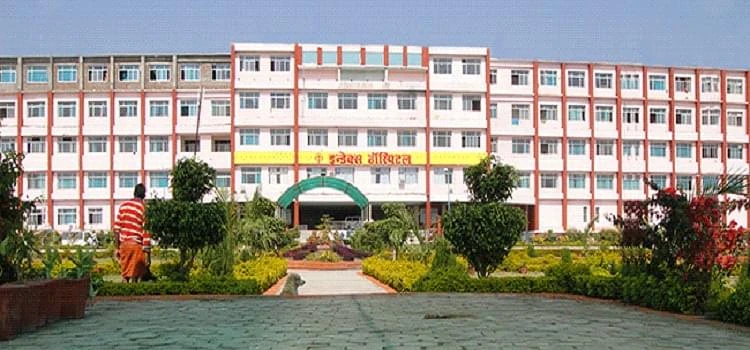
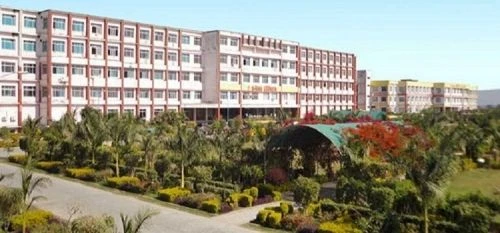
Index Medical College Hospital & Research Centre in Indore is a private institution where the massive, 1200+ bedded teaching hospital isn't just an adjacent building—it's the entire point. Established in 2007, the college has built its reputation on the back of this clinical behemoth, promising students the kind of hands-on patient interaction that's often the missing piece in medical education. And that's a promise it largely delivers on. The trade-off, as you'll hear from students, often comes in the form of campus life and some basic amenities. With an NAAC 'A' grade and recognition from the National Medical Commission, it's a serious contender in central India's crowded medical college landscape, especially for those who prioritize practical training over a vibrant social calendar.
This is a full-spectrum health sciences institution. The UG anchor is the 250-seat MBBS program, a 5.5-year course including a mandatory internship. But they also run BDS, BHMS, Nursing, Physiotherapy, and Pharmacy programs. The postgraduate offerings are substantial, with 131 MD/MS seats across specializations like General Medicine, Surgery, Orthopaedics, Radiology, and Psychiatry. For super-specialization, they have DM (Endocrinology) and M.Ch (Paediatric Surgery) programs, adding another 4 seats.
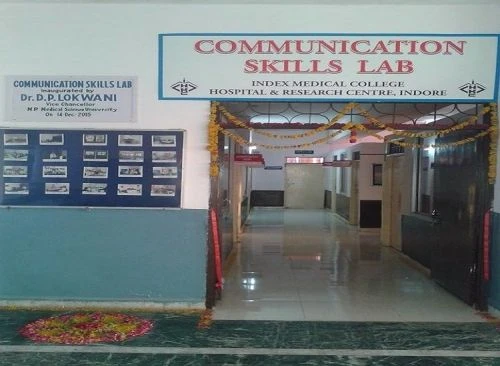
The academic culture leans heavily into clinical practice. They talk about "learner-centered healthcare education," which translates to early clinical postings and a well-equipped Skills Lab. Here, students practice on manikins for procedures like intubation, delivery, and suturing before touching a real patient. The curriculum follows NMC guidelines, and the faculty pool is large—the brief cites numbers between 456 and 898, which suggests a mix of full-timers and visiting clinicians from the hospital. Pass percentages for MBBS are quoted at both 95% and 60% in the data; the higher figure likely refers to final university exams, while the lower one might be for tougher internal assessments or specific subjects. That discrepancy is worth noting.
Medical college "placements" function differently. There's no campus recruitment drive with IT companies. Success is measured by where graduates land for their residency, junior doctor posts, or further studies.
The college officially claims a 100% placement rate for MBBS graduates. The highest package cited is ₹40 LPA, with an average of ₹20 LPA. The median packages offer a clearer picture: ₹8 LPA for MBBS, ₹10 LPA for MD, and ₹12 LPA for MS. These are decent starting points for a fresh graduate in central India. Roles graduates take up include Consultant, General Practitioner, Specialist, or they head into medical writing or academia.
The key differentiator is the mandatory one-year internship within the attached hospital, which comes with an ₹8,000 monthly stipend. This isn't just busywork; it's comprehensive rotation across departments with the high patient inflow a 1200-bed hospital guarantees. That exposure is the real placement catalyst. Alumni reviews generally support the notion that this training sets them up well for securing junior residency positions or cracking PG entrance exams. So while you won't get a traditional "offer letter," the pathway to a clinical career is actively constructed here.
This is where budgets need careful planning. The MBBS program is a significant investment. For the 2025-26 academic year, the total 5-year tuition is approximately ₹86.75 Lakhs, with a first-year fee around ₹17.35 Lakhs. PG fees vary wildly by specialization: MD programs range from ₹2.99 Lakhs to a staggering ₹67.5 Lakhs for the full three years, while MS is between ₹57.36 Lakhs and ₹60.15 Lakhs.
Hostel fees add a substantial layer. The 2024-25 structure lists options from ₹2.80 Lakhs for a double occupancy room to ₹4.00 Lakhs for a single occupancy flat—per year. Mess charges are typically extra. So, all-in, the annual cost for an MBBS student in a decent hostel can easily touch ₹20-22 Lakhs.
Scholarships are a crucial relief valve. They are available, but heavily skewed. Government schemes like the Mukhyamantri Medhavi Yojna (for students with >85% in CBSE or >70% in MP board, family income <₹6 Lakhs) and Post Matric Scholarships for OBC/SC/ST students (income <₹3 Lakhs) can cover 85-100% of tuition. The catch? The Medhavi Yojna often comes with a 5-year rural service bond. The blunt reality from the data: "No scholarships for general category students without fee concessions." You need to fall into a specific merit or category bracket to get help.
It's all about NEET. UG admissions require NEET UG, PG needs NEET PG, and super-specialties demand NEET SS. The selection is entirely through centralized state counseling conducted by the Directorate of Medical Education (DME MP Online).
Cutoff data is sparse but telling. For the 2025 NEET SS round for the DM program, the General Category cutoff rank was 3302. For management quota seats in 2025, the NEET score cutoffs were 451 (General), 449 (OBC), 349 (SC), and 272 (ST). These management quota scores are notably lower, reflecting the premium paid for those seats. The process is strict: qualify NEET, register for MP counseling, get allotted based on rank, and report for document verification. NRI and management quotas exist but require NEET qualification and command much higher fees.
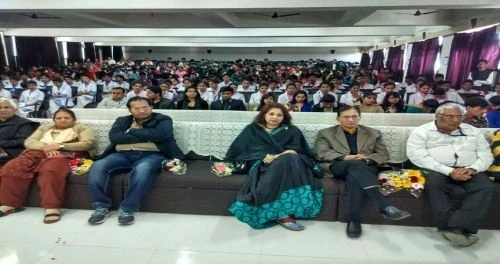
The infrastructure narrative is split. Academically, it's strong: modern lecture halls, smart classrooms, two large auditoriums (900 & 2000 capacity), and well-equipped labs. The library holds around 20,480 books. Sports facilities are comprehensive—football, cricket, hockey, indoor games, and a gym. Wi-Fi is available.
Then there's the hostel life, the most contentious point in student reviews. The physical facilities aren't the issue; rooms come furnished (bed, table, wardrobe), with options for AC and attached bathrooms. Hot water and power backup are provided. The complaints are about the experience—described as "poor" and even "horrible" in some verbatim feedback. Food quality in the mess and canteen is consistently panned, with reviews simply stating "the quality of food is not good." It's a persistent pain point.
The social scene is quiet. Students note "very few functions are organised" and that fests are "less in frequency and quality as compared to other colleges." A Ganesh Chaturthi program gets a mention, but don't expect a bustling cultural calendar. The location on Nemawar Road, about 22 km from Indore Junction, means the city isn't easily accessible for casual outings.
Sifting through the sentiment reveals a clear cost-benefit analysis done by students.
The positives are powerful and consistent:
But the negatives are equally persistent:
As one student put it: "Quality of teaching is excellent... Teacher are soo good and their practical knowledge gains us very much interest." Another counters bluntly: "The college and hotel life is horrible." Both can be true. The education delivers; the ancillary student experience often doesn't.
Index Medical College is a specific choice for a specific kind of student. It's worth it if your primary, almost sole, criterion is maximizing clinical hands-on experience during your MBBS or PG. The hospital-based training is genuine and prepares you well for the realities of medical practice. The academic delivery is solid.
However, you have to be willing to accept the trade-offs. The fee is very high, especially for general category students with no scholarship access. The hostel life and food receive enough negative feedback to be considered a genuine drawback, not just minor complaints. The social and extracurricular scene is minimal.
So, who is it for? The student who is intensely focused on becoming a clinician, who views medical college as a training camp rather than a holistic life experience, and whose family can bear the financial load. If you're looking for a more balanced college life with vibrant campus activities and comfortable living conditions, and you have a comparable rank, you might find better value elsewhere. But for pure clinical grounding, Index's hospital gives it a formidable edge.
In this preview: 5 photos · 0 videos
The total tuition fees for the complete 5.5-year MBBS program at Index Medical College are approximately ₹86.75 Lakhs for the 2025-2026 academic session. The first-year fee is around ₹17.35 Lakhs. This is for tuition only. Hostel and mess fees are separate and can add a significant amount, with annual hostel costs ranging from ₹2.80 Lakhs to ₹4.00 Lakhs depending on room type, as per the 2024-25 structure.
Admission to all programs is strictly based on national entrance exams. For the MBBS program, you must qualify and secure a rank in NEET UG. For postgraduate MD/MS courses, a valid NEET PG score is mandatory. For super-specialty DM/M.Ch programs, you need a NEET SS rank. Eligibility includes being at least 17 years old and having passed 10+2 with PCB and English. The final selection is done through centralized online counseling conducted by the Directorate of Medical Education (DME MP Online) based on your NEET rank.
As a medical college, placements refer to residency positions and junior doctor roles. The college claims a 100% placement rate for MBBS graduates. The reported average annual package is around ₹20 LPA, with the highest cited at ₹40 LPA. The median package for MBBS graduates is ₹8 LPA. Most graduates secure positions as junior/senior residents in hospitals, become general practitioners, or pursue further specialization. The mandatory one-year internship with an ₹8,000 monthly stipend within the large teaching hospital provides critical initial exposure.
The college provides separate hostels for boys and girls with single and double occupancy rooms. Some rooms have attached bathrooms and air-conditioning. They are furnished with a bed, study table, wardrobe, and have amenities like hot water and power backup. However, student reviews on the hostel experience are mixed to negative, with terms like "poor" and "horrible" used. Food quality in the mess and canteen is a common complaint, with multiple reviews stating it is "not good."
Scholarships are primarily for specific categories. Key schemes include the Mukhyamantri Medhavi Yojna for students with high board marks (>70-85%) and family income below ₹6 Lakhs, which may cover tuition fees subject to a 5-year rural service bond. Post Matric Scholarships for OBC, SC, and ST students with income below ₹3 Lakhs cover 85-100% of tuition. The data indicates that there are typically no scholarships for general category students without specific fee concessions. Merit-based aid linked to NEET rank may also be available.
Share what future students should know about Index Medical College Hospital & Research Centre.
Student voices are not rewritten by colleges. We remove spam and abuse.
Wider admission question? Community PulseWhat should future students know?
Tell us which course you're considering. We'll help you work out the next step.
Get instant Partner access after mobile verification. Your public edits are reviewed before they go live.
Claim this college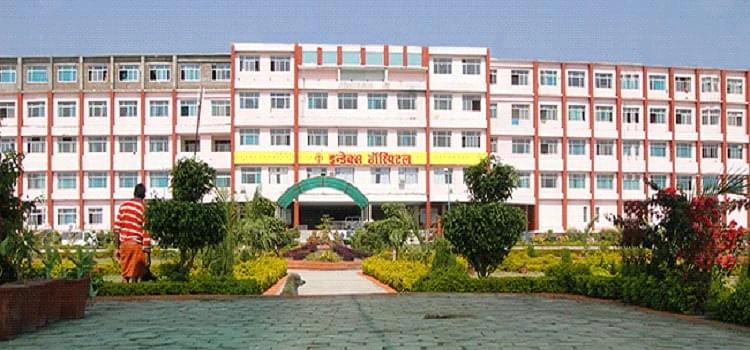
 Cafeteria
 Campus Wi-Fi
 Computer Labs
 Medical
 Science Labs