Loading Admission Guardian content
Loading Admission Guardian content

4 programmes · 1 institution. Check the admission year and requirements.
4 programmes · 1 institution. Check the admission year and requirements.
The Indian Institute of Management Bodh Gaya (IIMBG) is a public management institute in Gaya, Bihar. Its permanent campus is at Uruvela, Prabandh Vihar. The institute’s current programme options include the two-year MBA and specialised MBA routes in Digital Business Management (DBM) and Hospital and Healthcare Management (HHM), along with the five-year Integrated Programme in Management (IPM). These programmes serve different entry points and career interests, so compare their curricula and admission notices directly rather than treating them as interchangeable versions of one course.
For the 2026-28 intake, the institute described the MBA, DBM and HHM admission process through CAT-based shortlisting and a personal interview. The IPM route is a separate five-year pathway with its own entrance and selection process. The published admission page and notices attach rules to their named cycles. They are not a safe source for future-cycle criteria unless the institute publishes a new notice. Applicants should use the latest official admission page for the intake they intend to join.
IIM Bodh Gaya’s MBA/DBM/HHM admission policy for 2026-28 uses CAT results and a personal interview, with published eligibility and selection components. The institute’s January 2026 expression-of-interest notice sets CAT percentile thresholds for general and reserved categories, with separate overall and sectional values for MBA, DBM and HHM and different general and self-sponsored categories. These are invitation thresholds for that process, not the final cutoff of admitted students or a guarantee of an offer.
The 2026-28 selection process is closed. CAT percentiles and weights from that cycle should remain historical until an official notice establishes the next intake’s rules. IPM applicants should separately consult the current JIPMAT and institute notices; MBA-route CAT criteria cannot be transferred to the five-year programme. Before applying, confirm the eligibility, application window, required documents and category rules in the exact year’s official material.
A shortlist threshold and the later selection decision answer different questions. The institute’s CAP 2026 expression-of-interest notice labels its percentile values as thresholds for inviting applications; it separates programmes and categories and includes sectional requirements. A candidate should therefore check the row that matches both their programme and category, then read the policy for the remaining stages. A single overall CAT percentile copied from a coaching site cannot establish eligibility across all three courses. Nor should the previous cycle’s invitation threshold be used as a forecast for a new intake.
A practical checklist is to confirm the cycle and programme at the top of the notice, identify the correct category, verify each sectional condition, and then read the policy for interview and composite selection details. Applicants should also distinguish meeting a published threshold from being shortlisted after any other stated conditions and from receiving a final offer. Use the institute portal to locate the latest batch-specific instructions and confirm which notice governs the intake.
The official fee schedules reviewed for 2026-28 list total programme fees of ₹17.96 lakh for the MBA and ₹16.70 lakh each for DBM and HHM. These are programme- and cohort-specific scheduled totals; they should not be presented as a universal IIMBG fee or silently carried into a later batch. The institute’s IPM schedule covers only the first three years of the five-year route; the MBA-stage fee for 2029-31 is not yet established by that schedule. Students should check the official schedule for their own programme and intake, including separate refundable or variable charges.
The institute MBA page points students to central scholarship schemes for SC and ST students, minority communities and students with disabilities. Its 2023-24 annual report also describes need-based financial assistance for eligible MBA and IPM participants in that reporting period. Neither source establishes a current individual award, deadline or fixed reduction. Keep aid separate from the published fee until the responsible ministry or institute confirms eligibility and sanction.
On a simple two-year average, the MBA schedule works out to ₹8.98 lakh per year and the DBM and HHM schedules to ₹8.35 lakh per year. This arithmetic is only a planning comparison of the listed total divided by two; it does not mean each instalment is equal or that all living and personal expenses are covered. Read the itemised schedule and due dates before arranging funds, and distinguish refundable deposits from amounts that are consumed. Changes in housing, travel, books, devices or personal spending can also affect the amount a student needs beyond the scheduled fee.
IPM is a longer route and should be evaluated using its own staged fee schedule and later-year assumptions. The first-three-year schedule cannot establish the final cost across all five years if later MBA-stage fees have not yet been published. A candidate comparing IPM with a two-year MBA should account for the different entry point, course duration and timing of any later fee decision, rather than comparing only the first payment or the current MBA total.
The institute’s June 2026 final placement report covers the 2024-26 batches of MBA, DBM and HHM. It reports 100% placement for each programme and labels the salary measure as maximum earning potential (MEP). For MBA, the report gives an average of ₹14.80 lakh and a median of ₹14 lakh; DBM records ₹14.40 lakh average and ₹13.20 lakh median; HHM reports ₹13.50 lakh average and ₹12 lakh median. The programme-level maxima are not identical: MBA and DBM list ₹45.63 lakh MEP, while HHM lists ₹30 lakh MEP.
The report page carried an “Audit in Progress” label when checked, so these figures are presented as institute-reported results, not as completed audited results. MEP is the report’s label and should not automatically be read as take-home salary or fixed recurring pay. Each programme has a different recruiter count and cohort; do not add those counts together as distinct companies or compare them with a differently defined placement period. Use the full report’s definitions and denominator when making a personal comparison.
The report also separates new and legacy recruiters and publishes top-quartile averages, which can help show the spread beyond the single highest figure. For the 2024-26 MBA group it lists 201 recruiters, with 141 new and 60 legacy, and 100% placement. DBM lists 181 recruiters (131 new and 50 legacy); HHM lists 170 (150 new and 20 legacy). These are programme-level report counts, so they should not be summed as a count of unique employers across the institute. The report’s own programme tables and definitions are the right basis for any further comparison.
A placement percentage is meaningful only alongside its denominator, programme and cohort. The headline report records completion for the stated batches, but applicants should not infer that every future student will receive the same result or role. Salary measures can also use different definitions across institutions; this report uses MEP. Compare medians with medians and the same time period where possible, and consider the sector and role fit rather than treating the maximum as a typical outcome.
In India Rankings 2025, IIM Bodh Gaya ranked 31st in the NIRF Management category with a score of 59.65. The same category placed it 33rd in 2024 and 53rd in 2023. These are annual institution-level results, not separate ranks for MBA, DBM, HHM or IPM. NIRF’s Management framework combines teaching resources, research and professional practice, graduation outcomes, outreach and inclusivity, and perception.
The 2025 position is the latest published Management result found in the official ranking pages checked on 4 November 2026. The NIRF portal states that data submission for India Rankings 2026 has closed, but that alone does not establish a published 2026 rank. Use the year and category whenever citing the result; a Management rank is not an overall-university rank, global MBA list or placement guarantee.
The three-year change is descriptive: the position moved from 53 to 33 and then 31, while the composite score rose from 51.28 to 56.27 and 59.65. That sequence provides a dated context, but it does not prove why the score changed or predict the next edition. A position depends on the relative performance and participation of other institutions as well as the scored result. Applicants should use the NIRF number as one comparison point alongside the programme’s own curriculum, cohort outcomes, cost and personal fit.
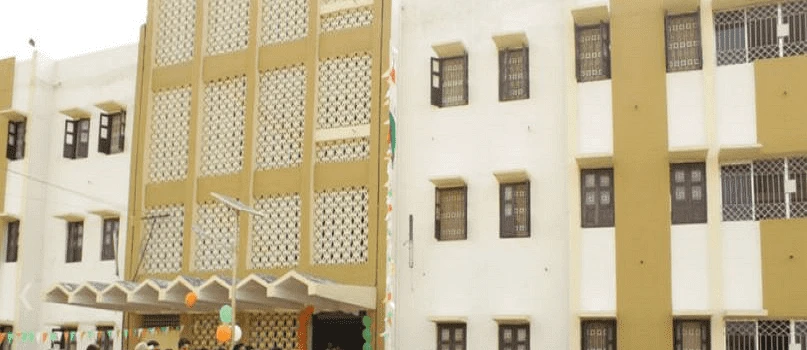
The institute describes a 119-acre permanent campus at Prabandh Vihar in Gaya. Its library, the Pragyata Learning Resource Center, reports approximately 12,000 print books, 35 databases, about 250,000 e-books and 26,000 e-journals. Collection and subscription figures can change, and remote access depends on current institutional access and licensing.
The 2023-24 annual report describes nine air-conditioned hostels with capacity for around 1,300 students, a central dining facility, other dining areas, laundry, RO water, Wi-Fi or LAN, common rooms and recreation facilities. It also mentions medical support and sports options. Those are historical institutional disclosures, not a current room guarantee or service-level promise. Confirm the incoming year’s hostel allocation, charges, hours and access arrangements with the institute. The location and campus setting may suit students looking for a residential academic environment; those who rely on city amenities should consider Gaya’s setting and ask current students about transport and daily routines.
The library’s reported collection includes both print and digital material, which matters for students whose course work relies on databases or journals. Applicants can ask the library which services are available to enrolled students, how off-campus sign-in works and whether a particular database is included in the current subscription. A collection count is not the same as an assurance that every item is accessible without a licence restriction. Similarly, annual-report descriptions of hostels and dining help explain the residential model but cannot answer current allocation or occupancy questions.
The campus decision is partly about study environment and partly about everyday logistics. Prospective students can verify travel from the nearest transport hubs, the institute’s current shuttle or transit arrangements, medical escalation contacts, and whether expected accommodation needs can be met. These details are personal and can change; an applicant should ask the institute directly and, where possible, speak with current students about routines. The sources support the campus and facility descriptions, but not a claim that the location will feel either isolated or convenient to every student.
IIM Bodh Gaya offers several distinct management routes and a self-contained campus. A useful comparison begins with programme fit and entry route, then checks the exact admission year, programme-specific fees, cohort-level placement definitions and the dated external ranking. Its specialised DBM and HHM courses and five-year IPM are separate choices; neither the institute’s overall NIRF result nor MBA placement figures should be assumed to describe every programme equally.
The strongest planning safeguard is to keep each fact attached to its source and period. Use the 2026-28 fee table only for the named schedules, the 2024-26 placement report only for those cohorts, the 2025 NIRF Management result as an annual institutional rank, and the 2023-24 campus inventory as historical reporting. For a future intake, wait for the official notice rather than extending old percentiles, amounts or dates. Before accepting an offer, confirm the current programme notice, full fee schedule, financial-aid decision and campus arrangements in writing.
Loading programmes and admission routes.
Selected ranking categories, with the recorded year beside each result. Open all records for the complete history.
16 published records · Lower numeric ranks are stronger
TOI
MBA
#102024
Find a program, read its fee details and explore the admission requirements.
Summary of the programs shown below. See each program's fee period below.
Specializations
Listed entrance exams
Eligibility: Graduation
Listed entrance exams
Eligibility: 10+2 with 60%
Specializations
Eligibility: Post Graduation
1 exam with cutoff data available
 Aakash Institute
 Accenta
 Adani group
 Aditya Birla Capital
 AGS Health
 Amul
 Aspire Systems
 Bharti Group
 Bisleri
 BNY Mellon
 Byju's
 Cadila Pharmaceuticals Ltd
 Cafe Coffee Day
 CoCubes Technologies Pvt. Ltd.
 Cred
 Crisil
 Crompton
 DTDC
 Ericsson India Pvt Ltd
 Gartner Inc
 JoulestoWatts
 Jubilant Foodworks
 Kent
 Kotak Mahindra Finance
 Maruti Suzuki
 McKinsey & Co
 Merilent Inc.
 Oyo Rooms
 Raam Group
 Reliance
 Safe Express
 SIDBI
 Sodexo India
 Tata Consultancy Services
 Trafigura
 Virtusa
 Wipro
 Zolostays Property Solutions Private Limited



In this preview: 5 photos · 0 videos
Yes, the Indian Institute of Management Bodh Gaya (IIMBG) is considered a good choice for the Integrated Program in Management (IPM). It is one of the few IIMs offering this 5-year integrated program for high school graduates, providing a strong start with the IIM brand and its new campus.
For the General category, the composite CAT cutoff for IIM Bodh Gaya typically requires a percentile in the range of 92-94. Applicants must also meet the sectional cutoffs, which are usually around 70-75 percentile.
The MBA-HHM program at IIM Bodh Gaya has a high placement rate, with graduates securing roles primarily in healthcare consulting and major hospital chains. The average placement package for this program is reported to be around 10-12 LPA.
Yes, staying in the campus hostel is mandatory at IIM Bodh Gaya. Like all IIM programs, the courses at IIMBG are fully residential, requiring students to live on campus.
Yes, IIM Bodh Gaya has a permanent campus. The 119-acre campus was fully operationalized and inaugurated by the Prime Minister in February 2024.
About IIM Bodh Gaya.
Colleges cannot rewrite published reviews. We remove spam and abuse.
Ask the communityWhat should future students know?
Tell us which course you're considering. We'll help you work out the next step.
Get instant Partner access after mobile verification. Your public edits are reviewed before they go live.
Claim this collegeProgramme information: Official source · Source as of: 2026-11-04
Programme information: Official source · Source as of: 2026-11-04
Each route applies only to this named programme and the stated year.
CAT: Common Admission Test · 2026-28
Admission-route evidence: Official source · Source as of: 2026-11-04
Programme information: Official source · Source as of: 2026-11-04
Each route applies only to this named programme and the stated year.
CAT: Common Admission Test · 2026-28
Admission-route evidence: Official source · Source as of: 2026-11-04
Programme information: Official source · Source as of: 2026-11-04
Each route applies only to this named programme and the stated year.
CAT: Common Admission Test · 2026-28
Admission-route evidence: Official source · Source as of: 2026-11-04
4 recorded programmes · 1 institution. Admission years and conditions apply to the named programme.

 Auditorium
 Cafeteria
 Computer Labs
 Medical
 Sports Complex
 Study Library