Loading Admission Guardian content
Loading Admission Guardian content

6 programmes · 1 institution. Check the admission year and requirements.
6 programmes · 1 institution. Check the admission year and requirements.
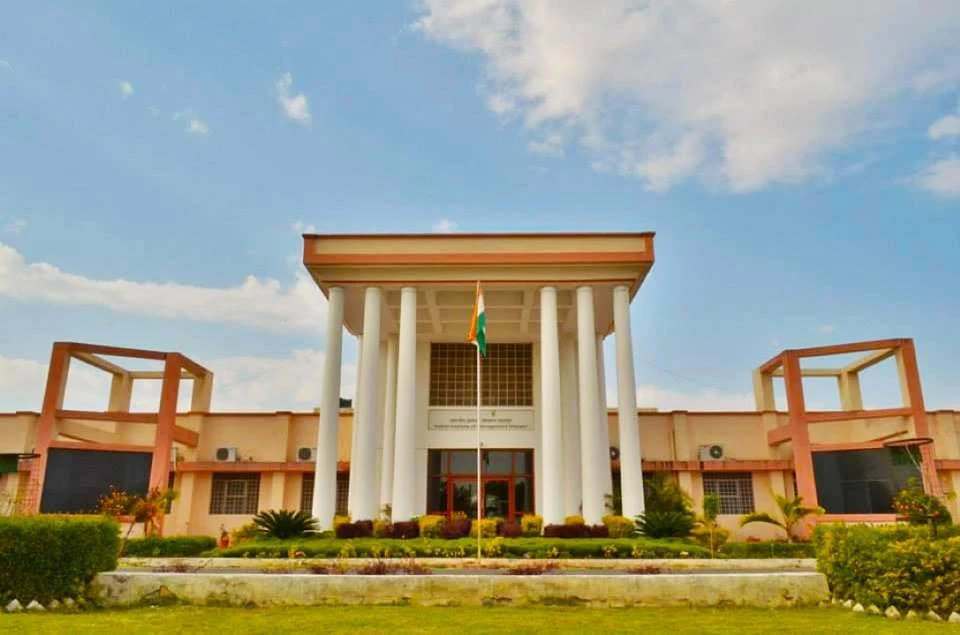
The Indian Institute of Management Udaipur (IIMU) is an autonomous management institute in Balicha, outside Udaipur, Rajasthan. Its permanent campus opened in October 2016. IIMU describes the site as about 300 acres and approximately 8 km from the city centre; its Two-Year MBA student guidance uses 10 km. Both are approximate institutional descriptions, with no route or measurement method stated. The institute describes a residential campus, so students should assess programme-specific housing and travel arrangements before choosing it. IIMU campus · Two-Year MBA student guidance
IIMU is one of India’s Institutes of Management established under the IIM Act, and its teaching activity is anchored at this Udaipur campus. The institute’s contact page gives Balicha, Udaipur, Rajasthan as its address. IIMU says it moved to the permanent site in October 2016; its campus page describes a 300-acre setting, whereas the Two-Year MBA guidance provides its own approximate city-centre distance. These figures are useful for orientation, but they do not describe commute time. Applicants should check the travel instructions for their programme and planned arrival date, particularly because campus facilities are outside central Udaipur. The founding year is left out here because the saved official pages give conflicting dates; a precise year should not be inferred from a profile snippet or from the permanent-campus opening date.
IIMU’s portfolio includes the two-year MBA, the one-year MBAs in Digital Enterprise Management (DEM) and Global Supply Chain Management (GSCM), a blended Executive MBA, a BBA and doctoral study. These are different formats and applicant profiles. The two-year MBA is a residential early-career route; DEM and GSCM are one-year programmes with their own experience and application rules; the EMBA combines online learning with campus modules; and the BBA is a separate undergraduate programme. Check each programme’s current eligibility, selection policy and calendar rather than applying one CAT cutoff or fee to the whole institute. Two-Year MBA admissions · DEM admissions · GSCM admissions · EMBA · BBA
The two-year MBA is the broad general-management option. The admissions page presents a batch-specific selection process and CAT-based shortlisting followed by later assessment stages; its 2026-28 policy should not be treated as a 2027-29 policy unless IIMU publishes that cycle. The latest linked fee schedule is labelled 2027-29, which is a different information date from the admission policy. That mismatch is a reason to confirm both the admissions cycle and the fee terms against the offer, not to assume that one page updates the other.
DEM and GSCM are one-year residential MBAs designed for different professional interests, digital enterprise and supply-chain management. They publish their own application instructions, fees and programme FAQs. Work-experience thresholds, test choices and course schedules should be checked separately for each. IIMU’s institute page reports programme-specific QS recognition for DEM and GSCM, but those results do not make the programmes interchangeable with the two-year MBA.
The EMBA is a blended programme for working professionals, with online study and scheduled campus modules. Its travel and residential arrangements therefore differ from a full-time on-campus degree. BBA applicants are choosing an undergraduate route with separate fees, scholarships and admissions requirements. The institute also offers doctoral study; prospective researchers should look at the current research areas, faculty and PhD notice rather than infer that the professional MBA formats share one academic or employment pathway. Across this portfolio, the practical first step is to select the exact degree and cohort, then follow that programme’s official notice. Check the current programme notice.
IIMU reports AACSB accreditation. Its published rankings cover different scopes: NIRF Management 2025 places the institute at 21 with a score of 61.79; IIMU reports its Two-Year MBA in the QS Masters in Management 2027 band of 201+; the institute reports the FT Masters in Management 2026 result at 83; and DEM and GSCM have separate QS programme results. These measures cannot be collapsed into one institute-wide rank. IIMU’s linked NIRF 2026 submission is not a published 2026 result. Treat accreditation as a separate quality-assurance status and check each result’s edition and programme before comparing offers. IIMU rankings and accreditation · IIMU NIRF results · QS IIMU profile
For an applicant to the two-year MBA, the NIRF Management result and QS Masters in Management band are the closest items in this set to an institution-wide and programme-specific comparison respectively, but neither estimates an individual student’s outcome. NIRF combines institutional measures such as teaching resources, research, graduation outcomes, outreach and perception. QS and the Financial Times use their own programme categories and methods. A rank of 21 in NIRF Management, a QS band of 201+ and an FT position of 83 are not three measurements on one shared scale.
The one-year programmes have separate ranking references. IIMU states that GSCM is No. 1 in India in the QS Business Master’s Rankings: Supply Chain Management 2027; QS’s profile shows the programme’s 2027 global band at 101+. The institute reports DEM recognition in QS Global MBA 2027 without a numeric band on its page. The domestic claim and global band answer different questions. Applicants should preserve that distinction when comparing programme options. The 2026 NIRF submission also needs separate treatment: submission data is not a published result, so it cannot update the 2025 rank.
IIMU publishes placement information by programme and cohort, including separate final-placement and summer-internship reports for the two-year MBA. The final-placement report labelled 2022-24 contains separate salary measures such as fixed yearly cash, guaranteed cash and maximum earning potential. Its auditor letter refers to Batch 2023-24, while the cover and portal use 2022-24, so clarify the graduating-cohort label before using those figures as a year-specific comparison. Fees also vary by programme and intake. Check the latest schedule and distinguish tuition, hostel, mess, deposits and other charges instead of relying on one all-in figure from an older article. IIMU placement reports · Two-Year MBA fees · DEM fees · GSCM fees
The two-year MBA final-placement report labelled 2022-24 records 315 graduates, 298 who sought placement through the institute and 298 accepted offers. Those counts do not mean all 315 graduates participated in campus placement. The report also separates fixed yearly cash, one-time cash, total guaranteed cash and maximum earning potential. For example, the median fixed yearly cash component is ₹13,99,996, while the median maximum earning potential is ₹18,00,000. Maximum earning potential includes components such as performance bonus and specified stock-option amounts; it should not be presented as base salary. The auditor’s letter identifies the MBA Batch 2023-24 even though the PDF cover and portal label it 2022-24. This unresolved label should travel with any comparison based on those figures. The 2023-25 summer-placement report describes internships, not the final salary outcomes of that cohort. Read the relevant placement page for its complete component definitions, denominators and caveats.
Fees also need the same programme-and-cohort discipline. The two-year MBA page labels its current schedule for the 2027-29 batch and lists term totals that sum to ₹22,02,750. It separately shows a ₹1,00,000 commitment payment at offer acceptance and notes that first-year tuition is adjusted for that fee. Before budgeting the amount as a final out-of-pocket total, reconcile the offer payment with the first term bill. The schedule includes programme charges such as hostel and mess in specified terms, and the dates span June 2027 to December 2028.
DEM and GSCM publish their own 2027-28 schedules. Their payment pages show ₹24,41,353 in a schedule while a separate breakdown lists ₹24,11,353 before the caution deposit; the commitment fee and refundable deposit also require reconciliation. The mess is separately billed by vendor according to consumption. These programme pages are therefore more useful than a generic “IIMU fees” total, but an applicant should confirm the reconciliation with the programme office before payment. Scholarship eligibility and assistance also vary by degree, and approval should not be assumed when estimating net cost.
IIMU lists classrooms, a 24-hour Learning Centre, hostels, dining facilities, sports spaces and student services on its Balicha campus. The Two-Year MBA guidance describes mandatory on-campus residence and mess for the students covered by that page. The EMBA FAQ instead describes boarding and lodging during on-campus modules, with participants responsible for travel. GSCM materials list a 24/7 medical centre, but the published information does not specify emergency transport or specialist coverage. Confirm the exact residence, meal, healthcare and facility-access terms for the programme in your offer. Campus room counts and amenities are institution-level descriptions, not a guarantee of allocation to a particular student. IIMU campus · Two-Year MBA student guidance · EMBA FAQ · GSCM FAQ
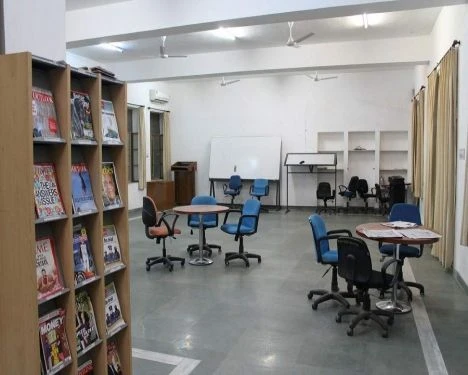
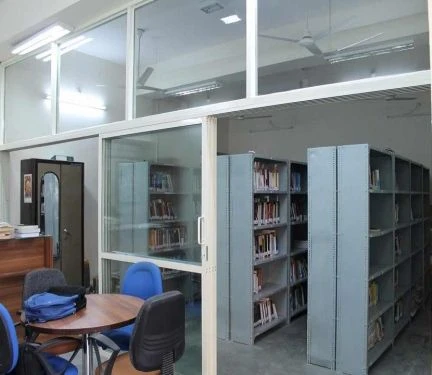
The campus page lists 21 classrooms with a combined stated seating capacity of 1,333, an auditorium with 330 seats and a dedicated EMBA studio. It describes a Learning Centre open around the clock with seating for 200. These counts indicate the scale of facilities described by the institute; they are not guarantees of a particular room, seat or study-space reservation. The library page separately lists physical and digital materials, including books, journals, databases, case studies and research tools. Access to licensed digital resources may depend on an IIMU account even where the building itself is open.
Residential inventory is similarly best read as campus-level context. IIMU lists 11 hostel blocks with 718 standard rooms and four executive-room blocks with 124 rooms, alongside common rooms, dining space and canteens. The same page says housing is available for more than 900 students. It does not allocate these room types to each programme or intake. The Two-Year MBA guidance describes mandatory residence and mess for regular and exchange students under that policy. The EMBA guidance instead covers boarding and lodging during on-campus modules. Applicants should ask which room type and meal arrangements apply to their offer rather than assuming the same residential terms for every degree.
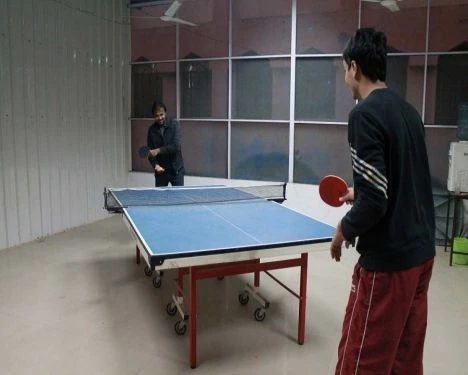
IIMU also lists indoor and outdoor sports facilities, gyms, yoga and dance rooms, a music room and a clubhouse. GSCM’s programme FAQ lists a 24/7 medical centre, but the available source does not specify specialist coverage or emergency transportation. Campus pages describe rainwater harvesting, linked lakes, solar power, decentralised wastewater treatment, vermicomposting and biogas, with further development toward self-sufficiency stated as a goal. These are institute descriptions, not independently measured performance figures for a current year. For a residential decision, compare the written services and costs with your own health, accessibility, diet and travel needs.
Loading programmes and admission routes.
Selected ranking categories, with the recorded year beside each result. Open all records for the complete history.
36 published records · Lower numeric ranks are stronger
IIRF
Management · public
#162023
Outlook
Management · public
#72020
Outlook
MBA · public
#82020
Find a program, read its fee details and explore the admission requirements.
Summary of the programs shown below. See each program's fee period below.
Showing 5 courses
Specializations
Eligibility: Graduation with 50%
Listed entrance exams
Eligibility: Graduation + CAT/GMAT/GRE
Specializations
Listed entrance exams
Eligibility: Graduation with 50% + CAT
Specializations
Listed entrance exams
Eligibility: Graduation
Specializations
Eligibility: Post Graduation with 55%
1 exam with cutoff data available
 Accenture
 Accenture Strategy
 Adani group
 Aditya Birla Capital
 Amul

Yes. According to its IPRS audited reports, the Indian Institute of Management Udaipur (IIMU) consistently achieves 100% placement for its MBA program batches.
IIM Udaipur is generally considered the leader in research and academic rigor among these three. While IIM Trichy and IIM Ranchi are comparable in placements, IIMU's audited reports give it a slight edge in terms of trust and transparency.
The Rural Immersion program at IIMU is a mandatory one-week experience where students live in villages. They work with NGOs to understand and engage with the "bottom of the pyramid" market.
Yes, the one-year MBA programs, particularly the Digital Enterprise Management (DEM) program, are considered worthwhile for experienced professionals looking to pivot into fields like Tech-Product Management or Analytics. The average package for these programs is higher than that of the two-year MBA.
The attendance policy at IIM Udaipur is very strict. Most courses require 80% attendance, and falling below this threshold typically results in a grade drop or a failing "F" grade.
About IIM Udaipur.
Colleges cannot rewrite published reviews. We remove spam and abuse.
Ask the communityWhat should future students know?
Tell us which course you're considering. We'll help you work out the next step.
Get instant Partner access after mobile verification. Your public edits are reviewed before they go live.
 Bajaj Auto
 BNY Mellon
 BPCL (Refinery)
 Capgemini
 Car Dekho
 Casio
 Centrum Housing finance
 Cisco
 Cognizant
 Cummins India Ltd
 Deshpande Foundation
 Droom
 EnglishEdge
 Future Generali
 Gartner Inc
 General Electric
 Goldman Sachs
 Hindustan Petroleum
 Hindustan Unilever Limited
 HSBC
 ICICI Bank
 KPMG
 Larsen & Toubro ECC Division
 Magic Bricks
 MakeMyTrip India Pvt. Ltd.
 MITHI SOFTWARE
 Namekart
 OfBusiness
 Outlook
 Phoenix Hospital
 Puma
 RBI
 Renault Nissan
 Samsung
 Secure Meters Ltd
 Sesa Goa
 Sodexo India
 Sutherland
 TAFE
 Tata Capital
 Titan
 Vedanta
 Wonder Cement
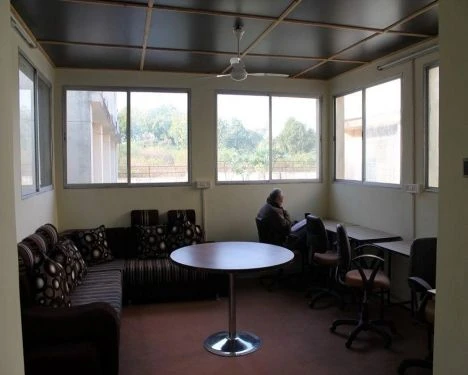
In this preview: 5 photos · 0 videos
Programme information: Official source · Source as of: 2026-11-04
Programme information: Official source · Source as of: 2026-11-05
Each route applies only to this named programme and the stated year.
CAT: Common Admission Test · 2027-28
Admission-route evidence: Official source · Source as of: 2026-11-05
GMAT: Graduate Management Admission Test · 2027-28
Programme information: Official source · Source as of: 2026-11-05
Each route applies only to this named programme and the stated year.
CAT: Common Admission Test · 2027-28
Admission-route evidence: Official source
Programme information: Official source · Source as of: 2026-11-05
Each route applies only to this named programme and the stated year.
CAT: Common Admission Test · 2027-28
Admission-route evidence: Official source
Programme information: Official source · Source as of: 2026-11-04
Programme information: Official source · Source as of: 2026-11-04
Each route applies only to this named programme and the stated year.
CAT: Common Admission Test · 2026-28
Admission-route evidence: Official source · Source as of: 2026-11-04
6 recorded programmes · 1 institution. Admission years and conditions apply to the named programme.
Admission-route evidence: Official source · Source as of: 2026-11-05
GRE: Graduate Record Examinations · 2027-28
Admission-route evidence: Official source · Source as of: 2026-11-05
GMAT: Graduate Management Admission Test · 2027-28
Admission-route evidence: Official source · Source as of: 2026-11-05
GRE: Graduate Record Examinations · 2027-28
Admission-route evidence: Official source · Source as of: 2026-11-05
GMAT: Graduate Management Admission Test · 2027-28
Admission-route evidence: Official source · Source as of: 2026-11-05
GRE: Graduate Record Examinations · 2027-28
Admission-route evidence: Official source · Source as of: 2026-11-05
 Auditorium
 Cafeteria
 Computer Labs
 Gym
 Hostel
 Medical

 Sports Complex
 Study Library