
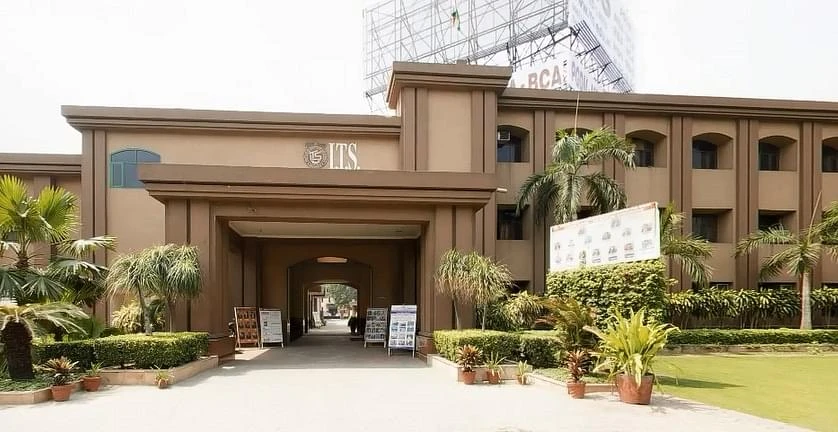

 Auditorium
 Cafeteria
 Computer Labs
 Gym
 Hostel
 Sports Complex
 Study Library
ITS UG Campus describes a set of academic, residential, health and recreation facilities at its Mohan Nagar campus in Ghaziabad. The strongest practical details published are the library and computing resources, named auditoriums and seminar halls, separate hostels, on-campus medical staff and sports facilities. The figures below come from ITS’s own facility pages and are not an independent facilities audit. Hours, booking rules, current capacity, fees, accessibility provisions and many service conditions are not stated; confirm those details before relying on them for a daily schedule or budget.
Study and computing resources
The library page says the collection contains more than 40,000 books and over 160 journals, including 73 international journals. It describes digital and multimedia content, an online journal subscription to EBSCO, an Online Public Access Catalogue, and services named E-Bodh, Capital Line and DELNET. The page presents the library as serving students across programmes, but does not state opening hours, borrowing limits, journal-by-journal access, off-campus login conditions, seating capacity or the date of its collection count. If a particular database or book is important to your course, ask the librarian whether it is currently subscribed and available to BBA/BCA students.
ITS’s computer and IT infrastructure page describes seven specialized computer laboratories and more than 480 computer systems. It names labs for database management systems, web technologies, Internet of Things, networking, communication systems and big-data analytics, and says campus connectivity is 500 Mbps with Wi-Fi across academic and administrative blocks. These figures are institution-published; the page does not specify how many machines are reserved for each course, the operating hours, software versions, student-to-system ratio during practicals or whether bandwidth is shared campus-wide. BCA applicants should verify lab access during regular classes and project work rather than assuming every student has a dedicated system.
Teaching, seminars and events
The auditorium and seminar-hall page identifies two air-conditioned auditoriums: Chanakya Auditorium with 600 seats and Dronacharya Auditorium with 300 seats. It also lists two air-conditioned seminar halls with seating for 150 each. ITS says the rooms have audio-visual equipment, LCD projectors, large display screens and Wi-Fi, and are used for seminars, conferences, guest lectures, workshops, training, presentations and cultural activities. The listed capacities help describe the venues, not how often a student can attend events or whether an event is part of a course. No public schedule or student access policy is stated on this page.
Hostel and residential arrangements
The hostel page names separate on-campus accommodation for girls at Durga Halls and boys at Eklavya Halls. It describes dedicated wardens and support staff, Wi-Fi, CCTV cameras and security guards day and night, and lists laundry, phone, entertainment, photocopying and mess facilities. This is useful evidence that ITS describes residential accommodation on campus, but it does not establish room availability for a particular intake. The page does not give current hostel or mess charges, room occupancy, eligibility, application deadlines, curfew, visitor rules, accessibility arrangements or the terms for withdrawing a booking. Ask for the current written residence handbook and total annual cost, including deposits and meals, before comparing a hostel place with private accommodation.
Health, insurance and sport
ITS’s medical-facilities page says the campus has a medical officer and that general physicians and dentists are available for students’ immediate health needs. It also mentions a hospital across the street, a group personal accident insurance policy and wellness programmes. The page does not publish clinic hours, emergency-response arrangements, insurance coverage limits, exclusions, claims contact or whether consultations and treatment incur charges. “Hospital across the street” is the institute’s description; it is not a substitute for confirming the hospital’s identity, services or emergency access. Students with ongoing treatment needs should request the current medical and insurance documents directly.
The sports-complex page lists badminton, table tennis, chess, carom, cricket, volleyball and basketball. ITS says indoor and outdoor activities and in-house, intra-college and inter-college competitions are organised; it also describes separate gyms for boys and girls and a full-time fitness trainer. The page does not state the gym timetable, equipment inventory, sports-club selection process, membership charges or whether coaching is available for every listed sport. Treat the list as a statement of facilities, not a guarantee of open access at any hour.
Food and campus access systems
The cafeteria page identifies an on-campus Bikano eating point offering snacks, beverages and meals, and a Mother Dairy outlet. It says the eating point stays open until late, but does not define “late,” publish a timetable, menu, prices, dietary or allergen information, or clarify whether hostel mess meals are included in any current residential charge. Ask for current meal arrangements and prices if food cost or timing affects your decision.
ITS also describes an AI-enabled facial-recognition access-control system for students, faculty, staff and authorised visitors. The page frames it as a contactless identity and entry system. It does not publish information about enrolment, data retention, access logs, alternatives for people unable to use facial recognition, correction procedures or privacy safeguards. Applicants who need an accommodation or want to understand how biometric data is handled should request the campus policy before registration.
What to verify before choosing
The facility pages give a useful starting list, but most are not dated to the 2027-28 intake. Confirm that the listed services are operating at the Mohan Nagar UG Campus, which student groups can use them and what charges apply. For accommodation, request the room and mess tariff, availability and current rules. For academic resources, check library hours, databases, lab schedules and software access. For health support, request clinic hours and the accident-policy document. For sport and fitness, ask about access hours and any selection or membership conditions. For dining, check the actual opening times and menu prices. For facial-recognition entry, request the written data and accommodation policy.
These are questions about current operating terms, not evidence that a listed facility is absent. ITS’s pages establish the amenities and specifications it reports; they do not independently verify service quality, year-round availability or how each facility is used by BBA and BCA students. A campus visit or a written response from the UG office can resolve the remaining practical details before you budget or commit.