Loading Admission Guardian content
Loading Admission Guardian content

2 programmes · 1 institution. Check the admission year and requirements.
2 programmes · 1 institution. Check the admission year and requirements.
IIBS is a Bengaluru management institute whose current admissions material distinguishes two PGDM routes, Prime and NextGen. For a 2027-29 applicant, the practical comparison is not simply “which one has the better label?” It is whether the programme structure, stated entrance route, total academic fee and placement conditions fit your profile and budget. The institute presents both as two-year, full-time study at its Bengaluru Airport Campus. The current fee release lists Prime at ₹11.45 lakh and NextGen at ₹14.45 lakh in total academic charges, with accommodation, transport and other applicable expenses separate. Those are material differences to resolve before comparing placement bands or scholarship mentions.
The evidence on this page is deliberately dated. Admissions and fees follow the institute’s 2027-29 release and current programme page. Placement numbers belong to named cohorts and are not a forecast for a future entrant. Outlook-ICARE results refer to its 2027 ranking categories. Facilities are described from IIBS’s own campus and disclosure pages; an institutional claim is not an independent audit. Applicants should download the current brochure and ask IIBS to confirm any item whose conditions, intake or schedule may have changed after publication.
The two current routes are both described as two-year, full-time programmes at the Airport Campus. IIBS positions Prime around dual specialisations across 17 areas. This format is relevant if you want a broad management core and the option to combine two subject areas. It does not, by itself, establish how many electives run in a given year, the minimum class size for each specialisation or the timetable for switching. Ask for the current curriculum and elective availability before treating every named area as a guaranteed choice.
NextGen is presented as an industry-pathway format with ten named pathways, including technology and professional-service partners. The release also describes a 15-day global immersion for eligible students who meet an 80% attendance condition. That makes it especially important to ask what “eligible” means beyond attendance, whether travel and related expenses are included in the stated academic fee, and which pathway is actually offered to your intake. A pathway or partner name is not a guarantee of a particular role, certification or placement.
Both programmes sit within the institute’s PGDM offering. IIBS says its PGDM is AICTE-approved, NBA-accredited and recognised by AIU as equivalent to an MBA. Applicants comparing this with a university MBA should verify the exact award, current approval period and downstream eligibility requirements for their intended employer, further study or public-sector application. Recognition language should be checked against the relevant authority and the specific programme, not inferred from the institute name alone.
The current programmes page names CMAT, first-attempt NMAT, GMAT valid from January 2026 through 18 January 2027, XAT 2027 and CAT 2026 for the 2027-29 Prime and NextGen cycle. Its selection outline says candidates are shortlisted using their profile and entrance score, then considered through Group Discussion and Personal Interview; programme allocation depends on merit, preference and available seats. This is a useful sequence for planning, but it is not a published seat matrix or a promise that a particular preference will be allotted.
IIBS’s general admissions page has a broader test list and states a recognised bachelor’s degree with 50% aggregate, or 45% for reserved categories, while allowing final-year students to apply. Because that page is general and the programme page has a narrower current-cycle list, applicants should ask admissions which test route and eligibility rule govern their chosen programme and intake. Do not assume that every test displayed on a general admissions page is accepted for every current programme or that an older score remains valid.
The institute’s general threshold page also shows test-specific figures, including 50 percentile for CAT and XAT and a MAT composite score of 550 for named 2026-27 administrations. It gives other thresholds for exams on different scoring scales. These are published general-page criteria, not a substitute for a 2027-29 offer or a current programme-specific cutoff. Confirm the minimum accepted score, validity window, attempt policy and document deadline in writing before paying an application fee.
A useful application checklist is therefore: select Prime or NextGen; verify the exam and score validity for that route; prepare graduation and school records; confirm whether final-year applicants need a provisional document; and ask how GD/PI scheduling and programme preference work. Keep copies of the brochure, fee schedule and written clarifications. If a deadline or selection stage is announced later, use the dated notice rather than an undated summary page.
For the 2027-29 cohort, the Prime release lists total academic charges of ₹11.45 lakh: ₹11 lakh tuition plus ₹45,000 in other academic charges. NextGen is listed at ₹14.45 lakh: ₹14 lakh tuition and the same ₹45,000 other academic component. The stated difference is ₹3 lakh across the programme, arising from the tuition component. These are programme totals, not annual tuition figures. Compare them on the same two-year basis when evaluating alternatives.
The institute says hostel accommodation, transport and other applicable expenses are charged separately. Request the current batch’s written schedule for accommodation, deposits, meal coverage, vacation periods, room availability and total payable amount. Do not add a monthly room rate to the academic total without knowing the chargeable months and what services it includes.
Before committing, request a written schedule of instalment dates, refundable and non-refundable components, taxes or deposits, examination charges, immersion expenses and transport. Ask what happens if a student withdraws or defers and which refund policy applies to the exact admission year. The current fee release does not make every ancillary item part of its listed total. A lower academic fee can still produce a higher overall budget if accommodation or travel differs, so compare the amount payable over the full course rather than the headline tuition alone.
The Prime 2027-29 notice says merit scholarships are available for eligible applicants, but does not give an award amount, cutoff or detailed award process. It also mentions acceptance of selected state student credit-card schemes. These statements establish that avenues exist; they do not establish that every applicant receives aid or how much a candidate should deduct from the published fee.
A separate NextGen notice for a December 2026-28 batch describes a flat ₹2 lakh scholarship opportunity for eligible students. It specifies at least 60% in Class 10, Class 12 and graduation and at least 60 percentile in one of its listed tests, while noting limited seats. That offer is tied to the named batch and criteria. It should not be applied automatically to Prime 2027-29 or another NextGen intake. Ask for a written confirmation of your eligibility, award decision, payment timing and whether the award is deducted from an instalment or reimbursed later.
IIBS also published a 2026 Karnataka PGCET scholarship opportunity described as 50% for qualifying MBA applicants, subject to score, academic record, admission assessment, guidelines and limited availability. This is conditional and associated with that stated route and year; the page also signals a separate KEA fee structure. Confirm whether it applies to your exact programme and intake and whether the institute’s fee schedule or the counselling authority’s schedule controls your payable amount. Do not combine separate scholarship offers unless the institute confirms they are stackable.
IIBS’s current announcement reports a ₹72 lakh per annum highest package for PGDM 2025-27 while placements were still continuing. It reports a ₹62 lakh highest and ₹11.2 lakh average for the completed PGDM 2024-26 cohort. The release does not state a denominator or averaging method alongside those headline figures. These measures are not directly interchangeable: one is an interim maximum for an ongoing season; the other includes a reported cohort average and maximum.
The same 2027-29 release states a Prime placement-opportunity band of ₹8-12 lakh per annum and a conditional NextGen opportunity band of ₹12-25 lakh per annum, subject to programme conditions, student eligibility and employer selection. Treat these as institute-stated programme terms, not an individual salary guarantee. The conditions and the meaning of “opportunity” should be obtained from the current brochure or written admissions guidance. A package maximum says little about the typical result unless the cohort size, eligible student count, placed count, median, role mix and pay components are also disclosed.
When speaking with the placement office, ask for the latest completed PGDM cohort report and distinguish domestic from international compensation, fixed pay from variable pay, CTC from take-home, and offers from students placed. Ask how many students were eligible, participated and placed, and how duplicate offers or withdrawn offers are counted. Request role and sector distributions and the proportion of sales or business-development positions if that affects your career plans. These questions help test whether a headline aligns with the roles you want.
The separate yearly-placement page labels some of its figures as undergraduate placements for BBA, BCA, B.Com and BA. Those rows should not be used as postgraduate PGDM or MBA outcomes. Likewise, an ongoing placement maximum should not be treated as the final result for that cohort. Compare like with like: same programme, same graduating cohort, same currency and same reporting period.
Outlook-ICARE’s 2027 table places IIBS third among 19 private business schools in Bengaluru, with a score of 75.33. Its national list of the top 200 private B-schools places IIBS at 23, also at 75.33. These are two different comparison groups from the same publisher, not two separate measures of a student’s likely outcome. A city ranking answers a different comparison question from a national private-school list.
Outlook’s Gold Standard institutions page is a separate alphabetical list. IIBS appears as item nine, but that sequence is not a ninth-place rank. This distinction matters because institutional marketing may shorten a label or omit the comparison group. Check the ranking title, year, category, geography and whether the number is a rank or list position before repeating it in a comparison table.
Rankings can help shortlist institutions, but they should sit alongside curriculum, total cost, outcomes with clear denominators, location and your intended role. A 75.33 publisher score is not a 75.33% employment rate, and a rank difference is not a measured difference in classroom quality. Where an institute links submitted data to a ranking framework, distinguish a data submission from a final rank issued by that ranking authority.
IIBS identifies its Bengaluru Airport Campus at Muthugadahalli near Kempegowda International Airport. Its mandatory disclosure lists the airport at about 10 km and Bengaluru City Railway Station at about 33 km. These are stated distances, not journey times. For students commuting from central Bengaluru, the relevant question is the door-to-door route at class hours, shuttle schedule and monthly transport cost, not just proximity to the airport.
The institute lists computer laboratories, an auditorium, cafeteria and reading room. Ask about lab software, opening hours during examinations, library access and whether facilities remain available during internships or project periods. A facility list confirms what the institution says it provides, but does not establish operating hours, capacity or access rules for a particular student.
IIBS says hostel accommodation with food is available for men and women in separate arrangements and lists separate wardens. Its disclosure describes medical facilities and a doctor on call but does not specify response hours. The hostel fee page is not batch-labelled, so confirm current room availability, meal plan, security arrangements and transport before assuming a place is included or reserved. Older institutional quality-assurance material describes sports and accessibility features for 2023-24; treat that as dated documentation and verify present facilities during a visit.
IIBS may merit a closer look if you want a full-time management programme with a structured campus setting, named specialisation or industry-pathway options, and you are comfortable asking the institute to document outcome and cost details. Prime’s lower listed academic total and dual-specialisation model differ materially from NextGen’s industry pathways and higher fee. The current admissions release also describes different opportunity bands for placements, each with conditions. Those distinctions are more useful for a decision than a generic “MBA college” label.
Before paying, make a one-page comparison with four verified items: the exact award and programme; your accepted entrance route and selection stages; the full two-year payable budget including housing and transport; and placement data for the latest completed cohort with counts and role mix. Add scholarship amounts only after you have a written award decision for your specific batch. Visit the Airport Campus or arrange a live student conversation to test commute, accommodation and access to facilities.
The published evidence leaves important questions open: placement denominators and median salary for the named recent cohorts, current hostel totals, exact scholarship award process for Prime 2027-29, and route-specific score cutoffs for this cycle. Those gaps are reasons to request current documents, not reasons to substitute an online anecdote or an older page. Keep the institute’s written answers with the brochure and fee schedule so you can compare the same terms against another offer.
Loading programmes and admission routes.
Selected ranking categories, with the recorded year beside each result. Open all records for the complete history.
2 published records · Lower numeric ranks are stronger
Find a program, read its fee details and explore the admission requirements.
Summary of the programs shown below. Total course fee
Showing 5 courses
Specializations
Eligibility: 10+2
Specializations
Eligibility: 10+2
Specializations
Eligibility: 10+2
Specializations
Listed entrance exams
Eligibility: Graduation with 50%
Specializations
Listed entrance exams
Eligibility: Graduation with 50%
5 exams with cutoff data available
 Accenture
 Aircel
 AK Capital
 Alfaraa
 Amazon
 American Express
 Ample Technologies
 Aryaka Networks India Pvt. Ltd.
 Ascent Circuits
 Asian Paints
 Axis Bank
 Axis Securities Limited
 Bajaj Allianz
 Berger
 Bharat Logistics
 Blue Dart
 Cafe Coffee Day
 Capgemini
 Ceasefire Industries
 Citi Bank
 Coffee Day Beverages
 Columbia Asia
 Cynet System Inc.
 DNA India
 First Gulf Bank
 FM Radio City
 Genpact
 Global Data
 Goldman Sachs
 HCL Technologies
 HDFC Bank
 IBM
 ICICI Bank
 IndusInd Bank
 InMobi
 ITC
 Jaro Education
 Knowlarity Communications India Pvt Ltd
 Kotak Mahindra Bank
 Kotak Mahindra Ltd.
 Larsen & Toubro Limited
 Mashreq Bank
 Orange
 Practo
 Reliance communication Pvt Ltd
 Reliance Retail
 Silicon Meadows
 Square Yards
 Standard Chartered
 Tata Teleservices
 TCS
 TNS India
 Wipro
 Zycus
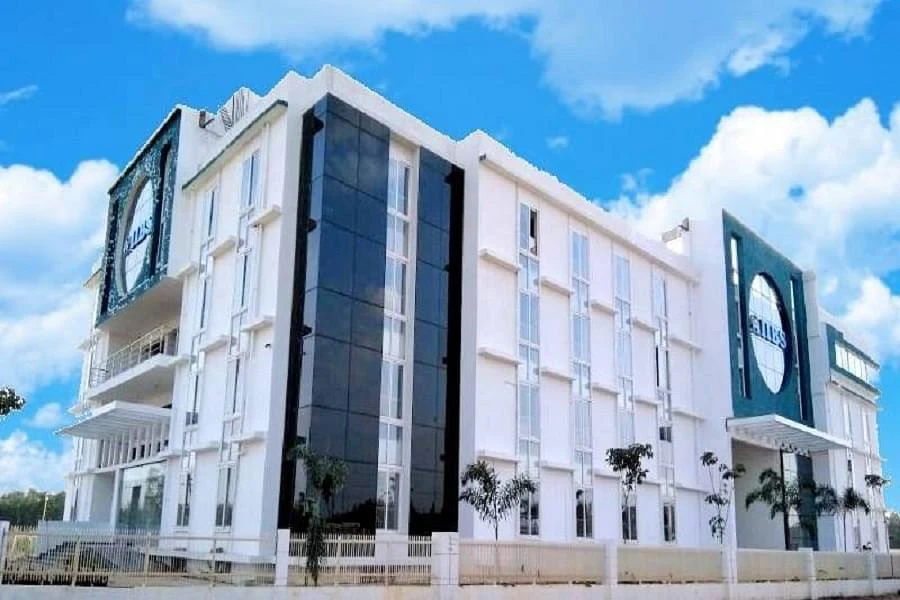




In this preview: 5 photos · 0 videos
IIBS Bangalore is considered a good Tier-3 B-school for students with moderate entrance exam scores, typically in the 50-70 percentile range. The institute is noted for its strong focus on industry certifications, though its placement roles are reported to be largely sales-oriented.
While the institute officially cites an average package of around 9 LPA, the median package reported to NIRF is INR 6.5 LPA. Most student reports indicate that actual offers typically range between 4.5 LPA and 6 LPA.
Yes, the Post Graduate Diploma in Management (PGDM) program at IIBS is approved by the All India Council for Technical Education (AICTE) and is also NBA accredited. This accreditation makes the PGDM equivalent to an MBA for purposes of government employment and higher studies.
The hostel for the Airport Campus is located off-campus at Ozone Urbana. It provides modern amenities including a gym and good security. However, reviews note that the food quality is average, and students must use the college bus service for the daily commute to the campus.
Yes, IIBS Bangalore includes a free laptop and an international study tour (typically to destinations like Dubai or Singapore/Malaysia) as part of the total fee package for students enrolled in its MBA/PGDM programs.
About IIBS Bangalore.
Colleges cannot rewrite published reviews. We remove spam and abuse.
Ask the communityWhat should future students know?
Tell us which course you're considering. We'll help you work out the next step.
Get instant Partner access after mobile verification. Your public edits are reviewed before they go live.
Claim this collegeProgramme information: Official source · Source as of: 2026-11-05
Each route applies only to this named programme and the stated year.
CAT: Common Admission Test · 2027-28
Admission-route evidence: Official source · Source as of: 2026-11-05
CMAT: Common Management Admission Test · 2027-28
Admission-route evidence: Official source · Source as of: 2026-11-05
GMAT: Graduate Management Admission Test · 2027-28
Admission-route evidence: Official source · Source as of: 2026-11-05
NMAT: by GMAC · 2027-28
Admission-route evidence: Official source · Source as of: 2026-11-05
XAT: Xavier Aptitude Test · 2027-28
Admission-route evidence: Official source · Source as of: 2026-11-05
Programme information: Official source · Source as of: 2026-11-05
Each route applies only to this named programme and the stated year.
CAT: Common Admission Test · 2027-28
Admission-route evidence: Official source · Source as of: 2026-11-05
CMAT: Common Management Admission Test · 2027-28
Admission-route evidence: Official source · Source as of: 2026-11-05
GMAT: Graduate Management Admission Test · 2027-28
Admission-route evidence: Official source · Source as of: 2026-11-05
NMAT: by GMAC · 2027-28
Admission-route evidence: Official source · Source as of: 2026-11-05
XAT: Xavier Aptitude Test · 2027-28
Admission-route evidence: Official source · Source as of: 2026-11-05
2 recorded programmes · 1 institution. Admission years and conditions apply to the named programme.

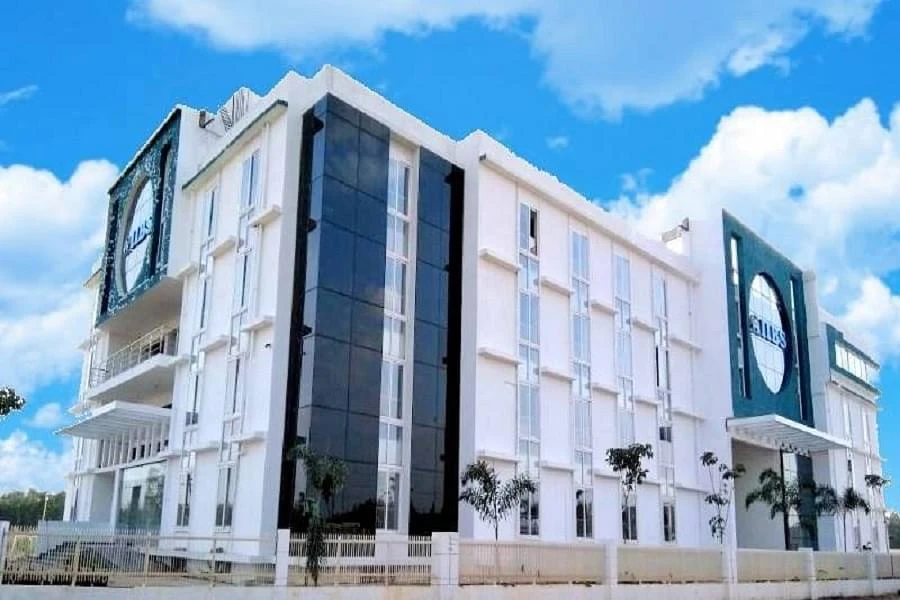
 Auditorium
 Cafeteria
 Computer Labs
 Hostel
 Medical
 Science Labs
 Sports Complex
 Study Library