
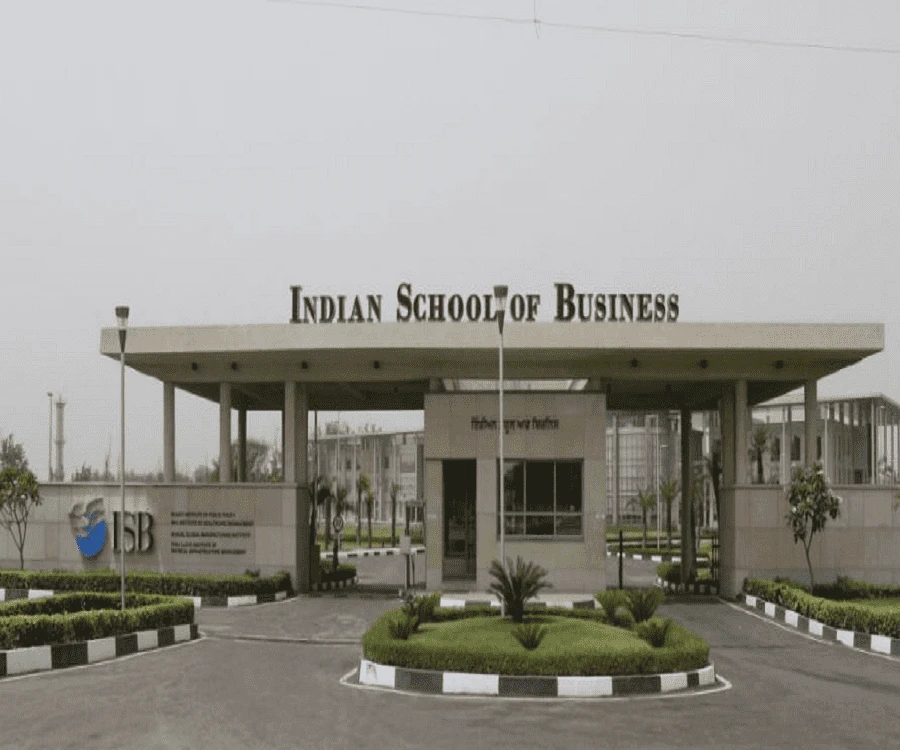

Start with the programme and its application cycle
ISB’s PGP and PGP YL have separate scholarship pages, applicant profiles and fee schedules. A scholarship shown for one route should not be assumed to transfer to the other, even when the eligibility bands look similar.
The one-year PGP is the experienced-professional route. Its current admissions page lists the Class of 2028 and the official aid page says approximately 25% of PGP students receive financial support each year. The 20-month PGP YL is designed for applicants with 0–2 years of experience and is offered at Hyderabad; its current admissions page is for the Class of 2027–29. PGP YL’s scholarship page reports that up to 40% of its class receives scholarship support. Those percentages describe school-reported proportions, not an individual applicant’s probability of receiving an award.
Before estimating your net cost, identify the exact programme and cohort on the application portal. The PGP page’s waiver table includes several categories and donor-funded awards, while PGP YL lists its own merit, need-cum-merit and donor options. Award availability, criteria and amounts can change. The live page and the written offer for your batch control your decision; an older category list is not a promise that the same award will be offered in the next class.
PGP Class of 2028: merit, need and focused awards
ISB says its PGP aid spans nine scholarship categories, including merit, need-cum-merit, merit-by-diversity, armed-forces and AIESEC categories. The page separately lists ten donor-funded categories across merit, need and diversity. This gives applicants several routes to check, but the number of categories does not show how many awards are available in each category or how competitive a particular award will be.
For the general merit route, the page says all applicants are considered automatically for available merit-linked tuition waivers. Its table lists the ISB Merit Waiver and Merit-by-Diversity Waiver at 25%–100% of tuition, with no separate application. “Automatic consideration” does not guarantee an award: the page says the diversity route depends on the candidate’s educational or professional background and merit, and awards remain subject to ISB’s selection criteria.
The need-based table gives two family-income bands, counting the applicant’s pre-ISB income: up to and including ₹8 lakh is listed for a 100% tuition waiver; above ₹8 lakh and up to ₹20 lakh is listed for a 75% tuition waiver. Both rows ask for an essay and proof of income for the applicant and family. Read the thresholds exactly as shown and confirm the financial documents, income definition and application steps for your cohort before submitting.
The official PGP page also lists focused awards. It says an Armed Forces Scholarship covers 50% of tuition for up to six veterans who transitioned to civilian life within the previous two years, or officers with a release order; a separate application is required. It lists a full scholarship for up to three serving IAS officers with at least two years of service and an undertaking to return to government service after the PGP, also requiring a separate application. Applicants in these groups should confirm current evidence requirements and deadlines rather than relying on a category name alone.
The donor table contains many other awards, with different application routes. Some rows say no separate application is required; others ask for an essay or supporting documents. Use the current PGP page’s “How to Apply” column for the award that fits your profile. The page also says an applicant can receive only one tuition waiver, so do not add several percentage awards together when estimating a possible reduction.
PGP YL Class of 2027–29: how the current aid routes work
The PGP YL page describes merit awards based on the overall selection evaluation, including education, test scores, essays, recommendations, accomplishments and interview performance. It says merit scholarships can cover up to 100% of tuition and that all applicants are considered for merit awards by default.
For need-cum-merit support, the current page lists up to a 100% tuition waiver for applicants with family income up to and including ₹8 lakh, and up to a 75% tuition waiver when family income is above ₹8 lakh and up to ₹20 lakh. Applicants must apply and supply the required documentation. The page says the need-cum-merit form becomes available after the programme application has been submitted, with final decisions made after a scholarship interview. It also says each applicant is eligible for only one of the tuition waivers.
ISB reports that up to 40% of the PGP YL class receives scholarship support. This is a programme-level ceiling stated by the school, not a forecast for a particular applicant or a guarantee that 40% of every award category will be funded. The page reserves the right to add, withdraw or modify scholarship criteria, amounts and counts, so verify the conditions attached to the live Class of 2027–29 application.
The PGP YL page also displays donor-supported awards explicitly labelled as scholarships awarded to Co’27. That table is cohort-specific historical evidence. Its listed donor amounts, beneficiary counts and eligibility terms should not be represented as confirmed awards for the Class of 2027–29. Check whether a donor programme has been renewed and whether a separate application is required before building it into a current budget.
Work out what a tuition waiver changes
For the PGP academic year 2027–28, ISB lists a programme fee of ₹34,48,000 plus GST on the shared-accommodation, single-instalment basis. For PGP YL’s 2027–29 class, the published programme fee is ₹25,60,000 plus GST on the same accommodation and payment basis. These are programme fees, not the tuition-only bases used in several scholarship rows.
That difference matters when reading “100% tuition waiver.” It means the stated tuition component under that scholarship’s rules; it does not establish that the full programme fee, GST, deposit, accommodation or miscellaneous charges are all covered. The fee pages list other fee components and, for PGP YL, separately mention a refundable security deposit and miscellaneous expenses. ISB does not publish a tuition-only rupee split beside these fee amounts, so this guide does not convert a percentage waiver into a rupee award.
Use a conservative budget until an award letter states the covered components:
- Start with the programme and cohort fee listed on the official page.
- Add GST and other payable amounts only from the current written fee statement.
- Apply a scholarship percentage only to the component named in the award terms, usually tuition.
- Keep refundable deposits, accommodation, course material and miscellaneous items separate unless the award letter expressly includes them.
- Check whether the award is a waiver or refund, when each tranche is applied, and what academic or service conditions can affect it.
A bank education loan is a separate financing choice, not a scholarship or fee reduction. ISB lists lender options on both financial-aid pages, but bank sanction, interest, collateral, repayment terms and loan eligibility are governed by the lender. Compare the signed loan offer separately from the ISB scholarship decision.
Practical next step: submit the programme application, then follow the scholarship page’s separate steps for awards that require an essay, income proof or a post-submission form. If you qualify for a focused category such as Armed Forces or serving IAS on PGP, confirm its separate application route. Ask ISB to confirm your award’s amount, covered fee components and disbursement dates in writing before reducing your financing plan.