Loading Admission Guardian content
Loading Admission Guardian content
1 programme · 1 institution. Check the admission year and requirements.
1 programme · 1 institution. Check the admission year and requirements.
Jaypee Institute of Information Technology (JIIT) is a deemed-to-be university in Noida with academic activity associated with Sector 62 and Sector 128. The university says it was established in 2001 and received deemed-to-be-university status in 2004. Its portfolio spans engineering, science, computer applications, design, commerce, management and doctoral study. For a prospective student, the main task is to match the exact programme and campus with the applicable admission route, current fee schedule and outcome data. JIIT’s official sources publish useful detail, but many tables are tied to a specific year and should not be read as promises for a later intake.
JIIT’s official About page describes the institution as a deemed-to-be university under Section 3 of the UGC Act, with its establishment in 2001 and deemed status in 2004. The university’s public material names academic and research blocks, student residences, faculty residences, a Learning Resource Centre and Annapurna, its mess facility. Its admissions and facilities pages distinguish Sector 62 and Sector 128. Applicants should confirm which location is associated with their chosen programme and counselling choice; the institute-wide name does not mean that every class or facility is at one campus.
The same official site links to several Jaypee institutions, including JUIT Waknaghat, JUET Guna and Jaypee University at Anoopshahr. They are distinct institutions. JIIT’s 2026 supplementary admissions brochure separates these institutions into different parts and says admission cannot be transferred between them. This matters when reading a brochure, placement page or application portal with “Jaypee” in its name: match the institution named in the section and offer, not just the group name.
JIIT is often considered by applicants comparing private engineering options in the Delhi-NCR region, but its programmes extend beyond B.Tech. It offers undergraduate and postgraduate routes in science, computing, design, commerce and management, along with PhD study. The best fit depends on the student’s subject background and intended course, not only on the university’s engineering profile or one placement headline.
The university’s programme pages and 2026 admissions materials list B.Tech in branches such as Computer Science and Engineering, Information Technology, Electronics and Communication Engineering, Biotechnology and several specialised options. It also lists Integrated M.Tech routes, including CSE and ECE, and subject-specific B.Tech options in areas such as AI and Machine Learning, Robotics and AI, VLSI and applied electronics. Programme names and branch availability can differ between Sector 62 and Sector 128. Use the current programme list and the exact campus row when making choices rather than assuming that every branch is available at both locations.
Other undergraduate programmes listed by JIIT include BBA, BCA, B.Sc., B.Com. and BA Journalism and Mass Communication. At postgraduate level, the official material lists M.Tech, M.Sc., MCA, M.Des, M.Com and MBA programmes. The MBA page describes separate formats, including general MBA, MBA in Artificial Intelligence and Data Science, and MBA in Hospital and Healthcare Management. JIIT also offers PhD study; the admissions brochure directs doctoral applicants to the current institute notice for field-specific requirements and dates.
This range means that admission eligibility is not one university-wide rule. A programme may require particular subjects in Class 12, an entrance score, a qualifying degree or an interview. For example, B.Tech routes use different subject combinations from BBA, BCA or B.Sc. routes; postgraduate programmes may accept different national test scores or direct admission on marks. Read the programme clause for the exact degree and specialisation before paying an application fee.
JIIT’s supplementary brochure for Academic Year 2026-27 described both JEE Main All India Rank and Class 12 merit routes for specified B.Tech and Integrated M.Tech programmes. The brochure set eligibility requirements around qualifying examination subjects and aggregate marks, with different clauses for some specialised programmes. For that cycle, selection through the JEE route used JEE Main 2026 AIR, while the Class 12 route used programme-specific subject combinations and marks. The brochure also described online counselling and programme-choice ordering. These are historical 2026-27 rules; the admissions page now marks that cycle closed.
The university also described lateral entry/direct admission to the second year of B.Tech for specified diploma, B.Sc. and vocational qualifications. Eligibility depended on the qualification, subject or branch match and the programme’s conditions. Other undergraduate courses used routes such as Class 12 marks or CUET-UG, while postgraduate routes differed by course. The 2026 brochure described MBA applicants using recognised entrance scores followed by Group Discussion and Personal Interview. M.Tech, MCA, M.Sc., M.Com and M.Des each had their own qualification and test options. Do not assume that an exam accepted for one JIIT programme applies to another.
The 2026 brochure also warned applicants to submit separate forms when they wanted consideration under more than one mode in cases where separate applications applied, and it described document checks and counselling steps. A provisional seat offer had its own payment deadline and required documents. The brochure’s dates, test editions and fee amounts belong to that intake; they do not establish a 2027-28 application window or later eligibility rules. Before applying, verify the newest admissions page, programme brochure and counselling notice. Check the exact institution, campus, branch, accepted exam year, subject combination, application mode and deadline.
JIIT’s official fee page displays separate programme-wise schedules for Academic Year 2026-27 and says admissions for that cycle are closed. In the General Category INR schedule, B.Tech and Integrated M.Tech have first-year annual totals of ₹3.79 lakh, followed by ₹3.98 lakh, ₹4.18 lakh and ₹4.39 lakh across the next years; the integrated table also shows ₹4.61 lakh for a fifth year. B.Tech lateral-entry fees start at year two. The fee page lists different amounts for BBA, B.Com., B.Sc., BCA, M.Tech, M.Sc., M.Com., MCA, M.Des and three MBA formats. A single headline “JIIT fee” therefore cannot accurately describe the whole programme range.
The published schedule separates tuition, development charges, one-time admission charges, application charges and refundable caution money. Hostel charges are separate and vary by room type. For Indian students in 2026-27, the page lists ₹1.35 lakh per semester for a single room or twin sharing with an attached washroom, ₹1.15 lakh for twin sharing, ₹1.05 lakh for triple or four sharing, and ₹95,000 for five or six sharing. The facilities FAQ describes hostel accommodation as limited, so a published room price is not a guarantee of a room offer. The page also has separate schedules for other applicant categories and currencies.
Use the fee page for the exact programme, year and category, then check what is included in the offer. Do not add hostel fees to tuition as if accommodation were compulsory or universally available. The official schedule does not establish a 2027-28 fee, and a later intake may revise both amounts and charge heads. Build a budget from the offer and current schedule, including separate housing, travel, food and personal costs where applicable.
JIIT’s Admission Brochure 2026 gives a campus-labelled placement table for the 2025 graduating batch. For JIIT Noida B.Tech, it reports 697 participating students, 978 total offers and 681 “absolute offers.” The brochure presents these as 140% total offers and 98% absolute offers. The offer count can exceed the number of participants because students may receive multiple offers; the terms should not be converted into a claim that every student was placed or received more than one offer.
The branch table records 481 CSE participants, 711 total offers and 473 absolute offers; 136 ECE participants, 165 offers and 133 absolute offers; 52 IT participants, 75 offers and 51 absolute offers; and 28 Biotechnology participants, 27 offers and 24 absolute offers. The brochure separately lists integrated programmes, M.Tech, M.Sc., MBA and BBA, with their own participant and offer totals. These differences are important: an overall engineering statistic should not be used as the outcome for every course.
For the B.Tech batch row, the same brochure reports an average package of ₹10.76 lakh and median of ₹7.60 lakh. It also displays a ₹94.25 lakh highest package, followed by ₹65.21 lakh and ₹60.44 lakh. The brochure’s salary bands count offers by ranges and companies; they are not a distribution of individual salaries. A median is often more useful than a highest package when comparing typical reported outcomes, but neither statistic predicts an individual student’s result.
JIIT’s live student-placement page describes a central training and placement operation serving JIIT Noida, JUIT Solan, JUET Guna and JU Anoopshahr, and it displays ongoing highlights for the 2026 and 2027 graduating batches. Because the page describes a shared placement function and the visible headline summary is not fully split by institution and programme, this overview uses the separately labelled 2025 JIIT Noida brochure data for campus-specific figures. Recruiter lists and ongoing totals can change during a cycle. Ask for a current campus- and programme-specific report before relying on a later batch result.
JIIT’s scholarship page labels its fee-waiver scheme for Academic Year 2026-27 and displays admissions closed for that year. The page describes merit waivers for B.Tech and Integrated M.Tech based on JEE Main AIR, as well as a Class 12 marks route for selected undergraduate programmes. The published brackets include different waiver percentages at different rank or marks bands. For some top awards, continuation depends on semester CGPA, no backlogs, attendance and disciplinary conditions. The page prints strict boundaries, so applicants should confirm treatment of an exact score boundary rather than infer it.
The same page lists merit schemes for B.Sc., M.Sc., MCA and M.Com, and a separate MBA scheme that combines qualifying-degree marks and CAT percentile. One lower MBA bracket is explicitly limited to students from the Jaypee Higher Education System. JIIT also describes teaching assistantships for eligible M.Tech and M.Des candidates, with a stated monthly amount and academic conditions. Other named schemes include a B.Tech tuition waiver for eligible girl students, a board-topper award, AICTE Tuition Fee Waiver seats and the William Webster Merit-cum-Means Scholarship.
Each scheme has its own programme, income, documentation, merit and continuation conditions. A tuition waiver does not mean that hostel, development or other charges are waived. The published 2026-27 rules should be treated as historical; they do not confirm future eligibility, award counts or deadlines. Check the current scheme page and obtain written clarification on any condition that affects your budget.
JIIT’s official NIRF history page lists Engineering positions of 60 in 2016, 54 in 2017, 70 in 2018, 80 in 2019, 96 in 2020 and 94 in 2021 and 2022. For 2023 the page lists a 101–150 band in the University category; for 2024 and 2025 it lists a 101–150 band in Engineering. The category is part of the result: the 2023 University band is not an Engineering rank, and a 101–150 band does not establish an exact position inside the band.
JIIT’s About page also displays EduRank and uniRank positions for 2025. Those publisher-specific figures are separate from NIRF and should not be combined into a single ranking. The page’s Times Higher Education line names “Jaypee University of Information Technology,” while JIIT is Jaypee Institute of Information Technology; the institution names differ, so this overview does not attribute that THE result to JIIT Noida. For a current ranking comparison, match institution, publisher, category and edition in the original table. A ranking is one context signal; it does not predict admission, course quality for every student or employment outcomes.
JIIT’s official pages name smart classrooms, Wi-Fi, laboratories, a Learning Resource Centre, Digital Learning Centre and specialist spaces such as the VLSI Design and Fabrication Lab, 5G Use Case Lab, Robotics and AI Lab, BioNEST and Quantum Technology Lab. The LRC is described as providing books, e-journals and printed journals in engineering, management and science. The campus facilities FAQ also lists basketball, lawn tennis, badminton, volleyball, football, swimming pools, billiards, squash, table tennis and gyms.
Hostel accommodation is described as limited, with separate boys’ and girls’ hostels and twin-sharing or four/six-bed dormitory options. The university names Annapurna mess, laundry and a first-aid centre. A paid bus service is listed between Sector 62 and Sector 128 and from Golf Course metro station and Okhla Bird Sanctuary to Sector 128. Applicants should verify route times, fees, room availability and the location of facilities for their programme rather than assume they are available at both campuses.
JIIT’s facility summaries report different campus areas and totals for classrooms, laboratories, auditorium capacity and hostels. The FAQ, About page and 2026 brochure do not explain the different bases. This overview therefore uses named facilities and leaves those totals unreconciled. Confirm any capacity figure directly with the university if it affects a campus choice.
JIIT may suit applicants who want a broad university with engineering and computing at its centre, along with science, design, management, commerce and doctoral options. Its official placement reports provide programme-level detail for some graduating cohorts, while NIRF ranks it in the Engineering 101–150 band for 2024 and 2025. At the same time, costs vary by programme and accommodation, hostel availability is limited, and admission rules are cycle-specific. These factors deserve as much attention as a highest-package figure or a ranking band.
Compare the exact course, campus, admission mode and current fee before making a choice. For outcomes, use the relevant programme and cohort, and distinguish total offers from absolute offers, average from median, and campus-specific reports from shared Jaypee placement pages. For facilities, ask where the activity or room is located and whether access is guaranteed. For scholarships, check every eligibility and continuation condition. The most reliable decision comes from the current official programme and offer documents, not a single all-university summary.
Is JIIT Noida the same institution as JUIT or JUET? No. JIIT Noida, JUIT Waknaghat and JUET Guna are separate institutions; their brochure sections and admission offers must not be conflated.
Is the 2026-27 admissions cycle open? JIIT’s admissions page marks the 2026 cycle closed. The reviewed sources do not establish a 2027-28 application window.
How much does B.Tech cost? The official 2026-27 General Category schedule lists B.Tech annual totals from ₹3.79 lakh in year one to ₹4.39 lakh in year four. Hostel and one-time charges are separate, and later-year fees are not confirmed here.
What placement number should I compare? Use the exact programme and cohort. The 2025 JIIT Noida B.Tech brochure row reports a ₹7.60 lakh median and ₹10.76 lakh average for 681 absolute offers; it is historical and not a guarantee.
Can an applicant rely on the listed hostel or scholarship? No individual room or award is guaranteed by the summary page. Hostel availability is limited, and scholarships have separate eligibility, documentation and continuation rules.
Loading programmes and admission routes.
Selected ranking categories, with the recorded year beside each result. Open all records for the complete history.
52 published records · Lower numeric ranks are stronger
Outlook
Engineering · private
#192020
IIRF
Engineering · private
#842024
India Today
Engineering · private
#252024
The Times Of India
Engineering · private
#322024
Find a program, read its fee details and explore the admission requirements.
Summary of the programs shown below. First-year fee
Showing 5 courses
Specializations
Eligibility: Graduation
Specializations
Eligibility: 10+2
Specializations
Listed entrance exams
Eligibility: 10+2 with 75% + JEE Main
Specializations
Listed entrance exams
Eligibility: 10+2 with 75% + JEE Main
Specializations
Listed entrance exams
Eligibility: 10+2 with 75%
1 exam with cutoff data available
 Abyeti Technologies
 Accolite
 Adecco
 Adobe
 Airtel
 Amazon
 Amdocs
 American Express
 Aptara
 Asahi India Glass Ltd.
 Broadcom India research Pvt Ltd
 Byju's
 Cadence Design Systems
 Cavisson System
 Cisco
 Clappia
 Codenation
 Cognizant
 Collegedunia Web Pvt. Ltd
 Conduent
 Crowe Horwath
 Cube Highways
 Cvent India Pvt. Ltd
 Dailyhunt
 Delhivery
 Deloitte
 DXC Technology
 Ecom Express
 Elitmus
 Epam
 Ericsson India Pvt Ltd
 Estee Advisors Private Limited
 ExpertLancing Research Services
 EY - Parthenon
 Freyssinet Prestressed Concrete Company Ltd
 FundWave
 Genpact
 Goldman Sachs
 Grail Research
 Grappus
 HashedIn Technologies
 HCL Technologies
 Hitachi consulting
 Icertis
 IDS Infotech
 IndiaMart Company
 Infoedge
 Infogain
 Infosys
 Innovaccer
 Interra Infotech (India) Pvt. Ltd.
 InterviewBit
 Intuit
 Kickdrum
 Kronos
 Kuliza
 Lucideus
 Morgan Stanley
 Nagarro
 NTT DATA
 Optimus Global Services Ltd
 Optum
 Paytm
 Posist
 QUOKKA LABS


In this preview: 5 photos · 0 videos
JIIT Noida is widely considered a Tier 2 engineering institution. It is regarded as better than most state-level colleges but ranks below the top-tier national institutes like the IITs, NITs, and BITS.
The Sector 62 campus is generally preferred due to its stronger brand reputation, central location, and proximity to the metro station. For placements, there is no significant difference as the placement process is centralized for both campuses.
The 80% attendance rule is strictly enforced at JIIT. The university regularly debars students from appearing for examinations if their attendance falls below the required threshold.
Securing a seat in Computer Science and Engineering (CSE) at the Sector 62 campus with 90 percentile is difficult, as the cutoff typically reaches around 95+ percentile. However, with 90 percentile, you may be eligible for CSE at the Sector 128 campus or for other branches like Electronics & Communication Engineering (ECE) or Biotechnology.
The mess food is generally considered average, described as eatable but often repetitive. This is a common reason why many senior students opt to move to private paying guest (PG) accommodations in their second or third year, also to avoid the high hostel fees.
About JIIT Noida.
Colleges cannot rewrite published reviews. We remove spam and abuse.
Ask the communityWhat should future students know?
Tell us which course you're considering. We'll help you work out the next step.
Get instant Partner access after mobile verification. Your public edits are reviewed before they go live.
Claim this collegeProgramme information: Official source · Source as of: 2026-11-06
Each route applies only to this named programme and the stated year.
JEE-Main: Joint Entrance Exam Main · 2026-27
Admission-route evidence: Official source · Source as of: 2026-11-06
1 recorded programme · 1 institution. Admission years and conditions apply to the named programme.
 Rockwell Industries
 Rohde & Schwarz India
 Samsung
 Sap labs
 Seclore
 Squad Technologies
 ST Micro Electronics
 STMicroelectronics
 StudyPad
 Sumo Digital
 Tata Power
 TCS Digital
 Topps
 Torrent Gas
 Traveloka
 Tresvista Financial Services
 United Health Group
 UpGrad
 Valued Epistemics
 Vehant Technologies
 Vinsol
 Vivo
 VMware
 Voith Paper Technology(India)Pvt.Ltd.
 Wipro
 WSP India
 Xenonstack
 Yamaha Motor Solutions
 ZS Associates
95 named recruiters in the recorded data. Company names are deduplicated.
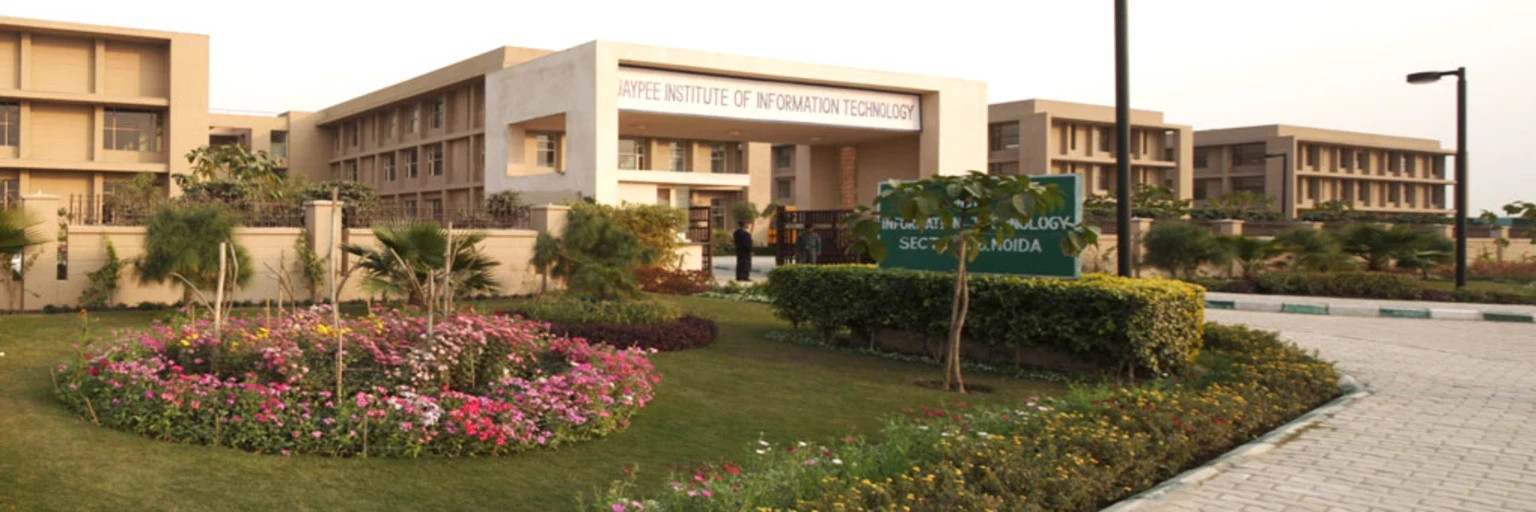
 Auditorium
 Cafeteria
 Computer Labs
 Hostel
 Medical
 Science Labs
 Sports Complex
 Study Library