Loading Admission Guardian content
Loading Admission Guardian content
Provisional score based on available data. It may change as more information is verified.
Find a program, read its fee details and explore the admission requirements.
Summary of the programs shown below. First-year fee. Check the note beside each amount for inclusions and exclusions.
| Course | Stream | Fees |
|---|---|---|
| Diploma in Engineering (Polytechnic) | Engineering | 33000 |
| Master of Business Administration [MBA] | Management | 61000 |
| Bachelor of Technology [B.Tech] | Engineering | 66000 |
| Bachelor of Vocational Studies [B.Voc.] | Vocational Courses |
Specializations
Eligibility: 10th
Specializations
All accepted exams
Eligibility: Graduation + MAH MBA CET
Specializations
All accepted exams
Eligibility: 10+2 with 45%
Specializations
Eligibility: 10+2
4 exams with cutoff data available - showing recent entries
 Accenture
 Bosch Limited
 Byju's
 Capgemini
 Delta Partners
 HCL
HCL Hitachi India Pvt. Ltd.
 Infosys
 Jainidhi Automation
 L&T Ltd.
 Maruti Suzuki
 Mphasis
 Raja Software Labs
 SBI
SBI TCS
TCS Tech Mahindra
 Topaz Engineering
KCE Society’s College of Engineering and Management (COEM) in Jalgaon is a private institution that’s been around since 2001, and it’s built a reputation as a practical, no-frills option for students in North Maharashtra. It’s not the biggest campus you’ll find—just over 2.5 acres right off NH-6—but its location in the city center is a major plus. The college is accredited with a B++ grade from NAAC, which is a decent score for a private institution, and it’s approved by AICTE. If you’re looking at it, you’re probably weighing its affordability and decent teaching against the reality that its placement numbers, especially for core branches, don’t always match the hype. For a local student who wants to stay close to home and get a solid engineering or MBA foundation without a massive financial burden, COEM can make sense. But if your primary goal is a guaranteed, high-paying campus placement, you might need to look harder at the data.
The academic structure here is straightforward, with a clear focus on engineering, management, and diploma programs. The B.Tech offerings are what you’d expect: Computer Engineering is the star with an intake of 120, followed by newer specializations like Data Science (30 seats) and more traditional streams like Mechanical and Electrical (30 seats each). The MBA program is sizable, with 120 seats for the general track and niche options in Agri-Business and Fin-Tech. The three-year diploma courses in engineering are also a significant part of the college’s identity.
Academically, it follows the DBATU system, which uses a 10-point absolute grading scale. That means your percentage is calculated as (CGPA – 0.5) × 10, and you need a minimum of 40% to pass. The faculty, led by Principal Dr. Sanjay R. Sugandhi, is frequently cited in student reviews as being supportive and accessible—a consistent positive. The college has also secured some useful collaborations, most notably with IIT Bombay for its Spoken Tutorial project and access to Virtual Labs, which adds a layer of quality to the technical resources.
A notable feature is the option for B.Tech students to pursue an Honors degree in their main branch or a Minor in another by completing 20 extra credits. It’s a good way to differentiate your degree if you’re motivated.
This is where you need to read between the lines. The official placement cell claims a placement rate of around 80% and highlights a highest package of ₹9-10 LPA for the 2025 cycle. The average package is reported between ₹4.7 and ₹4.9 LPA. Top recruiters are familiar IT and consulting names: TCS, Infosys, Wipro, Capgemini, HCL, and Accenture, along with some core companies like Maruti Suzuki and Bosch.
But the student narrative tells a more nuanced story. Reviews consistently suggest the actual on-campus placement rate, particularly for core engineering branches like Mechanical or Electrical, is significantly lower—closer to 25-30%. The official numbers likely include off-campus placements secured by students independently. The NIRF 2025 report provides a key, often overlooked data point: the median package for UG four-year programs was ₹2.05 LPA. That figure, which halves the dataset, paints a more conservative picture than the average.
The gap between the official claim and the alumni sentiment is notable. Placement drives are more frequent and successful for Computer Science and MBA students. For others, securing an internship—which is mandatory in the 8th semester—and then converting it or finding a job off-campus is a common path. The college has MoUs with platforms like Internshala to facilitate this.
Affordability is one of COEM’s strongest selling points. For a private engineering college, the fees are relatively modest. The annual tuition for a B.Tech ranges from ₹66,000 to ₹72,000 depending on the category. Over four years, with hostel and mess costs added, the total outlay is estimated to be between ₹3.2 and ₹3.8 lakhs. That’s a fraction of the cost of many private institutes in metro cities.
The MBA program is similarly priced at ₹61,000–₹65,000 per year. Diploma courses are the most affordable at ₹33,000 annually. Hostel fees are extra, around ₹15,000–₹20,000 per year for a basic, non-AC room, with mess charges likely adding ₹2,000–₹2,500 per month.
For financial aid, the primary avenue is the Maharashtra government’s MAHADBT portal, which provides full or partial tuition fee waivers for students from SC, ST, OBC, and EBC categories. The college may also offer some merit-based concessions for postgraduate programs, but details on those are less clear.
Admissions for the vast majority of seats are handled through the state’s centralized system. For B.Tech, you need a valid score in MHT-CET; JEE Main scores are also accepted. For MBA, it’s MAH-MBA-CET, though CAT and CMAT scores are considered. Diploma admissions are merit-based on your 10th-standard marks.
The cutoffs aren’t sky-high, which makes COEM an accessible option. For the 2024 session, the General Category cutoff for the coveted Computer Engineering program was around the 70-75 percentile in MHT-CET. For the newer Data Science program, it was near 65 percentile. For core branches like Electrical or Mechanical, cutoffs have historically been much lower, sometimes in the 10-20 percentile range, with seats often available in spot admission rounds.
The process runs through the DTE Maharashtra’s CAP rounds. It’s worth noting that 20% of seats are reserved for the Institute Level (management quota), which operates outside the CAP process.
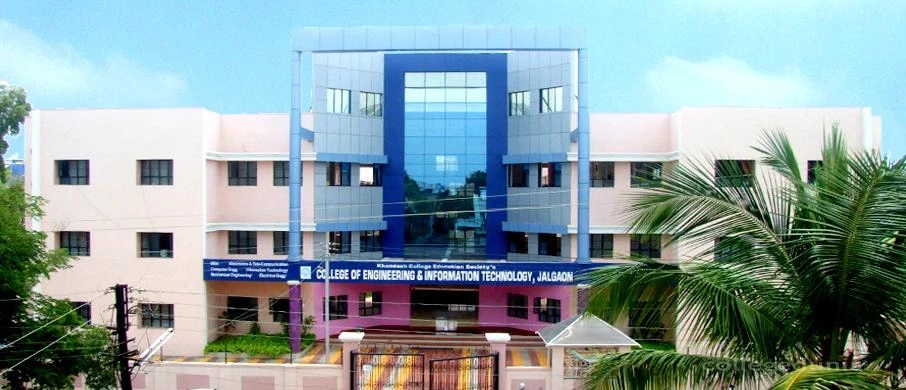
The campus is compact. At 2.52 acres, it’s functional rather than expansive. Students have described it as feeling more like a school campus than a sprawling college. That said, it’s consistently praised for being clean and well-maintained. The infrastructure is adequate: labs for CSE and Electrical are reported to be well-equipped, while Mechanical labs have older machinery. The central library has a collection of over 25,000 books and digital journal access.
The hostels are basic—separate for boys and girls, with non-AC rooms providing the essentials. A common complaint among students is the strict 75% attendance policy, which many feel leaves little room for self-study or competitive exam preparation. The canteen is functional, but many students prefer eating at the numerous local options given the college’s city-center location. The annual technical fest, INNO-TECH-FEST, is the main cultural highlight on the calendar.
Synthesizing feedback from platforms like CollegeDunia, Shiksha, and Quora reveals a clear consensus. The positives are reliable: helpful faculty, a convenient city location that simplifies commuting and access to amenities, and a clean, hygienic campus environment.
The criticisms are equally consistent. The placement reality check is the biggest one. Students feel the official statistics are inflated and that core branch students must hustle on their own. The small campus size is a frequent point of comparison with other colleges. Some practical issues, like occasional problems with drinking water supply in the building, also pop up in reviews.
The overarching student verdict, as one alumnus put it on Quora, is pragmatic: “If you want a degree with decent teaching and are from Jalgaon, it's a good choice. But don't expect a high-paying job unless you are in CSE and work hard on your own.”
KCE COEM is a classic case of “you get what you pay for.” It’s a value-for-money institution that serves a specific student profile well. If you are a student from Jalgaon or the surrounding North Maharashtra region, looking to minimize living costs and get a decent engineering or management education close to home, this college is a sensible, low-risk choice. The B++ NAAC grade and affiliations with reputable universities add legitimacy, and the supportive faculty is a genuine asset.
However, you should manage your expectations, particularly regarding placements. It is not a recruitment powerhouse. Success here, especially in securing a good job, is heavily dependent on your branch (with CSE having a clear advantage) and your own initiative in building skills and seeking opportunities beyond campus drives. If your primary goal is a guaranteed, high-salaried placement from a campus with extensive corporate connections, or if you desire a large, residential college experience, you would likely be better served by exploring other options, including autonomous government colleges. For the right student—pragmatic, locally-oriented, and self-driven—COEM does the job without breaking the bank.
Yes, Computer Engineering is the most popular branch at KCE and has the best placement record in the college, with an average package of around 4.5 LPA.
KCE is a private college with higher annual fees (approximately 70k vs 25k) and generally more flexible management. Government College of Engineering Jalgaon is an autonomous institute with higher admission cutoffs.
No, the college does not provide 100% placements. While high placement numbers are often claimed, the actual on-campus placement rate for the 2024 batch was closer to 30-40%.
No, staying in the college hostel is not mandatory. Many students opt for private paying guest (PG) accommodations nearby, which are often cheaper alternatives.
The college hosts an annual national-level technical event called "INNO-TECH-FEST", which is its primary fest.
Share what future students should know about KCE Society's College of Engineering and Management.
Student voices are not rewritten by colleges. We remove spam and abuse.
Wider admission question? Community PulseWhat should future students know?
Tell us which course you're considering. We'll help you work out the next step.
Get instant Partner access after mobile verification. Your public edits are reviewed before they go live.
Claim this college
 Auditorium
 Cafeteria
 Computer Labs
 Gym
Gym Hostel
 Medical
 Science Labs
 Sports Complex
 Study Library