Loading Admission Guardian content
Loading Admission Guardian content
Provisional score based on available data. It may change as more information is verified.
Find a program, read its fee details and explore the admission requirements.
Summary of the programs shown below. First-year fee. Check the note beside each amount for inclusions and exclusions.
| Course | Stream | Fees |
|---|---|---|
| Master of Engineering [ME] (Construction Management) | Engineering | 77500 |
| Bachelor of Engineering [BE] | Engineering | 96000 |
Specializations
All accepted exams
Eligibility: Graduation
Specializations
All accepted exams
Eligibility: 10+2
2 exams with cutoff data available
 Accenture
 Amdocs
 Cognizant
 EPIC Systems
 Flextronics
 Huawei Telecom
 IBM
IBM KEANE India Ltd( NTT DATA)
 MindTree
 Mphasis
 Oracle
 Syntel
 Tech Mahindra
 Zensar
RMD Sinhgad School of Engineering (RMDSSOE) is a private engineering college in Pune's Warje area that presents a classic trade-off. Established in 2011 and affiliated with Savitribai Phule Pune University (SPPU), it offers decent infrastructure and teaching at a relatively affordable cost for a private institution. But its placement record is the elephant in the room—official claims swing wildly from 30% to 90%, with student reviews consistently pointing toward the lower, more challenging end of that spectrum. If you're a student who doesn't mind hustling for opportunities outside the campus drive system, RMDSSOE provides a functional, no-frills engineering education. If you're banking entirely on the college to land you a job, you might want to look closer at those numbers.
The academic offering here is standard for an SPPU-affiliated college. You get the usual suite of undergraduate engineering programs, with seat distribution heavily tilted toward core branches. Computer Engineering has 120 seats, Mechanical a hefty 150, and Civil 90. Electronics & Telecommunication and Information Technology sit at 60 seats each. There's also a second-shift Mechanical Engineering program. At the postgraduate level, they offer an M.E. in Construction Management and a sizable MBA program with 180 seats.
The teaching follows the SPPU curriculum to the letter—semester exams and papers come directly from the university. That's neither good nor bad, just the reality of affiliation. Where RMDSSOE seems to score points is in faculty quality. Multiple student reviews mention teachers are helpful, qualified, and knowledgeable. With 53 faculty members for an intake of 780, the student-teacher ratio isn't terrible. The academic culture is what you'd expect: a conducive environment for learning if you're self-motivated, but don't anticipate groundbreaking pedagogy. Labs are reported to be well-equipped, which is a basic necessity they appear to meet.
This is the section that requires the most careful reading. The data is contradictory, and student sentiment adds crucial context.
Let's start with the headline numbers. The highest package touted is ₹27 LPA, offered by a Japanese company called 'JTP' to the 2024 batch. That's an outlier. The average package for the same batch was around ₹4 LPA. The list of visiting companies is long and features the usual IT services suspects: TCS, Infosys, Wipro, Accenture, Capgemini, Tech Mahindra, L&T, and a few product firms like Oracle and IBM.
Now, the placement percentage. The brief lists figures from 30% to 90%. The 30% is specifically noted for the 2024 batch. Student reviews consistently describe placement rates as "moderate to low" and stress that securing a job requires "hard work" from the student, implying the college's placement cell provides access but not a guarantee. The most credible takeaway is that the actual on-campus placement rate likely trends toward the lower end of that official range, probably in the 40-65% zone depending on the branch. Computer and IT likely fare better; core branches like Civil and Mechanical face a tougher market.
Internships are a compulsory part of the 6th-semester curriculum. The college has some industry tie-ups (like with Elite Softwares), and they facilitate free Infosys spring internships. But reviews note that internships aren't always directly offered on campus—again, pointing to a system where opportunity exists but requires proactive student effort to seize.
The reality check? If you're in a top-tier branch and are academically strong, you can land a decent IT job through campus drives. But don't assume the 90% placement claim is your reality. Plan to build your skills, compete on platforms like LeetCode, and network independently.
The fee structure is where RMDSSOE's value proposition becomes clearer, especially for reserved category students. For the 2025-26 academic year, first-year B.E. tuition for the OPEN category is ₹1,03,060. That's not cheap, but it's in the ballpark for private engineering in Pune. The cost drops significantly for other categories: ₹61,756 for OBC/EWS, and just ₹8,060 for SC/ST students.
Adding hostel and mess fees (₹86,000 per year) brings the total annual cost for an open-category student staying on campus to roughly ₹1.9 lakhs. A rough four-year estimate for tuition alone is between ₹3.3 to ₹3.8 lakhs; with hostel, you're looking at around ₹7.5 lakhs or more.
The college mentions that merit-based and need-based scholarships are available, though specific details aren't provided in the brief. It's a point to verify directly with the institute's official website during the admission process.
Admissions for the B.E. programs are primarily governed by the Maharashtra state's Centralized Admission Process (CAP), run by the Directorate of Technical Education (DTE). They accept MHT CET and JEE Main scores.
The cutoffs for the 2024-25 session tell a story of demand. For Computer Engineering, the opening cutoff for the OPEN category via MHT CET was a percentile of 93.85. That's reasonably high. It drops to 91.10 for TFWS (Tuition Fee Waiver Scheme) seats. For the same branch via JEE Main, the OPEN cutoff was 86.95 percentile.
Other branches are less competitive. Information Technology opened at 90.93 percentile (MHT CET, OPEN). Electronics and Telecommunication started at 88.14 (OBC). Mechanical Engineering had an OPEN cutoff of 68.04, and Civil Engineering was at 67.71 for EWS. The lowest cutoff mentioned is 21.53 percentile for Civil Engineering under the DT/VJ category.
The process is straightforward: score in the entrance exam, participate in CAP counseling rounds, and get allotted a seat based on your rank, category, and branch preference. If seats remain after CAP, the institute may conduct its own admissions. There's also a management quota for direct admission, which bypasses the cutoff system but likely comes at a higher cost.
For MBA, the accepted exam is MAH MBA CET. For M.E., it's GATE.
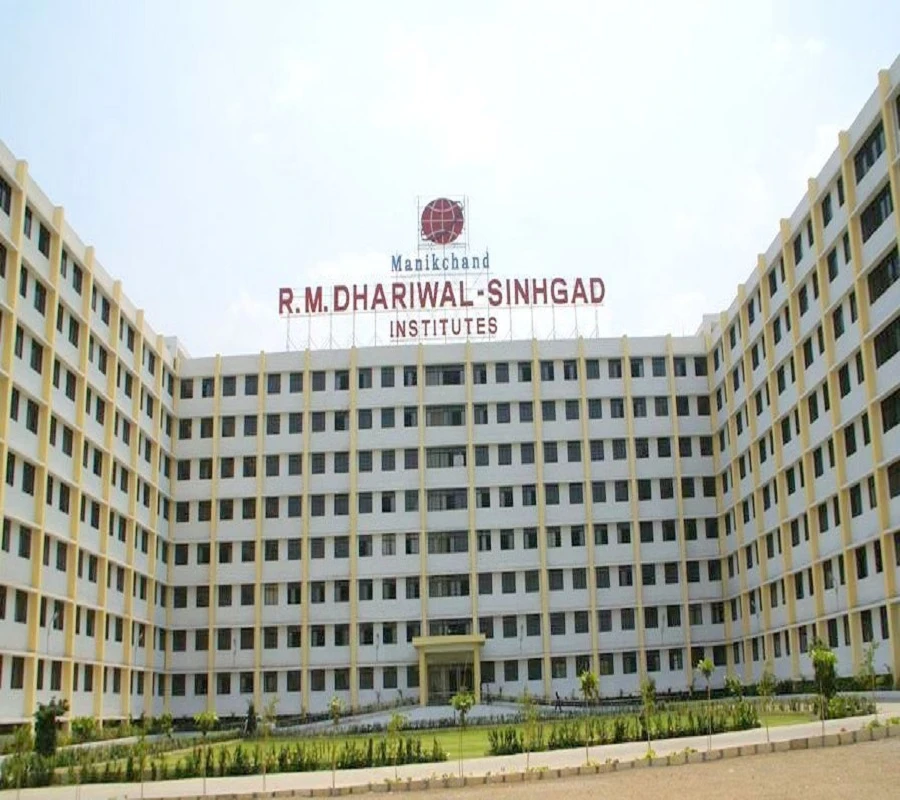
Spread over 10 acres in Warje, the campus is described as lush green with good infrastructure. Classrooms have smartboards, there's a central library with digital resources, and Wi-Fi is available across campus. Sports grounds, a canteen, a medical room, and an auditorium round out the facilities. It's a functional, modern setup.
Hostels are located on the main Sinhgad campus. Reviews praise the infrastructure and maintenance, calling it excellent with regular cleaning. Rooms are typically 4-sharing. The big point of contention is the mess food. Reviews are split—some call it decent and hygienic, others label it unorganized and appalling. That's a common grievance in many colleges, but it's worth noting.
Social life has a caveat. The college does organize fests, technical events, and theme days. However, the major cultural festivals and large-scale events are often centralized at the main Sinhgad campus at Vadgaon. So, if you're imagining a bustling, self-contained campus life with huge annual fests, RMDSSOE might feel a bit quieter. The bus facility helps connectivity, but the social scene is reportedly more subdued.
Synthesizing the sentiment from various platforms, a clear consensus emerges.
The positives are strong on academics and infrastructure. Students rate Campus Life at 4.2/5 and Academics at 4.4/5. Teachers are repeatedly cited as a major strength—helpful and knowledgeable. The labs, library, and overall learning environment get good marks. The admission process is also noted as simple and well-handled.
The negatives are overwhelmingly focused on placements and, to a lesser extent, food. There's a palpable sense that placement statistics are inflated. The phrase "requires hard work" is a euphemism for a placement cell that brings companies but doesn't secure jobs for everyone. The wide variance in official placement percentages (30% vs 90%) undermines trust. The internship process also gets a similar note—opportunities exist, but they aren't spoon-fed.
It's not a college students hate; many appreciate the education they receive for the price. But it's also not a college they credit for launching their careers. That part, according to them, is largely up to you.
RMDSSOE is a pragmatic choice for a specific type of student. If you have a mid-range MHT CET or JEE Main score (say, 70-90 percentile), are looking for a reasonably priced private engineering college in Pune with decent infrastructure and teaching, and you are a self-starter who doesn't rely on the college for career placement, it can be a good fit. The fee structure for reserved categories makes it particularly attractive. The SPPU affiliation is standard, and the NAAC A++ accreditation of the larger campus group is a mark of institutional credibility.
However, if your primary goal is to secure a high-paying job through robust, reliable campus placements with minimal external effort, you should temper your expectations. The placement data is too inconsistent, and student feedback too cautious, to consider this a placement powerhouse. Also, if a vibrant, self-contained campus social life with major fests is a priority, the activity at the main Vadgaon campus might leave you feeling a bit sidelined.
In short, it's a value-for-money academic institution, not a career launchpad. Choose accordingly.
The average package for the 2024 batch was around ₹4 Lakhs Per Annum (LPA). It's important to note that placement percentages vary widely in reports, and student reviews suggest securing a job requires significant individual effort alongside campus drives.
For the 2025-26 academic year, the first-year B.E. tuition fee for the OPEN category is ₹1,03,060. Fees are lower for other categories: ₹61,756 for OBC/EWS and ₹8,060 for SC/ST students. Annual hostel and mess charges are an additional ₹86,000.
For the 2024-25 admissions, the cutoff for Computer Engineering (OPEN category) was 93.85 percentile via MHT CET and 86.95 percentile via JEE Main. Cutoffs vary each year based on exam difficulty and applicant pool.
Placements are a mixed bag. While companies like TCS, Infosys, Wipro, and Accenture visit, the placement rate is not guaranteed. Official figures conflict, with one report citing 30% for the 2024 batch. Student consensus is that placements are moderate and require hard work from the student to secure an offer.
Yes, separate hostel facilities for boys and girls are available on the main Sinhgad campus. Rooms are typically 4-sharing, and infrastructure is rated as good with regular maintenance. However, reviews about the quality of mess food are mixed.
Share what future students should know about RMDSSOE.
Student voices are not rewritten by colleges. We remove spam and abuse.
Wider admission question? Community PulseWhat should future students know?
Tell us which course you're considering. We'll help you work out the next step.
Get instant Partner access after mobile verification. Your public edits are reviewed before they go live.
Claim this college Auditorium
 Cafeteria
 Computer Labs
 Gym
Gym Hostel
 Medical
 Science Labs
 Sports Complex
 Study Library