

 Auditorium
 Cafeteria
 Computer Labs
 Hostel
 Medical
 Science Labs
 Sports Complex
 Study Library
 Campus Wi-Fi
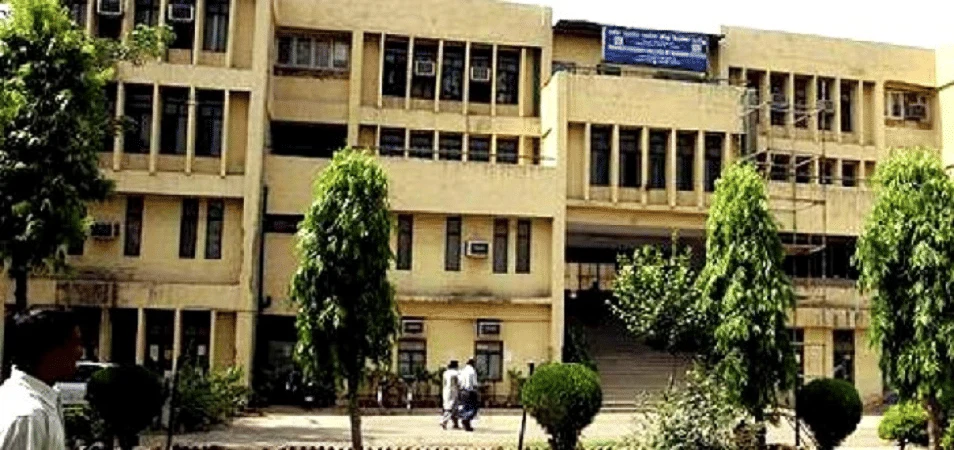
SSCBS is based at Sector 16, Rohini, New Delhi. Its campus page describes a five-acre, air-conditioned and Wi-Fi-enabled building with classrooms, seminar rooms, a two-floor library, computer laboratories, food outlets, auditorium, sports ground, open gym and hostels. The 2026-27 hostel bulletin adds practical details on room facilities, eligibility, allocation, fees and rules. These official pages are useful for planning, but some campus-page figures are undated and conflict with newer documents. In particular, hostel-bed totals and auditorium capacity differ across pages. Treat the dated 2026-27 hostel bulletin as the current hostel reference, and confirm live availability, fees and access arrangements with the college before deciding where to live. SSCBS campus · Hostel bulletin 2026-27
Academic spaces and daily services
The campus page describes an eight-floor building on about five acres, with approximately 217,800 square feet of floor area and basement parking. It lists Wi-Fi across teaching and common areas, air-conditioned classrooms with audio-visual equipment, and four seminar rooms equipped for workshops and presentations. The library occupies two floors and the campus page lists 23,231 books, along with magazines, newspapers, reference works and bound periodicals. Because the webpage does not date that collection count, treat it as the page’s reported inventory rather than a verified current library total. Students who need a particular database, course text, accessible reading space or opening time should check the library’s current service information rather than infer availability from the total number of books.
For computing, SSCBS lists six computer laboratories: two for BMS, two for B.Sc. (Hons.) Computer Science, one for BBA (FIA) and one for PGDCSL. It says each has 30–35 machines and names software including SPSS, R, Android Studio, EViews, SQL, C++ and Oracle. This programme allocation helps an applicant ask a concrete question: which lab is used in the chosen course, whether a required package is available in the relevant semester, and whether access is limited to scheduled practicals or also available for individual work. The page records facilities, not current student-to-computer ratios or lab opening hours.
The campus page describes a two-floor auditorium with capacity for 524, four seminar rooms with seating capacity of 100 students each, an amphitheatre and a rectangular outdoor ground for football, cricket and volleyball. It also lists an open gym and an indoor sports room with table tennis and chess. SSCBS’s 2024-25 annual report describes a 500-seat auditorium and four seminar halls. The two sources may use rounded or differently defined seating capacity; the college should confirm its current event configuration. These spaces indicate what is available on campus, but the pages do not say how often each student can book them or whether all facilities are open outside scheduled activities.
The canteen and mess are on the ground floor, and the campus page also lists Nescafé and Amul outlets near the playground. It describes wireless/LAN service across the main building, hostel, canteen, auditorium, classrooms and seminar rooms, and reports 94 CCTV cameras covering several common locations. The same page lists ramps and lifts in the college building and both hostels. These details can help a student plan connectivity, meals, movement through the building and event use. They do not replace a visit or a direct enquiry about a particular accessibility need, dietary requirement, current vendor hours or support arrangement.
Hostels: current allocation rules matter more than a headline count
For 2026-27, SSCBS’s Hostel Bulletin reports 93 beds for boys and 84 for girls. It says rooms are shared by three students and include air-conditioning, attached bathrooms, beds, desks, chairs, wardrobes and bookshelves. Listed shared facilities include a mess, Wi-Fi, common room, indoor games, playground, open gym, pantry, paid laundry, lift, study room, biometric attendance and 24/7 CCTV. Hostel admission is not automatic with college admission: students must register after admission to the college, submit the form and documents, and pay after verification. For first-year applicants, the bulletin says the home address must be more than 60 km away, measured using Google Maps, and allocation is based on CUET rank. Later-year rules include academic progress, attendance, disciplinary status and distance; re-admission requires a fresh application. Check the bulletin for the exact year-specific rule and ask the hostel office whether a place is available before making housing plans.
The published capacity figures do not agree. The 2026-27 Hostel Bulletin lists 93 boys’ and 84 girls’ beds. The SSCBS campus page gives 88 and 78, while the 2026 admissions FAQ gives 88 and 75. The most recent explicitly dated capacity document among these sources is the 2026-27 bulletin, so use its 93/84 figure for that cycle, while noting that the other official pages have not been reconciled. Capacity is not the number of vacancies: the bulletin allocates beds across years and DU categories, with admission subject to merit and the published conditions. A student should rely on the current allotment notice, not subtract total occupancy from the headline capacity or assume that first-year admission guarantees a hostel place.
The 2026-27 bulletin lists first-year odd-semester charges totaling ₹85,152 and even-semester charges totaling ₹59,689; the mess charge is variable, and the total includes a refundable caution amount. It states that hostel fees are paid online at admission. This is a cycle-specific hostel charge, not the course tuition fee, and it should not be combined with the separate SSCBS course-fee schedule without checking what each covers. The bulletin also says students vacate after semester examinations in May–June and the hostel does not accommodate residents during its vacation closure. If you need continuous housing, include that gap in your travel and accommodation plan.
What to verify before choosing
Ask the college which facilities are currently open to the selected programme, when the library and labs can be used, what accessibility support can be arranged, and how food services operate during weekends or breaks. For hostel planning, check the current bulletin and allotment notice for eligibility, distance measurement, category-wise allocation, application dates, required documents, mess charges and vacation dates. The college’s notice page publishes hostel allotment lists, so a current list is more useful for vacancies than an older capacity figure. For commuting, confirm the exact Rohini campus location and travel time from your likely residence. Public infrastructure descriptions show what the college reports, but they cannot answer how a specific room, lab or hostel place will be assigned to you. A direct written confirmation is the safest basis for decisions that depend on a particular facility or bed.