
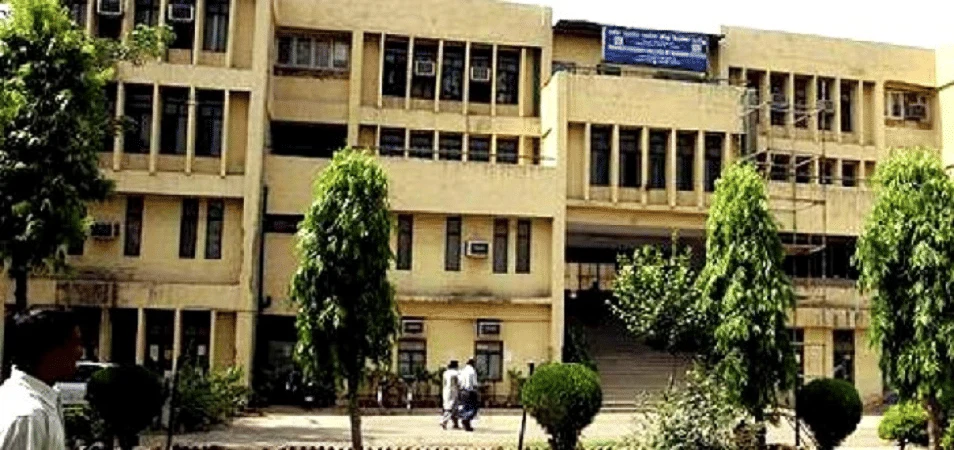

SSCBS lists college awards alongside government scholarship schemes, but the page does not provide a current award amount, number of recipients or a single application calendar for every item. For 2026-27, use the college page to identify in-house award criteria and the National Scholarship Portal (NSP) to check live scheme status. An award listed by the college or portal is not a confirmed entitlement: eligibility, institution/course mapping, documents, verification and available seats or funds still matter. Check the original scheme rules and ask the relevant college office before treating any amount as part of your study budget. SSCBS scholarships · NSP Delhi schemes
College awards depend on course, year and academic record
SSCBS’s in-house list is not one uniform means-tested scholarship. Several awards are restricted to a programme, year of study, category or specific academic record. For example, the college says its Pratibha Merit Scholarship is for a second-year student in BMS, BBA (FIA) or B.Sc. (Hons.) Computer Science whose annual family income is below ₹5 lakh; selection combines family income and first-year CGPA. Udaan is listed for a third-year B.Sc. Computer Science student with family income below ₹3 lakh, selected using the highest CGPA in Semesters 3 and 4 together with the income condition. The Shri Pooran Mal Award is described for one girl and one boy in the second or third year across the three undergraduate programmes, with SC/ST category, previous-semester marks of at least 60% and family income of ₹5 lakh or less. These criteria are distinct; meeting one criterion does not make a student eligible for another award.
Other entries reward particular academic or all-round performance. The SSCBS Best All Round Student award is for final-year regular UG or PG students and uses academic performance, extracurricular involvement and personal interaction. The Dr. S.S. Gulshan Scholarship is described for two second-year BMS students with the highest first-year CGPA. The Shri Sultan Chand Memorial Scholarship is for a second-year BMS student with the highest Semester 2 marks. Shyra is listed for one BMS student in each of the first three years and includes prior-semester grade, income below ₹5 lakh and attendance above 75% excluding waivers. The Vanishree entry says that from 2024-25 it is for one second-year student in each of BMS, BBA (FIA) and B.Sc. Computer Science from the PwD category, selected on first-year University exam performance. Since that change is explicitly stated for 2024-25, confirm whether the same cycle and selection process applies to your batch.
The page gives criteria but does not show a current award value or how many students applied, qualified or received each award. Donor-funded awards may also have different selection and disbursement conditions. Before relying on one in a fee plan, ask the college which awards are open for your programme and year, the current form and deadline, the documents required, how income is assessed, whether the award is one-time or recurring, and when funds are paid. Treat a prior-year form linked from the page as a form to verify, not proof that the same deadline or form is active now.
Government schemes require a separate eligibility check
The college page also includes central schemes and broad descriptions, but some rows are generic, dated or unrelated to an undergraduate applicant. For example, the page’s table gives a common “August to November” window for many entries. That should not be used as the current deadline. NSP’s Delhi domicile listing is a better place to check current scheme status: as viewed on 8 November 2026, it showed the 2026-27 Post Matric Scholarship for SC Students – Delhi and PM YASASVI Post Matric Scholarship for OBC, EBC and DNT – Delhi. Both were shown as open from 21 August 2026, with student applications due by 15 February 2027, defective application verification by 15 March, institute verification by 15 March and DNO/SNO/MNO verification by 31 March. These dates are portal status for the displayed 2026-27 schemes, not a promise that every SSCBS course or student qualifies.
The Delhi listing is explicitly filtered by domicile and scheme type. A student from another state should check that state’s portal and rules rather than assume the Delhi options apply. Even for a Delhi scheme, category, family income, course, institution recognition, previous academic record and fresh-versus-renewal status can be decisive. Open the scheme’s specification and FAQ, check that the exact course and college are accepted, and compare the required documents with your records before applying. NSP also provides an eligibility checker; treat it as a route to candidate schemes, then verify details in the official scheme guidance. Do not assume a scholarship listed on SSCBS’s page is currently open just because the row remains online.
A practical application check before budgeting
Start by separating three questions: does the student meet the scheme rules, is the exact course and institution covered, and is the application window open? A “yes” to the first question alone is not enough. For an in-house award, confirm programme, year, category, marks or CGPA, income threshold, attendance condition and the current form with SSCBS. For a government scheme, confirm the domicile and category rules, scheme year, institution and course mapping, income ceiling, documents and portal date. Ask whether a fresh application or renewal is required and whether the college must verify the application online or receive additional documents.
Make a short file before the window closes: current marksheet, income and category certificates where required, bank details, identity and domicile records, and any documents named in the current scheme instructions. Do not send sensitive documents through unofficial links or rely on an old form without confirming its current destination. Save the submitted application number and acknowledgement, monitor both the portal and college verification status, and respond to a defective-application notice promptly. The dates on the NSP page leave a verification period after the student deadline, but a late correction can still make it difficult for the institute to complete its step.
Scholarship money should be treated as uncertain until the relevant authority confirms selection and disbursement. The SSCBS list does not publish a single current award amount, and the NSP listing is a scheme directory rather than a student-specific eligibility decision. Build a budget from the published course fee and known living costs first; count an award only after the award notice or sanction confirms its value and payment timing. Recheck the official college and portal pages before each cycle, because a live deadline or changed eligibility rule can make a previously accurate summary stale.