
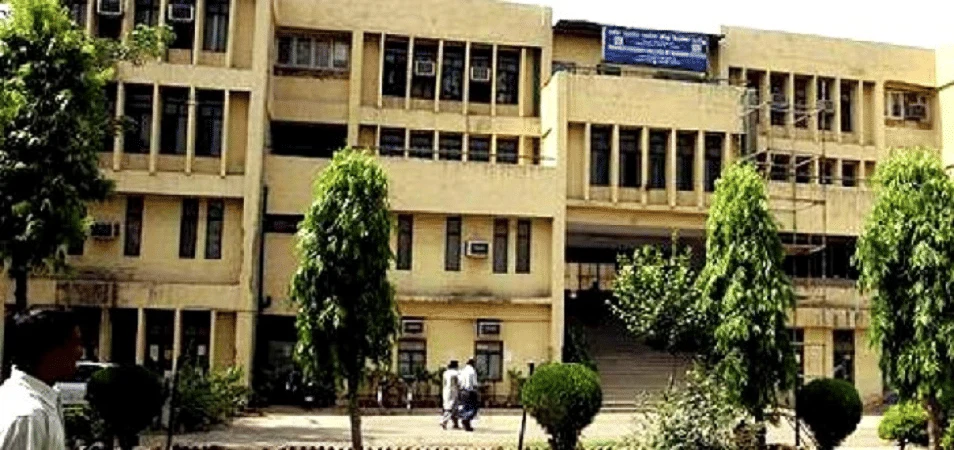



Shaheed Sukhdev College of Business Studies (SSCBS) describes its Career Development Centre (CDC) as the college placement cell. Its published process begins with sharing the employer’s job description, role, eligibility and compensation details; interested students submit consent and resumes; employers may hold a pre-placement talk and then conduct aptitude tests, group discussions, interviews or a combination. The employer communicates offers after its selection process. This is a useful outline of the campus process, but it is not a guarantee that every student receives an interview or offer. CDC placements
What the latest readable cohort report says
The latest complete placement report linked by the CDC when checked on 8 November 2026 was its 2023-24 placement report. The report says more than 80 companies participated in the placement season. Alvarez & Marsal was its largest recruiter, with 24 offers. It reports a highest package of ₹28 LPA, average package of ₹10.97 LPA, median of ₹10.20 LPA and top-quartile average of ₹16.99 LPA. These are report-reported amounts for that placement season, not guaranteed salaries, current vacancies or a forecast for a new batch. The report does not show a denominator alongside those figures in its summary, nor split the salary measures by BMS, BBA (FIA) and B.Sc. Computer Science. Compare them as institution-reported cohort outcomes, not as a programme-specific promise. 2023-24 placement report
The same report describes participating employers and offer domains including analytics, consulting, finance, marketing, research and technology. Its listed recruiter examples include Bain Capability Network, L.E.K. Capability Network, Dalberg, D. E. Shaw Group, Samagra and Everest Group. These examples establish breadth in that report year; they do not indicate how many offers each firm made, whether a role was open to every programme, or whether those recruiters will return. The largest recruiter statistic is explicitly scoped to Alvarez & Marsal and 2023-24, not to all years.
The report's pie-chart distribution is another description of its season: consulting 60.87%, finance 18.70%, marketing 12.17% and other 8.26%. Those shares total 100.00% after rounding. They describe the report's reported offer-domain distribution; the document does not attach a student count or programme denominator to that visualization. A reader interested in a particular function should therefore use the categories to understand what the college reported, then inspect actual role descriptions and eligibility in the next placement cycle rather than treating the shares as each student’s probability of entering that field.
Internship and placement are different decisions
SSCBS says an internship lasting six to eight weeks at the end of the second year is required for placement eligibility. Its 2026 undergraduate FAQ also clarifies that this requirement is not a mandatory activity in the University of Delhi syllabus. In practical terms, students need to plan for the internship alongside coursework and should confirm the current college process, documentation and timing with the programme and placement team. Internship participation and a later placement are separate outcomes: completing the internship requirement makes a student eligible under the stated rule, but it does not promise an employment offer. The FAQ’s rule belongs to the 2026-27 admission information and should be reconfirmed for the student’s own batch. SSCBS 2026 undergraduate FAQ
The CDC also describes support beyond final placements, including resume building, personal counselling, alumni mentoring, networking and internship opportunities. Those are services described by the centre; the pages do not publish a current service schedule, participation rate or individual placement guarantee. Prospective students can ask the CDC which services are available to their programme and cohort, how roles are circulated, and what eligibility conditions apply before relying on a service in their career plan.
Reading the live dashboard carefully
At the time checked, the CDC home page displayed a 2024-25 headline dashboard with “1+” offers, zero average and highest packages, and a note that the placement process was ongoing. The older placements page also showed malformed headline values for 2022-23. These display fields are not coherent enough to use as outcome statistics. They should not override the dated 2023-24 PDF, whose labels and reported values are legible, and should not be silently interpreted as zero placements or zero salary. The CDC page links a 2024-25 brochure and the 2023-24 report; readers seeking newer cohort outcomes should consult the actual report when published. The CDC states that it publishes its annual placement report in the last week of August, but that statement is not a guarantee of a publication date for a future edition.
For a sensible comparison, keep the cohort year, measure and denominator together. Highest package captures one offer; median is the middle reported salary measure; average can be affected by high values; and the top-quartile average describes a selected subset. SSCBS’s summary does not provide the number of placed students or programme-level salary tables, so a reader should not infer placement rate or compare these figures directly with another college’s differently defined cohort. Check the linked report and current role notices, ask for the current denominator and programme split, and confirm whether each quoted amount is annual CTC or another compensation basis before making a cost-versus-outcome decision.