
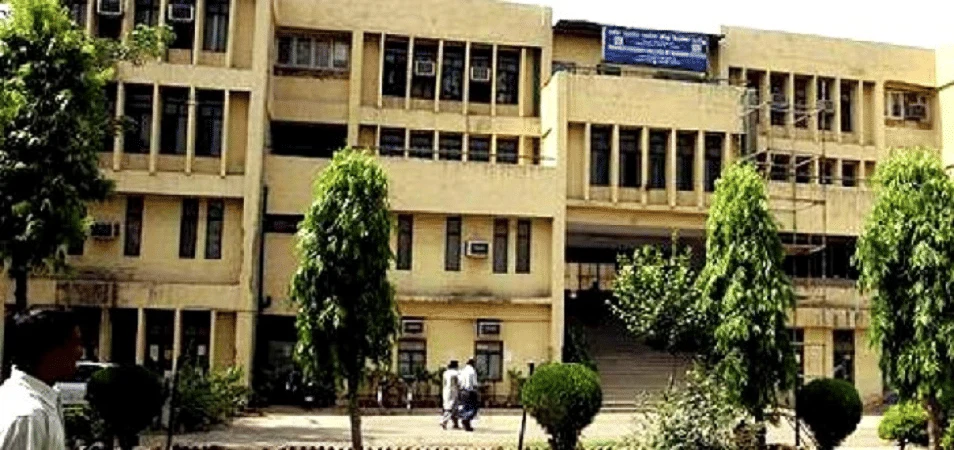

SSCBS Rankings 2026: BBA Position and Context
For applicants comparing undergraduate business programmes, the latest directly verified publisher table places Shaheed Sukhdev College of Business Studies (SSCBS) first in India Today–MDRA’s 2026 BBA ranking. The same table records SSCBS at number one in 2025. These are BBA-category positions in one publisher’s survey, not a universal rank for every SSCBS degree or a prediction of a student’s outcomes. The 2026 score was 1,867.8 out of 2,000, four points above the 2025 total. The rank stayed the same while the score components moved in different directions. India Today–MDRA BBA ranking, 2026 · 2025 table
The published BBA results
The publisher’s table labels the category Bachelor of Business Administration and identifies SSCBS in New Delhi. Its 2026 row reports the overall rank, five objective-category scores, the combined objective score, the perceptual score and the total. The preceding edition reports the same fields. The methodology page lists 240 BBA participants for 2026 and 225 for 2025. It also says the 2026 edition added sustainability indicators, although the parameter weights remained unchanged from the previous year. This is a useful reminder that the table compares consecutive published editions, not a controlled experiment using an entirely unchanged measurement instrument.
The total is the sum of the objective and perceptual scores. From 2025 to 2026, SSCBS’s objective score decreased by 0.3 points, from 1,072.0 to 1,071.7. Its perceptual score increased by 4.3 points, from 791.8 to 796.1. Together those changes produce the 4.0-point increase in the total, from 1,863.8 to 1,867.8. The Placement and Career Progression component rose by 1.8 points, from 289.7 to 291.5 out of 300. These are score movements, not evidence that teaching, placements or student experience improved by a corresponding amount. The table does not provide the underlying SSCBS data or enough institution-specific survey detail to make that causal claim.
What the India Today–MDRA score measures
The 2026 table assigns maximum marks of 240 to Intake Quality and Governance, 270 to Academic Excellence, 180 to Infrastructure and Living Experience, 210 to Personality and Leadership Development, and 300 to Placement and Career Progression. Those five components sum to an objective-score ceiling of 1,200. The survey then adds a perceptual score with a maximum of 800, giving a total ceiling of 2,000. The separate methodology document says professional-course totals combine objective and perception scores in a 60:40 ratio, consistent with those ceilings. It describes the objective score as institution-submitted data that MDRA checks against supporting documents, past data and disclosures. Its parameter notes associate placement and career progression with salaries, recruiter quantity and quality, and international placements.
For a prospective student, the 2026 result therefore combines measures with different evidence bases. The objective score includes information on selection, academics, facilities, student development and career progression. A substantial share of the total also reflects perceptions from a national survey. The methodology describes 1,889 informed respondents across 27 cities, including senior faculty, recruiters or professionals, career accelerators and final-year students. Those are survey-wide totals, not the number of people who rated SSCBS specifically. SSCBS’s perceptual score accounts for 796.1 of 2,000 points in the 2026 table, while its objective score is 1,071.7 of 1,200. Read the components and methodology alongside the rank instead of treating the total as a direct measure of learning or a placement guarantee. The published materials do not disclose SSCBS-specific response counts or the full institution-level input dataset.
How to use this result when choosing a course
The survey is specifically for BBA. SSCBS also offers BMS, BBA (Financial Investment Analysis) and B.Sc. Computer Science, so the BBA position should not be transferred to those other programmes. It also does not answer whether a particular course suits your academic strengths, preferred subjects, budget, location or career plan. Compare the actual curriculum, admission rules, current fees and course-specific placement evidence separately. In particular, do not read the 291.5 Placement and Career Progression score as an individual salary, placement probability or number of job offers: it is one component of a composite ranking.
The unchanged first-place position across the 2025 and 2026 India Today–MDRA BBA tables is a consistent result within that publisher’s editions. It is useful as one comparison signal for students who value the survey’s mix of objective indicators and stakeholder perceptions. It does not establish that SSCBS is first under every ranking system. Rankings use different categories, years, inputs and weighting, and an institutional position cannot replace programme-level due diligence. For a 2027 applicant, use the 2026 edition as the latest available result reviewed here; it is not a 2027 ranking or a promise that the next edition will retain the same position.
What this page can and cannot establish
The comparison above uses the ranking publisher’s own 2025 and 2026 BBA tables and recalculates only the displayed score differences. It confirms the institution row, category, city, edition and score fields together. The result is limited to those two editions and this ranking publisher. The methodology page says 2026 introduced sustainability indicators while retaining parameter weights, so even a small year-to-year score change should not be read as a direct measure of changed college quality. The table does not provide enough underlying data to independently reproduce every SSCBS score or determine a causal change in academic quality. Treat the ranking as a dated, category-specific comparison; verify the next edition and weigh it against current programme information before making an admission decision.