Loading Admission Guardian content
Loading Admission Guardian content

Provisional score based on available data. It may change as more information is verified.
Find a program, read its fee details and explore the admission requirements.
Summary of the programs shown below. First-year fee. Check the note beside each amount for inclusions and exclusions.
| Course | Stream | Fees |
|---|---|---|
| Bachelor of Ayurvedic Medicine and Surgery | Medical | 210000 |
| Diploma in Pharmacy [D.Pharm] | Pharmacy |
All accepted exams
Eligibility: 10+2 With 50%
Specializations
Eligibility: 10+2
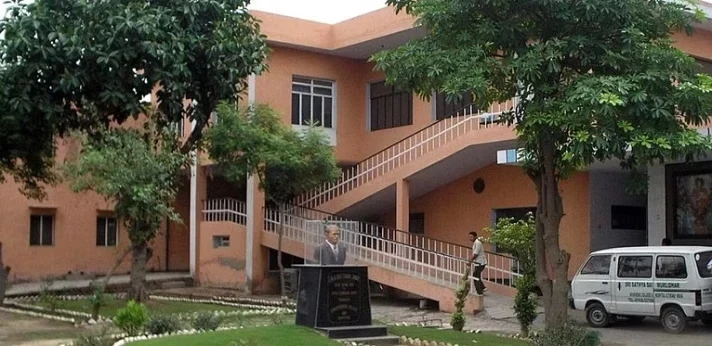
Sri Satya Sai Murlidhar Ayurveda College & Hospital in Moga isn't trying to be a glamorous university. Founded in 1982, it's one of Punjab's older private Ayurvedic institutions, and that's its core identity. It's for students who want a straightforward, clinically focused BAMS education without the frills of a sprawling campus life. The college is permanently recognized by the National Commission for Indian System of Medicine (NCISM) and the Ministry of AYUSH, and it's currently affiliated with Guru Ravidas Ayurved University (GRAU) in Hoshiarpur. If you're looking for a place where the emphasis is firmly on turning you into a practicing Ayurvedic doctor, with a functional hospital right on campus, this might be your fit. Just don't expect a vibrant social calendar or brand-new buildings.
The academic offering here is focused. The BAMS program, with an intake of 60 students, is the main draw. It's a 5.5-year grind—4.5 years of academics followed by a mandatory one-year internship. The curriculum is standard, spread across 14 departments from Kayachikitsa (General Medicine) to Rasa Shastra (Pharmacy). What sets the college apart is its own manufacturing unit, an Ayurvedic pharmacy that produces over 50 types of medicines. That's a decent practical link you don't find everywhere.
Faculty strength is reported to be around 30-40 teachers. The principal, Dr. P.C. Singla, is an MD in Dravyaguna (Pharmacology). Student feedback consistently points to the teaching staff being experienced and accessible, which is a significant plus in a system that relies heavily on traditional knowledge transfer. The academic calendar strictly follows GRAU's schedule, so there's no ambiguity there. The D.Pharm (Ayurveda) diploma is a two-year program, often seen as an entry point into pharmacy roles or a stepping stone for further studies.
Let's be clear: you won't find Amazon or TCS recruiting here. Campus placements in the corporate sense don't exist for Ayurveda graduates, and SSMD is no exception. The career trajectory is traditional and self-driven. Most graduates either set up their own private practice immediately after completing their internship or they buckle down to prepare for competitive exams.
There are two main paths post-graduation. The first is government service, specifically clearing the state-level exams to become an Ayush Medical Officer (AMO). The second is pursuing higher specialization by cracking the All India Ayush Post Graduate Entrance Test (AIAPGET) for an MD/MS seat. A handful of graduates might find roles within the college's own 100-bed hospital or other private Ayurvedic facilities, but these are not guaranteed "placement" offers. As for the internship stipend, manage your expectations. Being a private college in Punjab, stipends are often minimal if they exist at all. Reports suggest a range of ₹5,000 to ₹10,000 per month, but you should confirm this directly with the administration before joining.
The cost structure is fairly transparent but requires careful calculation. The total estimated cost for the entire 5.5-year BAMS program is around ₹11.03 lakhs. That breaks down to an annual tuition fee that varies significantly by quota: expect to pay between ₹1.45 lakh to ₹2.40 lakh per year depending on whether you secure a government, management, or NRI seat.
On top of tuition, hostel fees are separate. The boys' hostel is on-campus, while the girls' hostel is located off-campus in Moga city for security. Annual hostel charges range from ₹25,000 to ₹44,000, with some students reporting a monthly mess fee of around ₹4,400. Don't forget additional costs like the application fee (₹1,200) and periodic university exam fees as per GRAU norms. Financial aid primarily comes in the form of state government scholarships for SC/ST/OBC students as per Punjab government schemes. It's advisable to check the official website or contact the college for the latest fee structure and scholarship application details.
Admission to the BAMS course is strictly through NEET-UG. You must have passed your 10+2 with Physics, Chemistry, Biology, and English, with at least 50% marks (40-45% for reserved categories). The actual selection happens through centralized online counseling conducted by the affiliating university, Guru Ravidas Ayurved University (GRAU).
The cutoff is entirely NEET-score driven and fluctuates each year based on applicant pool and seat quota. For the 2024-25 session, a score in the ballpark of 150-300+ could secure a seat in the management quota of private colleges like SSMD in Punjab. Government quota seats, which are 50% of the total, are more competitive and typically require a higher score, often 250+. The remaining seats are split between management (35%) and NRI (15%) quotas. For the D.Pharm course, admissions are likely based on merit in the qualifying exam, but you should verify the current process with the college.
This is where student reviews paint a very consistent picture. The infrastructure is functional but dated. The buildings are over 40 years old, and while labs are equipped as per NCISM norms, they aren't state-of-the-art. The attached 70-100 bed hospital is the college's strongest asset, providing genuine clinical exposure with a steady OPD flow. There's a well-stocked library with over 10,000 books and a notable herbal garden with 250+ medicinal plant species.
Hostel life is segregated. The boys' hostel is on-campus with basic amenities like Wi-Fi and a common room. The girls' hostel is off-campus in Moga city, described as secure with its own mess and facilities. The biggest gap students mention is the lack of a proper canteen on campus—you often have to step out for meals. Social and cultural life is minimal. Don't expect large annual fests. The atmosphere is described as disciplined, with a high emphasis on attendance. It's a study-focused environment, not a typical "college experience" hub.
Scouring platforms like CollegeDunia and Shiksha reveals a clear consensus. Students agree it's a solid middle-tier option for an Ayurvedic education, but it comes with caveats.
The positives are clear: good clinical exposure thanks to the busy hospital, experienced and supportive faculty, and an extremely convenient location right on the GT Road near the Moga railway station. One student summed it up: "The college is good for studies, but don't expect a 'happening' life. It's strictly for those who want to become doctors."
The negatives are just as consistently reported. The infrastructure is repeatedly called "old." The hostel mess food gets average to poor ratings. The social scene is quiet. And as another review noted, "there is no proper canteen inside the campus; you have to go out for lunch." The management is also described as quite strict regarding discipline and attendance. It's a trade-off students seem to understand when they enroll.
SSMD Ayurveda College is a specific choice for a specific student. It's worth it if your primary, perhaps only, goal is to earn a recognized BAMS degree with adequate clinical training from an established institution, and you're comfortable with a no-frills, disciplined environment. The decent faculty and operational hospital are its core strengths. However, you should probably look elsewhere if you prioritize modern infrastructure, a vibrant campus life, extensive extracurriculars, or the promise of a high stipend during internship. It's an old-school, workmanlike college. It gets the job of making you an Ayurvedic doctor done, but it won't dazzle you along the way. For many students in Punjab and neighboring states, that's enough, and it has been for over four decades.
Sri Satya Sai Murlidhar Ayurveda College & Hospital in Moga is a private institution. It is affiliated with a government university, specifically Guru Ravidas Ayurved University (GRAU).
The NEET cutoff for the BAMS program varies. For management quota seats, qualifying NEET with approximately 130-150+ marks is typically sufficient. However, securing a government quota seat generally requires a higher score, often around 250+ marks.
As a private college in Punjab, Sri Satya Sai Murlidhar Ayurveda College & Hospital generally does not provide a significant stipend to its interns. Prospective students are advised to verify the current year's specific policy directly with the college administration.
The girls' hostel for Sri Satya Sai Murlidhar Ayurveda College is located off-campus within Moga city. This location is chosen for enhanced security and better accessibility. The college provides dedicated transport for students between the hostel and the college campus.
In addition to the BAMS program, Sri Satya Sai Murlidhar Ayurveda College & Hospital offers a 2-year Diploma in Pharmacy (Up-Vaid). This diploma course has an intake of 50 seats.
Share what future students should know about Sri Satya Sai Murlidhar Ayurveda College & Hospital.
Student voices are not rewritten by colleges. We remove spam and abuse.
Wider admission question? Community PulseWhat should future students know?
Tell us which course you're considering. We'll help you work out the next step.
Get instant Partner access after mobile verification. Your public edits are reviewed before they go live.
Claim this college Computer Labs
 Hostel
 Science Labs
 Study Library