
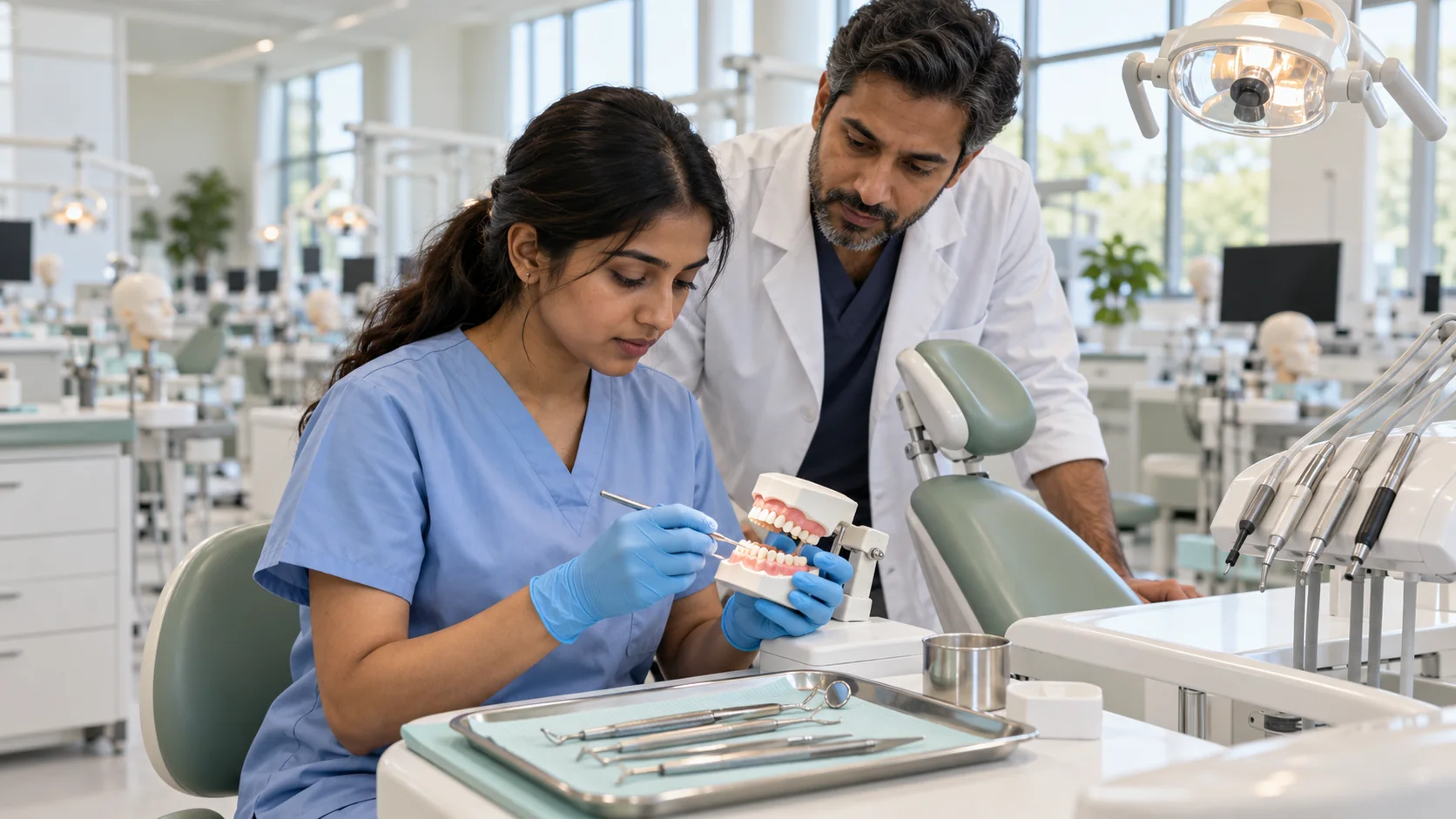
BDS is broad undergraduate preparation
BDS introduces multiple dental disciplines; it is not normally divided into specialist awards at undergraduate admission. The national curriculum builds foundations in biomedical sciences, diagnosis, prevention, restorative work, prosthodontics, periodontology, orthodontics, paediatric care, surgery and public health. Electives or workshops depend on the university and batch. A marketing phrase such as “specialisation in implants” does not create a recognised postgraduate credential.
Use clinical rotations to find what interests you. Do you prefer detailed restorative tasks, imaging and diagnosis, surgery, children's oral care, prevention, laboratory interpretation or community programmes? Observe what each area asks of a learner and how supervision works. Ask which electives appear in the approved curriculum, whether they are open to every student and how learning is assessed. Access to a device is not evidence that every learner receives supervised practice or independent competence.
MDS is postgraduate specialisation
The MDS Course Regulations describe postgraduate disciplines including Conservative Dentistry and Endodontics, Oral and Maxillofacial Surgery, Orthodontics and Dentofacial Orthopedics, Oral Pathology and Microbiology, Public Health Dentistry, Pediatric and Preventive Dentistry, Periodontology, Prosthodontics and Crown & Bridge, and Oral Medicine and Radiology. These fields are postgraduate options, not nine BDS tracks. Confirm current nomenclature, course recognition and seat availability from regulator and institution notices.
The 2017 regulations describe a NEET-based selection framework for postgraduate dental courses. Current rules, qualifying thresholds and counselling can change, so check the year-specific entrance bulletin and counselling portal when applying. Completing BDS does not guarantee admission to MDS or to a preferred speciality.
What the fields focus on
Conservative dentistry and endodontics concerns preserving and restoring tooth structure and pulp-related care. Prosthodontics restores or replaces missing and damaged teeth. Periodontology focuses on supporting tissues and periodontal disease. Orthodontics addresses malocclusion and dentofacial relationships. Oral and maxillofacial surgery covers surgical treatment of disease, injury and defects of the jaws and related facial structures. Oral medicine and radiology contributes diagnosis and imaging; oral pathology and microbiology studies disease processes. Paediatric and preventive dentistry focuses on oral health in childhood, while public health dentistry applies organised prevention at population level.
These descriptions explain academic focus, not job demand, prestige or expected income. Actual work varies with patient mix, referral networks, location and experience. Compare specialties by clinical requirements, research methods, patient population, training length and cost, and daily work environment. Avoid selecting a specialty from salary anecdotes.
Plan your progression
Complete BDS and internship first, then review whether you prefer practice, public health, research or postgraduate study. Confirm the licensing or registration requirements that apply to your graduating cohort. Before applying for MDS, compare recognised programmes, entrance rules, seats, clinical requirements and location. A speciality label does not tell you what its daily work entails. Be cautious of private short courses advertised as a shortcut to specialist status; ask the regulator and employer how the credential is recognised and what procedures it authorises.
BDS provides broad professional foundations. Further specialisation requires additional selection and study, and programme availability varies by year. Your choice should match the patient problems you want to work on and the training you are prepared to undertake.
Build evidence during undergraduate training
Your professional interests may change as you move from foundational sciences to patient work. Keep a private learning record of the clinical settings you observed, tasks you practised under supervision, feedback received and skills you need to strengthen. Do not include identifiable patient information without lawful permission. Discuss interests with faculty and ask which elective or project is formally available. This can support a later decision, but it does not replace core course requirements or create a recognised specialist title.
When considering MDS, check the current recognised-college list, speciality intake, entrance exam, counselling and eligibility rules for the relevant year. A speciality's name may vary between older regulation and current institutional presentation, so confirm exact nomenclature and recognised course status. Compare more than one programme where possible: clinical material, supervisor availability, research expectation, facilities and location can affect training. Do not choose only by the perceived prestige of a speciality.
Understand the day-to-day work
A field's focus is not the whole job. A specialist may combine diagnosis, patient communication, procedures, records, referrals, teaching or research depending on employer and setting. Public health dentistry may involve programme planning and community engagement as well as clinical prevention. Oral pathology may involve diagnostic laboratory work and research. Orthodontics may require long-term treatment planning and follow-up. These examples describe broad areas, not a guarantee that every programme or post has identical duties.
Speak with practitioners and current trainees about a typical week, supervision, patient mix and additional training. Ask what they wish they had known before choosing the field. Treat anecdotal answers as individual perspective, not a national employment forecast. Specialisation is a substantial investment of time and money, so assess whether the work itself appeals to you.