
Start with the curriculum for your batch
The national BDS framework sets broad training expectations; the detailed syllabus and examination scheme come from the university and apply to particular cohorts. The Revised BDS Course Regulations, as amended, describe four academic years plus a compulsory one-year paid rotating internship. Confirm the version and university adoption for your entry year rather than relying on an old semester PDF.
The curriculum moves from foundations toward clinical dental disciplines. Early study includes human anatomy, embryology, physiology, biochemistry, dental anatomy, dental materials and preclinical laboratory practice. Later areas include pathology, microbiology, pharmacology, general medicine and surgery foundations, oral diagnosis and radiology, restorative care, prosthodontics, periodontology, orthodontics, paediatric dentistry, oral surgery and community or public-health dentistry. This is a broad subject map, not a universal year-wise table. Each university sets its actual semester sequence, assessment and practical hours within the applicable framework.
Practical and clinical learning
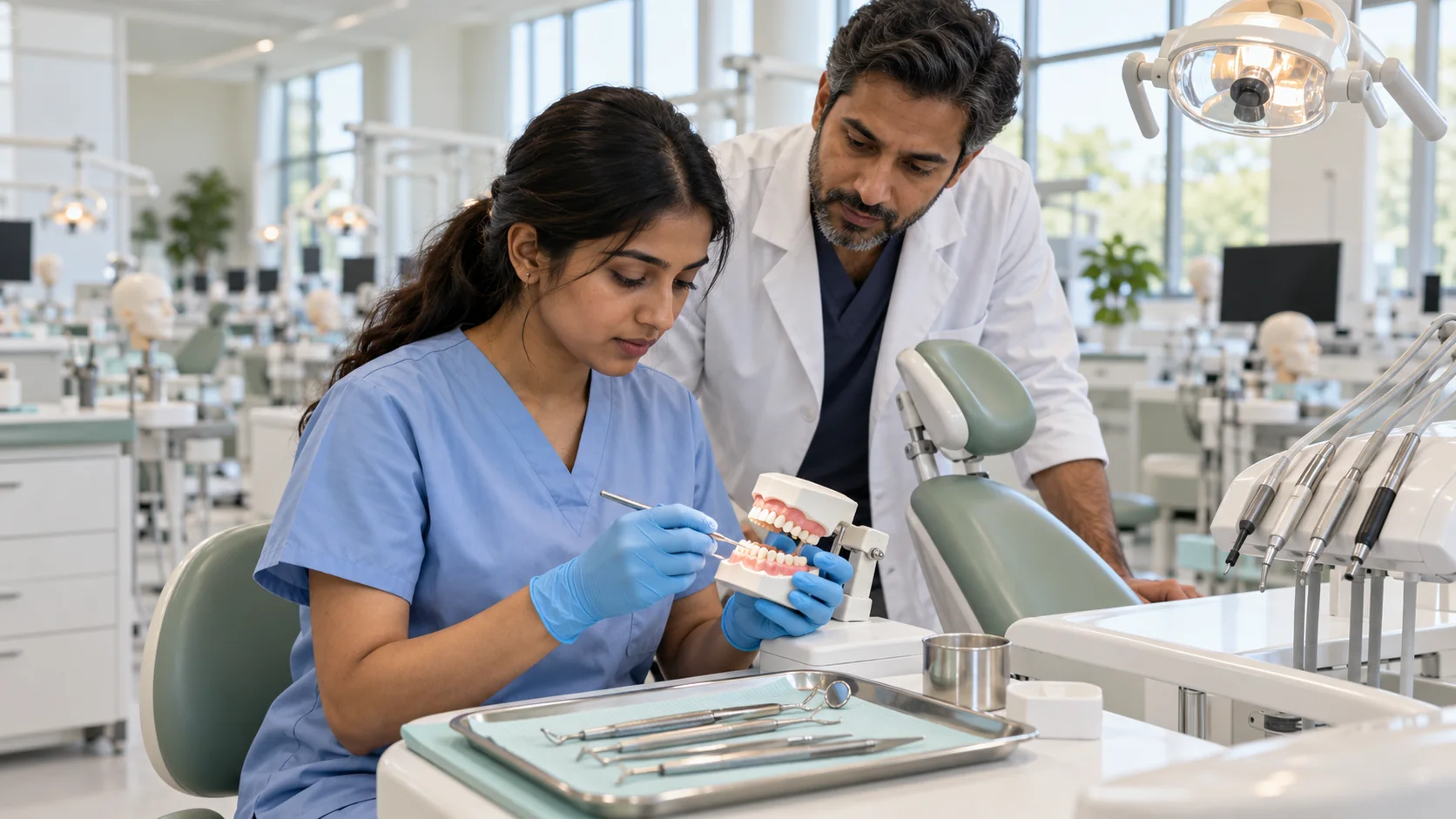
The regulations describe lectures alongside chair-side teaching, tutorials, seminars, small-group discussion, ward and laboratory postings, field visits and self-learning. Early laboratory practice gives students controlled repetition before clinical work. It is not the same as treating a patient. Clinical responsibility should increase under supervision and within course rules. Ask the college when student clinics begin, how supervision is organised, how infection prevention and consent are taught, and how cases are assigned across departments.
A good syllabus review goes beyond subject names. Ask for theory and practical hours, clinical competencies, internal assessment, written and practical examination criteria, attendance rules, progression requirements and remediation processes. Find out how patient case records are kept and how feedback is provided. Ask what happens if a student has not seen enough cases in a particular area before an examination. A high patient count or a modern-sounding subject does not prove each learner receives adequate supervised experience.
Internship structure
After passing the final BDS examination, students complete one year of paid rotating internship in a dental college. The degree is granted after internship completion. The regulations describe internship as competency-based and community-oriented. It is a training year, not an optional elective or guaranteed independent job. Confirm the current rotation schedule, stipend amount, payment timing, leave rules, attendance and posting location with the institution. National rules establish the requirement but do not provide a single stipend amount for every college.
Ask how the institution records competencies, who signs posting completion, how missed rotations are made up and when completion documents are issued. Delays can affect degree-award timing and subsequent registration or postgraduate plans. Check professional registration conditions separately for your cohort; course completion and permission to practise are not necessarily the same administrative step.
Check curriculum reform carefully
The National Dental Commission news page records a 2026 stakeholder consultation on BDS and MDS curriculum reform. Consultation indicates review, not proof that a new curriculum has taken effect. Use the version officially applicable to your admission batch and look for a final regulation or university adoption before treating proposed changes as binding. The MCODS Manipal page currently says its curriculum details will be updated shortly; do not infer a detailed year-wise syllabus from that page.
When comparing institutions, inspect the syllabus date, batch applicability, university approval, subjects, hours, practical competencies, assessments, internship schedule and electives. For a claimed focus such as digital dentistry or research, establish whether it is a required module, an elective, a short demonstration or merely access to equipment. Compare depth of supervised learning and assess how students receive feedback. A syllabus is a plan; competence depends on practice, supervision and assessment.
A regulated year-wise structure
The amended national regulation groups subjects by professional year. The first year includes general human anatomy, embryology and histology; physiology and biochemistry; dental anatomy and oral histology; dental materials; and preclinical prosthodontics. The second year adds general pathology and microbiology, pharmacology, dental materials, preclinical conservative dentistry and oral pathology. The third year brings in general medicine and surgery alongside oral pathology and multiple dental clinical disciplines. The fourth year continues clinical areas including orthodontics, oral medicine and radiology, paediatric dentistry, periodontology, oral surgery, prosthodontics, conservative dentistry and public health dentistry.
This list reflects the regulations, not a claim that every university uses identical semester titles or current sequencing. The text also contains historical fifth-year provisions for older cohorts. Do not read those transitional clauses as an extra academic year for a current student: the amended structure states four academic years plus a one-year internship. Confirm how the university organises the latest approved scheme for your batch.
Assessment and progression
The regulations describe written, practical or clinical assessment, viva and internal assessment. They set separate pass expectations for theory and practical or clinical components in the cited framework. Universities publish the operative examination rules and can detail the schedule, internal assessment and progression. Ask for those current rules before admission. Understand how many examinations occur in each year, how practical work is evaluated, what attendance is required, and how a failed subject affects the next professional year. A course outline without assessment detail can leave students unprepared for the actual workload.
Evaluate an advertised elective
A special module or elective can provide useful exposure if it has a defined syllabus, a qualified supervisor, learning outcomes and an assessment method. Check whether it appears in the university-approved curriculum and whether it is open to every student. If a college advertises digital dentistry, implants or research activity, ask whether students observe, practise on models, assist in a supervised clinical setting or conduct assessed work. These are different levels of exposure and should not be conflated. The official programme page for MCODS Manipal says curriculum details are to be updated; request its current scheme instead of inferring subjects from promotional highlights.