Loading Admission Guardian content
Loading Admission Guardian content
Find a program, read its fee details and explore the admission requirements.
Summary of the programs shown below. Fee periods can differ by program. Check the note beside each amount before comparing costs.
| Course | Stream | Fees |
|---|---|---|
| Master of Technology [M.Tech] (Heat Power) | Engineering | 41146 |
| Diploma in Engineering (Polytechnic) | Engineering | 48000 |
| Diploma in Engineering (Polytechnic) {Lateral} | Engineering | 48000 |
| Bachelor of Technology [B.Tech] {Lateral} | Engineering | 63500 |
| Bachelor of Technology [B.Tech] | Engineering | 72500 |
Specializations
All accepted exams
Eligibility: Graduation with 50%
Specializations
Eligibility: 10th with 35%
Specializations
Eligibility: 10+2
Specializations
All accepted exams
Eligibility: Diploma/ B.Sc with 45%
Specializations
All accepted exams
Eligibility: 10+2 with 45%
4 exams with cutoff data available
 2020 Analytics
 Accenture
 AMW Automobiles
 Apple
Apple Ashok Leyland
 Atos Origin
 Bajaj Corp Ltd
 Bharat Petroleum Corporation Limited (BPCL)
 Bizcon
 Blue Star
 Canon India Pvt. Ltd.
 Capgemini
 CMS IT Services
 Cognizant
 Dana
Dana Digitoonz
 DXC Technology
 Force Motors Ltd.
 FUJITSU
 Gunadhya Software Solutions
 Harman International
 HCL
HCL Hexaware Technologies
 Honeywell
 Hudl
Hudl Hyundai Motors
 Infosys
 Interview Mocha
 Jabil
Jabil JCB
JCB Kalyani Technoforge Ltd.
 L&T Ltd.
 Larsen & Toubro Limited
 Lodha Group
 Mahindra & Mahindra
 Menar
Menar Mphasis
 Nihilent Technologies
 Philips
 Qspiders
 Quantiphi Analytics
 Reliance Jio
 Samsung
 SEED infotech.
 SKF
SKF SysTools Software Pvt. Ltd.
 Tata Auto Comp
 Tata Motors
 Tata Technologies
 TCS
TCS TE Connectivity
 Tech Mahindra
 Varroc Excellence
 Virtusa
 Vodafone
 Wipro
Wipro Yazaki India Ltd
 Zensar
Arvind Gavali College of Engineering (AGCE) in Satara presents a classic regional college trade-off. It’s a solid, autonomous institution that’s built a decent reputation in Western Maharashtra over the last decade, but its primary appeal is to students from the surrounding districts who want a functional engineering degree without the cost and chaos of a metro. The college’s autonomous status, granted in 2024, is its biggest academic selling point, allowing for a more nimble curriculum. But as student reviews consistently point out, that academic promise often collides with the reality of modest placement packages, typically hovering around the 2.5 LPA mark. For the right student—someone looking for a low-cost, structured education close to home—AGCE works. For those dreaming of high-flying tech careers straight out of campus, the picture is more complicated.
AGCE runs a fairly standard spread of engineering programs, with Computer Science being the clear crowd-puller. They offer B.Tech in CSE (120 seats), Artificial Intelligence & Data Science (60), Electronics & Telecommunication (60), Civil (60), Mechanical (60), and Electrical (60). There’s also a B.Voc program with specializations like Data Science and Software Development, plus M.Tech, MCA, and BCA courses.
The autonomy is the key academic differentiator here. Being autonomous means AGCE designs its own syllabus and conducts its own exams under the broad DBATU framework. That’s a plus. Students report faster result declarations and a curriculum that can, in theory, be more responsive to industry trends than a non-autonomous college stuck with a rigid university syllabus. They’ve also started weaving in NEP 2020 guidelines.
Faculty strength is listed around 85-100, with a handful of PhD holders like Dr. Sharad S. Mulik (Principal) and Dr. Varsha Bhosale (CSE) providing senior oversight. But a common student gripe is faculty churn—while many teachers are praised as approachable, there’s a sense that experienced professors are thin on the ground, with a lot of teaching handled by newer lecturers.
This is where you need to read between the lines. The college’s promotional material will highlight the highest package, which was 14.5 LPA for 2024-25. That’s a real number, but it’s almost certainly an outlier, likely a single top performer in CSE placed off-campus or through a specific drive.
The working number that emerges from student reviews on platforms like Shiksha and CollegeDunia is far more modest. The consensus average package is between ₹2.1 LPA and ₹3.5 LPA, with a median around ₹2.5 LPA. That’s a decent outcome for a regional private college, but it’s crucial to calibrate expectations.
Placement percentages also have two versions. The official claim is 70-85%, but student anecdotes suggest the on-campus placement rate is closer to 50-60% for core branches like Mechanical or Civil, and higher for CSE and IT-related fields. Top recruiters visiting campus include IT service giants like TCS, Infosys, Wipro, and Capgemini, along with core companies such as Force Motors, Tata Motors, Mahindra & Mahindra, and local Satara industries like Cooper Corp. The placement cell is active, but the gap between the official placement claim and what alumni say on forums is notable.
AGCE’s fee structure is one of its main advantages, especially for in-state students. For the 2024-25 academic year, the annual B.Tech tuition fee ranges from ₹81,500 to ₹92,000, depending on your category (Open, OBC, SC, ST). Over four years, you’re looking at a total tuition cost of roughly ₹3.5 to ₹3.8 lakhs.
Hostel fees add to that. Basic hostel accommodation is estimated between ₹25,000 and ₹45,000 per year. There are mentions of premium AC rooms costing more, but those seem tied to the broader Samarth Group’s housing options.
Financial aid is primarily through government schemes accessible via the MAHADBT portal. These include EBC, TFWS, and SC/ST/OBC concessions. The college itself offers the "Sawkar Scholarship" for meritorious students. It’s a budget-friendly option in the grand scheme of engineering education.
Admission to the B.Tech programs is primarily through the Maharashtra Common Entrance Test (MHT-CET). JEE Main scores are also accepted. The process is centralized, run by the DTE Maharashtra through its CAP rounds.
The cutoffs tell a story about demand. For the 2024 session, the Computer Science & Engineering cutoff for General Home State students ranged from about 22.36 to 45.00 percentile in MHT-CET. Artificial Intelligence & Data Science followed in the 18.00 to 35.00 percentile range.
For other branches, the barriers are much lower. Cutoffs for Mechanical, Civil, and Electrical Engineering often dip to between 1.0 and 10.0 percentile. That basically means if you have a valid score, you’re likely in. Remember, 20% of seats are reserved for management quota admissions, which operate outside the CAP process.
The 10-acre campus is routinely praised in reviews. It’s clean, spacious, and the infrastructure—labs, libraries, classrooms—is considered well-maintained. The CSE labs have good internet, and the mechanical workshop has necessary machinery. The library has a collection of 20,000+ books and digital access to journals.
Hostels are separate for boys and girls, with basic amenities like Wi-Fi (speed can be spotty in rooms), water heaters, and common rooms. Food in the canteen is described as average but hygienic, serving basic Maharashtrian meals. There’s a large ground for cricket and football, and indoor spaces for table tennis.
The location, however, is a double-edged sword. Situated near the Pune-Bangalore Highway but about 10-12 km from Satara railway station, the campus is quiet. Some call it peaceful, others call it isolated. Social life is largely campus-centric. And be prepared for rules: the 75% attendance mandate is strictly enforced, and wearing a uniform is non-negotiable.
Synthesizing feedback from CollegeDunia, Shiksha, and other forums gives a balanced, human picture.
The Good: Students consistently highlight supportive, approachable faculty who are helpful with doubts. The infrastructure and cleanliness of the campus gets high marks. Many appreciate the benefits of autonomy—faster results and a perceived edge in syllabus relevance. For local students, it’s a cost-effective way to get an engineering degree.
The Not-So-Good: The biggest letdown, repeatedly mentioned, is placement quality. The packages are often seen as low for an engineering graduate. Faculty turnover and a reliance on younger lecturers is a concern for some. The remote location limits off-campus life, and the strict administrative style (attendance, uniforms, fee payments) can rub students the wrong way.
One paraphrased review sums it up: “The college is good for local Satara students who want a degree without moving to Pune, but don't expect high-paying jobs.” Another noted, “Infrastructure is 5-star, but the placement cell needs to bring better companies than just local workshops.”
AGCE Satara is a pragmatic choice, not a dream destination. It’s worth serious consideration if you are a student from Satara, Sangli, Kolhapur, or nearby districts looking for a respectable, autonomous engineering college close to home at a manageable cost. If your MHT-CET score is in the 20-45 percentile range and you want CSE, it’s a viable option. The autonomous status and decent infrastructure are legitimate pros.
You should probably look elsewhere if your primary goal is a high-paying campus placement or a vibrant, metropolitan college experience. The average package of ~₹2.5 LPA is a hard ceiling for most graduates here. Also, if you thrive in a less rigid environment, the strict attendance and uniform policies might chafe.
In short, AGCE does what many regional private colleges do: it provides accessible, structured technical education to its local community. It does that job adequately. Just go in with clear, grounded expectations about what that education will yield in the job market.
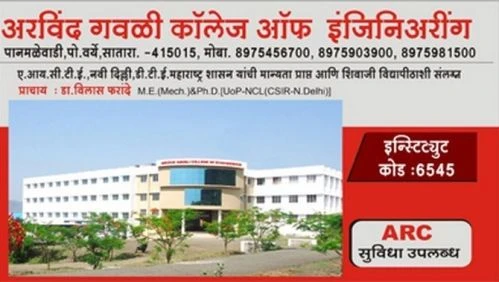
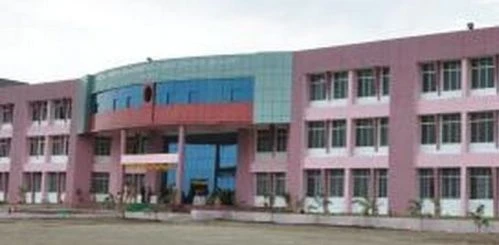
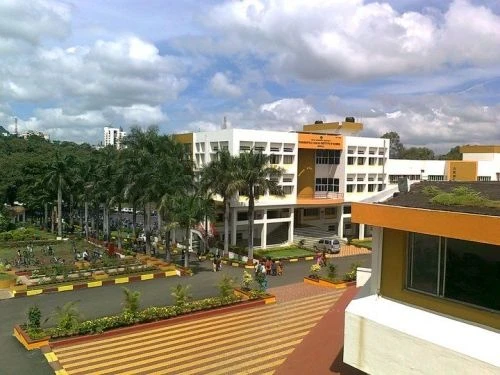
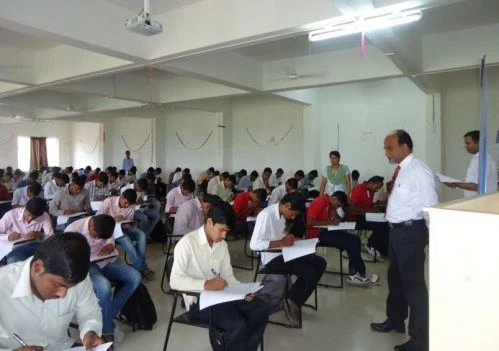
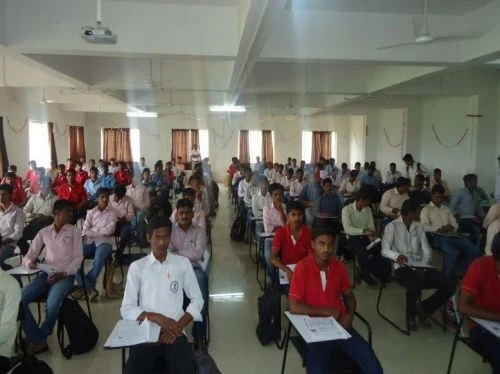
In this preview: 5 photos · 0 videos
Yes, AGCE is considered good for Computer Science. It is the most popular branch at the college, consistently having the highest admission cutoffs and the best placement record among all its programs.
The realistic average placement package at Arvind Gavali College of Engineering is reported to be between ₹2.2 Lakhs Per Annum (LPA) and ₹2.8 LPA.
Yes, Arvind Gavali College of Engineering has recently received autonomous status. This allows the college to set its own curriculum and conduct its own examinations.
Yes, AGCE provides a secure on-campus hostel facility for female students, which includes mess facilities for meals.
Yes, admission is possible with a lower MHT-CET score for most branches, except for Computer Science and Engineering (CSE) and AI & Data Science. For many other programs, the cutoff percentiles are often very accessible, frequently below 20 percentile.
Share what future students should know about AGCE.
Student voices are not rewritten by colleges. We remove spam and abuse.
Wider admission question? Community PulseWhat should future students know?
Tell us which course you're considering. We'll help you work out the next step.
Get instant Partner access after mobile verification. Your public edits are reviewed before they go live.
Claim this college
 Auditorium
 Cafeteria
 Computer Labs
 Gym
Gym Hostel
 Medical
 Science Labs
 Sports Complex
 Study Library