Loading Admission Guardian content
Loading Admission Guardian content
Selected ranking categories, with the recorded year beside each result. Open all records for the complete history.
1 published record · Lower numeric ranks are stronger
Find a program, read its fee details and explore the admission requirements.
Summary of the programs shown below. Fee periods can differ by program. Check the note beside each amount before comparing costs.
| Course | Stream | Fees |
|---|---|---|
| Bachelor of Business Administration [BBA] | Management | 470000 |
| Bachelor of Technology [B.Tech] | Engineering | 495000 |
| Master of Design [M.Des] | Design | 545000 |
| Master of Business Administration [MBA] | Management | 545000 |
| Bachelor of Design [B.Des] | Design | 682000 |
Specializations
Eligibility: 10+2
Specializations
Eligibility: 10+2 with 50%
Specializations
All accepted exams
Eligibility: Graduation
Specializations
All accepted exams
Eligibility: Graduation
Specializations
Eligibility: 10+2
 3M
3M Aditya Birla Group
 Adobe
Adobe Amazon
 Anarock Property Consultants Private Limited
 Asus Technology
 Bharat Serums and Vaccines Limited
 Bisleri
 Calvin Klein
 Carwale
 Cisco
Cisco Colgate Palmolive India Ltd.
 Crisil
 Datamatics Business Solutions
 Deloitte
 Diageo
 Edelweiss
 Eureka Forbes
 Facebook
 Foxy Moron
 General Mills
 Godrej Infotech
 Google
 HDFC Bank
 HDFC Life
 Hennes & Mauritz (H&M)
 IBM
IBM IDFC First Bank
 IIFL
IIFL Ikea
Ikea Indiabulls
 Infosys
 ITC
ITC JLL India
 Kotak Mahindra Bank
 KPMG
KPMG Landor
 Larsen & Toubro Ltd.
 LiquiLoans
 Microsoft
 Mindshare
 Motilal Oswal
 Nomura Research Institute Ltd.
 NYK
NYK Oracle
![Reliance Industries Limited [RIL]](https://assets.admissionguardian.com/imgproxy/insecure/w:64/h:64/rt:fit/el:0/f:avif/q:82/sm:1/plain/local%3A%2F%2F%2Fimages%2Frecruiter_logos%2Freliance-industries-limited-ril-logo.webp) Reliance Industries Limited [RIL]
Reliance Industries Limited [RIL] Reliance Jio
 Samsung
 Times of India
 Titan
Titan Tommy Hilfiger
 UpGrad
 Viacom
 Vogue
Vogue Zara
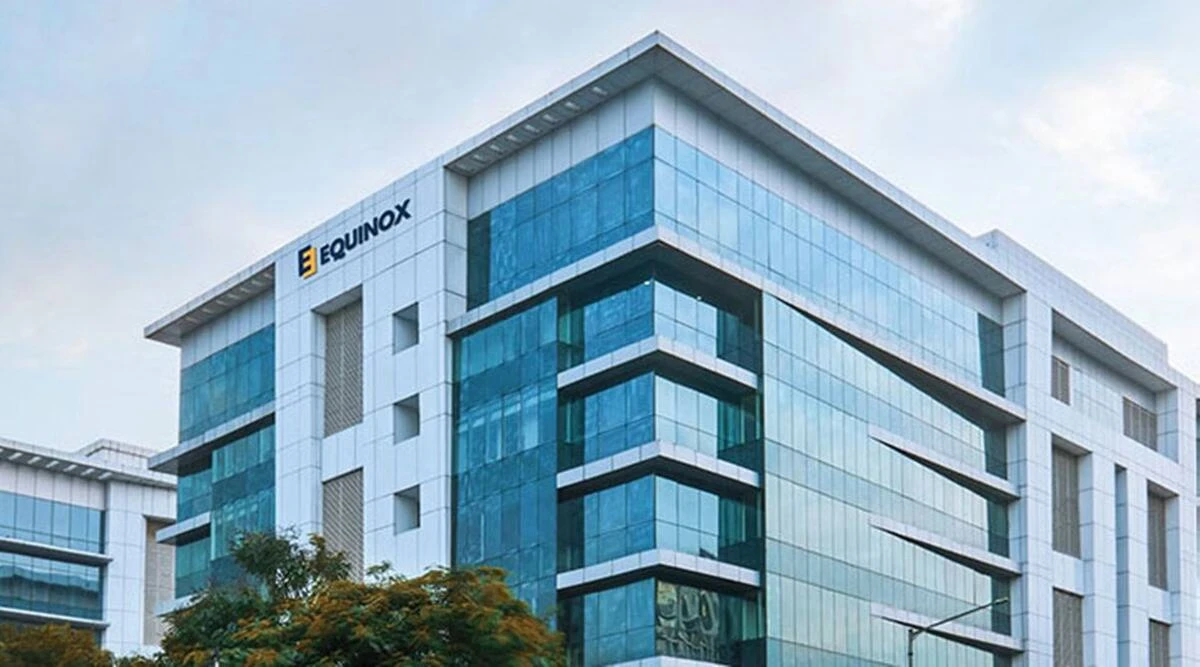
ZaraATLAS SkillTech University is a proposition that's hard to ignore if you're looking at private education in Mumbai. Established in 2021, it's already pulled off a significant feat: securing a NAAC 'A' Grade accreditation, making it one of the youngest universities in India to do so. That's not just a line on a brochure. It signals a formal recognition of academic quality and institutional processes from a national body, which is a serious point of credibility for a new player. But the real story here is its location and philosophy. Nestled in the Equinox Business Park, right in the middle of the Bandra-Kurla Complex, this isn't a secluded campus. It's a deliberate immersion into Mumbai's corporate bloodstream. The pitch is clear: your classroom is an extension of the boardrooms and design studios just outside the door. For students who learn by doing and want their education to feel connected to the real world from day one, that's a compelling starting point.
This is where ATLAS tries to differentiate itself. It's not a single-focus institute. It's built around four schools: ISDI (Design & Innovation), ISME (Management & Entrepreneurship), uGDX (Technology), and the ATLAS School of Law. The idea is that a BBA student might take an elective from the design school, or a law student might work with tech majors on a project. That's the theory, at least.
On paper, the undergraduate offerings are modern. The BBA (Hons.) program is flexible, letting you major in Marketing or Finance while picking a minor from a list that includes Business Analytics and Entrepreneurship. They've got specialized BBA tracks in Digital Branding & Advertising and, more notably, in AI & Emerging Technologies—a direct nod to market demand. There's also a B.Sc. (Hons.) in Finance and B.Tech and B.Design programs. At the postgraduate level, the flagship is the MBA, offered in both full-time and online formats.
The academic model heavily emphasizes "industry-integrated learning." That phrase gets used a lot. Here, it translates to a curriculum reportedly co-created with industry partners, classrooms set up like workspaces, and a steady stream of real-world projects. For instance, student teams have worked on projects for Mondelez India and HDFC Life. The faculty is described as coming from institutions like IIT and BITS Pilani, with a stated teacher-student ratio of 1:30. A key collaboration is ISDI's long-term curricular partnership with Parsons School of Design, which is a solid hook for design aspirants.
This section requires a bit of reading between the lines. The university's published material prominently lists an impressive roster of companies where graduates have secured placements and internships: Apple, Google, Amazon, Deloitte, P&G, HDFC, Morgan Stanley, Accenture, Bain & Company, and Boston Consulting Group. That's a top-tier list, no doubt.
However, a critical point is missing from the available data: the official placement statistics. There's no mention of the highest, average, or median package for recent batches. The placement percentage is also not specified. This isn't uncommon for very new institutions, but it's a gap for anyone trying to gauge concrete outcomes. The presence of those brand-name recruiters suggests strong corporate outreach and likely some excellent individual offers. But without the full dataset—how many students actually land roles at these firms, and at what salary bands—it's hard to assess the typical student's experience. The promise is clearly geared towards the high-achiever, but the breadth of success is an open question for now.
Specific fee details for the 2025-2027 academic cycles are not publicly detailed in the available brief. For a university located in prime Mumbai real estate with a focus on industry-ready infrastructure and global collaborations, prospective students should anticipate fees that are competitive with other leading private institutions in the city. The total cost will be a significant factor.
On the positive side, the university does state that scholarships are available. These include merit-based awards (for academic excellence or high entrance exam scores), need-based assistance, and government scholarships. This indicates a structured effort to make education accessible to a wider pool of talent. Anyone seriously considering ATLAS should contact the admissions office directly for a detailed, program-specific fee breakdown and scholarship application criteria.
Admissions for the 2026-2027 session are open. The process isn't reliant on a single exam. Instead, ATLAS accepts a mix of its own entrance tests and national scores, which gives applicants flexibility.
The selection typically involves a two-step process: performance in one of the accepted entrance exams, followed by a Personal Interview (PI). There's no available data on cutoff ranks or percentiles from recent cycles, which is again typical for a new institution that's likely building its applicant pool year-on-year. The emphasis seems to be on a holistic review—test scores plus the interview—rather than just a rank-based filter.
The campus is its own unique selling point. It's not a sprawling traditional university grounds; it's a modern, tech-led infrastructure built into a business park. You'll find digitally enabled classrooms, over 30 specialized labs and innovation studios, and collaborative spaces designed to mimic professional environments. The library and specific academic resources aren't detailed, but the focus is clearly on creating a dynamic, project-based workspace.
Hostels are available separately for boys and girls, located just a short walk from the academic building. They're described as comfortable and secure, with both AC and non-AC options. A major plus is the 24/7 availability of medical staff and support in the hostel, along with Wi-Fi. Food options cater to diverse preferences (Veg, Jain, Non-Veg). For outstation students, this on-campus housing removes a huge logistical headache in a city like Mumbai.
Student life appears active. There's a long list of sports facilities, both indoor (chess, table tennis, badminton) and outdoor (football, basketball, cricket). The Agile Sports Club organizes events like the ATLAS Champions League football tournament. Beyond sports, the university highlights various festivals and events like "ILLENIUM" and "MUNZIL," and clubs like the ATLAS Book Club. The location in BKC means the city's social and cultural scene is easily accessible, but the on-campus community seems intentionally curated.
Here's the honest truth: finding a consolidated, unbiased stream of student reviews for a university established in 2021 is challenging. Most available information online is from the university itself or affiliated promotional channels. They consistently highlight the strengths: the future-ready curriculum, the multidisciplinary approach, the industry connections, the prime location, and the modern infrastructure. The leadership, including Founding President Dr. Indu Shahani, brings considerable academic credibility.
What's missing are the unfiltered, critical perspectives you'd find on forums like Reddit or Quora—the kind that talk about workload pressures, administrative hiccups, variability in teaching quality, or the actual day-to-day reality of placements beyond the top names. For any new institution, the first few batches are the real test. Their experiences, once they start sharing them publicly in the coming years, will provide the crucial "reality check." For now, the student sentiment is largely projected by the institution's own vision. That vision is ambitious and well-articulated, but due diligence for a prospective student should include trying to connect with current students on LinkedIn or attending open house events to ask pointed questions.
ATLAS SkillTech University is a bold, modern bet on what higher education in India could look like. It's not for everyone. If you want a classic, sprawling campus life or are solely driven by the historic brand name of an older university, look elsewhere. But if you're a student who is self-driven, thrives in a fast-paced environment, and believes education should be deeply intertwined with industry practice, ATLAS presents a fascinating option. The NAAC 'A' grade so early is a strong trust signal. The Mumbai BKC location is a massive advantage for networking and exposure. The multidisciplinary model, if executed well, could provide a significant edge.
The caveats are important. It's new, so long-term placement trends and alumni networks are still forming. The fees are not publicly listed but will be substantial. You are buying into a philosophy and a potential future outcome more than a proven, decades-old track record. For the right student—entrepreneurial, adaptable, and looking to build a career in design, new-age business, or tech—ATLAS could be a perfect launchpad. For those seeking certainty and tradition, it might feel like too much of a leap into the unknown. Your decision hinges on how much you value its innovative approach versus the comfort of established data.
Admission requirements vary by program but typically involve a combination of academic qualifications, performance in accepted entrance exams, and often a portfolio review or personal interview. Prospective students should check the specific criteria for their chosen course in Design, Management, Technology, or Law directly with the university's admissions office.
The fee structure for BBA and MBA programs at ATLAS SkillTech University is program-specific. For the most accurate and current tuition details, applicants should refer to the official university website or contact the admissions department directly, as fees can be subject to change.
ATLAS SkillTech University has a placement cell that facilitates campus recruitment. The university's placement records and the list of top recruiters vary annually and by school (Design, Management, Technology). For detailed and updated statistics, students are advised to consult the official university placement reports.
ATLAS SkillTech University offers specialized programs in Design, Management, Technology, and Law. Its focus on industry-relevant skills and modern pedagogy makes it a considered choice for students seeking education in these fields. Prospective students should evaluate specific program curricula, faculty, and infrastructure to determine the best fit for their career goals.
Yes, ATLAS SkillTech University offers scholarships to eligible students. The availability, types, and criteria for these scholarships are detailed on the university's official website. Interested candidates should review the specific scholarship programs and application processes outlined by the university's financial aid office.
Share what future students should know about ATLAS SkillTech University.
Student voices are not rewritten by colleges. We remove spam and abuse.
Wider admission question? Community PulseWhat should future students know?
Tell us which course you're considering. We'll help you work out the next step.
Get instant Partner access after mobile verification. Your public edits are reviewed before they go live.
Claim this college Campus Security
 Campus Wi-Fi
 Communication Centre
 Smart Classrooms
 Study Library