Loading Admission Guardian content
Loading Admission Guardian content
Provisional score based on available data. It may change as more information is verified.
Selected ranking categories, with the recorded year beside each result. Open all records for the complete history.
42 published records · Lower numeric ranks are stronger
IIRF
Engineering · private
#972022
India Today
Engineering · private
#532021
Find a program, read its fee details and explore the admission requirements.
Summary of the programs shown below. First-year fee. Check the note beside each amount for inclusions and exclusions.
| Course | Stream | Fees |
|---|---|---|
| Master of Business Administration [MBA] | Management | 30000 |
| Master of Technology [M.Tech] (Biotechnology) | Engineering | 50000 |
| Bachelor of Engineering [BE] | Engineering | 75000 |
| Bachelor of Engineering [BE] {Lateral} | Engineering | 75000 |
| Bachelor of Technology [B.Tech] | Engineering | 75000 |
Specializations
All accepted exams
Eligibility: Graduation
Specializations
All accepted exams
Eligibility: Graduation
Specializations
All accepted exams
Eligibility: 10+2
Specializations
All accepted exams
Eligibility: Diploma
Specializations
All accepted exams
Eligibility: 10+2
2 exams with cutoff data available - showing recent entries
 Accenture
 Amazon
 BIS
BIS Bosch Limited
 Britannia Industries
 Byju's
 Cognizant
 Decathlon
 Flipkart
 Gofrugal
 Hatsun
 IBM
IBM IDP Pvt Ltd
 Incredible Holidays
 Informatica Business Solutions Pvt Ltd.
 Infosys
 Infoview
 Juspay
 Kaar Technologies
 Lowe Lintas & Partners
 Mercedes Benz (India) Ltd.
 Mr Cooper Home Loans
 Odessa Technologies Inc.
 PAYPAL
 Pega Systems
 Rently Software Development Private Limited
 Sirius Computer Solutions
 Skavasystems Pvt. Ltd.
 Soliton Technologies Pvt Ltd
 TCS
TCS TCS - Corporate Technology Organization
 TEMENOS India Private Limited
 ThoughtWorks Technologies
 Titan
Titan TVS Groups & Sons
 ValueLabs
 Virtusa
 Wipro
Wipro Zifo RnD Solutions
 Zoho
ZohoBannari Amman Institute of Technology (BIT), located in Sathyamangalam, Erode district, Tamil Nadu, is a major autonomous, self-financing engineering institution established in 1996 by the Bannari Amman Group. Situated on a sprawling 180-acre campus on the banks of the River Bhavani, the institute operates under affiliation with Anna University, Chennai, and is approved by the All India Council for Technical Education (AICTE). The institution has steadily built a reputation in the region for its expansive infrastructure, disciplined residential environment, and consistent placement record, particularly in the information technology and services sectors.
For applicants navigating the Tamil Nadu Engineering Admissions (TNEA) process, BIT represents a significant decision point. It offers the academic flexibility of an autonomous institution, allowing for more frequent curriculum updates than non-autonomous affiliated colleges. The institute holds accreditations from the National Assessment and Accreditation Council (NAAC) and the National Board of Accreditation (NBA) for several of its core programs, serving as baseline indicators of academic and infrastructural quality. BIT has also participated in the National Institutional Ranking Framework (NIRF), securing a place in the 51 to 100 band for the NIRF Innovation category in 2023, and having previously ranked in the 151 to 200 overall band in 2018. The following profile examines the academic offerings, admission competitiveness, full cost of attendance, reported placement outcomes, and the residential experience to help applicants determine if BIT aligns with their educational and career objectives.
BIT offers a comprehensive suite of undergraduate (B.E. and B.Tech.), postgraduate (M.E., M.Tech., and MBA), and doctoral (Ph.D.) programs. The academic breadth is substantial, catering to both traditional engineering disciplines and emerging technology sectors.
The Bachelor of Engineering (B.E.) framework includes established branches such as Computer Science and Engineering (CSE), Electrical and Electronics Engineering (EEE), Electronics and Communication Engineering (ECE), Electronics and Instrumentation Engineering (EIE), Mechanical Engineering, Mechatronics Engineering, and Aeronautical Engineering. Concurrently, the Bachelor of Technology (B.Tech.) offerings reflect industry shifts, featuring programs in Artificial Intelligence and Data Science (AI & DS), Biotechnology, Information Technology (IT), and Agricultural Engineering.
The autonomous status of the institute is a critical academic differentiator. While the degree is ultimately awarded by Anna University, BIT has the authority to design its own syllabi, conduct its own examinations, and establish specialized grading rubrics. This autonomy permits the integration of industry-oriented electives, modern software tools, and contemporary lab practices directly into the curriculum without waiting for university-wide syllabus revisions. For instance, computing students frequently engage with specialized tracks in machine learning, cloud computing, and cybersecurity, while core engineering students have access to advanced design and manufacturing software. The academic rigor is supported by extensive laboratory infrastructure, requiring students to maintain high attendance and adhere to strict academic schedules.
Admission to the undergraduate B.E. and B.Tech. programs at BIT is highly structured and primarily divided into two main routes: the Government Quota through TNEA counselling and the Management Quota.
TNEA Counselling Route The majority of seats are filled through the TNEA single-window counselling system administered by the Directorate of Technical Education (DoTE), Tamil Nadu. Eligibility requires candidates to have passed the 10+2 (Higher Secondary) examination with Physics, Chemistry, and Mathematics as mandatory subjects, though certain branches like Biotechnology or Agricultural Engineering may permit Biology or vocational subjects as alternatives.
The admissions process is strictly merit-based, driven by the aggregate marks secured out of 200 in the core science and mathematics subjects. BIT, participating under TNEA Code 2702, experiences varied demand across its programs. Branches such as Computer Science and Engineering, Artificial Intelligence and Data Science, and Information Technology consistently command the highest closing cutoffs. In recent admission cycles, securing a seat in these high-demand computing branches under the Open Competition (OC) or Backward Class (BC) categories typically required candidates to be in the upper percentiles of the TNEA rank list, often concluding in the earlier rounds of counselling. Conversely, traditional core engineering branches like Mechanical or Civil Engineering, while still competitive, generally present slightly more accessible closing ranks, allowing students with moderate TNEA aggregates to secure admission in subsequent counselling rounds. Applicants must carefully analyze the previous year's closing ranks for their specific category and desired branch to set realistic expectations.
Management Quota and Lateral Entry For candidates who do not secure their preferred branch through TNEA, or for out-of-state students, the Management Quota provides an alternative pathway. Admission through this route is handled directly by the institute, adhering to the guidelines of the Consortium of Self-Financing Professional, Arts and Science Colleges in Tamil Nadu. This route requires direct application and is contingent upon fulfilling the institute's specific academic thresholds. Additionally, BIT accommodates diploma holders through the Lateral Entry scheme, allowing direct admission into the second year of the B.E./B.Tech. programs, which is also subject to merit and government guidelines.
Understanding the complete cost of attendance at BIT requires looking beyond the base tuition fee, as the total financial commitment varies significantly based on the chosen admission route and accommodation choices.
Tuition and Academic Fees For students admitted through the TNEA government quota, the annual tuition fee is regulated by the state fee fixation committee. This typically ranges from ₹75,000 to ₹1,00,000 per academic year, depending on the specific program and any applicable government waivers for first-generation graduates.
In contrast, the Management Quota involves a substantially higher financial outlay. While exact figures fluctuate by year and branch demand, the annual fees for management seats frequently range between ₹1,50,000 to ₹2,00,000. Consequently, a four-year degree under the management quota can result in a cumulative tuition cost of approximately ₹6.40 lakhs to ₹6.80 lakhs, excluding other mandatory charges. All students, regardless of the admission route, must also account for one-time admission fees, caution deposits, examination fees, and charges for specialized training programs.
Residential and Living Costs Given its location, BIT operates primarily as a residential campus. Hostel accommodation is a major component of the total cost. Standard non-air-conditioned hostel rooms generally start around ₹65,000 per academic year, which covers basic lodging and mess facilities. The institute also offers premium residential options, including air-conditioned rooms or single-occupancy layouts, which carry significantly higher annual tariffs. Applicants must factor these recurring living expenses into their four-year financial planning.
Financial Aid and Scholarships To offset costs, BIT facilitates various state government scholarships, particularly for SC/ST students, Backward Class students, and First-Generation Graduates. Furthermore, the institute's mandatory disclosures indicate the availability of institutional fee waivers and merit scholarships awarded to high-performing students or those demonstrating financial need, though these are highly competitive and subject to strict academic renewal criteria.
The Training and Placement Cell at BIT is a highly active, well-resourced department that constitutes a major draw for prospective applicants. The institute consistently reports large-scale placement drives, facilitating recruitment for cohorts exceeding 1,000 students.
Reported Statistics and Top Recruiters Recent placement reports highlight the institute's capacity to attract a broad spectrum of employers. For the 2024 and 2026 reporting cohorts, BIT recorded highest package offers reaching ₹44 Lakhs Per Annum (LPA). The placement drives regularly see participation from over 300 companies, resulting in 1,200 to 1,900+ job offers across various sectors.
The recruitment landscape is heavily dominated by IT services and technology product companies. Major recruiters frequently visiting the campus include Amazon, TCS, Infosys, Juspay, Thoughtworks, Capgemini, Virtusa, SAP, and Oracle. In the core engineering domain, companies such as Bosch, Esko, Ford, and Britannia offer roles to students from mechanical, electrical, and mechatronics backgrounds.
Contextualizing the Outcomes While the headline figure of ₹44 LPA demonstrates the potential upper limit of campus placements, applicants must interpret this metric with analytical restraint. Such premium packages are typically secured by a very small, elite fraction of the student body, usually those with exceptional coding proficiency participating in highly competitive product-company recruitment drives.
For the broader student cohort, the placement reality aligns more closely with the industry standards for mass IT recruitment. The median or average package, while not always prominently advertised, is a more accurate reflection of the typical graduate outcome. Students in computing branches generally see higher placement volumes and starting salaries compared to those in traditional core engineering branches, where recruitment is often more selective and dependent on specific macroeconomic cycles in manufacturing or infrastructure.
Placement Preparation BIT invests heavily in pre-placement preparation. The placement cell executes a structured training regimen that begins well before the final year. This includes intensive coding bootcamps focusing on C, C++, Java, and Python, alongside rigorous aptitude training, soft skills development, and mock interviews. This systematic approach is designed to ensure students meet the baseline employability criteria demanded by major corporate recruiters.
The 180-acre BIT campus in Sathyamangalam is designed as an expansive, self-sufficient academic township. Because the institute is located away from major metropolitan centers, the campus relies on its internal infrastructure to provide a comprehensive student experience.
The physical infrastructure is extensive and modern. Academic facilities include well-equipped Science Labs and Computer Labs that support the practical requirements of the autonomous curriculum. A large central Study Library provides extensive digital and physical resources for research and coursework. For large gatherings, technical symposiums, and cultural festivals, the campus houses a major Auditorium.
Residential life is heavily emphasized. The Hostel blocks are expansive, segregated, and supported by a large Cafeteria and dining infrastructure designed to cater to thousands of students daily. Health and wellness are supported by an on-campus Medical center, a fully equipped Gym, and a massive Sports Complex that accommodates multiple outdoor field sports and indoor games. Daily conveniences are met through an on-site Bank & ATM. The entire perimeter and residential zones are monitored by dedicated Campus Security, ensuring a safe, regulated environment.
The campus culture at BIT is known for being highly disciplined and structured. While there are numerous student-run technical clubs, cultural societies, and annual events that foster peer interaction and leadership, the environment is governed by strict rules regarding attendance, dress codes, and hostel curfews. This structured environment is often viewed favorably by parents seeking a focused academic setting, though it requires adjustment from students expecting a highly liberal or unstructured college life.
Who is Bannari Amman Institute of Technology (BIT) a strong fit for? BIT is an excellent match for students who desire a highly structured, discipline-oriented residential college experience supported by massive, modern infrastructure. It is particularly strong for applicants targeting careers in the IT and software services sectors, given the institute's robust placement pipeline, intensive pre-placement training, and autonomous curriculum that integrates modern tech skills. Students who thrive in a predictable, well-organized environment with clear academic and extracurricular boundaries will find the campus highly supportive.
What could rule it out? The semi-rural location of Sathyamangalam acts as a geographic constraint for students who want immediate, daily access to a vibrant metropolitan startup ecosystem, frequent off-campus urban internships, or city-based networking events typical of Chennai or Bangalore. Furthermore, the campus culture is notably strict; applicants seeking a highly liberal, unstructured collegiate environment may find the rules regarding dress codes and hostel curfews restrictive. Finally, the total cost of attendance for students entering via the management quota and opting for premium hostel accommodations is substantial, which may rule out the institute for applicants with strict budgetary constraints who prefer fully government-subsidized options.
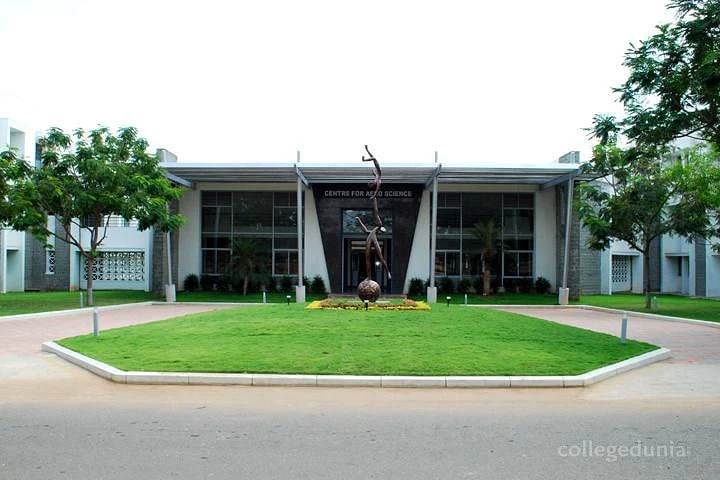
In this preview: 1 photo · 0 videos
Yes, the Computer Science Engineering branch is the flagship program at BIT. It is known for having the highest placement rates, consistently above 95%, and the most competitive admission cutoffs among all the branches offered at the institute.
The hostel curfew at Bannari Amman Institute of Technology is strictly enforced at 8:15 PM. This timing applies uniformly to both boys' and girls' hostels on campus.
Yes, direct admission is available through the management quota at BIT. Approximately 35% of the total seats are allocated under this category. Admission for these seats is based on the applicant's 12th standard marks, and no entrance exam score is required for this specific quota.
The food served in the campus mess is hygienic and strictly vegetarian. Non-vegetarian food is provided once a week. Based on student feedback, the mess food is generally rated as "above average" when compared to hostel food at other institutions in Tamil Nadu.
The "Special Lab" is a unique facility and a key highlight of BIT. These labs are either student-run or dedicated to advanced research. A major advantage is that they remain open 24 hours a day, 7 days a week, to support student innovation, project work, and hands-on learning.
Share what future students should know about Bannari Amman Institute of Technology.
Student voices are not rewritten by colleges. We remove spam and abuse.
Wider admission question? Community PulseWhat should future students know?
Tell us which course you're considering. We'll help you work out the next step.
Get instant Partner access after mobile verification. Your public edits are reviewed before they go live.
Claim this college
 Auditorium
 Cafeteria
 Computer Labs
 Gym
Gym Hostel
 Medical
 Science Labs
 Sports Complex
 Study Library