Loading Admission Guardian content
Loading Admission Guardian content

7 programmes · 1 institution. Check the admission year and requirements.
7 programmes · 1 institution. Check the admission year and requirements.
First-year fee
Showing 5 courses
Specializations
Eligibility: Graduation
Eligibility: Graduation
Specializations
Listed entrance exams
Eligibility: 10+2 with 45% + COMEDK UGET
Specializations
Listed entrance exams
Eligibility: Graduation with 50% + CAT
Specializations
Listed entrance exams
Eligibility: 10+3 with 45%
See courses and fees at other colleges.
Explore collegesLoading programmes and admission routes.
BMS College of Engineering publishes separate fee schedules for management-quota admission and different programmes. Its available 2026-27 fee tables are historical cycle evidence; they do not establish 2027-28 rates. The annual management-quota amount is not a full-course total, and the revised postgraduate circular covers first-year miscellaneous charges rather than replacing the annual programme-fee table.
The college’s approved 2026-27 schedule lists fees in lakh per annum. The listed rates are Civil Engineering ₹6L, Electrical and Electronics Engineering ₹6L, Industrial Engineering and Management ₹6L, Electronics and Communication Engineering ₹9L, Mechanical Engineering ₹6L, Computer Science and Engineering ₹15L, Chemical Engineering ₹4L, and Biotechnology ₹7L. Among the newer computing options, Artificial Intelligence and Machine Learning is ₹12.5L; Artificial Intelligence and Data Science, CSE (Data Science), and CSE (Internet of Things and Cyber Security including Blockchain Technology) are each ₹12L. Computer Science and Business Systems is ₹10L per annum.
These figures are specifically management-quota rates, not a universal BMSCE fee or a KEA/COMED-K fee quote. The college says hostel charges are extra. The schedule does not establish whether later-year rates remain unchanged, so multiplying the annual rate by the course duration would imply a total that the source does not promise. Applicants should ask the admissions office for a written programme-specific payment schedule, including any other compulsory charges.
The published schedule also shows why a single “BMSCE fee” figure is misleading: within this 2026-27 management schedule, CSE is ₹15L per annum while Chemical Engineering is ₹4L. That comparison is a direct reading of the listed annual rates, not an estimate of total course cost. The source does not say whether every other compulsory institutional or university charge is included in each branch amount. Ask the admissions office for an itemised demand and confirm whether any separate first-year fee applies. Do not use the management schedule to estimate KEA or COMED-K payments.
For 2026-27, BMSCE lists MBA at ₹4L per annum and MCA at ₹3.5L per annum. The listed M.Tech rates are Data Science ₹3L, Transportation Engineering ₹1.5L, and VLSI and Embedded Systems ₹4L per annum. These are programme-specific management-quota figures. The page calls Data Science a new course and does not list every M.Tech specialisation, so the schedule should not be treated as a comprehensive postgraduate prospectus.
The postgraduate page separately links a revised 2026-27 first-year miscellaneous-fee notification, dated 29 September 2026, referring to VTU’s 23 September fee circular and a Government order dated 7 September. For PGCET quota, it lists ₹28,960 for MBA and MCA and ₹29,500 for M.Tech in the standard row; the reserved-category row lists ₹40,840 for MBA/MCA and ₹41,380 for M.Tech. Its note discusses tuition-fee amounts due under the government/KEA process, which should not be confused with these miscellaneous charges. Under management quota, the circular lists first-year miscellaneous charges of ₹40,840 for Karnataka MBA/MCA students and ₹41,380 for M.Tech; for non-Karnataka students it lists ₹42,640 for MBA/MCA and ₹43,180 for M.Tech.
The circular is an additional first-year charge schedule, not a substitute for the annual management-quota rates above and not a complete two-year cost. Applicants should confirm how the applicable quota, category, tuition and any later revisions affect their individual demand before paying.
The same page shows a wide difference across the listed PG options: M.Tech Transportation Engineering is ₹1.5L annually, while VLSI and Embedded Systems is ₹4L. These are route-labelled management-quota amounts, not a comparison of programme value or outcomes. The table does not establish seat availability, tuition treatment for every category, or an unchanged fee in year two. Confirm the exact course name and current offer before comparing it with a PGCET-quota fee or another M.Tech specialisation.
The schedules make the difference between branch-specific annual management fees and first-year miscellaneous charges visible. For example, the ₹15L CSE figure is an annual management-quota programme rate, whereas the PG circular’s ₹40,840 MBA/MCA management figure is a first-year miscellaneous charge. They cover different programmes and fee components and cannot be added or compared as though they were the same kind of amount.
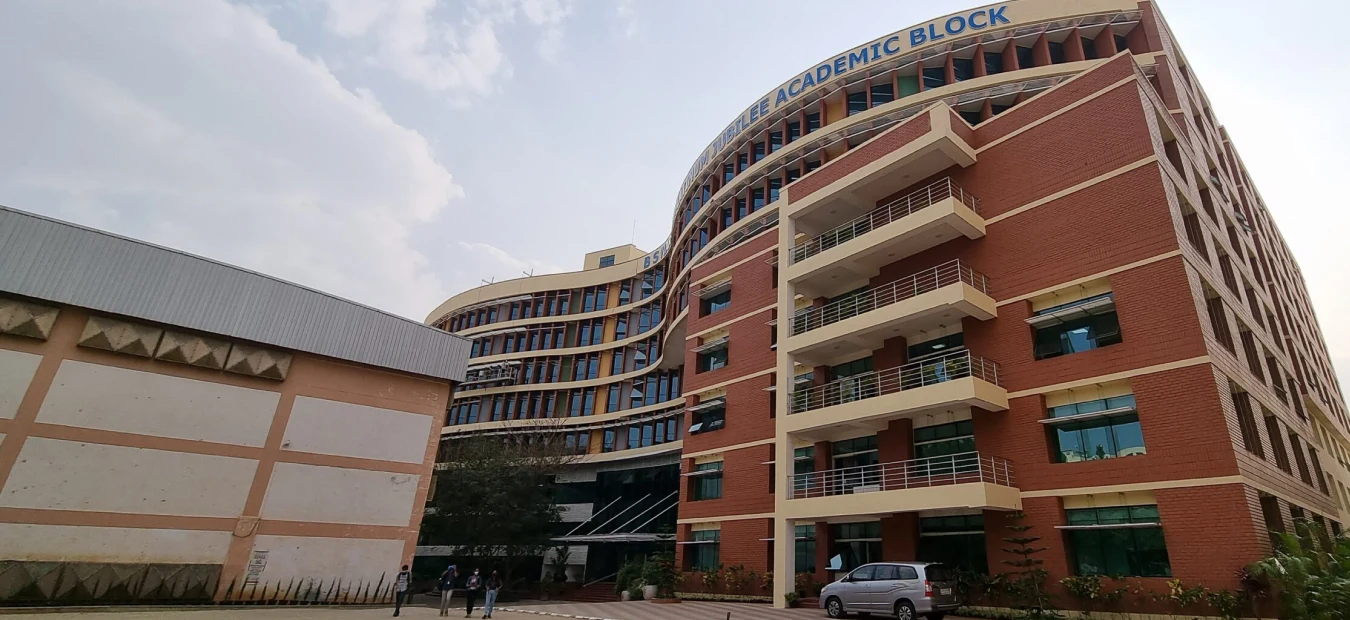
The official pages reviewed here do not provide a 2027-28 fee schedule. They also do not establish a complete course-duration payable total, hostel amount, or every route-specific payment and refund condition. Use the linked current notice and a written college demand for those items. The postgraduate page directs management-admission queries to the Director (Admissions), International Division, at the Platinum Jubilee Block on Bull Temple Road, Basavanagudi, Bengaluru; it lists 080-26611636 and [email protected]. Verify contact details on the college page before relying on them.
The circular states that these amounts are payable at first-year admission and labels them miscellaneous fees. It separately says the tuition amount under the KEA order is due until the government amount is received; that note does not turn the listed miscellaneous charge into tuition. The circular’s management-quota row varies by Karnataka status, while its PGCET quota table varies by category and M.Tech aided or unaided status. A student should match the row to the actual allotment and obtain the current demand in writing.
Programme information: Official source · Source as of: 2026-11-01
Each route applies only to this named programme and the stated year.
Admission-route evidence: Official source · Source as of: 2026-11-01
KCET: Karnataka Common Entrance Test · 2026-27
Admission-route evidence: Official source · Source as of: 2026-11-01
Programme information: Official source · Source as of: 2026-11-01
Programme information: Official source · Source as of: 2026-11-01
Programme information: Official source · Source as of: 2026-11-01
7 recorded programmes · 1 institution. Admission years and conditions apply to the named programme.