
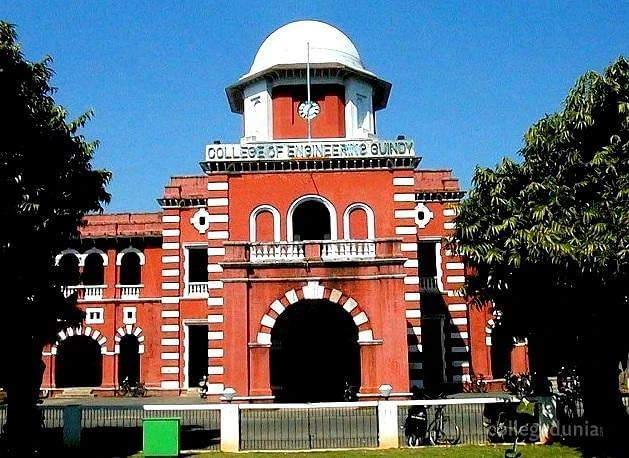
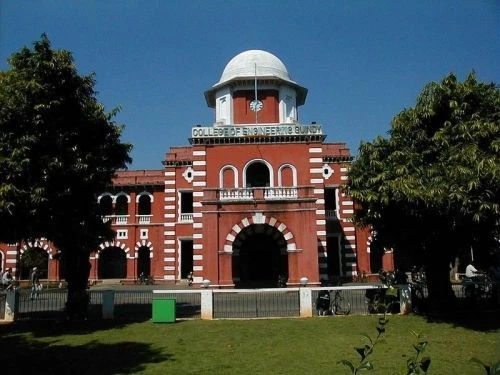


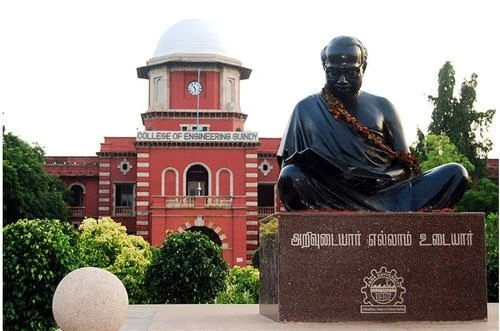
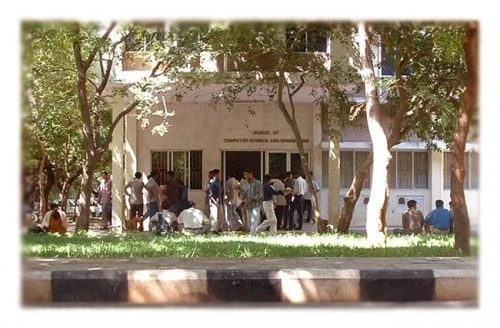

The College of Engineering, Guindy (CEG) campus of Anna University fills every undergraduate seat through government-run counselling. There is no institution-level entrance test, no management quota, and no direct application to the college. The Directorate of Technical Education (DoTE), Government of Tamil Nadu, lists four distinct routes for engineering admission on its official portal: TNEA for full-time B.E./B.Tech, a separate B.Arch process requiring a national aptitude test, TNLEA for lateral entry from diploma holders, and the Anna University Centre for Admissions (CFA) for NRI and foreign-national applicants. Part-Time B.E. constitutes a fifth route, also managed by the CFA. Which route applies depends entirely on a candidate's qualifying examination, domicile status, and current employment.
Route 1 — TNEA (Full-Time B.E./B.Tech)
The Tamil Nadu Engineering Admissions process, managed by DoTE through tneaonline.org, is the sole route for Class 12 candidates seeking full-time undergraduate engineering seats at CEG. It operates as a centralised, purely merit-based online counselling system with no entrance examination.
Eligibility
Candidates must have passed Class 12 (HSC) or an equivalent examination with Physics, Chemistry, and Mathematics as compulsory subjects. The minimum aggregate in these three subjects is 45% for the Open Competition (OC) pool and 40% for community-reserved categories (BC, BCM, MBC/DNC, SC, SCA, ST). This threshold uses raw marks; board-normalised marks are used only for ranking, not for clearing the eligibility bar.
Nativity rules determine which pool a candidate competes in. Candidates who studied Classes 8 through 12 continuously within Tamil Nadu need no nativity certificate. TN-native candidates who studied any portion of that span outside the state must submit a digitally signed e-Nativity Certificate, obtained from the Revenue Department. Candidates from other states may apply but compete in the OC pool regardless of community; community certificates issued by other-state authorities are not recognised for reservation purposes in TNEA. The current TNEA guidelines specify a minimum age of 16 years; candidates should verify upper-age provisions in the current-year information brochure at tneaonline.org, as these have been subject to change.
Cutoff Score Formula and Normalisation
The TNEA cutoff score is computed from normalised subject marks, each scaled out of 100:
Cutoff = Mathematics + (Physics ÷ 2) + (Chemistry ÷ 2)
The maximum possible score is 200. Because marking patterns differ across boards, DoTE normalises each subject mark using the ratio of the candidate's board topper to the Tamil Nadu State Board topper in that subject. A student from CBSE, ICSE, or any other recognised board is neither advantaged nor penalised. The rank list published on tneaonline.org reflects normalised marks; candidates do not calculate this themselves.
When two candidates share the same normalised cutoff, the TNEA tie-breaking sequence is: (1) higher normalised Mathematics mark, (2) higher normalised Physics mark, (3) higher normalised optional-subject mark, (4) higher overall Class 12 percentage, (5) older date of birth, and (6) the computer-generated random number issued to each registered candidate. For the 2026 cycle, random numbers were released on 10 June 2026 and are visible on each candidate's dashboard at tneaonline.org.
Reservation Structure
TNEA distributes seats across seven vertical reservation categories following Tamil Nadu state policy. OC (Open Competition) is not a community category; any candidate can compete for OC seats on merit, and candidates from reserved communities who rank high enough are allotted OC seats first.
*SCA is a sub-quota within the 15% SC allocation, not an addition to it.
Three horizontal reservations operate across all vertical categories:
Government School Quota (7.5%): Candidates who studied continuously in Classes 6 through 12 in Tamil Nadu government, corporation, municipal, Adi Dravidar and Tribal Welfare, Kallar Reclamation, or Forest Department schools are assigned a separate Government School Rank (GSR) in addition to their general and community ranks. The 7.5% is carved from within each community category's share, not added on top. Students admitted under this quota receive a full fee waiver covering tuition, hostel, and development fees as mandated by the state government. Private, matriculation, and CBSE schools do not qualify even when grant-aided.
Differently Abled (DA): A 5% horizontal reservation applies across 21 disability categories recognised under the Rights of Persons with Disabilities Act, 2016. A valid medical board certificate is required.
Special Quota – Ex-Servicemen and Sports: Ex-servicemen families hold 150 reserved seats statewide (8 in government colleges, 34 aided, 108 self-financing). The sports quota covers 500 seats statewide, with 12 in government colleges. In-person certificate verification at Chennai is mandatory for the sports quota. Both quota rounds are conducted before general counselling each year and had already concluded for the 2026-27 cycle before August.
Seat Matrix at CEG (TNEA 2026, Initial Allocation)
DoTE published the following initial seat distribution for major branches at the CEG campus. Seats shift after each counselling round as vacancies are filled; the current position is updated in the vacancy report PDFs on tneaonline.org.
The Self-Supporting (SS) designation indicates a programme with higher tuition fees than regular-aided branches; the admission process and counselling authority are the same.
How Competitive Is CEG?
Based on third-party reported closing marks from the 2025 counselling cycle (not DoTE-certified figures), the OC-category cutoffs at CEG closed near the top of the 200-point scale: Computer Science Engineering reportedly closed between 199.5 and 200, Electronics and Communication Engineering between 198.5 and 199.5, and Civil and Mechanical Engineering in the 193 to 197 range. Official verified closing marks for all years from 2021 onward are searchable at cutoff.tneaonline.org by college, branch, and community. Reserved-category closing marks are lower by margins that vary with pool size and branch demand and should be looked up separately by category before forming expectations.
TNEA 2026 Cycle: Dates and Current Status
As of 28 August 2026, the three regular counselling rounds have concluded. The cycle is in Supplementary Counselling. Candidates who completed Round 3 with an "Accept and Upward" confirmation should receive revised allotment results by 31 August 2026. The Supplementary round is open until 31 August 2026 at suppl.tneaonline.org. At CEG specifically, seats in the highest-demand branches are effectively exhausted after three rounds; any remaining availability in the supplementary round will be narrow and branch-specific, and candidates should check the live vacancy report on tneaonline.org before registering.
Counselling Process Step by Step
Step 1 – Registration and document upload. Candidates create an account on tneaonline.org, pay the application fee, and upload scanned documents. Accepted formats are PDF, JPG, JPEG, and PNG. Documents must be clear, legible, and in colour. Consistency of name, date of birth, and community details across Class 10 certificates, Class 12 certificates, and Aadhaar is important; mismatches cause verification delays.
Documents required for upload include: Class 10 (SSLC) mark sheet; Class 12 (HSC) mark sheet; Aadhaar card; Community Certificate (for BC, BCM, MBC, SC, SCA, ST categories, issued by the Tahsildar); Nativity Certificate (if applicable); First Graduate Certificate (if claiming the associated fee concession); Income Certificate (for scholarship claims); and any special-category certificates (government school, DA, sports, or ex-serviceman quota).
Step 2 – e-Verification. DoTE authorities verify uploaded documents online. Candidates receive a status update on the portal once verification is complete. TNEA Facilitation Centres (TFCs) are available for candidates who face technical difficulties during upload or verification.
Step 3 – Rank list. After e-verification across all boards, DoTE publishes the rank list with normalised cutoff scores, community ranks, government school ranks (where applicable), and the random number for each candidate.
Step 4 – Choice filling. Candidates log in during the designated window to enter up to 100 college-branch combinations in descending order of preference. The TNEA algorithm scans this list from position 1 downward and allots the highest-ranked preference for which the candidate's cutoff qualifies given available seats. There is no penalty for listing aspirational choices at the top; placing CEG-CSE at position 1 does not affect outcomes if the cutoff is not met. Candidates must save preferences frequently using the portal's save function and must lock the list before the deadline; changes are not possible after locking. For candidates deciding between branch and institution, listing all preferred branches at CEG first, then other campuses, is a commonly understood strategy when the institution is the priority.
Step 5 – Provisional allotment. Seats are allotted based on merit rank within each community category, following reservation percentages, and in order of listed preferences.
Step 6 – Seat confirmation (approximately 48-hour window). Candidates who receive an allotment must choose one of two options and pay the seat-acceptance fee online before the stated deadline:
- Accept and Join: The candidate finalises the allotted seat and must report directly to CEG with original documents by the date in the allotment order.
- Accept and Upward: The candidate retains the current seat as a safety net and remains eligible for an upgrade to a higher-ranked preference if a vacancy arises in subsequent rounds. These candidates report to a TNEA Facilitation Centre (TFC) rather than the college itself.
The seat-acceptance fee, credited against first-semester tuition, is reported at Rs 5,000 for OC, BC, BCM, and MBC/DNC candidates and Rs 1,000 for SC, SCA, and ST candidates. Failure to select an option or pay within the window forfeits the allotment and removes the candidate from further rounds.
Step 7 – Fee payment and document submission at CEG. Candidates use the Anna University e-governance portal at auegov.ac.in to register with their TNEA application number, admission year, and mobile number; pay the balance tuition online; and upload supplementary documents before the in-person reporting visit.
Originals and one set of self-attested photocopies required at the college: provisional allotment order; Class 10 mark sheet; Class 12 mark sheet; Transfer Certificate; Conduct Certificate; Community Certificate (if applicable); Nativity Certificate (if applicable); Medical Fitness Certificate; Aadhaar card; Migration Certificate (for candidates from boards other than the Tamil Nadu State Board); 8 to 10 passport-size photographs; anti-ragging form; and student data form (both downloadable from auegov.ac.in).
Supplementary Counselling Eligibility
The supplementary round is open to candidates who: did not participate in any earlier regular round; participated but received no allotment; recently cleared Class 12 supplementary examinations; or previously confirmed a seat but wish to change their college or branch. Registration is at suppl.tneaonline.org. Choice filling and allotment for the supplementary round are expected in September 2026; exact dates will be notified on tneaonline.org.
Route 2 — B.Arch (NATA Required)
B.Arch admissions to the School of Architecture and Planning (SAP) on the Anna University Guindy campus are handled through a separate portal, barch.tneaonline.org, also under DoTE. The SAP is a distinct academic unit from CEG, though both are on the Guindy campus of Anna University.
Eligibility: Class 12 or equivalent with Mathematics as a core subject; minimum 50% aggregate overall. A valid score in NATA (National Aptitude Test in Architecture) or JEE Main Paper 2 is mandatory.
Merit: The rank list combines the NATA or JEE Paper 2 score with Class 12 board marks, scaled to a common base. SAP offers approximately 80 seats, distributed across the same community categories as TNEA. Candidates seeking Architecture should monitor barch.tneaonline.org and the Anna University CFA site; the B.Arch counselling timeline runs parallel to but separately from the B.E./B.Tech TNEA calendar.
Route 3 — TNLEA (Lateral Entry into Second Year)
Diploma holders and eligible B.Sc. graduates may enter the second year (third semester) of the B.E./B.Tech programme directly through the Tamil Nadu Lateral Entry Admissions process, administered by DoTE at tnlea.com.
Eligibility: A three-year Diploma in Engineering or Technology from an AICTE-recognised polytechnic, with a minimum aggregate of 45% (40% for reserved categories) in the qualifying examination's final year. B.Sc. graduates with Mathematics at the 10+2 or degree level are also eligible. The diploma or B.Sc. branch must map to an approved B.E./B.Tech branch under DoTE's group-mapping criteria. Tamil Nadu domicile is required; children of Central Government servants posted outside TN are among the exceptions.
Process: No entrance examination; selection is purely merit-based on qualifying marks. For 2026-27, the TNLEA application window was open from 7 June to 7 July 2026. The rank list and counselling followed in July and August 2026. CEG provides 10% supernumerary seats for lateral-entry candidates above the regular intake. Candidates who missed the primary rounds should check tnlea.com for supplementary activity.
Route 4 — CFA (NRI / Foreign National / CIWGC)
Anna University's Centre for Admissions (cfa.annauniv.edu/cfa) manages a 5% supernumerary quota per branch for Foreign Nationals, Non-Resident Indians, and Children of Indian Workers in Gulf Countries.
Eligibility: A minimum average of 45% in Physics, Chemistry, and Mathematics at the qualifying level. Foreign nationals must hold a valid student visa, OCI card, or PIO card.
2026-27 cycle dates and fees: The notification was issued on 16 March 2026. The online application for B.E./B.Tech and B.Plan. was open from 16 March to 22 May 2026. B.Arch applications ran from 11 May to 10 July 2026. Postgraduate programmes (M.E./M.Tech./M.Arch./M.Plan.) had a notification from 14 May 2026 with a registration deadline of 10 June 2026. A non-refundable processing fee of US $400 plus 18% GST is charged per application; payment is online.
Documents required include: NRI status certificate from the Indian Embassy or consulate; academic transcripts; proof of financial support; and a valid student visa, OCI card, or PIO card. The CFA can be reached at 044 2235 8314 or 044 2235 8276; email: [email protected]. The UG application window for 2026-27 has closed; prospective applicants should monitor cfa.annauniv.edu/cfa from March 2027 for the next cycle.
Route 5 — Part-Time B.E. (CFA, Working Professionals)
Anna University offers Part-Time B.E. programmes at CEG for working diploma holders, administered separately from TNEA through the CFA portal. Eligibility typically requires a three-year Diploma in Engineering or Technology in a relevant branch plus a minimum of two years of full-time work experience in a recognised organisation after completing the diploma. Applicants must be currently employed, and the workplace is generally required to be within approximately 90 to 120 kilometres of the institution, as classes are held in the evenings. There is no prescribed age limit. Selection is merit-based, combining diploma marks and verified work experience. Notifications and schedules are published on cfa.annauniv.edu/cfa; candidates should check that portal for current-cycle status, as admission rounds are announced separately from TNEA.
Hostel Admission
Hostel accommodation at CEG is handled through a completely separate process from TNEA counselling, via the Engineering College Hostels portal at ceg.annauniv.edu/ech/HostelConnect/. Hostel admissions for the 2026-27 batch opened on 27 July 2026. After securing a TNEA allotment, students must submit a separate online application with scanned documents: TNEA admission slip, Aadhaar card, community certificate, address proof, medical certificate (if applicable), and passport photographs of the student, parent, and a Chennai-based local guardian. Room selection and fee payment occur after application approval. Missing the hostel registration window typically means no on-campus accommodation even with a confirmed college seat.
What to Do Right Now (28 August 2026)
For a domestic Class 12 candidate whose regular rounds are concluded, the immediate action is to check the live vacancy report on tneaonline.org for any remaining CEG seats and, if eligible, complete Supplementary Counselling registration at suppl.tneaonline.org before 31 August 2026. Candidates who chose "Accept and Upward" in Round 3 should check tneaonline.org on 31 August 2026 for revised allotment results before the next confirmation window opens.
For the 2027-28 cycle, the indicative TNEA registration window is May to early June; candidates from non-TN boards should arrange their board-specific mark details and digitally signed nativity certificate in advance. TNLEA registration for lateral entry opens around June; TNLEA applicants should also confirm their diploma branch mapping against DoTE's published group-mapping table. NRI and foreign-national applicants should monitor cfa.annauniv.edu/cfa from March 2027 onward.