
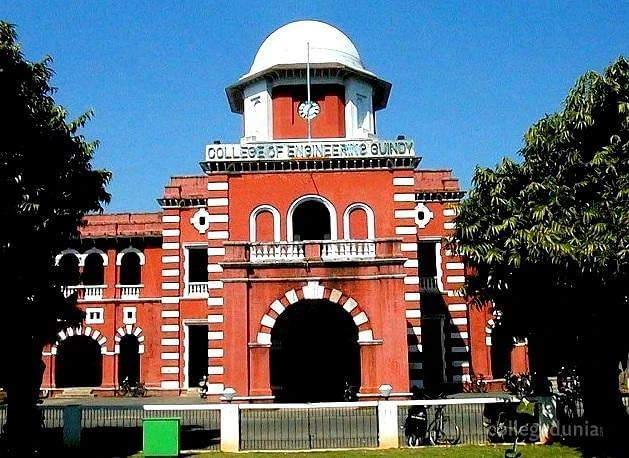
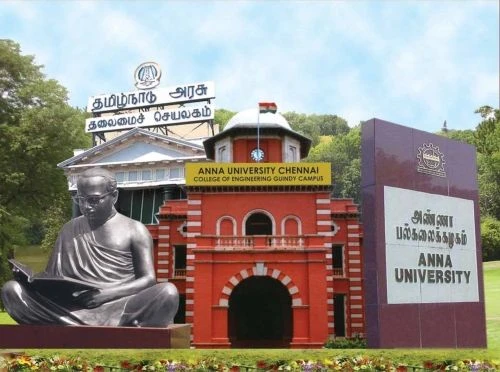

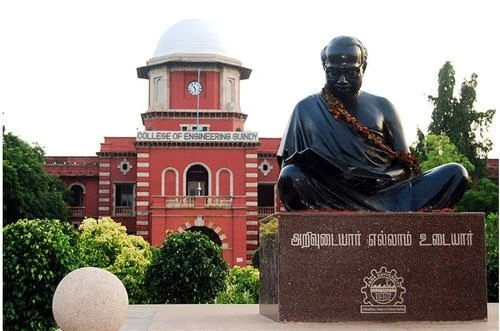

Students at the College of Engineering, Anna University (CEG), Guindy can access funding from three layers: Tamil Nadu state schemes, central government scholarships routed through the National Scholarship Portal, and AICTE-specific awards. The SC/ST Cell at CEG, established under UGC funding and now maintained by the state government, acts as the nodal point for most of these awards. The Nodal Officer is Dr. O. Uma Maheswari (Professor), reachable at [email protected] or 044-2235-8620.
The schemes below are listed from highest financial impact to lowest within each category, with the eligibility conditions and action steps a student needs.
Tamil Nadu State Schemes
7.5% Government School Quota — Full Fee Waiver
This is the most comprehensive benefit available at CEG. Students who studied continuously in a Tamil Nadu government school (government, corporation, municipal, Adi Dravidar and Tribal Welfare, Kallar Reclamation, or Forest Department school) from Class 6 through Class 12 and secured admission through the TNEA special 7.5% reservation receive a complete waiver of tuition fees, hostel fees, and counselling fees. There is no family income ceiling for this benefit.
The waiver attaches automatically to the admission category at TNEA counselling. Students must select the "Govt. Quota (GS)" category correctly during hostel admission to ensure the hostel fee waiver is also applied. Any college demanding fees from students admitted under this quota would be acting contrary to state government directives. Students who face such demands should raise a complaint with the SC/ST Cell or the university's grievance mechanism.
Documents needed at counselling: continuous study certificates from the same government school for Classes 6–12, allotment order, and community certificate where applicable.
AdiDravidar and Tribal Welfare Scholarship
Who qualifies: SC students (including SCA and converted Christians) enrolled in full-time degree or postgraduate professional courses in notified institutions, with total annual family income from all sources not exceeding ₹2 lakh. CEG is a notified institution.
Benefit: Full tuition fee waiver.
How to apply: Through the Tamil Nadu State Scholarship Portal (TNSSP). The SC/ST Cell at CEG facilitates the process. A renewal form for 2023–24 was published on the SC/ST Cell website (annauniv.edu/scstcell/), indicating active processing for continuing students.
Pudhumai Penn (Moovalur Ramamirtham Ammaiyar Higher Education Assurance Scheme)
Who qualifies: Girl students who studied in a Tamil Nadu government school from Class 6 to Class 12. From 2024–25, the scheme was extended to include students from government-aided Tamil-medium schools in the same range. The student must be currently enrolled in an undergraduate degree, ITI, Diploma, or Polytechnic course.
Benefit: ₹1,000 per month, credited directly to the student's bank account for the duration of the UG course. No separate income test is specified in the state's published eligibility.
How to apply: Registration is routed through the college using the student's EMIS or UMIS ID. CEG students should contact the SC/ST Cell Nodal Officer for registration assistance.
A student who qualifies for both the 7.5% government school quota and Pudhumai Penn can benefit from both simultaneously — the full fee waiver and the monthly ₹1,000 stipend are not mutually exclusive.
First Graduate Concession
Who qualifies: Students who are the first in their family to pursue graduation and can produce a First Graduate Certificate from the competent authority.
Benefit: Tuition fee waiver. Students already admitted under the 7.5% government school quota do not need to claim this separately — the quota benefit is broader and already covers tuition and hostel fees.
How to apply: Submit the First Graduate Certificate to the Dean's Office at CEG. The SC/ST Cell can assist in routing the claim for students on other admission routes.
Central Government Schemes — UG Level
Top Class Education Scheme for SC Students (Ministry of Social Justice and Empowerment)
Who qualifies: SC students pursuing studies beyond Class 12 in notified institutions. CEG qualifies as a constituent college of Anna University. Family income from all sources must not exceed ₹8 lakh per annum — a higher ceiling than the AdiDravidar state scheme, which means students who do not qualify for the state scheme on income grounds may still qualify here.
Benefit: Full tuition fee and all non-refundable charges, plus an academic allowance of ₹86,000 in the first year of study and ₹41,000 in every subsequent year. The allowance covers living expenses, books, stationery, and a computer with accessories. This is the most financially substantial central scheme for SC UG students: a first-year CEG student can receive full fee reimbursement plus ₹86,000 in allowances.
How to apply: Apply on the National Scholarship Portal (scholarships.gov.in). The SC/ST Cell at CEG verifies and processes institutional documents.
Post-Matric Scholarship for SC Students (Ministry of Social Justice and Empowerment)
Who qualifies: SC students in degree, postgraduate, diploma, and certificate courses. The institution must have an AISHE or UDISE code (CEG has both). Family income must not exceed ₹2.5 lakh per annum.
Benefit: ₹3,000 to ₹13,500 per year depending on the course category. For professional degree courses like B.E., the amount is at the higher end of this range.
How to apply: National Scholarship Portal (scholarships.gov.in), with institutional verification via the SC/ST Cell.
PM-USP Central Sector Scholarship (Pradhan Mantri Uchchatar Shiksha Protsahan)
Who qualifies: Students at graduation or postgraduate level in professional courses including engineering who scored at or above the 80th percentile in Class 12 board examinations. Family income must not exceed ₹4.5 lakh per annum.
Benefit: ₹12,000 per annum for the first three years of a B.Tech or B.E.; ₹20,000 per annum in the fourth year. Note: the rate for the 2021–22 academic year was ₹10,000 per annum; verify the current rate on the National Scholarship Portal before applying.
How to apply: National Scholarship Portal; no institutional nomination required. CEG verifies enrolment.
AICTE Pragati Scholarship (Girl Students — Technical Degree)
Who qualifies: Girl students admitted to the first year of an AICTE-approved degree-level technical course, or to the second year through lateral entry. All CEG engineering programmes are AICTE-approved.
Benefit: ₹50,000 per annum for every year of study.
How to apply: Apply through the AICTE portal (aicte-india.org) during the annual application window, typically announced after the academic session begins. Verify current income eligibility on the AICTE portal, as the published SC/ST Cell page does not specify an income ceiling for this scheme.
AICTE Saksham Scholarship (Specially Abled Students — Technical Degree)
Who qualifies: Students with a certified disability of not less than 40% admitted to the first year of an AICTE-approved degree-level course. Family income must not exceed ₹8 lakh per annum.
Benefit: ₹50,000 per annum for every year of study.
How to apply: AICTE portal. Disability certificate and income certificate are required.
AICTE Swanath Scholarship (Technical Degree)
Who qualifies: Students who are orphans, whose parent(s) died due to Covid-19, or who are wards of Armed Forces or Central Paramilitary Forces personnel killed in action, studying in AICTE-approved degree or diploma courses in any year. Family income must not exceed ₹8 lakh per annum.
Benefit: ₹50,000 per annum for every year of study.
How to apply: AICTE portal, with supporting documentation (death certificate, ward certificate, or orphan certificate as applicable).
Prime Minister's Scholarship Scheme for CAPFs and Assam Rifles
Who qualifies: Wards and widows of Central Armed Police Forces and Assam Rifles personnel, or State and UT police personnel.
Benefit: ₹3,000 per month (₹36,000 per annum) for girl students; ₹2,500 per month (₹30,000 per annum) for boy students.
How to apply: National Scholarship Portal. Requires service or death certificate of the parent and a dependent certificate.
Prime Minister's Scholarship Scheme for RPF/RPSF (Ministry of Railways)
Who qualifies: Wards of Railway Protection Force or Railway Protection Special Force personnel enrolled in professional degree courses including B.E., B.Tech, BDS, MBBS, B.Ed, BCA, MCA, B.Pharma, and similar courses recognised by regulatory bodies. The student must have scored 60% or above in the minimum entry qualification.
Benefit: ₹3,000 per month for female students; ₹2,500 per month for male students.
How to apply: National Scholarship Portal.
Post-Matric Scholarship for Students with Disabilities (Dept. of Empowerment of Persons with Disabilities)
Who qualifies: Students with disabilities enrolled from Class 11 to master's degree or diploma. Income ceiling is ₹2.5 lakh per annum.
Benefit: Maintenance allowance of ₹900–₹1,600 per month for hostellers and ₹550–₹750 per month for day scholars depending on discipline; tuition fee reimbursement up to ₹1.5 lakh per annum; book allowance of ₹1,500 per annum; disability allowance of ₹2,000–₹4,000 per annum.
How to apply: National Scholarship Portal.
Scholarship for Top Class Education for Students with Disabilities (Dept. of Empowerment of Persons with Disabilities)
Who qualifies: Students with disabilities pursuing graduate or postgraduate degrees or diplomas.
Benefit: Monthly maintenance allowance of ₹3,000 for hostellers or ₹1,500 for day scholars; ₹2,000 per month disability allowance; book grant of ₹5,000 per annum; tuition fee up to ₹2 lakh per annum.
How to apply: National Scholarship Portal.
Post-Matric Scholarships Scheme for Minorities (Ministry of Minority Affairs)
Who qualifies: Students from notified minority communities — Muslim, Sikh, Christian, Buddhist, Jain, and Zoroastrian (Parsi) — who have secured at least 50% marks in the previous examination. Annual family income must not exceed ₹2 lakh.
Benefit: Admission and tuition fee reimbursement of ₹3,000 per annum (UG/PG, subject to actuals); maintenance allowance of ₹570 per month for hostellers or ₹300 per month for day scholars in non-technical and non-professional courses.
How to apply: National Scholarship Portal.
Merit-cum-Means Scholarship for Professional and Technical Courses (Ministry of Minority Affairs)
Who qualifies: Students from notified minority communities enrolled in professional or technical courses with at least 50% marks. Family income must not exceed ₹2.5 lakh per annum.
Benefit: Course fee up to ₹20,000 per annum (subject to actuals, whichever is lower); maintenance allowance of ₹1,000 per month for hostellers and ₹500 per month for day scholars.
How to apply: National Scholarship Portal.
Financial Assistance for Wards of Beedi/Cine/IOMC/LSDM Workers — Post-Matric (Ministry of Labour and Employment)
Who qualifies: Students whose parent is a beedi, cine, IOMC, or LSDM worker. Monthly family income ceiling: ₹10,000 for beedi and mine workers; ₹8,000 for cine workers.
Benefit: For professional courses: ₹25,000 per annum. For degree courses (including B.Sc. Agriculture): ₹6,000 per annum.
How to apply: National Scholarship Portal; requires proof of parent's registration under the relevant welfare fund.
Central Government Schemes — ST Students
Post-Matric Scholarship Scheme for ST Students (Ministry of Tribal Affairs)
Who qualifies: ST students in any recognised course where the qualifying level is matriculation/Class 10 or above. Parental income must not exceed ₹2.5 lakh per annum.
Benefit: ₹1,200 per month for hostellers and ₹550 per month for day scholars for 10 months or the course duration; ₹1,600 per annum for study tours; ₹1,600 per annum for thesis typing/printing charges; ₹1,200 per annum book allowance for distance or correspondence courses. Relaxation in compulsory non-refundable fees also applies. An additional disability allowance is available for ST students with disabilities.
How to apply: National Scholarship Portal (scholarships.gov.in).
PG-Level and Research Scholarships
UGC Post-Graduate Scholarship for SC/ST (Professional Courses)
Who qualifies: SC/ST students enrolled in PG professional courses regulated by AICTE (M.E., M.Tech), MCI, DCI, PCI, NCTE, BCI, ICAR, and equivalent bodies. The award tenure is two to three years depending on course duration.
Benefit: ₹7,800 per month for M.E./M.Tech students; ₹4,500 per month for other professional PG courses.
How to apply: UGC scholarship portal; the SC/ST Cell at CEG provides supporting institutional documents.
UGC Post-Graduate Scholarship for University Rank Holders
Who qualifies: Students who hold a university rank in their UG course and are enrolling in a first PG degree, up to age 30 at admission. Eligible disciplines are Life Sciences, Physical Sciences, Chemical Sciences, Earth Sciences, Mathematical Sciences, Social Sciences, Commerce, and Languages — not engineering as such. M.Sc. students at CEG in relevant disciplines may qualify.
Benefit: ₹3,100 per month for two years.
How to apply: UGC scholarship portal.
UGC Post-Graduate Scholarship for Single Girl Child
Who qualifies: Girl students who are the single girl child (no siblings), enrolling in a first PG degree at age 30 or below.
Benefit: ₹36,200 per annum for the full two-year PG duration. No additional hostel or medical grant is payable under this scheme.
How to apply: UGC scholarship portal; requires a single girl child certificate from a competent authority.
National Fellowship Scheme for Higher Education of ST Students
Who qualifies: ST candidates who have passed postgraduation and are registered for regular full-time M.Phil or Ph.D at a university or government-funded institution. Family income must not exceed ₹6 lakh per annum.
Benefit: ₹25,000 per month for M.Phil; ₹28,000 per month for Ph.D. Apply at scholarships.gov.in.
National Fellowship and Scholarship for Higher Education of ST Students (Top Class, Ministry of Tribal Affairs)
Who qualifies: ST students at graduate or postgraduate level in identified institutions of excellence including professional fields such as engineering. Family income must not exceed ₹6 lakh per annum.
Benefit: Full tuition fee and other non-refundable dues at government or government-funded institutions.
UGC Junior Research Fellowship — Engineering and Technology
Who qualifies: Candidates holding an M.E./M.Tech with 55% marks; GATE is not mandatory. Age limit is 40, extendable by five years for women and SC/ST candidates. SC/ST candidates are allocated 22.5% of JRF seats, and unfilled SC/ST seats revert to the general pool.
Benefit: ₹14,000 per month for the first two years; ₹15,000 per month for the remaining period.
UGC Junior Research Fellowship — Science, Humanities, and Social Sciences
Who qualifies: Candidates who have qualified in NET or the UGC-CSIR joint test.
Benefit: JRF at ₹12,000 per month for the first two years; SRF at ₹14,000 per month for the remaining tenure.
National Overseas Scholarship for SC Candidates (Ministry of Social Justice and Empowerment)
Who qualifies: SC candidates (including Denotified Nomadic and Semi-Nomadic Tribes, Landless Agricultural Labourers, and Traditional Artisans) with at least 60% in the qualifying examination, not older than 35 years on the first of April of the selection year. Second-cycle applicants must hold an unconditional admission offer from a Top 500 QS-ranked institution.
Benefit: Covers tuition and living costs for M.Phil, Ph.D, or postdoctoral study abroad. Apply through the Ministry of Social Justice and Empowerment portal.
Tamil Nadu Overseas Scholarship for SC Candidates
Who qualifies: SC candidates with at least 60% marks in the qualifying examination and not older than 35 years as on the first of April in the selection year. Administered by the Tamil Nadu Adi Dravidar and Tribal Welfare Department.
Maulana Azad National Fellowship for Minority Students (UGC)
Who qualifies: Students from notified minority communities (Muslim, Christian, Sikh, Buddhist, Parsi) admitted to regular full-time M.Phil or Ph.D programmes within two years of receiving the award letter.
Benefit: ₹16,000 per month for the first two years (JRF); ₹18,000 per month for the remaining period (SRF). Note: this fellowship has faced intermittent suspension; verify current operational status on the UGC website before applying.
Fulbright-Nehru Doctoral Fellowship and Fulbright-Kalam Climate Fellowship
These competitive bilateral fellowships support Ph.D scholars at Indian institutions for research collaboration with US universities. The Fulbright-Nehru is for doctoral students registered at an Indian institution; the Kalam fellowship targets climate-related research. Both are administered by the United States-India Educational Foundation (usief.org.in).
Application Routes and Practical Notes
Most central government scholarships — all Ministry of Social Justice, Ministry of Tribal Affairs, Ministry of Minority Affairs, Ministry of Labour, and MHRD/Department of Higher Education schemes listed above — are applied for and renewed on the National Scholarship Portal at scholarships.gov.in. The CEG SC/ST Cell provides institutional verification. For the AICTE schemes (Pragati, Saksham, Swanath), applications go through the AICTE portal at aicte-india.org.
Key stacking and timing points:
- Students admitted under the 7.5% government school quota receive a full waiver that covers what the First Graduate Concession and AdiDravidar scholarship each provide separately. Confirm at hostel admission that the "Govt. Quota (GS)" category is selected correctly before any fees are collected.
- Pudhumai Penn supplements rather than replaces tuition waivers — a qualifying girl student can hold the full fee waiver and the ₹1,000 monthly stipend simultaneously.
- The Top Class Education Scheme for SC (income below ₹8 lakh) has a higher income ceiling than the AdiDravidar state scheme (income below ₹2 lakh) and provides both full tuition coverage and an allowance component. A student eligible under both should confirm with the SC/ST Cell which scheme is processed for fees in the current year.
- All National Scholarship Portal schemes require annual renewal. The portal typically opens for fresh applications after June and closes renewal windows before December. Missing a renewal cycle forfeits that year's disbursement.
- The SC/ST Cell also operates a Book Bank (annauniv.edu/scstcell/book-bank.html) for textbook borrowing, reducing out-of-pocket costs beyond what scholarship disbursements cover.