Loading Admission Guardian content
Loading Admission Guardian content

Provisional score based on available data. It may change as more information is verified.
Selected ranking categories, with the recorded year beside each result. Open all records for the complete history.
52 published records · Lower numeric ranks are stronger
IIRF
Engineering · public
#182024
Outlook
Engineering · public
#112022
India Today
Engineering · public
#132024
Find a program, read its fee details and explore the admission requirements.
Summary of the programs shown below. First-year fee. Check the note beside each amount for inclusions and exclusions.
| Course | Stream | Fees |
|---|---|---|
| Bachelor of Technology [B.Tech] | Engineering | 84250 |
| Bachelor of Technology [B.Tech] {Lateral} | Engineering | 84250 |
| Master of Technology [M.Tech] | Engineering | 115850 |
| Post Graduate Diploma | Engineering | 189000 |
| Master of Business Administration [MBA] | Management | 207500 |
Specializations
All accepted exams
Eligibility: 10+2 with 50% + MHT CET
Specializations
All accepted exams
Eligibility: 10+3 with 50% + MHT CET
Specializations
All accepted exams
Eligibility: Pass in Graduation + GATE
Specializations
All accepted exams
Eligibility: Graduation
Specializations
All accepted exams
Eligibility: Graduation + MAH MBA CET
4 exams with cutoff data available - showing recent entries
 2 Coms
 ACC Cement
 Accenture
 Afcons Infrastructure
 Amdocs
 Ashok Leyland
 Atos Origin
 Bajaj Auto
 BEHR
BEHR Bentley Systems
 Bharat Petroleum Corporation Limited (BPCL)
 BPCL (Refinery)
 Crompton Greaves Ltd.
 Cummins India Ltd
 Cybage Software
 Daimler
 Deloitte
 Eaton
Eaton Emerson Virgo
 Eq Technologic
 Essar Steels
 Forbes Marshall
 GCI Financial Ltd.
 Geometric Ltd.
 GlaxoSmithKline(GSK)
 Godrej & Boyce
 Godrej Infotech
 Hewitt Technologies
 Hindalco
 Honeywell
 HP India Pvt. Ltd.
 HPCL
HPCL IBM
IBM Idea Cellular
 iFlex
iFlex Indian Oil Corporation Ltd (IOCL)
 Informatica Business Solutions Pvt Ltd.
 Infosys
 Intel
Intel Intuit
 ISPAT Industries
 ITC
ITC John Deere
 Kirloskar Group of Companies
 Larsen & Toubro Limited
 Mahindra & Mahindra
 Marvell India Pvt. Ltd.
 Morgan Stanley
 National Instruments
 Neilsoft
 Newgen Software Technologies Ltd.
 Nvidia
 ONGC
ONGC Patni Computers
 Reliance Energy
 Rockwell Automation
 Satyam
 Schlumberger
 Schneider Electric
 Siemens
 Socrates (TOSHIBA)
 Sterlite
 Sunguard
 Symantec
 Syntel
Founded in 1854, COEP Technological University isn't just old; it's a living piece of engineering history in India. The third-oldest engineering college in Asia, it recently shed its affiliated college status to become a full-fledged unitary public university in 2022. That move, coupled with its deep-rooted brand and location in the heart of Pune, makes it a powerhouse. For generations of students, the COEP tag has been a passport—opening doors to top-tier jobs, elite graduate schools abroad, and a network of influential alumni. But this isn't a preserved relic. Walk the 36-acre campus at the confluence of the Mula and Mutha rivers, and you'll feel the kinetic energy of its legendary student clubs, from the satellite lab to the boat club, driving much of the real learning here.
COEP's academic portfolio is traditional in structure but expanding rapidly in capacity. The undergraduate B.Tech program is the main draw, with a total intake of 863 seats for 2024-25 that's projected to jump to around 1,220 next year. That's a significant expansion, led by a doubling of seats in Computer Engineering and the introduction of a new B.Tech in Artificial Intelligence & Machine Learning. The core branches—Mechanical, Civil, Electrical, and Electronics & Telecommunication—remain stalwarts with strong industry connections.
The teaching model is built for self-starters. Evaluation is split 50-50 between continuous internal assessment and semester-end exams, and the grading is relative. That means your grade depends on how you perform against your peers, not a fixed mark. It creates a competitive, sometimes stressful, environment. Faculty credentials are impressive—about 85-90% hold PhDs, often from IITs or abroad. But student reviews consistently note that brilliance in research doesn't always translate to great teaching. You'll have phenomenal mentors, but you'll also need to figure a lot out on your own.
Where COEP truly shines academically is in its specialized postgraduate programs and industry partnerships. The M.Tech in Automotive Technology, run jointly with the Automotive Research Association of India (ARAI), is a standout. There are also PG diplomas in high-demand fields like Data Science & AI, and a growing portfolio of MoUs with firms like TCS and NVIDIA's Deep Learning Institute. For the proactive student, these links provide a direct pipeline to applied research and emerging tech.
The placement story at COEP is one of elite peaks and a solid, reliable median. For the 2024-25 batch, the highest domestic package was an astounding ₹87 LPA from D.E. Shaw. The average stood at a respectable ₹12 LPA, with a median of ₹10.5 LPA. Early data for 2024-25 shows a highest offer of ₹52.57 LPA so far and an average hovering around ₹11.6 LPA. The college is a recruitment hub for Maharashtra, regularly mentioned in the same breath as IIT Bombay and VJTI Mumbai.
But you have to read the fine print. The overall placement percentage for UG in 2024-25 was 73.35%. For postgraduate students, it was lower at 52.4%. This indicates that while top-tier companies flock here, not every student secures a role on campus. The distribution is also heavily skewed by branch. Computer Engineering and E&TC students see placement rates well above 90%, with averages likely pushing past 17 LPA for CS. Core branches like Mechanical and Civil have strong recruiters too—Tata Motors, Bajaj Auto, L&T—but the process can be longer and the packages, while good for core roles, are lower than the software boom.
The top recruiters list is a who's who of tech and finance: Google, Goldman Sachs, Nutanix, Oracle, Arcesium, PhonePe, and Barclays all visit. About 45% of offers are in IT/Software, 35% in core engineering, and the rest in finance and consulting. The internship scene is equally robust, with the highest monthly stipend hitting ₹1.5 lakhs. The official COEP Technological University website hosts detailed placement reports, and it's worth checking the NIRF rankings for their submitted employment data, which adds another layer of context.
As a state-run institution, COEP offers one of the best value propositions in Indian engineering education. The fee structure is heavily subsidized and varies by category. For the 2024-25 academic year, students from the Open (General) category can expect to pay between ₹1.31 lakhs and ₹1.46 lakhs in annual tuition and fees. OBC/EBC/EWS students pay roughly ₹85,000-95,000. For SC/ST students, fees are nominal, often just ₹7,000-15,000 to cover development and exam charges.
On top of tuition, hostel fees are about ₹45,000 per year. Mess fees, run by student cooperatives, add another ₹35,000-40,000. All in, a general category student can complete their entire four-year B.Tech, including living expenses, for an estimated ₹7.5 to ₹8.5 lakhs. That's a fraction of the cost of a mid-tier private college. Financial aid is available through state schemes like the Rajarshi Shahu Maharaj Scholarship for EBC students and the MahaDBT portal, plus several alumni-funded merit-cum-means scholarships.
Getting into COEP is fiercely competitive, and there are no back doors. There is no management quota. Admissions for the 85% Maharashtra State quota seats are primarily through the MHT-CET exam. The remaining 15% of All India Quota seats are filled based on JEE Main scores. The entire process is centralized, run by the Directorate of Technical Education (DTE) Maharashtra through its CAP rounds.
The cutoffs are brutally high, reflecting the college's brand. For the 2024 admission round, a General Home State candidate needed a 99.96 percentile in MHT-CET for Computer Engineering. The new AI & Machine Learning branch opened at 99.85 percentile, and E&TC at 99.75. Even Civil Engineering, often with lower demand, required a 98.40 percentile. These aren't just scores; they're a statement about the caliber of the peer group you'll be joining. For M.Tech, GATE scores are key, and for the MBA program, the college accepts MAH-MBA-CET or CAT scores.
The 36-acre campus is a mix of heritage stone buildings and modern facilities, right in the middle of Pune. It's incredibly well-connected—the Shivajinagar metro station is a short walk, and the railway station is literally next door. You're never isolated.
Hostel life is a defining experience. There are 11 blocks (8 for boys, 3 for girls) housing about 2,000 students. The rooms are basic, functional, and come with a high-speed LAN connection—a non-negotiable for many. The mess food gets average reviews, but the unlimited, cooperative system is a budget-saver. The real magic of campus life happens outside the hostel room. COEP's club culture is legendary. The Micro-Satellite Lab (which built the 'Swayam' satellite), the Robot Study Circle, the BAJA team, and the famous Boat Club—one of the few in India, with over 70 racing boats—aren't extracurriculars; they're parallel education systems where students build, compete, and lead.
Infrastructure is a mixed bag. The library is excellent, with over 1.25 lakh books and 24/7 reading access during exams. The 7-acre sports ground is a luxury in a city campus. But students often point out that labs in some of the older engineering departments feel dated and could use modernization.
Synthesizing feedback from years of student reviews paints a consistent picture. The positives are powerful: the COEP brand has immense pull for decades after graduation. The location in central Pune means access to everything—internships, part-time jobs, city life. And the club culture is repeatedly called the "soul" of the college, where practical skills and leadership are forged.
The criticisms are just as consistent. Teaching quality is hit-or-miss, with many brilliant researchers being less engaged in undergraduate pedagogy. Administrative processes, especially since the transition to a university, can be slow and chaotic, with delays in transcripts. The relative grading system is described as "cut-throat," making a high CGPA harder to achieve than at many private colleges. And while historic, some physical infrastructure is seen as needing an update.
The consensus quote from students sums it up: "COEP is for those who want to be independent. Nobody will spoon-feed you here, but the opportunities are limitless if you seek them." It's an environment that rewards initiative and punishes passivity.
For the right student, COEP is an unparalleled deal. If you are a self-motivated learner who can thrive in a competitive, hands-on environment, the return on investment is exceptional. You get a premier engineering education and a powerful alumni network for a total cost that can be under ₹10 lakhs. Computer Science and E&TC aspirants with sky-high CET percentiles will find top-tier placements almost guaranteed. Core engineering students benefit from a legacy brand and serious industry ties, though they may need to hustle more for their dream role.
It's probably not the best fit if you need structured, hand-held learning or prioritize pristine, modern campus facilities over character and location. The academic pressure is real, and you have to be ready to carve your own path, often through the student clubs. In the end, COEP isn't just a college; it's a test of initiative. If you pass that test, the rewards—a great job, lifelong connections, and the pride of a 170-year legacy—are absolutely worth it.

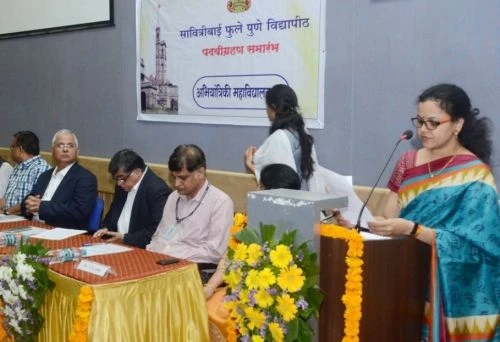
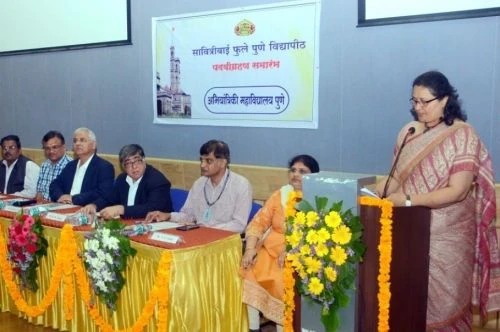
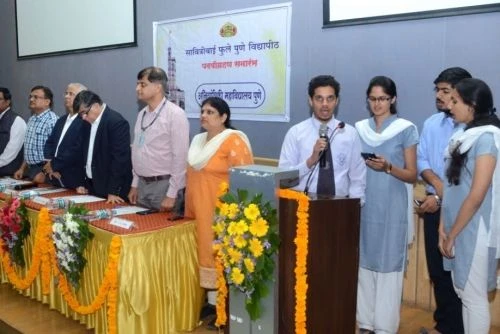
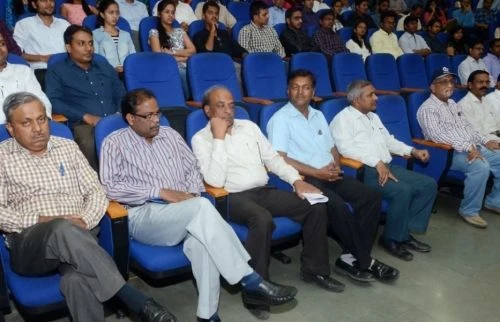
In this preview: 5 photos · 0 videos
Both colleges are considered equal in prestige. VJTI may have a slight advantage for Finance and Consulting placements due to its Mumbai location, while COEP is noted for its superior club culture and larger campus.
Yes, you can. For All India candidates, 15% of the seats at COEP are reserved for admission based on JEE Main scores.
No, there is no management quota. All admissions at COEP are conducted strictly on merit through the Centralized Admission Process (CAP) rounds.
Hostel life at COEP is described as vibrant and social. The hostels are highly desirable due to their proximity to the river and the city center, though the rooms themselves are noted as being "old-school."
Yes, Computer Engineering is the most sought-after branch at COEP. It reports an average placement package exceeding 17 LPA and maintains placement rates above 95%.
Share what future students should know about COEP.
Student voices are not rewritten by colleges. We remove spam and abuse.
Wider admission question? Community PulseWhat should future students know?
Tell us which course you're considering. We'll help you work out the next step.
Get instant Partner access after mobile verification. Your public edits are reviewed before they go live.
Claim this college Tata Bluescope Steel Ltd
 Tata Elxsi
 Tata Motors
 Tata Power
 Tata Technologies
 TCE Consulting Engineers
 TCS
TCS Tech Mahindra
 Texas Instrument
 Thermax
 Valeo
Valeo VMware
 Wipro
Wipro Yahoo (Research)
 ZS Associates
81 named recruiters in the recorded data. Company names are deduplicated.

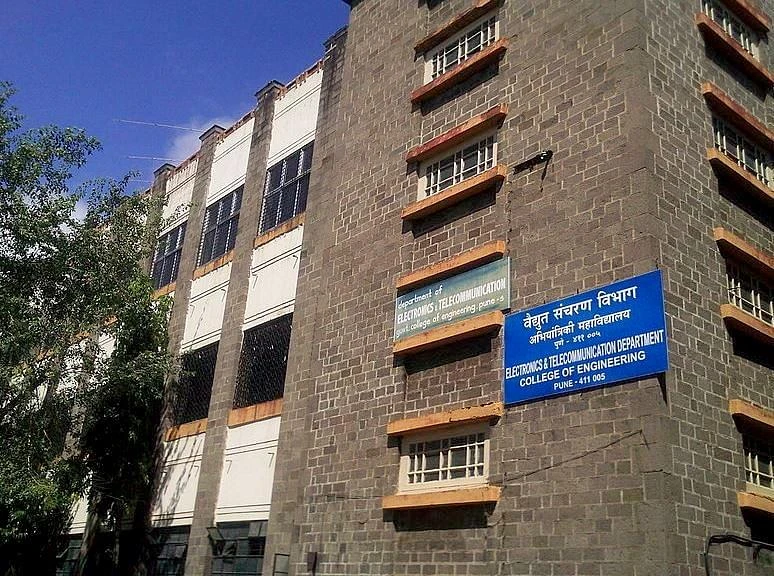
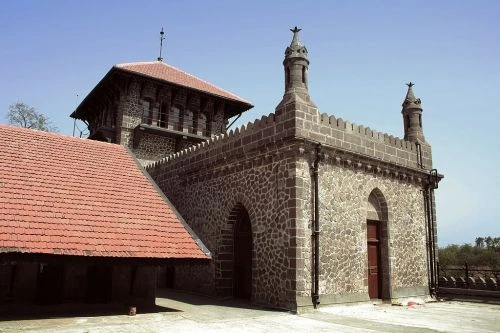
 Auditorium
 Cafeteria
 Campus Shuttle
 Computer Labs
 Medical
 Science Labs
 Sports Complex
 Study Library