Loading Admission Guardian content
Loading Admission Guardian content
Selected ranking categories, with the recorded year beside each result. Open all records for the complete history.
22 published records · Lower numeric ranks are stronger
IIRF
Management · private
#1022025
IIRF
MBA · private
#1052024
India Today
Engineering · private
#1562020
Find a program, read its fee details and explore the admission requirements.
Summary of the programs shown below. Fee periods can differ by program. Check the note beside each amount before comparing costs.
| Course | Stream | Fees |
|---|---|---|
| Diploma Course in Fashion & Clothing Technology | Design | 50000 |
| Diploma in Engineering (Polytechnic) | Engineering | 50000 |
| Master of Business Administration [MBA] | Management | 50000 |
| Master of Technology [M.Tech] | Engineering | 60000 |
| Bachelor of Technology [B.Tech] | Engineering | 106000 |
Specializations
Eligibility: 10th
Specializations
Eligibility: 10th
Specializations
All accepted exams
Eligibility: Graduation with 50% + CAT
Specializations
All accepted exams
Eligibility: Pass in Graduation + GATE
Specializations
All accepted exams
Eligibility: 10+2 with 75% + JEE Main
5 exams with cutoff data available - showing recent entries
 Accenture
 Bharat Forge Limited
 Bosch Ltd
 Capgemini
 Clarice Tech
 CMC Limited
 Decathlon
 GS Labs
 HSBC
HSBC Igate Patni
 Indian Army
 Indian Navy
 Infosys
 Jade Global
 Kirloskar Group of Companies
 KPIT Cummins
 L&T Infotech
 L&T Ltd.
 Mind Tree Limited
 Nvidia
 Persistent Ltd
 Raymond
![Reliance Industries Limited [RIL]](https://assets.admissionguardian.com/imgproxy/insecure/w:64/h:64/rt:fit/el:0/f:avif/q:82/sm:1/plain/local%3A%2F%2F%2Fimages%2Frecruiter_logos%2Freliance-industries-limited-ril-logo.webp) Reliance Industries Limited [RIL]
Reliance Industries Limited [RIL] Shahi Exports Pvt. Ltd.
 Siemens
 Synergy Green Industry
 Syntel
 Tata Consultancy Services
 TCS
TCS Tech Mahindra
 Trident Group
 Vardman Textiles Ltd.
 Vertex Volt
 Wipro
WiproIf you're looking for a serious, industry-focused engineering education in Maharashtra, particularly in textiles, DKTE Society's Textile and Engineering Institute is a name that comes up with authority. Located in Ichalkaranji—a city so woven into the fabric industry it's called the Manchester of Maharashtra—this institute has built a formidable reputation over four decades. It's not a sprawling metro campus with a flashy social scene. Instead, it's a place where the curriculum is designed with direct input from companies like Bharat Forge and Infosys, where the labs are packed with industry-grade machinery, and where the textile department's 100% placement record isn't just a claim, it's a consistent outcome. With an NAAC A+ grade, autonomous status, and a faculty where over 75% hold PhDs, DKTE offers a pragmatic, no-nonsense path into core engineering and the massive textile sector.
DKTE’s academic portfolio is a clear reflection of its roots and evolution. It started with textiles and that remains its undisputed strength, but it has strategically expanded into mainstream engineering to meet broader student demand.
The B.Tech lineup is extensive. The textile cluster is comprehensive: Textile Technology, Man-Made Textile Technology, Textile Plant Engineering, Textile Chemistry, and Fashion Technology. For students aiming for the broader engineering market, options include Computer Science and Engineering (120 seats), Electronics and Telecommunication Engineering (120), Mechanical, Civil, Electrical (60 each), and newer programs in AI & Data Science (60) and CSE with Artificial Intelligence (120). At the postgraduate level, M.Tech programs are available in Textile, E&TC, Mechanical, CSE, and even Defence Technology, each with an intake of 12. There's also a sizable MBA program (120 seats) and Ph.D. opportunities in four engineering disciplines.
What sets the academic experience apart is the institute's empowered autonomy and deep industry weave. The curriculum isn't static. It includes open electives in areas like Robotics and PLC/SCADA, and from the 4th semester, students can pursue Minor and Honor specializations. There's a mandatory entrepreneurship component. And then there are the collaborations—over 29 foreign universities and more than 100 industries. The list is impressive: from North Carolina State University and Hochschule Niederrhein in Germany to industry giants like Siemens, Bosch, and Rieter. These aren't just paper MoUs. Industry experts help design labs and course content, and DKTE was selected by AICTE as an Industry Institute Partnership Cell (IIPC).
Faculty strength is a solid point. With 215 teachers and a 1:20 student-faculty ratio, sections are manageable. The fact that over three-quarters hold a Ph.D. speaks to a research-oriented environment, which is further bolstered by the institute's own Technology Business Incubator supported by DST. The grading system is a detailed 10-point scale, and yes, they take attendance seriously—a minimum of 80 lectures per subject is mandated. It’s a structured, disciplined academic culture.
This is where you need to look at the data branch-by-branch. The overall picture is one of consistent, if not spectacular, placement rates with significant variance in compensation.
Let's start with the star performer: Textile Engineering. The institute claims 100% placement for the B.Tech Textile batch, and student reviews back that up. It makes sense. Ichalkaranji is a textile hub, and DKTE is the premier local talent pipeline. Top recruiters for textile roles include Raymond, Trident, Arvind Ltd, Reliance Industries, and Grasim. The highest package for a textile course recently was ₹18 LPA, but the typical range is more grounded.
For mainstream CS, IT, and electronics roles, the recruiter list reads like a who's who of Indian IT services: TCS, Infosys, Wipro, Cognizant, Capgemini, Tech Mahindra, L&T Infotech, and Persistent. Product and core engineering companies like Siemens, Bosch, Cummins, KPIT, and Bharat Forge also visit. The highest package fluctuates year to year—it was ₹45 LPA in 2022-23, ₹25 LPA in 2023-24, and provisional figures for 2024-25 show ₹6 LPA. That volatility hints at the impact of a few outlier offers in any given year.
The more stable metric is the average package, which has been remarkably consistent for the past five years, hovering between ₹3.7 and ₹4 LPA. The NIRF 2025 report confirms this trend, citing a median package of ₹3.6 LPA for UG and ₹4.5 LPA for PG students in 2023-24. That year, 567 UG and 81 PG students were placed. The placement percentage generally falls between 70-80%, though the institute reports figures as high as 85-100% in recent years.
The placement cell gets high marks from students for being active and supportive, offering mock interviews and training. A key feature is the internship pipeline—over 700 students secure internships in 300+ industries each year, and many placements stem from those performances. For branches like Civil or Mechanical in non-textile roles, the number of dedicated recruiters is smaller, which is a reality students in those streams acknowledge.
So, the reality check? If you're in textiles, DKTE is arguably one of the best bets in the country for a near-guaranteed job in the sector. For CSE or E&TC, you'll have access to major IT mass recruiters, with average outcomes that are decent for a private institute in a tier-2 city. You're not likely to land a flood of ₹20+ LPA offers, but a stable career launch is a reasonable expectation.
DKTE’s fee structure is relatively moderate, especially when compared to private engineering colleges in major metros. For the 2025 intake, the first-year B.Tech tuition fee is approximately INR 1,06,000. The total cost for the four-year degree is stated to range between Rs 1.85 lakhs to Rs 4.70 lakhs, suggesting possible fee variations by branch or category.
Postgraduate fees are lower, with M.Tech starting at INR 60,000 for the first year. The MBA program is a bigger investment, with fees starting at ₹1,90,000. For research scholars, the DKTE research center fee is Rs. 10,000 per year on top of Shivaji University charges.
Hostel accommodation adds INR 20,000 to 24,000 per year, plus a one-time deposit of INR 3,000. The institute offers both AC and non-AC boarding options. When you factor in mess charges and other incidentals, the total annual cost for an out-of-town B.Tech student can be estimated around INR 1.5-1.7 lakhs.
Financial aid is available. DKTE boasts of securing the highest number of merit scholarships from Shivaji University. Government scholarship schemes for eligible students are also accessible. A specific draw for some applicants is the Transport Facility Waiver Scheme (TFWS) scholarship, which covers tuition fees. It’s worth checking the official website for the latest scholarship announcements and application details.
Admission to DKTE is primarily entrance-exam driven, with seats filled through the state's Centralised Admission Process (CAP).
For B.Tech, you need a valid score in either MHT-CET or JEE Main. The eligibility requires passing 10+2 with Physics, Mathematics, and English as compulsory subjects, and Chemistry/Biology/Biotechnology as optional, with a minimum of 45% aggregate marks (40% for reserved categories). The cutoffs provide a clear picture of demand. For the 2025 cycle via JEE Main, the closing ranks for the General-All India category were:
The MHT-CET percentile range for B.Tech in 2025 was wide, from 17.24 to 95.57, indicating seats are available across the spectrum, but the top branches require a strong score. For CSE, a percentile above 85 in either exam is generally considered safe.
For M.Tech, the key is the GATE score. MBA aspirants can apply with scores from CAT, CMAT, XAT, MAT, ATMA, GMAT, or the MAH MBA CET. The 2024 MAHCET cutoff for DKTE's MBA was 79.76 percentile for the general category. Ph.D. admissions are governed by Shivaji University's Ph.D. Entrance Test (PET).
It's important to note that 20% of seats are reserved under the institutional (management) quota. The application process is online, and deadlines typically align with the CAP counseling schedule for UG programs.
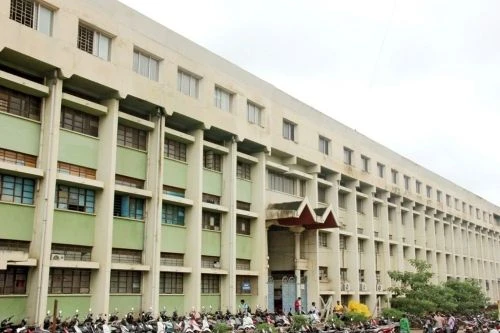
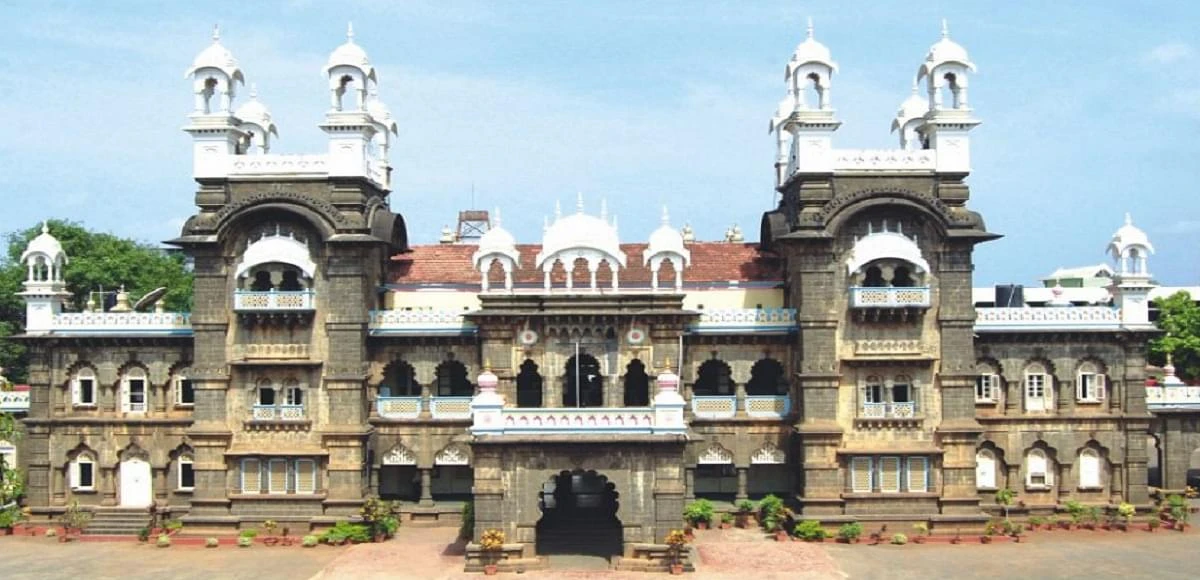
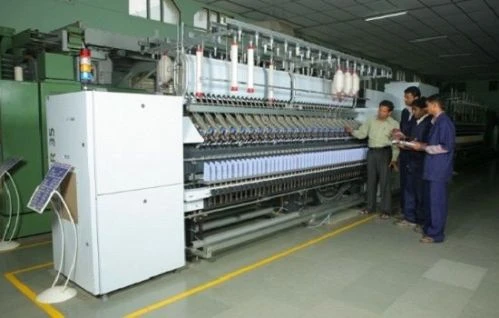
The DKTE campus is distinctive. It's housed partly in the historic Rajwada Mansion, which gives it a royal, old-world charm that students appreciate. But don't let the heritage facade fool you—the academic blocks are modern, with well-equipped labs (16 of them industry-supported), air-conditioned seminar halls, and a 500+ seat auditorium.
Infrastructure is a strong point. The library has over 90,000 volumes and digital access. There's 24x7 Wi-Fi (210 Mbps), a central computer center, and a full range of sports facilities from cricket grounds to a gym and indoor game rooms. A food court, ATM, and basic medical facilities are on campus, with banks and markets just outside.
Now, the hostel situation is the most common point of contention. The girls' hostel is on-campus and is generally considered good, though some reviews mention rooms can be congested with four occupants. For boys, it's trickier. There's no dedicated on-campus boys' hostel. Male students often need to find private PGs or rooms in the city, though the institute does provide bus transport within a 40 km radius. The quality of mess and canteen food gets mixed reviews—"tasty and homely" to "not that good."
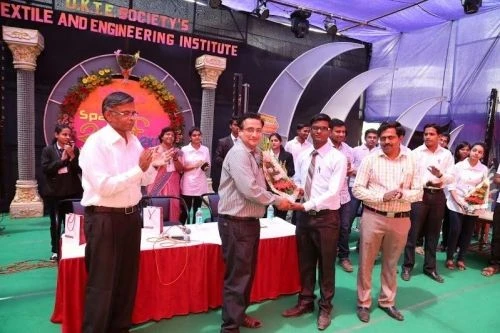
Social life is what you make it. The institute organizes annual festivals like Textvision and Fashionova. There are active chapters of IEEE, CodeChef, NSS, and cultural clubs. But if you're comparing it to the non-stop, cosmopolitan campus life of a Pune or Mumbai college, you'll be disappointed. Ichalkaranji is an industrial town. The focus here is more on academics and industry interaction than on urban socializing.
Sifting through student feedback paints a consistent picture of a college that's strong on fundamentals but has clear trade-offs.
The praise is loud and clear for the faculty quality and placement support. Students repeatedly call out teachers as "highly qualified," "supportive," and "helpful." The high PhD ratio is evident in classroom interactions. The placement cell is described as "very active" and "dedicated," providing tangible preparation help. For anyone in a textile program, the sentiment is overwhelmingly positive about the department's reputation and job outcomes.
Infrastructure, especially the labs and the unique campus setting, also gets thumbs up. The academic environment is seen as healthy and focused.
But the negatives are specific and recurring. The lack of an on-campus boys' hostel is the biggest practical headache mentioned. The variability in food quality is another. Some students in branches like Civil Engineering feel the curriculum could be updated more rapidly with modern software tools. While placement support is good, there's an acknowledgment that packages and recruiter variety for non-textile core branches (Mechanical, Civil) can be average, relying more on the IT services wave. And yes, the attendance policy is strict—this isn't a college for those seeking a lax academic schedule.
DKTE isn't trying to be everything to everyone. It's a specialist institution that has successfully broadened its offerings. Your decision hinges entirely on your branch and career goals.
If you want to build a career in the textile industry—in technology, manufacturing, chemistry, or fashion—DKTE is arguably a top-tier choice in India. The 100% placement record, industry-integrated curriculum, and location in a textile hub create an unbeatable ecosystem for that field. It's absolutely worth it.
For Computer Science, Electronics, or IT, DKTE presents a solid, value-for-money option. You'll get a respectable education from qualified faculty, access to major IT recruiters, and a median package around ₹3.6 LPA, all at a tuition cost lower than many private colleges. You're trading a quieter campus life for a focused, affordable degree. If your scores aren't landing you in the top NITs or premier private institutes, DKTE is a sensible, pragmatic backup.
For other core engineering branches like Civil or Mechanical (outside of textile plant engineering), the calculus changes. Placements are more modest and the institute's legendary industry network is less focused on these domains. You might find better opportunities at institutes with stronger ties to construction or heavy machinery sectors.
In short, DKTE is a powerhouse for textiles and a reliable, industry-connected college for IT. For anything else, weigh your options carefully against more specialized institutes.
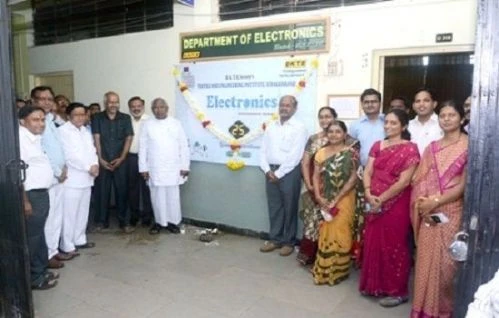
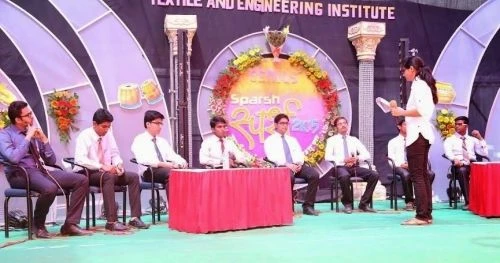
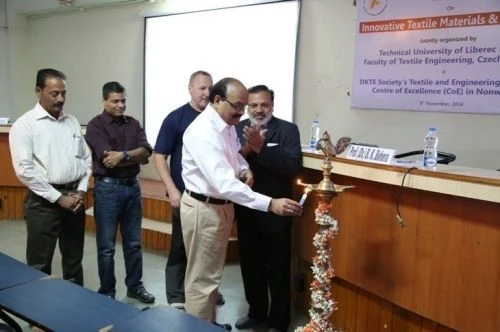
In this preview: 5 photos · 0 videos
For the ongoing 2024-25 academic cycle, provisional placement data shows 367 students placed with an average package of ₹3.5 LPA and a highest package of ₹6 LPA. The previous year (2023-24) saw a higher peak offer of ₹25 LPA. According to the official NIRF 2025 report, the median package for undergraduate students was ₹3,60,000. The B.Tech Textile program consistently reports a 100% placement rate, supported by the institute's deep ties to the local and national textile industry.
Admission to B.Tech programs is based on performance in the MHT-CET or JEE Main entrance exams. Eligibility requires passing the 10+2 examination with Physics, Mathematics, and English as compulsory subjects, along with Chemistry/Biology/Biotechnology/Technical Vocational, securing a minimum of 45% aggregate marks (40% for reserved categories). Final seat allotment is conducted through the Maharashtra state's Centralised Admission Process (CAP) counseling based on the entrance exam rank.
The first-year tuition fee for B.Tech programs in 2025 is approximately INR 1,06,000. The total fee for the entire four-year degree ranges from Rs 1.85 lakhs to Rs 4.70 lakhs, depending on the branch and category. On-campus hostel accommodation costs between INR 20,000 and INR 24,000 per academic year, with an additional one-time refundable deposit of INR 3,000. Mess charges are separate.
Student reviews consistently highlight the high quality of faculty, with over 75% holding PhDs. They are described as supportive, knowledgeable, and accessible. The academic environment is structured and focused, with compulsory attendance and an industry-aligned curriculum. The institute's autonomous status allows for a dynamic syllabus, including minor specializations and electives in emerging areas. However, some students in specific branches like Civil Engineering have suggested the curriculum could integrate more modern industry software.
DKTE holds several prestigious accreditations: an NAAC A+ grade with a CGPA of 3.3 (re-accredited in 2022), NBA accreditation for all eligible undergraduate programs, and AICTE approval. It is also ISO 9001:2015 certified. The institute has been recognized as the 'Best Industry-Linked Engineering Institute' three times in a nationwide AICTE-CII survey and was honored as 'The Best Educational Institute for Textile Engineering' by the Ministry of Textiles, Government of India.
Share what future students should know about DKTE.
Student voices are not rewritten by colleges. We remove spam and abuse.
Wider admission question? Community PulseWhat should future students know?
Tell us which course you're considering. We'll help you work out the next step.
Get instant Partner access after mobile verification. Your public edits are reviewed before they go live.
Claim this college
 Auditorium
 Cafeteria
 Computer Labs
 Gym
Gym Hostel
 Medical
 Science Labs
 Sports Complex
 Study Library