Loading Admission Guardian content
Loading Admission Guardian content

Provisional score based on available data. It may change as more information is verified.
Selected ranking categories, with the recorded year beside each result. Open all records for the complete history.
21 published records · Lower numeric ranks are stronger
India Today
Engineering · private
#1752022
Outlook
Architecture · private
#132021
Indiatoday
Architecture
#212021
Indiatoday
B.Tech · private
#1762021
Find a program, read its fee details and explore the admission requirements.
Summary of the programs shown below. First-year fee. Check the note beside each amount for inclusions and exclusions.
| Course | Stream | Fees |
|---|---|---|
| Master of Technology [M.Tech] | Engineering | 30374 |
| Bachelor of Architecture [B.Arch] | Architecture | 99618 |
| Bachelor of Technology [B.Tech] | Engineering | 114085 |
| Bachelor of Technology [B.Tech] {Lateral} | Engineering | 114085 |
| Ph.D | Engineering |
Specializations
All accepted exams
Eligibility: Pass in Graduation + GATE
All accepted exams
Eligibility: 10+2 with 50% + NATA
Specializations
All accepted exams
Eligibility: 10+2 with 50% + MHT CET
Specializations
All accepted exams
Eligibility: 10+2 with 50% + MHT CET
Specializations
Eligibility: Post Graduation
3 exams with cutoff data available - showing recent entries
 Accenture
 Adrosonic IT Consultancy Services
 Amazon
 ATOS SYNTEL
 Bitwise
 Bosch Ltd
 Cognizant
 Finolex Industries
 Galaxy Project
 HCL Technologies
 Indian Army
 Infosys
 Integra Micro Systems
 IRTI Robotics
 Jaro Education
 Kirloskar Oil Engines
 L&T Ltd.
 Larsen & Toubro Ltd.
 Lupin
Lupin Mahindra & Mahindra
 MBT (MAHINDRA BRITISH TELECOM)-Tech Mahindra
 Mphasis
 Paramatrix
 Patni Computers
 Persistent Systems Limited
 Qspiders
 Sciative Solutions
 Shapoorji Pallonji - Interior
 SLK
SLK Syntel
 Tata Infotech
 Tcognition
 TCS
TCS TE Connectivity
 Thyssenkrupp
 Webonise Labs
 Wipro
Wipro Wipro Technologies
DY Patil College of Engineering and Technology in Kolhapur is a bit of a puzzle. It's a private, autonomous institution that's been around since 1984, affiliated with Shivaji University. The official numbers show a solid NAAC 'A' grade and NBA accreditation for its key engineering programs. But the real story, as always, is in the details—like a reported ₹64 LPA placement from Adobe in 2023 sitting alongside more modest averages, and a campus students call "state of art" but with some hostel confusion. It's a college that seems to be trying to punch above its weight in a competitive landscape, and whether it succeeds depends heavily on which department you land in.
DYPCET offers a fairly standard spread of engineering programs, but with a clear tilt towards the computer sciences. The total B.Tech intake is a substantial 1,140 seats. The Computer Science and Engineering, along with the newer Data Science and Artificial Intelligence & Machine Learning programs, are the obvious draws. That's where the cutoffs are highest and, anecdotally, where placement attention is focused.
Civil, Mechanical, E&TC, and Chemical Engineering round out the undergraduate offerings. There's also a B.Arch program that, interestingly, gets more external recognition than the engineering streams—ranked 22nd by India Today in 2024. At the postgraduate level, M.Tech programs in CSE and E&TC are available, along with doctoral research centers in two departments.
The college promotes a "cutting-edge curriculum" with industry-relevant skills. They mandate coding bootcamps and hackathons, which is a decent practice. There's also mention of communication labs and micro-credentials in sustainability engineering. The faculty is described as experienced and supportive in student reviews, with a mix of PhD holders and industry guests. The autonomous status, granted in 2020, theoretically allows them more flexibility in updating syllabi compared to non-autonomous colleges under Shivaji University.
This is where you need to read between the lines. The official data has some wild swings. The 2023 batch boasts a staggering ₹64 LPA highest package from Adobe. That's an outlier, no doubt, but it's on the record. The average that year was a more grounded ₹5.63 LPA, with a median of ₹4.8 LPA. Fast forward to partial 2026 data, and the highest package mentioned is ₹8.5 LPA with a ₹5.2 LPA average. The 2024 averages hovered around ₹4.6 LPA.
The placement percentage is another figure that varies. Officially, it was 62% for the 2023 batch and 66.07% for 2023-24. Some student reviews claim 75% or even 88% for the CSE department. The truth likely lies in the middle and is heavily department-dependent. IT firms like Capgemini, TCS, Infosys, Wipro, and Cognizant are the most frequent recruiters, accounting for about 35% of offers. Core engineering and manufacturing companies like L&T, Godrej, JSW, and Mahindra also visit.
Internship support seems mixed. One claim says 70-80% of students get them, another says nearly 20%. A more concrete stat is that 65% of students engage in semester-long projects with partner companies, which is a good sign for practical exposure. Stipends for these internships range from zero to a notable ₹98,000.
The verdict? If you're in CSE, AI/ML, or Data Science, you have a reasonable shot at the mass IT recruiters and the occasional premium offer. For core branches, the path is tougher, and you'll need to be more proactive. The college's claim of over 120 MoUs with companies suggests a network, but the translation into uniform placement success isn't fully guaranteed.
The fee structure is a broad spectrum, especially for B.Tech. It ranges from ₹99,000 to a steep ₹4,44,000 per year. This wide gap likely corresponds to different quotas or specializations (like the newer, in-demand AI/ML program possibly commanding a premium). M.Tech fees are listed at a more uniform ₹53,480 annually. The B.Arch program is at the higher end, with annual fees of ₹4,30,000.
Hostel costs add significant expense. The girls' hostel (paid, merit-based) is quoted at ₹80,000 per year including meals. General hostel charges for "stay only" are around ₹1,00,000 annually. Some older data points to non-AC rooms costing about ₹1,15,000 yearly. There's mention of a boys' "earn-and-learn" hostel scheme, but details are scarce. Many student reviews, however, indicate that a lot of students end up in private PGs or rented apartments near campus, as on-campus hostel availability might be limited or not preferred.
Scholarship information is not explicitly available in the brief, which is a gap. For a college with fees touching ₹4.4 lakhs a year, the absence of clear, prominent scholarship pathways is something families should inquire about directly.
Admission is primarily through state and national entrance exams. For B.Tech, you need a valid score in either MHT CET or JEE Main. For B.Arch, it's NATA or the architecture stream of MHT CET. M.Tech admissions require a GATE score.
The cutoffs give a clear picture of demand. For the 2025 cycle (expected), MHT CET percentiles for B.Tech ranged from 6.24 to 94.05 in Round 1. The coveted Computer Science and related fields demand percentiles generally above 90. For 2023, the last round cutoff for B.Tech CSE was 83.29 percentile. Mechanical and Civil engineering seats fill at lower percentiles, typically in the 75-82 range.
For JEE Main, the overall B.Tech rank range in 2025 was broad: 342,505 to 720,320. The lowest rank for CSE was 406,136.
The selection process has a defined weightage: 60% for the entrance exam score, 30% for academic performance (likely 12th standard marks), and 10% for an Interview or Written Ability Test. Final seat allocation happens through the state's CAP (Centralized Admission Process) counseling. Applications usually open around May-June for an August/September start. The application fee via MHT CET is ₹800 for General category and ₹600 for reserved categories.
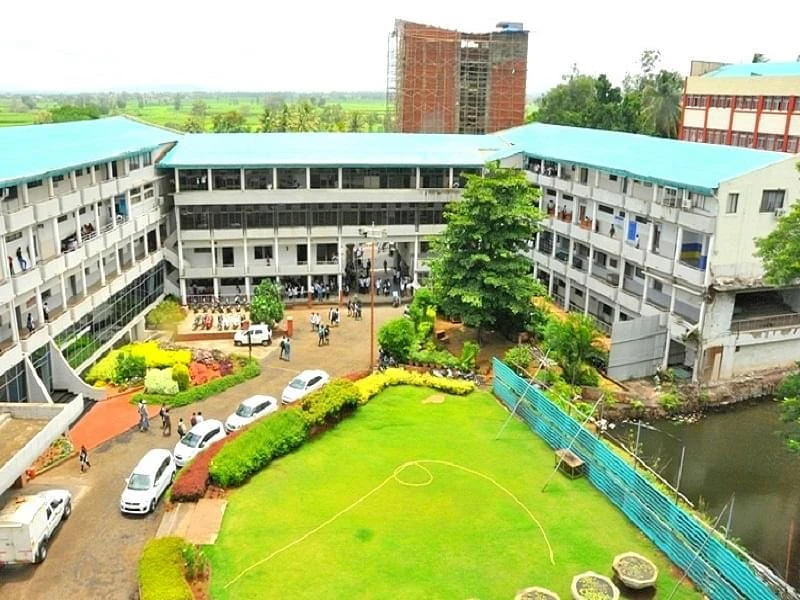
The campus itself receives consistent praise from students. Words like "state of art," "lush green garden," "beautiful classrooms," and "well-maintained" come up repeatedly. Infrastructure includes smart classrooms, air-conditioned lecture halls, a well-stocked central library with over 44,000 books and 24/7 study rooms, and a sports complex. The whole campus is Wi-Fi enabled, reportedly with 5G connectivity.
Labs are described as well-equipped with industry-grade gear, including expanded semiconductor and VLSI design labs. The canteen is noted for being clean and affordable.
The hostel situation is the most ambiguous part. Some sources describe on-campus hostels with "impeccable cleanliness" and "spacious, well-furnished rooms." Others strongly suggest the college doesn't have its own hostels on the main campus, leading students to nearby private accommodations. The truth may involve limited on-campus hostel capacity that fills quickly. Reviews on hostel food are lukewarm—"average but hygienic" is a common theme, with several suggesting eating from outside messes.
Social life is active. The college hosts regular fests, hackathons, cultural events like traditional days, and has a range of active clubs (GDSC, coding, photography, adventure). The overall environment is described as calm, green, and balanced—a place where you can focus on studies but also have an enjoyable campus life.
Synthesizing the sentiment, the consensus is largely positive about the core academic experience. The supportive and qualified faculty is a major highlight. Students feel the staff, both academic and non-academic, are helpful. The modern infrastructure and green campus are consistently applauded. It doesn't feel like a neglected institution.
Placement reviews are pragmatic. Alumni in CS-related fields generally feel the college prepared them well and provided adequate opportunities. Those in core branches are more measured, acknowledging that securing a core job is challenging and that many end up in IT roles—a reality across most tier-2/3 engineering colleges anyway.
The primary grievances center on hostel living—specifically the cost versus quality of food. The management of hostels and the clarity around their availability are points of confusion. There are no major red flags like ragging mentioned, which is a positive.
In short, students don't seem to feel cheated. They acknowledge the college's strengths in infrastructure and teaching for its category, while being clear-eyed about its limitations in placement uniformity and hostel amenities.
DYPCET is a solid, mid-tier private engineering college in Western Maharashtra. Its worth is highly program-specific. If you secure a seat in Computer Science, Data Science, or AI/ML with a fee at the lower end of the spectrum (closer to ₹1 lakh/year), it presents good value. You get a decent campus, supportive faculty, and a credible shot at IT placements with the occasional star offer. The autonomous status and NBA accreditation add legitimacy.
For B.Arch, its national rankings suggest it might be the college's strongest suit, though the fee is high.
However, if you're joining Mechanical, Civil, or Chemical Engineering with aspirations for core sector jobs, temper your expectations. The placement support will lean towards IT companies. And if you're paying the top-end B.Tech fee of over ₹4 lakhs a year, you should critically compare what rival institutions in Pune or other major cities offer at that price point.
It's best for students from the region seeking a reputable, well-infrastructured college with a functional placement cell, particularly for software roles. It's probably not the best choice for someone solely focused on core engineering placements or who is extremely sensitive to hostel living conditions. Do the math on total cost versus probable outcomes for your chosen branch—that's the only way to decide.
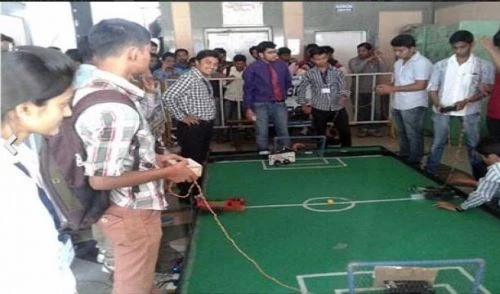
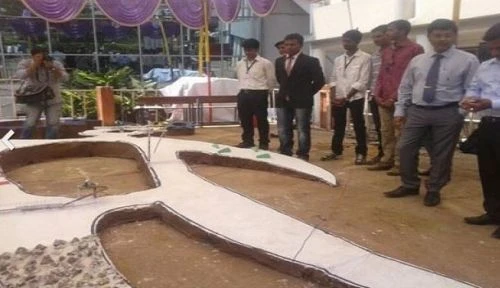
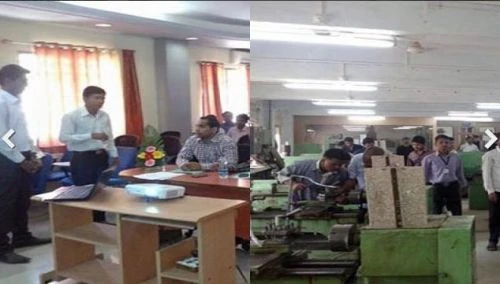
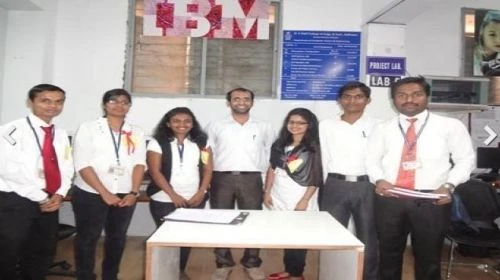
In this preview: 5 photos · 0 videos
You need a valid score in either JEE Main or the state-level MHT CET. Your 10+2 marks in Physics, Mathematics, and Chemistry are also part of the eligibility criteria. Final selection is done through the Maharashtra CAP counseling process based on these scores.
The 2023 batch saw a remarkable highest package of ₹64 LPA from Adobe. The average package for that year was ₹5.63 LPA, with a median of ₹4.8 LPA. More recent partial data for 2026 indicates figures around ₹8.5 LPA highest and ₹5.2 LPA average. Placement rates have varied, with an official 66.07% for 2023-24.
Information is conflicting. The college lists hostel options: a girls' hostel (merit-based, approx. ₹80,000/year with meals) and a boys' "earn-and-learn" scheme. General hostel charges are around ₹1 lakh per year for accommodation. However, many student reviews indicate limited on-campus hostels, leading most to live in private PGs or rented rooms nearby, which affects the true cost of living.
The college holds a strong NAAC 'A' Grade with a CGPA of 3.08. Its B.Tech programs in Computer Science, Electronics & Telecommunication, and Mechanical Engineering are NBA re-accredited for the period 2022-2025. It is also approved by the AICTE and recognized by the UGC.
Students consistently praise the modern, green, and well-maintained campus with good infrastructure like smart classrooms and labs. Social life is active with regular fests, hackathons, cultural events, and various clubs (coding, photography, etc.). The overall environment is described as conducive to both study and a balanced college experience.
Share what future students should know about DYPCET.
Student voices are not rewritten by colleges. We remove spam and abuse.
Wider admission question? Community PulseWhat should future students know?
Tell us which course you're considering. We'll help you work out the next step.
Get instant Partner access after mobile verification. Your public edits are reviewed before they go live.
Claim this college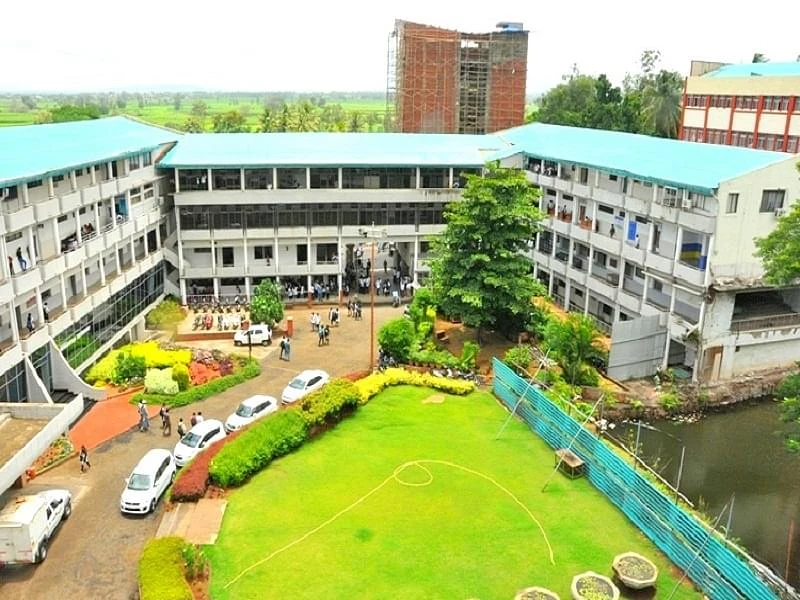
 Auditorium
 Cafeteria
 Campus Security
 Computer Labs
 Gym
Gym Hostel
 Medical
 Science Labs
 Sports Complex
 Study Library