Loading Admission Guardian content
Loading Admission Guardian content
4 programmes · 1 institution. Check the admission year and requirements.
4 programmes · 1 institution. Check the admission year and requirements.
Goa Institute of Management (GIM) is a specialist management institute at Sanquelim in North Goa. For applicants considering its 2027–29 intake, the practical questions are whether the four full-time PGDM tracks fit their goals, how the current application schedule works, what the published academic fee covers, and how to read placement figures that use different cohorts and reporting methods. The current admission page lists the two-year PGDM, PGDM in Healthcare Management (HCM), PGDM in Big Data Analytics (BDA), and PGDM in Banking, Insurance and Financial Services (BIFS). They share an application cycle, but their subject focus, eligibility implications and placement outcomes are not interchangeable.
GIM’s own history page dates the start of operations to 2 August 1993, when the institute began with one programme and 24 students. The present institute is on a residential campus at Sanquelim. Its site uses both 50-acre and 55-acre descriptions, so an exact campus area should not be treated as settled from the pages reviewed. The institutional choice is narrower than a multi-faculty university: GIM’s profile is management education, with full-time PGDM study alongside other offerings such as hybrid management education and doctoral study. The current full-time intake page is the relevant source for applicants to the 2027–29 batch; it should not be mixed with aggregate institute-wide student numbers or older programme listings.
The flagship PGDM is the broad management route. GIM describes it as a two-year, full-time residential course and says its curriculum uses core and elective courses. It is the natural comparison point for applicants who want a general management qualification and have not committed to the sector-specific tracks. The programme page states 300 seats for PGDM, but that is a programme-specific figure rather than a promise about the institute’s total intake or the number available in any one category.
PGDM-HCM is the healthcare-management route. It is not simply the general PGDM with a healthcare label: the institute presents healthcare as its focus, and its separate placement reporting shows roles and recruiters across healthcare-related areas. Applicants should compare the course curriculum and the actual role mix with their intended work, rather than choosing it solely because the highest reported salary is an outlier. GIM also limits its MBBS scholarship to eligible MBBS graduates admitted to HCM, so the scholarship rule itself reinforces that this track has a distinct target applicant group.
PGDM-BDA is the analytics-focused route. Its admission process includes the GIM Analytics Aptitude Test (GAAT), in addition to the broader selection process; the institute describes the test as a 75-minute online assessment and schedules it for 31 January 2027. The track can be relevant to applicants seeking management roles that use data and analytics, but the published outcome page does not establish that every graduate enters a data-scientist role. The programme page and the placement report should be read together: one explains the educational route, the other reports a mixed set of job titles and employers.
PGDM-BIFS focuses on banking, insurance and financial services. The institute lists a special ACCESS award for applicants with specified professional qualifications, including completed CA, CS, CMA, CFA (US), ACCA, CIMA, CPA (US) or FRM (GARP). That scholarship eligibility is narrower than general programme eligibility. Applicants should verify the exact qualification-completion condition and award rules with GIM before relying on a scholarship in their funding plan.
These are full-time residential programmes, so location and the campus living model matter as much as the title. The programme pages describe the PGDM as two years and full-time. The current admission page displays intake figures of 300 for PGDM, 120 for HCM, 180 for BDA and 120 for BIFS. Their sum is 720 across those four displayed programmes, but this is a sum of the current website’s programme cards, not a NIRF-approved intake figure for a specific reporting year. For comparison, GIM’s NIRF 2026 management submission reports sanctioned intake of 630 for 2024–25. The years and definitions differ, so these values should not be presented as a contradiction or a single like-for-like trend.
GIM has published a 2027–29 application cycle. The current admission page sets a minimum of 50% aggregate marks in a recognised three-year bachelor’s degree, with 45% for SC/ST applicants. Final-year students may apply if they complete degree requirements by 5 June 2027; the offer remains conditional on meeting the stated degree requirements. This is the institute’s published rule for this cycle. Applicants should keep official degree results and category documentation ready and confirm how their university calculates aggregate marks, especially where transcripts use a different grading scale.
For the current selection cycle, GIM accepts CAT 2026, XAT 2027 and eligible GMAT scores. The published GMAT window is 1 January 2025 through 15 January 2027, and the score must be sent to GIM by 31 January 2027. The page specifies in-person examinations at authorised test centres. It also says applicants do not need to upload CAT or XAT scores themselves because GIM obtains those scores from IIM and XLRI. This distinction matters: a test taken outside the accepted date window or a score not transmitted as directed may not be usable even when the applicant otherwise meets the degree requirement.
BDA applicants have an additional GAAT step, listed for 31 January 2027. GIM describes a 75-minute online test with multiple-choice questions, negative marking, and coverage of linear equations, calculus, matrices, progressions and abstract reasoning. Do not assume that GAAT replaces CAT/XAT/GMAT; the institute’s programme page says BDA applicants need to appear for GAAT, while the common admission framework still lists the standard entrance scores.
The admission process includes an early Achiever’s Round for a small number of shortlisted candidates and regular interviews in February or March 2027. The institute describes the assessment as a Written Ability Test and Personal Interview. Its application timeline uses staged dates and lower application fees for early applications. As of 2 November 2026, the first-mover stage dated 22 October has passed; the listed Early Bird date is 19 November, the Achiever Round deadline is 3 December, CAT deadline 23 December, and final application date 4 January 2027. Treat these as the institute’s current published schedule, not a guarantee that the institute will not amend it. Check the live admission page before paying or arranging score transmission.
The institute states that there is no seat reservation for Goan applicants. It does, however, say the qualifying competitive-exam score for interview shortlisting may be lowered by up to 15 points for eligible candidates of Goan domicile or origin. That is a possible shortlisting adjustment, not a quota or reserved-seat count. GIM’s FAQ defines domicile/origin through specific documentation, including residence, education or employment evidence, family domicile, birth or ancestral property. Applicants should check those criteria and the required certificates directly rather than infer eligibility from having studied in Goa.
For the 2027–29 full-time batch, GIM’s fees page lists an academic fee total of ₹22,00,000 for each of the four displayed tracks: PGDM, HCM, BDA and BIFS. The schedule is staged: ₹50,000 and ₹5,00,000 in the March–June 2027 period, ₹5,50,000 in October 2027, and ₹11,00,000 in June 2028. The sum is ₹22 lakh. This is the published academic-fee schedule; do not assume it is an all-in cost for accommodation, meals, travel, personal expenses or financing. The page’s separate hostel information and fee components should be checked with admissions for the final payable amount and payment dates.
GIM’s page also identifies a ₹25,000 refundable caution deposit, subject to clearance of dues, and says ₹5,000 is deducted at graduation as the GIM Alumni Association membership fee. It states that fees already paid are not refundable if a student discontinues the programme. These terms can materially affect a decision to accept an offer: compare the deposit and refund terms with other offers before paying, and ask the institute for written clarification of any item not shown in the academic-fee schedule. The page labels ₹14.16 lakh as the tuition-fee component for its tuition-fee waiver scheme; this should not be substituted for the ₹22 lakh total academic fee.
Scholarship descriptions are programme- and condition-specific. The ACCESS scheme lists up to 45 awards of ₹5 lakh for PGDM, 21 for BDA and 7 for BIFS. For the general PGDM and BDA awards, GIM says identified meritorious candidates are invited to apply and must enter through the Achiever’s Round with that programme as their first preference. The BIFS award additionally requires one of the specified completed professional qualifications. Awards are paid in two instalments; the second depends on academic performance, including a stated CGPA threshold of 5.6, and conduct. GIM says a student can receive only one financial benefit, so ACCESS and a tuition-fee waiver cannot be stacked.
For HCM, the GIM-MBBS scholarship is listed as up to seven awards of ₹5 lakh, restricted to candidates holding an MBBS degree and admitted to HCM. It is not available to candidates in the other PGDM tracks. The tuition-fee waiver has a separate need-based process: the institute’s page says family income must be below ₹8 lakh annually, the award is subject to assessment, and the number is capped at 5% of admitted students. These figures describe the published scheme, not an assured award to every eligible applicant. Ask for the current application process, documentation and whether an award can be combined with any other financial support before building a budget around it.
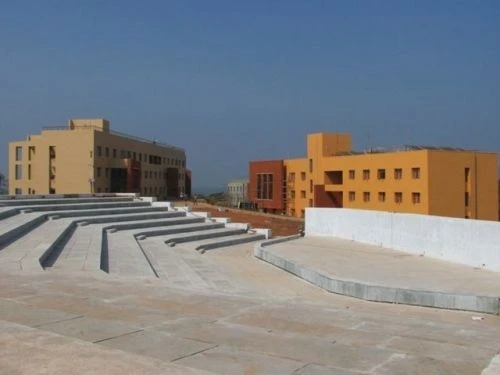
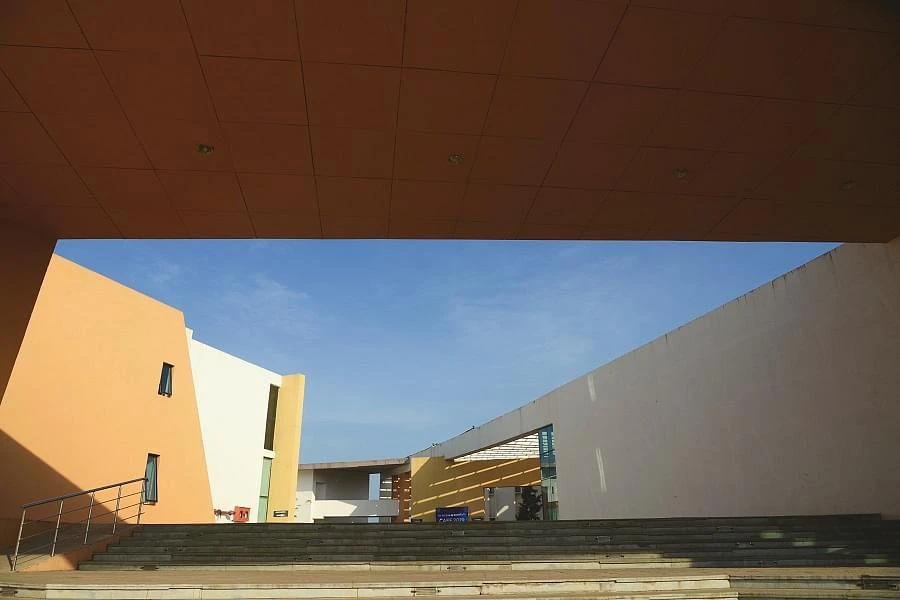
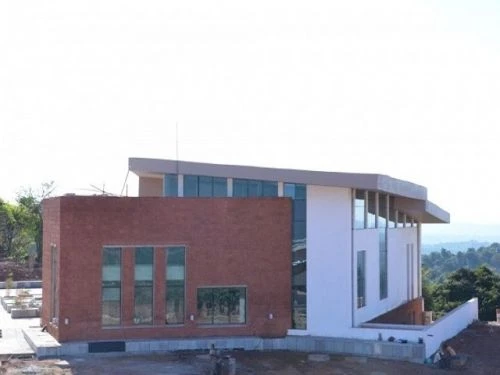
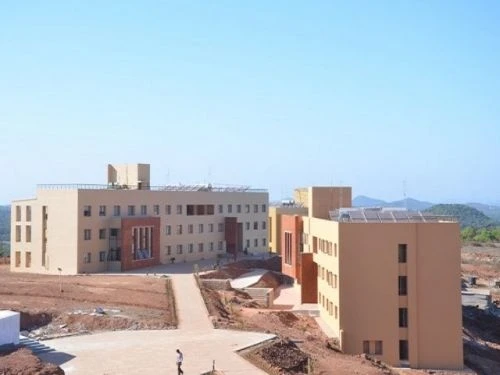
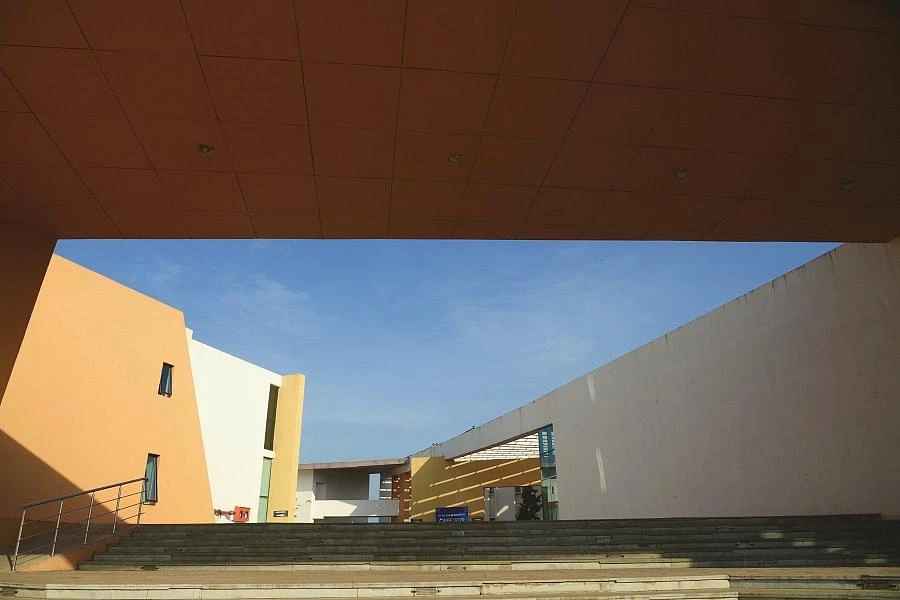
GIM’s campus page describes a residential campus at Sanquelim and lists nine hostels accommodating over 800 students, with Wi-Fi, washing machines and common areas. It says first-year students are allotted double-occupancy rooms and second-year students single-occupancy rooms. Those statements are useful for understanding the living model, but they do not give a current hostel-and-mess charge. Applicants should obtain the actual accommodation and meal schedule for their batch before comparing the ₹22 lakh academic fee with another institute’s all-in estimate.
The academic resources listed by the institute include a library with more than 24,800 management-related books, access to 50,000 online journals and 103 hard-copy global management journals. Its finance lab lists data and market tools including Bloomberg, Thomson Reuters Eikon, CMIE, Capitaline and CRISIL Fund Analyser. The Data Science Lab lists Microsoft Azure, SAS, Tableau and Power BI. These resources may support coursework and projects, but a resource list does not establish individual access time, licensing limits or the extent to which a specific course uses each tool. Ask programme faculty how these resources are embedded in the curriculum if they are central to your choice.
The campus page also lists a swimming pool, sports facilities, student clubs and on-campus counselling, along with access to the YourDOST online counselling service. A residential management programme can involve sustained group work, presentations and recruiting preparation; the campus environment may therefore matter to students who prefer structured access to peers and faculty. At the same time, a residential location in North Goa is a real trade-off for anyone who needs frequent access to a major city or family support. Compare travel, housing rules and personal support needs rather than treating campus amenities as a substitute for those practical considerations.
GIM’s institutional history page says operations began on 2 August 1993. Its accreditation page reports AMBA and BGA reaccreditation in 2025 for a further five years and AACSB accreditation awarded in 2025 for a six-year term. It also describes the PGDM as AICTE-approved and states that the PGDM has equivalence to an MBA degree of an Indian university. Accreditation scope matters: the AACSB and AMBA/BGA statements concern institutional or management-education recognition, while AICTE approval and MBA equivalence refer to the PGDM programme. Read the current regulator and accreditation records for the exact scope if a credential is important for a particular job, further study or government eligibility.
The institute’s accreditation page reports that GIM ranked 43rd in NIRF 2025 under Management. This is an institute-reported ranking statement on the accreditation page. It is not an admission cutoff or a guarantee of outcomes. A rank can help with broad shortlisting, but it does not tell an applicant whether the curriculum, fees, placement cohort or career path is the right match. GIM’s self-submitted NIRF 2026 management data also contains older placement cohorts; those data should be read as regulatory reporting, not as a direct update to the institute’s separate Class of 2026 placement announcement.
GIM’s June 2026 placement announcement reports the 2025–26 placement season for the Class of 2026. For the flagship PGDM it gives an average CTC of ₹16.27 lakh, median CTC of ₹15 lakh and highest CTC of ₹35 lakh, with more than 110 recruiters including over 40 new recruiters. The highest figure is an upper-end result, not a typical salary. The median is ₹1.27 lakh below the average, a simple subtraction from the institute’s figures; the average therefore sits above the middle offer and can be lifted by higher packages. Neither figure is a take-home salary, and CTC can include components that are not paid monthly.
The programme tracks differ in the same announcement. HCM reports a ₹15.51 lakh average and ₹29 lakh highest CTC; medical devices accounted for 37% of offers. BDA reports a ₹15.48 lakh average and ₹35 lakh highest CTC, with a 98.71% placement rate excluding opt-outs and 51 companies participating. BIFS reports a ₹14.45 lakh median and ₹28.60 lakh highest CTC, with 41 recruiters. Do not compare the BIFS median directly with the other two tracks’ averages. These are programme-level reported figures, and the page does not make every denominator or individual offer detail comparable across tracks. Use the placement reports and ask for the latest programme-specific audited report if the placement rate, cohort size or role distribution is decisive.
GIM’s NIRF 2026 management submission provides a separate three-year PG two-year-programme series. It reports 451 graduates and 451 placed in 2022–23 with a ₹15 lakh median salary; 413 graduates and 380 placed in 2023–24 with a ₹14.40 lakh median and 24 students in higher studies; and 563 graduates and 516 placed in 2024–25 with a ₹14.6425 lakh median and 47 in higher studies. The submission is filed by the institute for NIRF reporting and covers the PG two-year programme category, whereas the blog is a later Class of 2026 season announcement with separate programme breakouts. Do not splice the two into a single trend line or treat the NIRF cohort medians as the same group as the latest flagship PGDM median.
For applicants, the most useful comparison is by intended track, relevant role, cohort and measure. Ask whether the institute’s report distinguishes fixed pay from variable pay, includes opt-outs, records accepted offers or all offers, and states the number of students eligible for placements. The public announcement names sectors and selected roles, but it does not establish that a particular role is available to every student. Compare median and average together, then check recruiting roles, internship pathways and programme curriculum. If you are financing a ₹22 lakh academic fee, also model borrowing cost and your own likely career path; a highest package alone is not a sound repayment assumption.
Before applying, decide which of the four tracks is the genuine fit and put that preference in the order required for any scholarship application. Confirm your degree aggregate, entrance-test date and score-transmission steps. BDA applicants should calendar GAAT separately. For Goan domicile/origin consideration, confirm the exact documentary route with admissions. Do not leave the application until the final date if an earlier fee stage applies, and verify the live schedule before payment because the institute may revise dates.
Before accepting an offer, request an itemised 2027–29 cost statement that separates academic fee, hostel, meals, deposits and optional expenses. Read the discontinuation and refund terms. Treat scholarships as conditional: confirm eligibility, application timing, instalment conditions and the one-benefit rule in writing. For placement comparisons, ask for the programme-specific audited report and verify cohort size, opt-outs, median, fixed-pay basis and roles. The published information gives useful starting points, but it does not resolve every individual cost or outcome question.
GIM may suit an applicant seeking a residential management programme with four distinct full-time tracks, a current staged admission cycle, named scholarship routes and access to campus labs and databases. The main trade-offs are the ₹22 lakh academic fee before accommodation and living costs, the location away from a large metro, and placement figures that vary by programme and reporting method. Applicants should make the final comparison at programme level and on total cost, not on institutional labels or the largest salary figure.
Loading programmes and admission routes.
Selected ranking categories, with the recorded year beside each result. Open all records for the complete history.
44 published records · Lower numeric ranks are stronger
IIRF
Management · private
#112025
Outlook
Management · private
#102023
IIRF
MBA · private
#132024
Indiatoday
MBA
#132021
Find a program, read its fee details and explore the admission requirements.
Summary of the programs shown below. See each program's fee period below.
| Course | Stream | Fees |
|---|---|---|
| Fellow Programme in Management [FPM] | Management | 22000 |
| Post Graduate Diploma in Management [PGDM] | Management | 290000 |
Eligibility: Post Graduation
Specializations
All accepted exams
Eligibility: Graduation with 50%
4 exams with cutoff data available - showing recent entries
 Aakash Educational Services Ltd.
 AC Nielson
 Accenture
 Adani Wilmar Limited
 Alkem Laboratories
 Arcesium
 Asian Paints
 Axis Bank
 Barclays Bank
 Bosch Ltd
 Cadila Pharmaceuticals Ltd
 Capgemini
 Citi Bank
 Cognizant
 Decathlon
 Deloitte
 eClerx Services
 Emcure
 EMERSON
 Ernst & Young
 FedEx
 First Source
 Gartner Inc
 Genpact
 Godrej & Boyce
 Grant Thornton India Private Limited
 HashedIn Technologies
 HDFC Bank
 Hexaware Technologies
 Home First
 HSBC
 IBM
 ICICI Securities
 IFB
 Infosys
 Johnson & Johnson
 JP Morgan
 Kotak Mahindra Bank
 Lenskart
 Medtronics
 MindTree
 Narayana Health
 Novo Nordisk Service Center Pvt. Ltd
 RBL Bank
 Relaxo Ltd.
 Reliance
 Roche
 Saama Technologies
 Signify
 Tata Capital
 UPL
 Vedanta
 Western Digital
 Yes Bank
 Zycus

In this preview: 5 photos · 0 videos
GIM does not publish support for a “top 70%” return-on-fees claim. Its current fee page lists an academic fee of ₹22 lakh for the 2027-29 full-time PGDM batch; the separate 2026 placement report gives a ₹15 lakh median CTC for the flagship PGDM Class of 2026. Those are different cohorts, and these figures do not establish a return for the top 70% of students. Compare the confirmed programme fee, living costs, financing and roles you are targeting rather than treating the median as a guaranteed outcome.
No, GIM does not have a management quota. Admissions are strictly merit-based or profile-based through the Achiever's Round. There is a small relaxation in cutoffs for candidates with Goan domicile.
GIM’s published 2025-26 placement report for the Class of 2026 lists the flagship PGDM average/median CTC at ₹16.27/₹15 lakh and BDA at ₹15.48/₹14 lakh. On those reported figures, BDA did not have the higher average or median for that cohort. The report is one placement cycle and does not establish future growth; compare each curriculum, role mix and your interest in analytics before choosing.
No, it is a rigorous residential program. The "vacation" aspect is limited to occasional weekend trips, but the academic schedule is demanding.
GIM does not publish a universal “safe CAT percentile” on its current 2027-29 admissions page. For this cycle, its page lists CAT 2026, XAT 2027 and GMAT tests taken from 1 January 2025 through 15 January 2027, with the score sent by 31 January 2027. The page does not give numeric programme cutoffs. The older percentile ranges in this FAQ should not be treated as current thresholds or a guarantee of a call.
About Goa Institute of Management (GIM).
Colleges cannot rewrite published reviews. We remove spam and abuse.
Ask the communityWhat should future students know?
Tell us which course you're considering. We'll help you work out the next step.
Get instant Partner access after mobile verification. Your public edits are reviewed before they go live.
Claim this collegeProgramme information: Official source · Source as of: 2026-11-02
Each route applies only to this named programme and the stated year.
CAT: Common Admission Test · 2027-28
Admission-route evidence: Official source
GMAT: Graduate Management Admission Test · 2027-28
Admission-route evidence: Official source · Source as of: 2026-11-02
XAT: Xavier Aptitude Test · 2027-28
Admission-route evidence: Official source · Source as of: 2026-11-02
Programme information: Official source · Source as of: 2026-11-02
Each route applies only to this named programme and the stated year.
CAT: Common Admission Test · 2027-28
Admission-route evidence: Official source · Source as of: 2026-11-02
GMAT: Graduate Management Admission Test · 2027-28
Admission-route evidence: Official source · Source as of: 2026-11-02
XAT: Xavier Aptitude Test · 2027-28
Admission-route evidence: Official source · Source as of: 2026-11-02
4 recorded programmes · 1 institution. Admission years and conditions apply to the named programme.
 Auditorium
 Cafeteria
 Campus Wi-Fi
 Computer Labs
 Gym
 Hostel
 Medical
 Sports Complex
 Study Library