Loading Admission Guardian content
Loading Admission Guardian content
Provisional score based on available data. It may change as more information is verified.
Selected ranking categories, with the recorded year beside each result. Open all records for the complete history.
10 published records · Lower numeric ranks are stronger
NIRF
B.Tech
#962019
IIRF
Engineering · public
#862024
IIRF
B.Tech · public
#912023
Find a program, read its fee details and explore the admission requirements.
Summary of the programs shown below. First-year fee. Check the note beside each amount for inclusions and exclusions.
| Course | Stream | Fees |
|---|---|---|
| Master of Science [M.Sc] | Science | 43100 |
| Bachelor of Computer Applications [BCA] | Computer Applications | 51100 |
| Bachelor of Technology [B.Tech] | Engineering | 96100 |
| Master of Technology [M.Tech] | Engineering | 97100 |
| Master of Business Administration [MBA] | Management | 97100 |
Specializations
Eligibility: Graduation
Specializations
Eligibility: 10+2
Specializations
All accepted exams
Eligibility: 10+2
Specializations
All accepted exams
Eligibility: Graduation
Specializations
All accepted exams
Eligibility: Graduation with 50%
 Accenture
 Amazon
 Angel Broking
 Aon Hewitt
 Artech Infosystems
 Axis Bank
 Bharti Airtel
 Byju's
 Calvin Klein
 Convergys
 Cvent India Pvt. Ltd
 Decathlon
 E-Clerx
 eNest Technologies
 Ericsson India Pvt Ltd
 Eureka Forbes
 Fortis Healthcare
 HCL Technologies
 HDFC Bank
 Housing Development Finance Corporation (HDFC)
 Hyatt
Hyatt IBM
IBM ICICI Prudential
 IndiaMart Company
 Infosys
 International Tractors Ltd. (Sonalika)
 ITC
ITC Jaro Education
 Just Dial
 LAVA Mobiles
 LG Electronics
 Maruti Suzuki
 PNB Met Life Insurance Company Limited
 Reliance Jio Infocomm
 Schneider Electric
 Tata Consultancy Services
 TCS
TCS Tech Mahindra
 Teleperformance
 UAE Exchange
 Verdantis Technologies
 Videocon Industries Ltd.
 Wipro
Wipro Wipro Technologies
 XL Dynamics
 Zscaler
I.K. Gujral Punjab Technical University (IKG-PTU) is a public state university that offers a classic trade-off in Indian technical education. You get a widely recognized government degree at a fraction of the cost of a private university, but you'll likely trade away some campus vibrancy and face a famously strict academic system. Established in 1997 and sprawling over 78 acres on the Jalandhar-Kapurthala highway, its main campus is the administrative and academic heart of a vast network of over 180 affiliated colleges. The distinction between the main campus and its affiliates is critical—the experience, faculty quality, and placement outcomes here are often a world apart from the private colleges that fly the PTU flag. For students seeking a budget-friendly, recognized technical degree with a focus on academics over extravagance, IKG-PTU's main campus presents a compelling, if no-frills, option.
IKG-PTU operates on two fronts: as a teaching university at its main campus and as an affiliating body. The main campus programs are where you find the university's core faculty and resources. The B.Tech program is the flagship, with Computer Science and Engineering (CSE) having the largest intake, followed by Electronics & Communication, Mechanical, Civil, and Electrical Engineering. Beyond engineering, the campus offers MBA, BBA, BCA, B.Arch, and programs in Pharmacy and Sciences.
The academic culture is defined by its Choice Based Credit System (CBCS) and a rigorous evaluation pattern: 40% internal marks and 60% from external end-semester exams. The 75% attendance rule is strictly enforced. Faculty quality is a noted strength for a state university—around 85-90% of permanent faculty hold PhDs, many from IITs and NITs. That's a decent resource for students who proactively seek mentorship. The university has industry tie-ups, including an elective partnership with Saras AI Institute, and international MoUs with institutions in Australia and Canada, though these are more pathways than guaranteed exchanges.
The placement story requires separating official data from student-reported reality. According to the NIRF 2025 report, the median package for a 4-year UG program is INR 6.0 LPA. For 2-year PG programs, it's notably lower at INR 2.64 LPA. The university's reported highest package for 2023-24 was INR 13.4 LPA from Sky Trade Lincs, though an unverified off-campus offer of INR 64.87 LPA is sometimes cited in brochures.
Here's the reality check. The official NIRF 2023 placement percentage for B.Tech was around 44%. But talk to students, especially in CSE, and they'll claim a figure closer to 80% for their branch. That gap tells the story: placement is heavily branch-dependent. Top recruiters like TCS, Infosys, Wipro, Cognizant, and Accenture regularly visit, but they predominantly hire from CSE and, to a lesser extent, ECE. Core engineering branches—Mechanical, Civil, Electrical—face a much tougher market, with far fewer on-campus opportunities. The sector split is telling: about 60% of offers are in IT/Software, 20% in core engineering, and 20% in sales or marketing roles.
So, if you're in CSE, you have a solid shot at a mainstream IT job with a package in the INR 4.5-6 LPA range. For other branches, you'll need to hustle more off-campus. It's a pragmatic, not a spectacular, placement outcome.
This is where IKG-PTU's status as a government university shines. The fees are substantially lower than those of major private universities in Punjab. For the 2024-25 session, annual tuition for B.Tech programs hovers between INR 94,000 and INR 96,000. Over four years, you're looking at a total tuition cost of roughly INR 3.8 to 4.2 lakhs. MBA tuition is about INR 60,000-80,000 per year.
Add to that hostel accommodation (INR 15,000-18,000/year) and mess fees (approximately INR 3,000-4,000 per month). There are additional one-time charges like a security deposit (refundable) and semester exam fees. Financial aid is available primarily through state government schemes: the Post-Matric Scholarship for SC/ST students with Punjab domicile, the Chief Minister Scholarship Scheme based on 12th-grade marks, and Tuition Fee Waiver (TFW) seats for merit-cum-means students.
Admission to the B.Tech program on the main campus is primarily through JEE Main scores. The state also conducts its own PTU CET, but JEE Main is the primary gateway. Selection happens via centralized online counseling run by the university itself. A strong 85% of seats are reserved for candidates with Punjab domicile, leaving 15% for students from other states.
Cutoffs vary by branch and quota. For the 2024 session, the closing rank for CSE under the Punjab state quota was in the range of 660 to 1600. Other branches like Mechanical or Civil are available at significantly lower JEE Main percentiles, often around the 70-80 percentile mark. For MBA, scores from CMAT, MAT, or CAT are accepted. M.Tech requires a GATE score, and B.Arch requires NATA.
The application and counseling fee is around INR 2,000, which is non-refundable. It's a straightforward, if bureaucratic, process typical of state universities.
The main campus is built on a "Knowledge City" concept, with a modern administrative building that's a local landmark. It's a green, spacious campus located directly on the highway—peaceful and focused, but undeniably isolated from the hustle of Jalandhar city, which is about 12 km away.
Infrastructure is adequate. Labs for CSE and Mechanical are well-equipped, featuring cloud computing, AI, and robotics setups. The central library has a solid collection and digital journal access. Sports facilities include a cricket ground, football field, and indoor complex. Campus-wide Wi-Fi is present, though students note the speed can be inconsistent.
There are three boys' hostels and two girls' hostels. Reviews rate them around 3.8/5 for space and basic amenities. The vegetarian mess food gets an average rating (around 3/5), leading many students to opt for the campus canteen or nearby PGs for meals. A 24/7 medical dispensary is on site. The social life? Don't expect the constant fest culture of a large private university. Events happen, but the atmosphere is quieter. It's a self-contained academic environment.
Scouring platforms like Quora, Reddit, and Shiksha reveals a consistent, almost unanimous consensus on several points.
The positives are clear. Students repeatedly cite "value for money"—getting a government degree at low cost. The degree's recognition for government jobs and immigration (it's WES approved) is a huge plus. The main campus environment is praised for being peaceful and its faculty for being more accessible than at massive private institutions. One recurring piece of advice: "Main campus is 100x better than any PTU-affiliated private college. Don't confuse the two."
And then there's the elephant in the room: the evaluation system. The most common and vehement complaint across reviews is about the "backlog culture" or "mass re-appears." Students allege the university is notoriously strict—some say erratic—in marking, leading to a high number of backlogs (called "supplies") which then require paying for re-evaluation. A typical Reddit comment puts it bluntly: "The marking system is a nightmare. You can write a perfect paper and still get a 'Supply'." This sentiment is pervasive. Administrative bureaucracy for documents and degree collection is also flagged as slow.
Placement disparity between CSE and core branches is another noted downside, as is the relatively quiet social scene. The verdict from a Quora user sums it up: "If you want a government degree at a low cost, come here. If you want a 'happening' college life, go elsewhere."
IKG-PTU's main campus is a specific choice for a specific type of student. It's worth it if your priorities are a recognized, affordable government degree and you're entering a branch with solid placement prospects—primarily Computer Science. You need to be academically self-motivated and prepared to navigate a rigorous examination system without the hand-holding or glamour of a private campus. The low fee structure is its strongest asset, making it a financially sensible launchpad for a career in IT.
You should probably look elsewhere if you're seeking a vibrant, event-filled campus life, or if you're enrolling in a core engineering branch like Mechanical or Civil with high hopes for on-campus placements. The isolation and reported administrative hassles are real trade-offs. Ultimately, IKG-PTU is a pragmatic, no-nonsense institution. It delivers fundamental technical education and a valuable degree without the frills, and for many students in Punjab and beyond, that's exactly what they need.

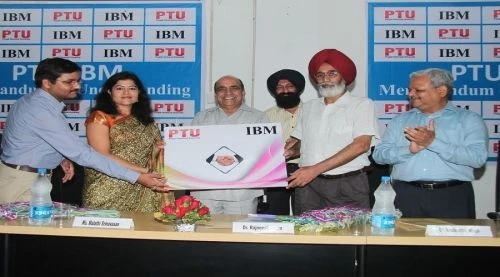
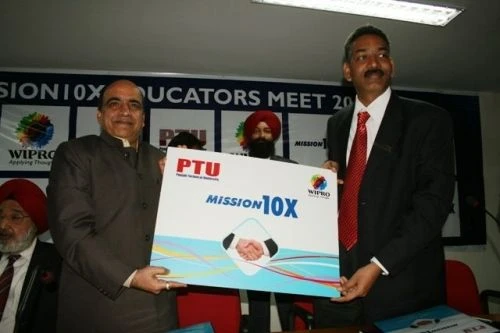
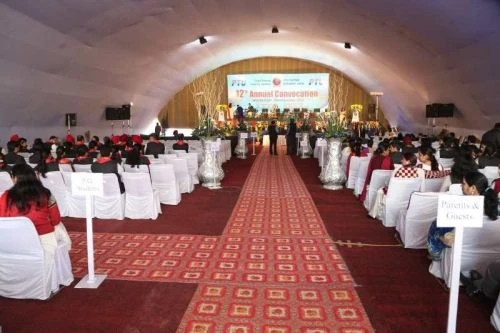

In this preview: 5 photos · 0 videos
For students prioritizing lower fees and government university recognition, IKG-PTU Main Campus is a strong choice. However, for those focused primarily on campus infrastructure and placement opportunities, Lovely Professional University (LPU) generally has an advantage.
The main difference lies in management and resources. The IKG-PTU Main Campus in Kapurthala is the university's own campus, offering lower fees and direct access to its core faculty. Affiliated colleges are private institutions that follow the university's curriculum and award its degree but operate independently.
Yes, according to student consensus, obtaining passing marks can be more challenging at IKG-PTU compared to some other universities. This is often attributed to a strict and sometimes unpredictable evaluation process.
Admission to its core engineering programs is primarily based on JEE Main scores. However, for seats that remain vacant after the main counseling rounds, the university may offer spot admissions based on 12th-grade merit.
Yes, an IKG-PTU degree is recognized for Canada PR applications. The university is listed with international credential evaluation services like World Education Services (WES), which is required for the immigration process.
Share what future students should know about PTU.
Student voices are not rewritten by colleges. We remove spam and abuse.
Wider admission question? Community PulseWhat should future students know?
Tell us which course you're considering. We'll help you work out the next step.
Get instant Partner access after mobile verification. Your public edits are reviewed before they go live.
Claim this college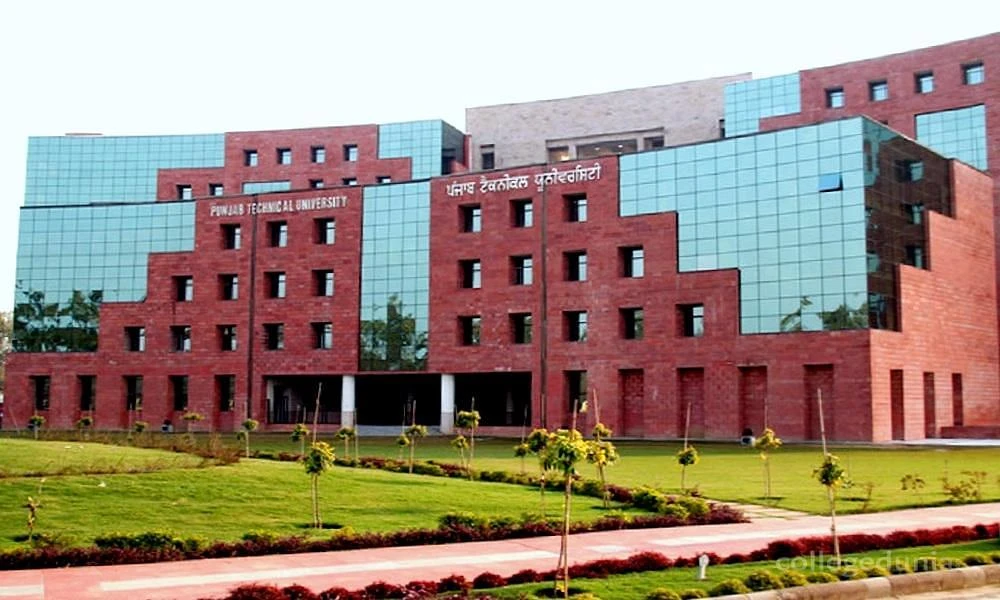

 Auditorium
 Cafeteria
 Campus Shuttle
 Computer Labs
 Hostel
 Medical
 Science Labs
 Sports Complex
 Study Library