Loading Admission Guardian content
Loading Admission Guardian content
Selected ranking categories, with the recorded year beside each result. Open all records for the complete history.
39 published records · Lower numeric ranks are stronger
NIRF
B.Tech
#202019
IIRF
Engineering · public
#152024
India Today
Engineering · public
#112020
THE
Overall
#10012023
Find a program, read its fee details and explore the admission requirements.
Summary of the programs shown below. Fee periods can differ by program. Check the note beside each amount before comparing costs.
| Course | Stream | Fees |
|---|---|---|
| Master of Arts [MA] (Development Studies) | Arts | 54750 |
| Master of Technology [M.Tech] | Engineering | 54750 |
| Ph.D | Engineering | 57250 |
| Bachelor of Technology [B.Tech] | Engineering | 234750 |
| Master of Business Administration [MBA] (Data Science And Artificial Intelligence) | Management | 422750 |
Specializations
Eligibility: Graduation with 55%
Specializations
All accepted exams
Eligibility: Graduation + GATE
Specializations
Eligibility: Postgraduation
Specializations
All accepted exams
Eligibility: 10+2 with 75% + JEE
Specializations
Eligibility: Graduation + 65% with CAT
4 exams with cutoff data available - showing recent entries
 Adobe
Adobe Amazon
 Arrelic
 Bharat Petroleum Corporation Limited (BPCL)
 Blue Star
 CAD Studio
 Capgemini
 Capital Dynamics
 CeWIT
CeWIT Cisco
Cisco Coal India Ltd.
 Cognizant
 Continental Device India Limited (CDIL)
 CSC India
 Deloitte
 Directi
 DRDO
DRDO Drishti Soft
 eBay
eBay Edifecs
 Enarka
 Finisar Corporation
 Flipkart
 Goldman Sachs
 Google
 Grofers
 HPCL
HPCL Hyundai Motors
 IBM
IBM Indeed
 Infosys
 ISRO
ISRO ITC
ITC Khosla Profil P.ltd.
 Larsen & Toubro Ltd.
 Mahindra & Mahindra
 MAQ Software
 Microsoft
 Microsoft-IDC
 Mindtickle
 Nucleus Software
 One97
One97 Oracle
 Paytm
Paytm R Systems
 RockOn Technologies
 Samsung
 Samsung Electronics
 Samsung India Software Centre
 Sentiss Pharma
 Siemens
 Smartprix
 Smartron
 Statlabs
 Tata Motors
 TCS
TCS Tecumseh
 Tejas Networks
 Texas Instrument
 Tower Research Capital
 Trident
 United Health Group
 Ushva
Ushva Webstaff
 Wipro
Wipro
IIT Mandi is a study in contrasts. It’s one of the youngest IITs, established in 2009, yet it has carved out a distinct identity that separates it from its older siblings. Nestled in the remote Kamand Valley of Himachal Pradesh, its 538-acre campus offers breathtaking Himalayan views that students call "living in the clouds." But that beauty comes with a trade-off: a significant distance from urban centers. Academically, it’s known for a fiercely strong coding culture and a unique, design-oriented curriculum that pushes interdisciplinary thinking. While its NIRF Engineering ranking sits in the 20s, its Innovation ranking consistently breaks into the top 10 nationally. The 2024 placement season reflected the broader tech slowdown, with the placement percentage dipping to 72%, but the median package held steady at a respectable 18.5 LPA. For the right student—one who values intense academics in a serene, isolated setting—IIT Mandi isn't just an IIT; it's a specific, challenging, and rewarding experience.
IIT Mandi’s academic structure is deliberately different. Beyond the standard B.Tech branches like CSE (80 seats), Electrical (70), and Mechanical (60), it offers unique programs that reflect its philosophy. The B.Tech in General Engineering is a standout—a 30-seat program for students who want a broad base before specializing. There's also Engineering Physics, Bioengineering, and a dedicated BS in Chemical Sciences.
The pedagogy is hands-on. A mandatory Reverse Engineering course has students dismantling machines to learn design from the inside out. In the second or third year, every student undertakes an Interactive Socio-Technical Practicum (ISTP), tackling real-world problems in local Himalayan communities. It’s not just theory.
Faculty quality is a strong suit. With 210 professors, 100% of the regular faculty hold PhDs, and the student-faculty ratio allows for accessibility. Undergraduates often get involved in research early, a perk harder to find in larger, older institutes. For postgraduates, the options range from M.Tech and M.Sc programs to a new Integrated MBA (I-MBA) and a specialized MBA in Data Science & AI.
The 2024 placement data requires a clear-eyed look. The college’s official NIRF report and placement cell cite an average B.Tech package of 22.38 LPA, with CSE averaging 26.55 LPA. The highest domestic offer was 52 LPA from Zomato. The median package of 18.5 LPA is a robust figure, indicating a healthy distribution.
But the headline number is the placement percentage, which fell to 72.39% for B.Tech in 2024 from over 94% the previous year. That’s the reality of the global tech correction. The sectors tell the story: about 60% of roles were in IT/Software. Core engineering placements made up 20%, with analytics and finance taking the rest.
Top recruiters like Microsoft, Amazon, Google, Oracle, and Adobe regularly visit. For core roles, companies like L&T and Tata Projects show up. The consensus from student reviews is clear: if you're in CSE or related IT branches, you’re relatively insulated. For Civil or Mechanical students, you need to be proactive, build a strong profile, and often pivot to analytics or software roles to secure a high-paying job. The internship scene is active, with stipends ranging from an average of ₹20,000/month up to ₹50,000/month for the best.
The fee structure follows the standard IIT model, with significant support for reserved categories. For the 2024-25 academic year, General, OBC, and EWS students pay an institute fee of approximately ₹1,06,200 per semester. Hostel and mess charges add another ₹25,000 or so per semester. That puts the total annual cost around ₹2.6 lakhs.
Over four years, a general category student can expect to spend between ₹10.5 to ₹12 lakhs for their B.Tech, all inclusive. For SC, ST, and PwD students, the tuition fee is fully waived—they pay only the ₹6,200 semester fee plus hostel charges.
Financial aid is robust. The Merit-cum-Means Scholarship provides a full tuition waiver plus a ₹1,000/month stipend for eligible students from economically weaker sections. There are also Central Sector Scholarships for SC/ST students and Institute Merit Scholarships for the top 25% of each branch.
For B.Tech and BS programs, the only gateway is JEE Advanced followed by the JoSAA counseling process. The 2024 JoSAA Round 6 closing ranks give a solid sense of the institute's standing among the IITs.
For Computer Science, you needed a rank under 3118. Data Science & AI closed at 3928. Electrical Engineering sat at 6909, and Mechanical at 9734. The unique General Engineering branch had a closing rank of 10842, while Civil Engineering rounded out the list at 12562. These ranks have been steadily improving, reflecting the institute's growing reputation.
For M.Tech, a GATE score and participation in the COAP counseling is mandatory. M.Sc admissions are through the IIT JAM exam. The new I-MBA program uses JEE Main scores followed by a personal interview, while the 2-year MBA requires a CAT score and PI.
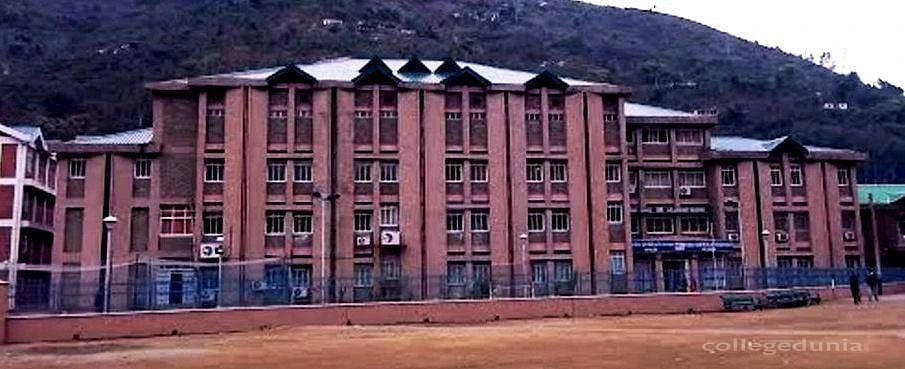
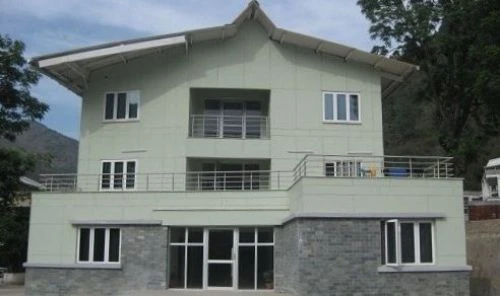
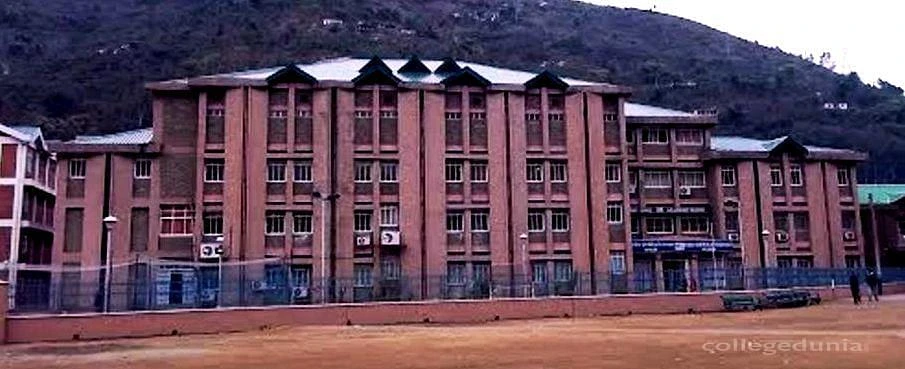
Let’s be direct: the campus is stunning and isolated. The two campuses (North and South) are spread across the valley, connected by a frequent shuttle service. The infrastructure is modern and growing—sometimes noisily. Ongoing construction is a common student complaint.
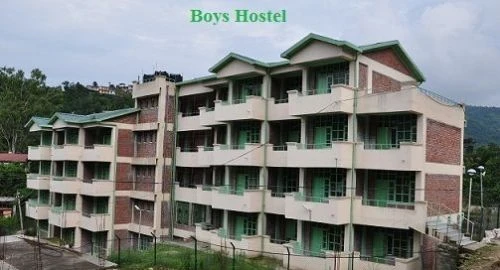
There are over 10 hostels (Dashir, Beas, Suvalsar). First-years typically get double-occupancy rooms. They’re clean, modern, and come with basic furniture and a heater for the cold winters, but students note they can feel cramped as intake increases. The mess food is a point of contention. It’s hygienic, but the menu is often called monotonous.
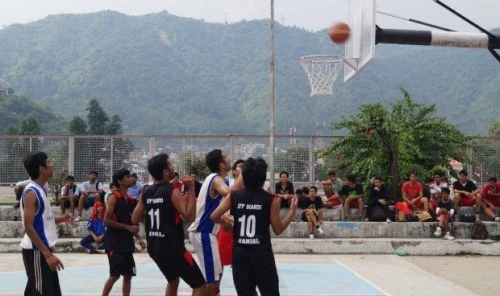
Social life is almost entirely campus-bound. There’s no nearby city for mall trips or multiplex outings. What you get instead is a tight-knit community focused on clubs, tech festivals like Exodia, and sports. The "Super Sports Sunday" tradition is big. Facilities for badminton, table tennis, football, and cricket are excellent. The internet is high-speed in academic blocks, though it can be spotty in some hostel wings.
And the travel is a genuine consideration. The nearest major transit hub is Chandigarh, a 6-10 hour road journey away. You plan your exits carefully.
Synthesizing voices from Reddit, Quora, and education portals reveals a consistent narrative. The positives are powerful. The scenic beauty is unmatched. The coding and hackathon culture is intense and competitive, often punching above its weight in national events. Students praise the approachable faculty and the 5-Week Induction Program (5WIP), which genuinely helps ease the brutal transition from school to IIT without ragging.
But the negatives are equally stark. The remote location is the biggest drawback, affecting everything from weekend plans to internship interviews. Mess food monotony is a frequent gripe. While the placement average is good, students in non-CSE branches express concern about having to hustle more for coveted roles. As one Reddit user summarized: "If you love nature and peace, it's heaven. If you need a city life with Zomato delivering in 10 mins, you will struggle." Another noted pragmatically: *"Placement reality: CSE is safe, but core branches have to work twice as hard."
IIT Mandi is not a generic IIT choice. It’s a specific bet. It’s worth it if you are self-driven, value a collaborative (but academically fierce) environment over a metropolitan one, and are passionate about interdisciplinary, hands-on learning. If your goal is a top-tier CSE education with great placements amidst stunning scenery, and you can handle the isolation, it’s an excellent pick—often better than many older NITs for this track. The General Engineering program is a fantastic option for the intellectually curious who aren’t ready to pigeonhole themselves.
However, think twice if you thrive on the energy of a big city, need extensive external social outlets, or are set on a traditional core engineering career where older institute networks still hold significant sway. Your IIT Mandi experience will be defined by the campus and your peers, not by the town outside its gates. For the right student, that’s not a compromise; it’s the main attraction.

In this preview: 5 photos · 0 videos
For Computer Science and Engineering (CSE) and research opportunities, IIT Mandi is considered a strong choice. However, for "brand name" recognition in traditional core industries, some top older NITs like Trichy or Surathkal may still have an edge due to their more established alumni networks.
The weather at IIT Mandi gets very cold in winter, with temperatures often between 0-5°C. While snowfall directly on the main campus is rare, occurring approximately once every 2-3 years, the surrounding mountain peaks are frequently snow-capped during the winter season.
The General Engineering branch is ideal for students who desire a multidisciplinary degree or are unsure of their specialization. However, it requires a proactive and self-directed approach from students to secure placements, as the broad curriculum may not align directly with specific industry roles.
Travel to the IIT Mandi campus is considered a significant logistical hurdle. The most common route involves taking a flight or train to Chandigarh, followed by a roughly 6-hour journey by bus or taxi to reach Mandi town and the campus.
IIT Mandi has a very strict anti-ragging policy, and there is no prevalent ragging culture. The institute fosters a positive environment through initiatives like the 5WIP program, which is designed to build a friendly and supportive bond between seniors and juniors.
Share what future students should know about IIT Mandi.
Student voices are not rewritten by colleges. We remove spam and abuse.
Wider admission question? Community PulseWhat should future students know?
Tell us which course you're considering. We'll help you work out the next step.
Get instant Partner access after mobile verification. Your public edits are reviewed before they go live.
Claim this college66 named recruiters in the recorded data. Company names are deduplicated.
 Auditorium
 Cafeteria
 Campus Security
 Computer Labs
 Gym
Gym Hostel
 Medical
 Science Labs
 Sports Complex
 Study Library