Loading Admission Guardian content
Loading Admission Guardian content

8 programmes · 1 institution. Check the admission year and requirements.
8 programmes · 1 institution. Check the admission year and requirements.
The Institute of Chemical Technology (ICT) in Mumbai is most relevant to applicants who want to study how chemistry and engineering become materials, products and industrial processes. The institute began in 1933 as the University Department of Chemical Technology of the University of Bombay, according to its 2024–25 handbook. Its present academic identity remains concentrated around chemical engineering, chemical technology and neighbouring fields rather than a broad, general-purpose university model. Read the institute handbook.
That focus can be a strength if you already have a serious interest in process engineering, pharmaceuticals, food technology, polymers, surface coatings, fibres or related applied sciences. It gives applicants several ways to specialise within a connected technical landscape. The trade-off is that the choice of branch matters: a student who is undecided about the subject area should compare the actual curriculum and graduate options for each programme rather than treating the ICT name as a substitute for programme fit.
The institute’s Department of Chemical Engineering describes the discipline through process design and the conversion of chemicals into useful products, with applications including energy, materials, electronics, pharmaceuticals, food processing and environmental protection. That is a useful way to test your interest: do you enjoy not only chemistry as a subject, but also quantitative design, scale-up, equipment and how a process works beyond the laboratory? The answer is more predictive of fit than a generic preference for a famous college.
ICT’s 2024–25 handbook lists a four-year Bachelor of Chemical Engineering, a four-year B.Pharm. and seven B.Tech. branches: Dyestuff Technology; Fibres and Textiles Processing Technology; Food Engineering and Technology; Oils, Oleochemicals and Surfactants Technology; Pharmaceutical Chemistry and Technology; Polymer Engineering and Technology; and Surface Coating Technology. The same handbook lists specialised master’s and doctoral programmes, including M.Tech. options across several of those fields, M.Pharm., M.E. in Plastic Engineering and selected M.Sc. courses. The exact programme list and nomenclature can change, so use the current handbook for an application-year choice. See ICT’s 2024–25 handbook.
The specialisations lead to different kinds of technical work. Food Engineering and Technology concerns food processes; Oils, Oleochemicals and Surfactants focuses on fats, oils and surfactant systems; Polymer Engineering and Technology centres on polymer materials and processing; and Surface Coating Technology is a separate materials and coating route. These names are not interchangeable versions of a generic chemical engineering degree. Compare the syllabus, required background and course-specific admission route before ranking them.
The handbook’s 2024–25 Mumbai-campus intake table illustrates the scale and variation between branches. It lists 75 seats for B.Chem.Engg.; 18 in Dyestuff Technology; 34 in Fibres and Textiles Processing Technology; 16 each in Food Engineering and Technology, Oils, Oleochemicals and Surfactants Technology, and Polymer Engineering and Technology; 18 in Pharmaceutical Chemistry and Technology; 16 in Surface Coating Technology; and 30 in B.Pharm. These are historical sanctioned capacities, not a promise of current intake. Their practical value is to show that branch-level seat counts differed, so last year’s cutoff or availability cannot safely be transferred from one branch to another.
A further distinction matters for postgraduate applicants. The handbook describes its listed master’s programmes as full-time two-year courses, but separates paper-and-thesis programmes from M.Sc. by-papers routes. It says M.Chem.Engg., M.Pharm. and M.Tech. combine coursework and thesis, while the listed M.Sc. programmes are by papers and do not carry fellowships. Entry requirements vary by course: for example, the handbook identifies GAT-B for three biotechnology-oriented M.Tech. programmes and GPAT for M.Pharm.; it also describes GATE/GPAT-led merit levels for several other programmes, with written tests or interviews in specified cases. This is a reason to search by exact programme title and qualification, not just “ICT PG admission.” These rules are from 2024–25 and should only help you understand how varied the routes can be; the current handbook controls your application.
The same distinction affects funding. ICT’s 2024–25 handbook ties some postgraduate fellowships to a valid GATE or GPAT score, merit, availability and continuing academic performance. It does not establish that every student in every postgraduate course receives a stipend. Build your budget using the current course notice and the funding conditions for that exact programme rather than treating the institute-wide word “fellowship” as a universal benefit.
The opened official handbook is for 2024–25, so it is a historical guide, not the rulebook for a later application. For that cycle, ICT stated that undergraduate admissions were conducted by the Government of Maharashtra. It listed a 70% Maharashtra and 30% All India division for B.Chem.Engg. and the seven B.Tech. branches, while B.Pharm. seats were listed for Maharashtra candidates. The handbook directed applicants to the state admission brochure and portal for the details. Do not carry those percentages, seat counts or counselling instructions into a future cycle without checking the current notice and seat matrix.
The same year’s fee section is a useful warning against relying on an old headline figure. For undergraduate entrants, the handbook showed a ₹5,000 library deposit, said other fees were as per government regulations, and left the total to be declared in the admission notice. It also said the figures were indicative and likely to change. The same undergraduate table noted reimbursement of fees for SC/ST/OBC/VJNT/SBC candidates by the Government of Maharashtra. That is a 2024–25 note, not a promise for a later cohort; verify current category eligibility, documents and reimbursement steps with the state and institute before enrolment. For the listed postgraduate M.Chem.Engg., M.Tech., M.Pharm. and M.E. Plastic Engineering categories, the 2024–25 table showed a first-year total of ₹92,000, including a ₹5,000 one-time library deposit, and second-year fees of ₹1,00,000. It separately listed first-year totals of ₹70,000 and second-year fees of ₹76,500 for M.Sc. Physics/Chemistry/Textile Chemistry, and ₹65,000 and ₹71,000 respectively for M.Sc. Mathematics. Hostel charges were additional. These programme groups are not interchangeable, and the M.Sc. schedules include different “other fees” amounts. Those amounts are not a current cost estimate and should not be used to compare 2027 entry offers. Consult the handbook’s fee and admission sections, then request the current programme-specific schedule, hostel amount, deposit treatment and refund terms.
The practical budgeting question is therefore not simply whether ICT is “affordable.” Establish the fee for your exact course and category, add residence and living costs if relevant, and distinguish a refundable deposit from recurring charges. For scholarships or fee reimbursement, verify current eligibility and application steps with the responsible notice; a historical category note is not proof that a student will receive a waiver. Applicants should also confirm whether a programme is based at the Mumbai campus, since ICT operates additional campuses and its combined handbook covers more than one location.
ICT’s NIRF Engineering 2025 submission reports placement and higher-study information separately for four-year undergraduate programmes and two-year postgraduate programmes. The following figures are from its table of students graduating in minimum stipulated time, students placed and median salary of placed graduates. They are not branch-specific guarantees, and the table does not identify how many graduates were actively seeking employment. It should not be read as a placement rate among jobseekers. Open the NIRF 2025 submission.
Within these reported categories, the undergraduate median increased from ₹8 lakh in 2021–22 and 2022–23 to ₹9 lakh in 2023–24; the postgraduate median increased from ₹5.21 lakh to ₹7 lakh and then remained at ₹7 lakh in 2023–24. These are historical medians across the NIRF programme groups, not a typical offer for any named specialisation or an estimate of take-home pay. A median also does not show the spread of salaries, role types, recruiter mix or the share of students who preferred further study. The counts placed and higher studies are separate outcomes; they should not be added together to infer a job-seeking denominator.
Use the figures as context for questions to ask, not a forecast: request the latest branch-level placement report, its eligible and participating student counts, salary units, and the distinction between accepted offers and students placed. NIRF’s broad categories are useful for a time series, but they are not detailed enough to compare, for example, Polymer Engineering with Food Engineering or B.Pharm. with B.Chem.Engg.
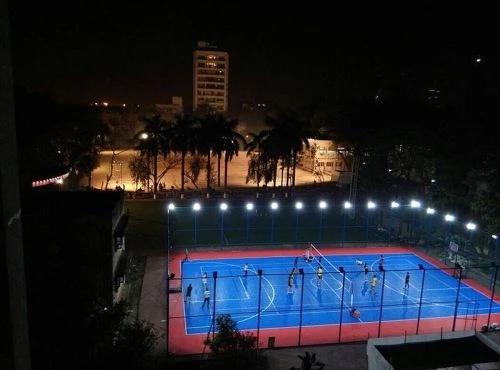
The 2024–25 handbook describes the Mumbai campus as 16 acres and includes sections on the Professor M. M. Sharma Library, hostels, counselling and the central placement cell. The same handbook describes ICT as having its main Mumbai campus and off-campus locations in Bhubaneswar and Marathwada, Jalna. Confirm the campus for a particular course before comparing commute, residence and facilities; institution-wide material may combine details from several locations. It confirms that hostel fees are charged separately for students who opt for accommodation, but the handbook’s historical listing cannot establish current availability or charges. A compact campus in a dense city may suit applicants who value access to Mumbai; it may be less attractive to someone whose main priority is a large residential campus. Treat that as a preference to check on a visit, not as a claim about campus quality.
Before placing ICT high on your list, write down the programme you want and why. If your interest is in a defined technical area and you are comfortable with a specialised curriculum, compare its current syllabus, admissions route and branch-specific outcomes. If you are selecting by brand alone, pause and compare the actual degree title and coursework with alternatives. The institute’s programme names span chemical engineering, food, pharmaceuticals, polymers, dyes, fibres, oils and coatings, but that breadth sits inside a related technical focus rather than a general menu of unrelated majors.
A useful shortlist has at least one alternative with a related degree but a different balance of theory, process design and specialisation. Compare named courses and their prerequisites side by side; a broad institutional label cannot tell you whether two branches lead to comparable study.
For the final decision, use the current Mumbai-campus handbook and admission notices for application rules, seats, cutoffs, fees and scholarship conditions. Use the NIRF figures here only as dated group-level context. Ask the institute or placement cell for programme-level outcomes and the accounts office for the complete fee schedule, including residence and refund rules. That check turns ICT’s specialist depth into a concrete course choice instead of an assumption that every branch offers the same experience or career path.
Programme information: Official source · Source as of: 2026-11-05
Programme information: Official source · Source as of: 2026-11-05
Programme information: Official source · Source as of: 2026-11-05
Programme information: Official source · Source as of: 2026-11-05
Programme information: Official source · Source as of: 2026-11-05
Programme information: Official source · Source as of: 2026-11-05
Programme information: Official source · Source as of: 2026-11-05
Programme information: Official source · Source as of: 2026-11-05
8 recorded programmes · 1 institution. Admission years and conditions apply to the named programme.
Selected ranking categories, with the recorded year beside each result. Open all records for the complete history.
50 published records · Lower numeric ranks are stronger
IIRF
Engineering · public
#92022
NIRF
Overall · university
#142022
NIRF
Pharmacy
#42019
Find a program, read its fee details and explore the admission requirements.
Summary of the programs shown below. First-year fee
Showing 5 courses
Specializations
Eligibility: Bachelor’s degree
Specializations
Listed entrance exams
Eligibility: Pass in B.Pharm. + GPAT
Specializations
Listed entrance exams
Eligibility: 10+2 with 50% + JEE Main
Listed entrance exams
Eligibility: 10+2 with 50% + MHT CET
Specializations
Eligibility: Post Graduation
3 exams with cutoff data available - showing recent entries
 Agilent Technologies
 AkzoNobel India
 Alfa Laval
 Arvin Meritor
 Asian Paints
 BASF
 Bharat Petroleum Corporation Limited (BPCL)
 BioCon Ltd.
 Cadbury
 Cargill india Ltd
 Cipla Limited
 Coca-Cola
 Converteam (GE Energy)
 Dow Chemical
 Dr. Reddy's Laboratories
 Escan Antivirus
 Evalueserve
 Exxonmobil India
 Galaxy Project
 GE Healthcare
 GlaxoSmithKline Pharmaceuticals (GSK)
 Glenmark Pharmaceuticals Ltd
 Godrej & Boyce
 Hindustan Unilever Limited
 Hospira Inc
 Intel
 ITC
 JBF RAK
 Kansai Nerolac Paints Ltd
 Kelloggs
 Larsen & Toubro Ltd.
 Loreal
 Lupin
 Marico Industries Ltd.
 Nerolac Paints
 OPAL India
 Pepsi Food Ltd.
 Pidilite Industries
 Pidilite Industries Ltd.
 Raymond
 Reckitt Benckiser (I) Pvt. Ltd
 Reliance Industries Limited [RIL]
 Reliance Industries Ltd.
 SRF Limited
 Sulzer Pumps India Ltd.
 Syngene International Pvt. Ltd.
 Unilever
 UOP India Private Limited
 UPL
 Wockhardt Ltd.


In this preview: 5 photos · 0 videos
For research and core chemical engineering depth, ICT Mumbai is often considered superior or equal to IIT Bombay. However, for overall college life, brand versatility, and placements in non-core sectors like IT or finance, IIT Bombay is generally considered to have the advantage.
Yes, ICT Mumbai accepts NEET scores for B.Pharm admissions, but only for a very small number of All India seats. The primary and most common route for admission is through the MHT-CET entrance exam.
No, there is no management quota at ICT. All admissions are strictly merit-based and conducted through centralized CAP rounds or Institute-level merit rounds.
The B.Chem.Engg degree is a general chemical engineering program, while the B.Tech degrees are specialized in fields like Food, Polymer, or Surface Coating. Typically, the B.Chem.Engg program has the highest admission cutoffs and offers the broadest placement opportunities.
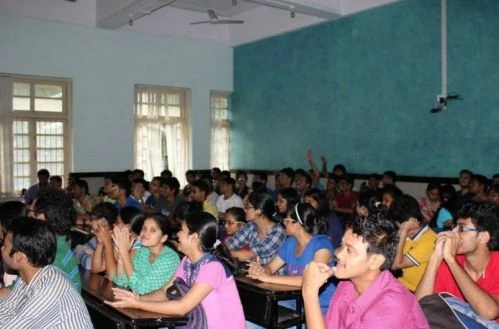
Social life at ICT is described as hectic but vibrant, with major annual events like the cultural fest Manzar and the sports fest Sportsaga. However, academics are always the top priority for students.
About ICT Mumbai.
Colleges cannot rewrite published reviews. We remove spam and abuse.
Ask the communityWhat should future students know?
Tell us which course you're considering. We'll help you work out the next step.
Get instant Partner access after mobile verification. Your public edits are reviewed before they go live.
Claim this college
 Auditorium
 Bank & ATM
 Cafeteria
 Campus Security
 Computer Labs
 Gym
 Hostel
 Medical
 Science Labs
 Sports Complex
 Study Library
 Swimming Pool