


What is confirmed for 2027 applicants
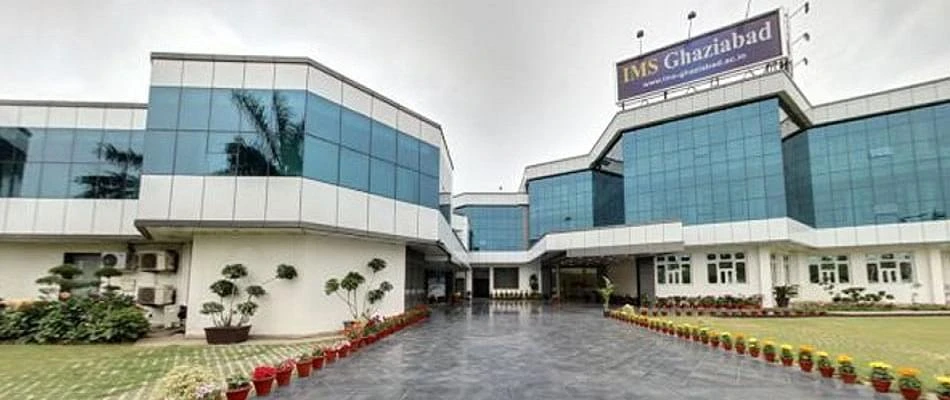
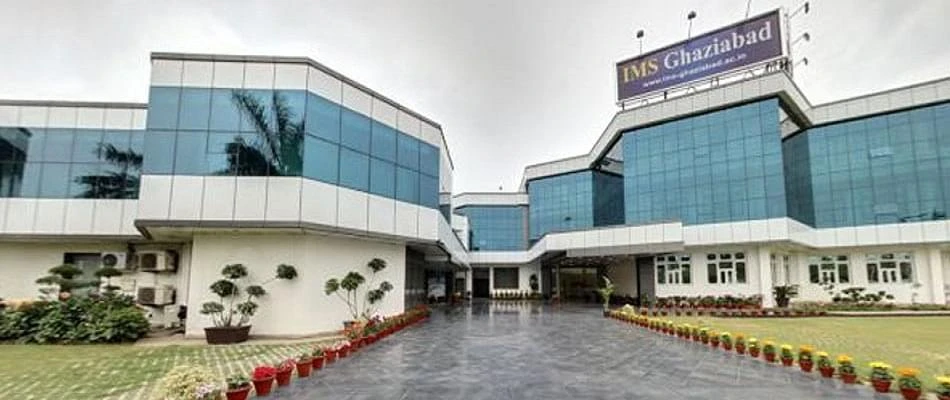
When checked on 5 November 2026, IMS Ghaziabad’s official homepage displayed a PGDM batch 2026-28 banner. The material reviewed does not announce a 2027-29 application deadline or a next-batch schedule. Treat that banner as a dated snapshot, not as a date or rule for a later intake. Check the official application portal and the institute’s PGDM admission procedure before paying or planning around a deadline.
IMS lists two distinct management routes: the two-year, full-time PGDM and the four-year doctoral Fellow Programme in Management (FPM). The PGDM page says the diploma is AICTE-approved, NBA-accredited and considered equivalent to an MBA by the Association of Indian Universities. That is an equivalence statement; the award remains a PGDM diploma. FPM is a research doctorate with a separate eligibility and screening path. Applicants should first decide whether they want a professional management programme or doctoral research, then use the matching admissions page.
The programme page describes a trimester system and a dual-specialization choice across Applied AI, Finance, Human Resource, Marketing and Operations. Compare these subject options against your intended roles before applying; the programme page does not say that every specialization has a separate admission route.
The PGDM admission page displays an intake of 450 and a full-course tuition figure of ₹9.5 lakh, but neither figure is attached there to a named admission batch. The separate fee page lists installment dates in 2027 and 2028, while the homepage still promotes 2026-28. Confirm the fee schedule and approved intake for the exact batch in the live portal or a written offer. Do not treat an undated page figure as a confirmed 2027-29 offer.
PGDM eligibility: check the degree rule separately from the test list
IMS states that PGDM applicants need a bachelor’s degree of at least three years with 50% marks or an equivalent qualification in any discipline recognized by UGC or AICTE. The page says both fresh graduates and candidates with relevant work experience may apply. Final-year candidates can apply, but must provide proof of passing by the time they join; the admissions office communicates the exact document deadline in the offer letter and the page describes 31 December of the admission year as typical.
The institute’s own page presents different entrance-test lists in different places. Its overview table names CAT, XAT and CMAT. The detailed selection section lists CAT, XAT, MAT and CMAT, while the application-document list asks for a CAT, XAT or CMAT score. Those lists are not identical. Do not assume that another test listed on an older policy page or for FPM is accepted for the current PGDM batch. Confirm the accepted exam, score-validity period and application option with the live portal before applying.
The published PGDM eligibility rule does not give a minimum entrance percentile or a guaranteed interview score. Meeting the stated graduation threshold makes you eligible to apply; it does not secure a GD-PI call or admission. Use the exact batch notice for any category-specific relaxation or additional rule, because the current procedure page does not set out a 2027-29 cutoff.
Selection is a composite process, not an entrance-score cutoff
IMS’s detailed selection table assigns 20% to performance in graduation, Class 12 and Class 10; 20% to the entrance-test score; 10% to the Written Aptitude Test; 25% to the personal interview; and 25% to the group discussion. The page does not publish a score-to-marks conversion formula or a guaranteed cutoff. A strong test result is only one fifth of this stated weighting, so prepare to explain your academic record, interests and reasons for choosing management as well as the test itself.
After the written application, the institute says it shortlists candidates for GD-PI and publishes venue and timing information online. The final list is merit-based and applicants are notified by call or email. The admissions page explicitly warns that submitting an application does not guarantee a GD-PI call or an offer.
Before you submit, reconcile the test-list discrepancy with admissions and retain the answer in writing. Ask whether the 20% entrance component uses a particular score version or validity window, how academic marks are normalized, whether the WAT is online or in person for your batch, and how the group discussion is scheduled. These details are not specified on the reviewed page, so they should not be guessed from a previous intake.
Application sequence and documents
The institute’s procedure page directs applicants to an online application form and also describes an offline submission address at Lal Quan, Ghaziabad. The online route is the IMS admissions portal. The procedure page lists an application charge of ₹1,100, but does not label it with a batch; verify the amount and refund terms in the portal before paying.
The page asks candidates to attach an attested score report for CAT, XAT or CMAT, school and graduation certificates and marksheets, and an Aadhaar card. Since the listed documents do not match every test named in the detailed selection section, confirm the applicable upload checklist for your exam and admission batch rather than treating this list as exhaustive.
A practical sequence is:
- Check the portal for the open batch, accepted exams, current fee and last date.
- Prepare the degree and marksheet records, exam score report and identity document. Final-year applicants should check the offer letter for the exact deadline to prove graduation.
- Submit the form and save the confirmation, payment record and uploaded-document list.
- Monitor email, calls and the institute’s GD-PI schedule page. A form submission does not assure a shortlist.
- If selected, read the offer letter promptly. IMS says the first installment is due within 15 days of the final result; the page says late qualification documents are typically due by 31 December of the admission year, with the exact deadline communicated in the offer.
The institute says it can provide documentation support for education-loan applications, subject to bank terms. It also cautions that loan processing delays may not extend an institute payment deadline. Arrange financing early and ask admissions in writing about any exception before relying on it.
FPM: a separate path for management research
IMS describes the Fellow Programme in Management as a four-year doctoral programme, offered in full-time residential and executive formats. Its structure moves from coursework and qualifying work to research development, teaching immersion, publications and a doctoral thesis. It is intended for applicants seeking research or teaching careers, or roles that require advanced analytical work, rather than a substitute PGDM application.
The published eligibility page gives three academic routes: a BE/BTech or equivalent with at least 60% (50% for SC/ST applicants) plus two years of relevant work experience; an integrated four- or five-year master’s degree with at least 55% (50% for SC/ST applicants); or a professional qualification such as CA, ICWA or CS with the same 55%/50% threshold. Check the official FPM admission procedure for the precise qualification wording before applying.
Eligible applicants can use one of three screening routes: CAT, GMAT, GRE or GATE taken within the two-year window defined relative to the admission year; UGC-JRF, NET, SET or CAT within the five-year window stated by IMS; or the institute’s Research Aptitude Test (RAT). For candidates applying through the first two routes, IMS says merit-shortlisted applicants must then attend RAT and a personal interview. The page does not explain the final sequence for every Route 3 applicant or publish a 2027-28 calendar, so confirm both with the FPM admissions office.
The FPM procedure page lists a ₹5,100 application charge without naming a batch. Verify the current amount and application window in the live portal. The PGDM’s exam list, fees and selection weights do not apply to FPM.
Before you commit
For PGDM, the key checks are the exact batch, accepted test, application deadline, current fee schedule and how the five selection components are scored. IMS publishes parts of this process but not the 2027-29 timetable or a test cutoff in the sources reviewed here. Use the live portal and keep the official answer for any inconsistency between the summary test list and detailed selection page.
For FPM, confirm that your degree and work-experience route meets the stated threshold, calculate the test-score window from the actual admission year, and ask whether your route requires the institute RAT and interview. The research-intensive four-year commitment differs materially from the PGDM’s two-year professional format.
If you are still comparing programmes, review the PGDM curriculum and specializations separately from the FPM structure. For either route, treat an admission-page figure as a published rule only within its stated scope; an application portal or offer letter can establish batch-specific deadlines and payment obligations that a general page leaves open.