
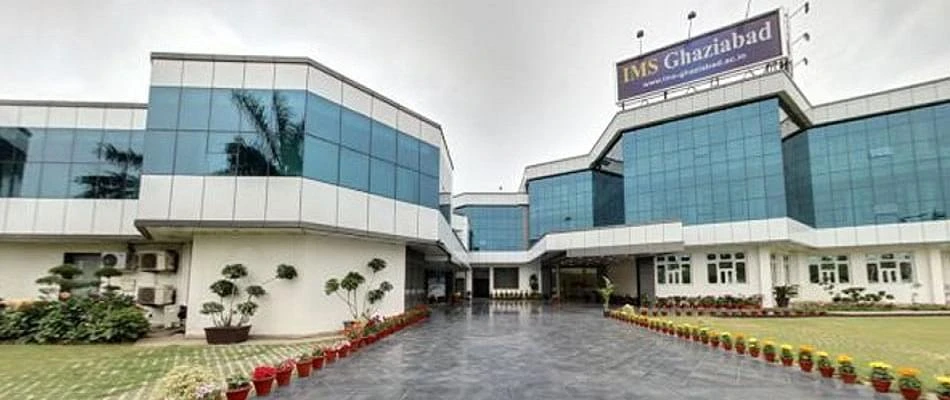

 Auditorium
 Cafeteria
 Campus Wi-Fi
 Computer Labs
 Gym
 Hostel
 Medical
 Sports Complex
 Study Library
Facilities at IMS Ghaziabad: what the official pages describe
IMS Ghaziabad’s published facilities span teaching rooms, computer labs, library services and a residential hostel. The institute’s pages describe infrastructure and amenities, but they do not establish live capacity, availability for every programme, current operating hours or access for each student. Use this guide to shortlist what to inspect, then confirm the details for your course and visit date.
The campus pages also mix specific service descriptions with broad promotional language. A listed amenity is evidence that IMS advertises it, not a guarantee that it is open at every hour or included in every fee. For decisions about accommodation, study access and commute, ask the institute for current operating details and inspect the relevant space when possible.
Classrooms and computer labs
IMS describes its lecture rooms as air-conditioned and equipped with audio-visual and multimedia aids. Those features can support presentations, case discussions and classroom instruction. The public page does not give a room-by-room equipment list, seating capacity, timetable availability or accessibility details. During a visit, check the rooms used by your programme rather than assuming every lecture room has the same setup.
The computer-labs page describes eight labs and 500 PC nodes or laptops. Treat these as the institute’s published facility figures: an older AICTE disclosure reports a smaller configuration, so the documents do not provide one consistent current inventory. Neither figure by itself establishes how many working devices are available to students at a given time. Ask about student access, operating hours, software and device availability during peak assessment periods.
Library and digital study resources
The institute’s library page says it serves postgraduate and doctoral programmes and reports more than 47,000 books, over 5,000 journals and more than one million e-books. It also advertises round-the-clock database access, naming services such as Scopus, ScienceDirect, ProQuest and Sage. These statements indicate a broad mix of print and digital resources, but they do not show that every title or database is available off campus, or that every programme has identical permissions.
The same page gives inconsistent print-journal totals: one section refers to 54 selected journals, while another states 143. Because the page does not reconcile the figures, neither total should be used as a precise current count. Ask the librarian which subscriptions are active, whether remote login is included, and whether access continues outside term time.
For a prospective management student, useful questions include whether the library has course reading lists, case-study access, quiet study seats during project deadlines and help with database searches. The public page describes resources, but does not publish seat capacity, opening hours for each area or an availability guarantee for a specific title. Check those practical details directly.
Hostel amenities and residential setting
IMS’s residential-accommodation page describes separate boys’ and girls’ hostel wings at Adhyatmic Nagar, on Delhi Hapur Road/NH-24 in Dasna, Ghaziabad. The listed amenities include Wi-Fi, indoor and outdoor games, a gym, cafeteria and mess, washing area, open-air theatre, green playground, ambulance availability and medical check-ups. This is an amenities list from the institute, not an independent inspection or a service-level schedule. Confirm which facilities are operational, what is included in the room charge and how medical support works after hours.
The hostel address differs from the institute’s general Lal Quan contact address. The public pages do not explain the relationship between these locations or provide a reliable commute time. Ask admissions to identify the teaching location for your programme, the hostel location, transport arrangements and typical travel time at class hours. Do not estimate daily travel from the two addresses alone.
Published hostel cost and what it covers
The institute’s fee page labelled 2026-28 lists a two-seater hostel charge with mess of ₹1,60,000 per annum, plus ₹5,000 refundable security. It says rooms are charged for the full year, with no pro-rata adjustment, and that fees are not refunded after room allotment. This is a dated 2026-28 schedule, not a confirmed price for a later intake. The page does not establish whether utilities, laundry, transport, deposits beyond the stated security or optional services are included.
For a realistic budget, request a written hostel quote for your own batch. Confirm room type, mess coverage, the full-year billing rule, refund and cancellation conditions, deposit treatment and any separate charges. Compare the hostel total with an off-campus option only after adding commute and meals; the institute’s public pages do not provide enough detail to calculate those costs reliably.
A focused visit and verification checklist
Before accepting accommodation or relying on a facility, ask IMS to confirm: (1) which campus and rooms your programme will use; (2) current classroom and computer-lab access, including hours and peak-time availability; (3) active library subscriptions and remote access; (4) hostel room occupancy, mess schedule, Wi-Fi coverage and medical support; (5) transport between teaching and residential locations; and (6) the batch-specific fee, refund and deposit terms in writing.
If you visit, see the actual hostel room category offered, the route to teaching spaces, library study areas and the computer labs. Ask whether the advertised amenities are included in the quoted fee and whether any are temporarily unavailable. Keep the response with your offer and fee documents. IMS publishes a useful picture of its facilities, but a current visit and written batch-specific answers are the best basis for a housing and study-access decision.