

 Auditorium
 Bank & ATM
 Cafeteria
 Computer Labs
 Gym
 Hostel
 Medical
 Science Labs
 Smart Classrooms
 Sports Complex
 Study Library
A campus with academic, residential and everyday services
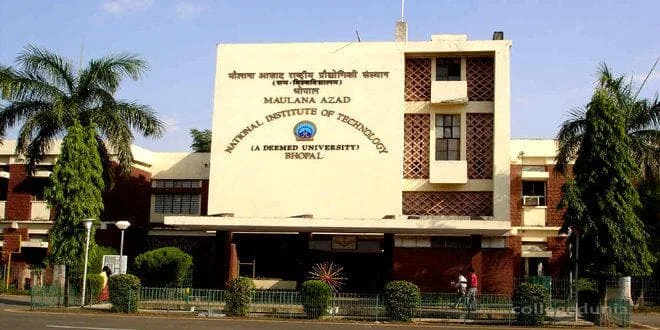
MANIT describes its Bhopal campus as 650 acres, with academic and administrative buildings, workshops, a library and community centre alongside student and staff residences. The same campus description lists a post office, shopping complex, school, dispensary, auditorium and sports complex. For a prospective student, this establishes that teaching, study, accommodation and several everyday services sit within one institutional campus. It does not tell you how long a walk between two departments or hostels takes, and it should not be read as a guarantee that every listed service is open at every hour. MANIT About Us.
This scale can matter when comparing a compact city campus with a larger residential environment. The useful question is less whether a campus is “large” and more whether your routine puts the resources you need near your department, hostel and timetable. If you expect to use a particular lab, clinic or sports facility frequently, ask the relevant department or service about its location, access rules and operating hours before relying on the general campus list. MANIT’s pages identify facilities, while current notices and local service rules determine how students can use them.
The institute’s facilities pages are most useful as a starting map. They point to dedicated pages for the Central Library, Central Computing Facility, Central Research Facility, hostels, dispensary, student activity and sports, and auditorium. Each has a different purpose: a library resource is not the same as an instrument service, and a campus-wide listing does not establish that a particular resource is included in every course or available without booking. Use the page for the service you need, then confirm programme-level access with the responsible office.
Library access for classes, projects and independent study
The Central Library publishes separate hours for its main library, outer reading area and circulation counter. The main library is listed as open Monday to Friday from 8:30 AM to 9:30 PM and Saturday from 9:30 AM to 6 PM. The outer reading area is listed until 11:30 PM on weekdays and Saturdays, while the circulation counter closes earlier. The library page says it is closed on Sundays and institute-declared holidays, with possible holiday openings only when approved. Check the live schedule before planning a late study session or a holiday visit because operating details can change. Central Library timings.
The library website links to the catalogue, e-books, e-journals, online courses, new arrivals, resource guides and the institutional repository, as well as research databases. That combination can support different stages of academic work: locating a print title, reviewing journal literature, finding course materials or checking institutional research output. The presence of a link does not by itself establish off-campus access, a particular subscription, or eligibility for every database. Students should check the library’s membership, circulation and access policies for the resource they plan to use. Central Library.
For applicants choosing a programme, ask whether the department has subject-specific collections or spaces in addition to the central facility. The broad campus description establishes a library and learning resource presence, but programme-specific design studios, departmental collections and lab access need confirmation from the course department. This distinction is useful when comparing programmes that rely on different kinds of study: a shared central collection may serve general academic needs, while specialist work can require scheduled access to a department resource.
Computing and shared research infrastructure
MANIT’s campus description lists a computer centre, and the facilities menu links a Central Computing Facility with information about services, software, labs, resources and policies. These are relevant to students who need computing for coursework, coding, simulation or project work. The public pages do not establish that every student receives the same machine, software licence, network privilege or lab schedule. Ask your department how a specific course uses the facility, and check the CCF’s current policies before assuming that a tool is available for personal or unrestricted use. MANIT About Us.
The Central Research Facility is a more specialised shared resource. MANIT describes it as supporting undergraduate, postgraduate, doctoral and project students, as well as consultancy and external academic or industry users. Its overview focuses on research services such as materials characterisation, chemical composition, phase transitions and measurement of mechanical, electrical and optical properties. This makes the CRF relevant to project work that needs analytical equipment or interdisciplinary research support, but it is not a general-purpose teaching lab for every student. Central Research Facility.
Access is operational, not automatic. The CRF page provides equipment-specific information and user-request processes; sample requirements, scheduling, user category and charges can differ by service. A student planning a project should first discuss the required method and facility with a supervisor, then check the current request form and testing details. External users should follow the facility’s current conditions as well. The practical value is that the institute publishes a route to shared instrumentation; the limit is that a catalogue entry alone does not promise a booking, free testing or a particular result.
The institute also links a Central Research Facility and a Central Computing Facility separately. Applicants should therefore distinguish research instrumentation from general computing provision when asking about project infrastructure. If a course advertises a particular laboratory or software environment, verify it with that department rather than assuming that the central facility menu covers every programme-specific requirement.
Hostels, health support and everyday needs
MANIT’s hostel page lists separate accommodation blocks for boys and girls and links to hostel rules, allotment information, accommodation details and mess-charge notices. The institute’s general campus description also identifies residential accommodation and a dispensary. These sources confirm that residential and basic health facilities are part of the campus offer, but they do not establish a current bed guarantee for each incoming student, a room-sharing arrangement, the latest hostel fee or clinic hours. Those details depend on the current allotment and service notices. MANIT Hostels · MANIT About Us.
Before accepting a place, check the hostel notice for your programme, year and category, and read the current rules and charges rather than relying on an older fee figure or a general description. Ask when allotment is announced, what happens if rooms are limited, which costs are paid separately, and whether mess arrangements follow a separate cooperative account. If living off campus is an option you are considering, compare the commute and total housing cost using current local information; the campus page cannot answer those personal budget questions.
The campus page describes a dispensary and mentions doctors, but its staffing detail is not treated here as a current service guarantee. Confirm the clinic’s present hours, available care and emergency procedure directly with MANIT before depending on it for a medical need. A campus dispensary is useful to know about, but it should not be confused with a full hospital or specialist service unless the institute explicitly confirms that scope.
The official campus overview also lists a post office, shopping complex and cafeteria options. This supports a basic picture of on-campus day-to-day amenities, not a claim about opening times, menus, prices or availability. For a residential student, those details affect routine more than a long inventory does, so ask current students or the service office about the specific provision you expect to use.
Sports, activity and shared spaces
MANIT’s campus page lists outdoor sports grounds and courts, including football, track and field, cricket, basketball and volleyball, plus indoor games such as table tennis and badminton. It also describes a gymnasium and sports complex. The institute’s dedicated auditorium page identifies the renovated former Students Activity Centre as Dr. S. Radhakrishnan Auditorium. The general campus page and venue page give different capacity figures, so this guide omits a seat count rather than treating either number as a dependable current specification. MANIT About Us · Auditorium.
For a student, the existence of these spaces means there are campus facilities for sport and events; it does not establish free access, open hours, team selection, equipment availability or a particular student-club schedule. If sport is central to your decision, ask about practice slots, coaching, trials, indoor access and any membership or booking rules. Similarly, confirm the current availability of the auditorium or activity spaces through the organising office before planning an event.
The institute also publishes student clubs and activity groups through its student zone. That can help applicants understand the kinds of organised activities present, but an online list is not a guarantee that every group is active each term. Look for recent announcements and ask about participation requirements if you want a particular activity to shape your campus experience.
How to verify whether the facilities fit your needs
Use MANIT’s campus pages as a directory, then check the service that matters to you. For regular study, confirm library and reading-area hours, circulation rules and digital access. For a course project, ask the department which labs or computing resources students use and whether access is scheduled. For research instrumentation, discuss the method with a supervisor and follow the CRF’s current request and sample procedure. For residential planning, check the latest hostel allotment, rules and mess notices. For health support, verify current clinic hours and emergency arrangements. For sports, ask about booking, coaching and team selection.
These checks are especially useful because infrastructure presence and personal access are different questions. A facility can be listed at institute level while a course sets its own timetable, safety training, booking priority or eligibility. Similarly, a library’s posted schedule can change around holidays, and hostel availability can vary by intake. Reading the current operational page is a more reliable way to plan than relying on an older review, an undated campus list or an assumed student entitlement.
MANIT’s public information supports a broad picture of a large residential campus with academic, study, computing, research, hostel, health, sports and everyday amenities. It does not settle room availability, current charges, every lab’s equipment, individual service quality or programme-specific access. Applicants should use the institute’s dedicated facilities pages and current notices for those details, and contact the relevant office when an access or cost decision could affect whether they enrol.