MANIT Bhopal at a glance
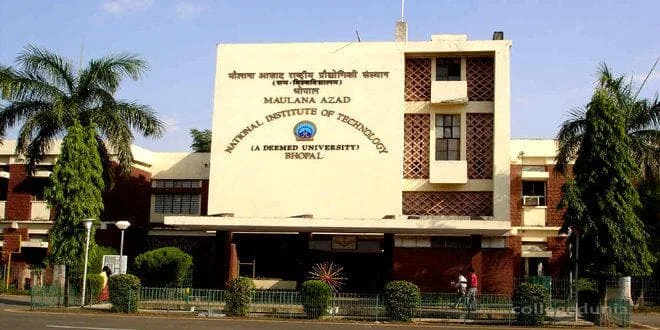
MANIT Bhopal is a centrally funded National Institute of Technology with roots in India’s first Regional Engineering Colleges. The institute says Maulana Azad College of Technology began in 1960, became a deemed university and took the MANIT name in June 2002, and received Institution of National Importance status under the NITSER Act in 2007. Its campus is in Bhopal, Madhya Pradesh. These milestones explain the institute’s identity; they do not by themselves indicate how a particular programme or cohort performs. MANIT campus and institute profile
For a prospective student, the practical question is which MANIT academic route fits the subject and degree length you want. The institute offers undergraduate, postgraduate and doctoral study across engineering, architecture and planning, sciences, computing, and management. Programme availability and admission routes vary by level, so use the current programme and admission pages for the exact intake rather than relying on a single institute-wide summary.
The timeline matters when reading older descriptions of the college. “MACT” refers to the earlier Maulana Azad College of Technology name, while MANIT is the later name adopted after it became a deemed university in 2002. The NITSER Act status followed in 2007. Older student material may therefore use different institutional labels, but those labels do not represent a different Bhopal campus. For current administrative notices, the institute’s own portal is the responsible source.
MANIT’s institutional profile frames its role around technical education, teaching and research, with a multidisciplinary scope. That is a broad institutional description rather than an independent quality assessment. Students should make comparisons at the level that affects their choice: the degree, department, admission process, current curriculum and the facilities or project access relevant to their interests. A national institute designation can establish statutory status; it cannot tell you whether a specific course, teaching style or campus environment will suit you.
Undergraduate programme choices
The institute’s published 2025-26 undergraduate list spans seven B.Tech disciplines, including chemical, civil, computer science, electrical, electronics and communication, mechanical, and materials and metallurgical engineering. It also lists B.Arch, B.Plan, Energy and Electrical Vehicle Engineering, Electrical Engineering with e-mobility, and two five-year B.Tech-M.Tech dual-degree options. The same page gives a total of 1,203 seats across its listed UG and dual-degree programmes for 2025-26, with the note that DASA, MEA and ICCR seats are extra. This is a dated intake snapshot, not a promise of the 2027-28 seat matrix. MANIT UG programme list, session 2025-26
The degree lengths help distinguish the choices: the listed B.Tech programmes are four years, B.Arch is five years, B.Plan is four years, and the dual degrees are five years. The 2025-26 table assigns 229 seats to Computer Science and Engineering, 173 to Electronics and Communication Engineering, 184 to Mechanical Engineering, and 100 to Architecture. The differences describe that published intake only; they do not measure course quality, selectivity or likely employment. Seat totals can also change between admission cycles, so use the current seat matrix when comparing options. MANIT UG programme list, session 2025-26
The course names point to distinct academic interests. The conventional engineering branches include Civil, Chemical, Electrical, Electronics and Communication, Computer Science, Mechanical, and Materials and Metallurgical Engineering. Architecture and Planning provide routes focused on buildings, the built environment and planning practice. The 2025-26 list also includes Energy and Electrical Vehicle Engineering and Electrical Engineering with e-mobility, plus five-year dual-degree options in Mathematics and Data Science and Engineering and Computational Mechanics. A student choosing between them should read the syllabus and compare the required mathematics, design or laboratory work rather than deciding from a branch label alone.
The institute page describes the syllabus and examination scheme as prescribed by the Senate. That tells applicants where academic rules are set, but this overview does not infer attendance policy, grading patterns or branch-change thresholds from the old article. Those details should be taken from the current ordinances and departmental notices. For course-level choices, the practical next step is to review the current curriculum, eligibility and counselling data together; the Overview is a map of the available programme families, not an admission prediction.
Postgraduate and research options
MANIT’s 2025-26 postgraduate catalogue includes M.Tech and M.Plan specialisations as well as MCA, MBA and M.Sc programmes. The institute lists CCMT with GATE for M.Tech and M.Plan, NIMCET for MCA, and CCMN with JAM for M.Sc. The published list also includes a three-year route that combines the first two years of M.Sc study with a third-year M.Tech in Materials and Metallurgical Engineering. These routes have different prerequisites and counselling processes; a candidate should verify the current brochure and the relevant counselling authority before applying. MANIT PG programme list, session 2025-26
The research environment is part of the institute’s stated academic scope. MANIT identifies centres in Artificial Intelligence, Smart Manufacturing, Water Resource Management and Cable Technology, alongside a Central Research Facility and Data Centre. That breadth may matter to students seeking interdisciplinary projects, but a centre’s presence does not guarantee access to a specific laboratory, supervisor or project. Check the department’s current research areas and admission requirements for the degree you plan to pursue. MANIT campus and academic profile
The PG catalogue is broader than a single engineering pathway. It includes M.Tech specialisations, two M.Plan routes, MCA, MBA, and M.Sc programmes in Physics, Chemistry, and Energy. The 2025-26 page lists 66 MBA seats, 115 MCA seats, and 20 seats in each of the three M.Sc programmes. These are published programme-level seats for that session, not current availability or an assurance of admission. The page also notes that several categories of additional seats are outside the listed totals, so applicants should read the programme-specific table and counselling notice together.
Admission routes differ by degree. MANIT’s 2025-26 listing associates CCMT and GATE with M.Tech and M.Plan, NIMCET with MCA, and CCMN with JAM for M.Sc. A separate listed three-year pathway combines two years of M.Sc with a third year of M.Tech in Materials and Metallurgical Engineering, for students meeting the relevant entry requirements. The MBA is a two-year programme, but the institute’s PG list alone does not establish the current test or selection route. Candidates should follow the current Management Studies notice instead of carrying forward a route from an older guide.
The institute says it offers doctoral programmes as well. Research candidates should treat the broad catalogue as a starting point: supervisor availability, project funding, laboratory access and department-specific eligibility are separate questions. The Central Research Facility describes shared testing and characterisation services for undergraduate, postgraduate, doctoral and project students, as well as consultancy users. Its areas include materials structure and chemical composition, phase transitions, and mechanical, electrical and optical properties. Requests depend on equipment-specific forms, sample requirements, user category and charges. This makes the facility relevant to applied research, while also making clear that it is not an open-access promise for every student or project. MANIT Central Research Facility
This is useful context when comparing research-oriented postgraduate routes with taught programmes. The catalogue tells you that a degree exists; the department and centre pages explain where work may be carried out and what resources are offered. Neither source guarantees that an applicant will receive a particular thesis topic, instrument booking, supervisor or project funding. Prospective students should ask the department about current faculty supervision, laboratory access and project expectations as part of their decision.
Campus and student fit
MANIT describes its Bhopal campus as a plateau of about 650 acres and lists academic and administrative buildings, workshops, an Energy Centre, Computer Centre, library, Learning Resource Centre and residential and recreational facilities. The institute’s wider amenities list includes a post office, bank, shopping centre, dispensary, auditorium, guest house, sports complex, playgrounds and open green areas. The Central Library site provides access points for its catalogue, e-books, e-journals, repository and research databases. These are institutional facilities, not a guarantee of room availability, uninterrupted service or unrestricted access to every resource. MANIT campus profile · Central Library
Hostel allocation and charges are set out through separate institute notices, so applicants should check the current hostel page rather than budget from old figures or assume that a bed is available. The official portal links hostel details, rules, allotment and mess-charge notices. MANIT Hostels
MANIT is worth comparing when you want a broad technical institute in Bhopal with engineering, architecture and planning choices, postgraduate study, research centres and on-campus services. Your decision should still be programme-specific: compare the current curriculum, admission rules, fee schedule, placement evidence and hostel terms for the course and intake you are considering. The institute’s 2025-26 programme lists and campus pages are useful starting points, not substitutes for the current notices.
For students who expect to live on campus, accommodation is a material part of the decision, but the public hostel page is a notice directory rather than a live vacancy counter. It links hostel rules, allotment notices, accommodation information and mess-charge instructions. Check the latest notice for eligibility, required details and actual charges before finalising a budget. The campus profile’s older capacity figures are not used here as present-day availability. Hostel allocation can vary by student category, programme or year, so an advertised facility does not guarantee an individual room.
The campus facilities are best read as institutional infrastructure. The presence of a library, computing centre, sports complex, dispensary and Central Research Facility indicates services that students may need to investigate, but access conditions differ. The Central Library’s online portal links its catalogue, e-books, e-journals, institutional repository and several research resources. Resource availability and authentication requirements are set by the library, so students should check its current rules rather than assume every database is accessible from any device. The library site also links membership, general rules, circulation policies, timings and floor plans, which are more useful for planning than older guidebook descriptions. Central Library resources
This profile deliberately separates the institution’s scale and range from claims about outcomes. It does not use old placement averages, package highs, branch cutoffs, tuition estimates or student-forum anecdotes as a proxy for the current experience. Those figures depend on cohort, programme, category and reporting period, and they belong in their dedicated pages with matching source years. The same caution applies to broad claims about campus culture: an institutional list of clubs and facilities can show what is formally present, but it cannot predict an individual student’s experience. For a final shortlist, compare the exact course’s current fees, admissions route, placement evidence and hostel terms, then weigh those against the curriculum and city context that matter to you.
If you are deciding between MANIT and another institute, compare like with like: the same degree level, branch or specialisation, admission year, fee basis and placement cohort. A national ranking category may cover engineering or architecture rather than the whole institution, and a single institution-wide number cannot describe every programme. The current admission and course pages should determine eligibility and seat availability; the dedicated placement page should be read for programme-specific reporting. Keep that evidence separate from the institute’s historical milestones and campus amenities, which answer different questions.




 Auditorium
 Bank & ATM
 Cafeteria
 Computer Labs
 Gym
 Hostel
 Medical
 Science Labs
 Smart Classrooms
 Sports Complex
 Study Library