
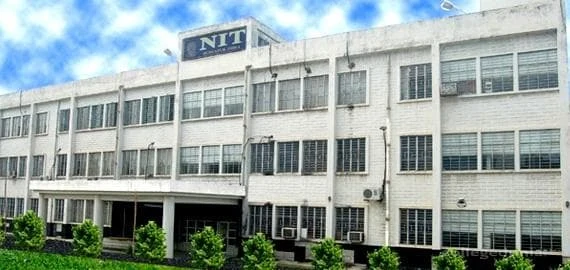

 Auditorium
 Cafeteria
 Campus Security
 Computer Labs
 Hostel
 Medical
 Science Labs
 Sports Complex
 Study Library
A residential campus with academic and research spaces
NIT Durgapur describes its campus as 187 acres, with academic buildings, laboratories, classrooms, hostels, residential quarters, gardens and playgrounds. Its facilities pages also identify the Utkarsh Bhawan central research and academic laboratory building, a Central Research Facility and a Centralized Laboratory Facility. The listed research equipment areas include physical, chemical and mechanical characterisation, high-performance computing and storage, and electrical and electronics fabrication and characterisation. The central labs page names teaching spaces such as physics, chemistry, computation, process control, language and tinkering laboratories. These are institute-level listings; a facility’s presence does not establish that every student or programme has unrestricted access.
For a prospective student, use these listings to ask practical questions about your course: which spaces are part of scheduled classes, which require a supervisor or booking, and what safety training or eligibility applies? The institute’s campus description identifies the broad layout, but it does not provide reliable walking times between a particular hostel and department. If daily access to a specific lab matters to your decision, confirm its location and operating rules with the department rather than inferring access from a general campus page. NIT Durgapur facilities and campus.
Central Library and digital study resources
The Central Library supports teaching, study and research and is housed in a separate three-floor building. The institute page describes a 1,000-square-metre plinth area and a collection of more than 1.7 lakh print volumes, alongside journals, e-books, databases and software. It identifies LIBSYS-10 for library operations, an online public access catalogue (OPAC), barcode-based circulation and Wi-Fi inside the library. These are useful signals of the services available, but the published collection totals are institute-reported figures rather than a live inventory.
The library also lists participation in One Nation One Subscription, e-Shodh Sindhu, Shodhganga and the National Digital Library of India. The page says online learning resources are accessible across campus through the intranet, while print materials are open access in the Central Library. Check the OPAC for a specific book or resource and the library’s current instructions for off-campus access, borrowing limits, hours and account eligibility. Do not assume that an institutional subscription guarantees access from a personal network or that every title is available to every user. Central Library.
Hostels and residential planning
NIT Durgapur’s current Hostels page lists halls numbered 1 through 14, including the A.P.J. Abdul Kalam International Hostel (Hall 12), Sarojini Naidu Hall (Hall 13) and Dr B. R. Ambedkar Hall (Hall 14). The page was last updated on 26 October 2026. A separate older campus facilities page says there are 13 hostels. Because those official pages differ, this guide relies on the current named-hall listing and does not state a total hostel count. Neither listing establishes room capacity, current vacancies, allocation by programme or the conditions for a particular intake.
Hostel availability and assignment are separate from admission. Before budgeting or making travel plans, read the hostel allotment notice for your entry category and year, and confirm the applicable charges, room type, mess arrangements, move-in dates and rules with the hostel office. The institute’s hall pages identify the residential system, but applicants should not treat a hall listing as a room offer. International students should verify which accommodation process applies to them; the existence of Hall 12 alone does not establish eligibility or availability. Hostels.
Medical support and emergencies
The institute’s Medical Unit page lists empanelled hospitals and diagnostic providers, including facilities in Durgapur and Kolkata. It also states that two dedicated ambulances and four trained drivers are available around the clock, and publishes Medical Unit numbers +91 9434788007 and +91 9434788015, with internal emergency number 9111 from campus telephones and intercoms. The page describes insurance helpdesk support and connections to hospitals for care beyond the campus unit. These details are operational and can change, so students should check the current Medical Unit page and campus instructions when they arrive.
For a day-to-day decision, distinguish the institute medical service from an external hospital or an insurance reimbursement. The page separately describes empanelled providers and reimbursement under institute rules; neither should be read as a promise that every treatment is cashless or that every cost is covered. Ask the Medical Unit or insurance helpdesk about current eligibility, documentation, referral and claim steps. In an emergency, use the current official contact instructions rather than relying on a saved copy of this article. Medical Unit.
Research facilities and specialist laboratories
The institute’s facilities page describes the Central Research Facility’s physical, chemical and mechanical characterisation facilities, high-performance computing and storage, and electrical and electronics fabrication and characterisation. It also identifies a Centralized Laboratory Facility with teaching and practical spaces across basic sciences, computation, process control, language learning and tinkering. A separate high-voltage laboratory is described as serving undergraduate teaching and graduate research. These listings help applicants identify the range of infrastructure, but the pages do not provide a complete equipment inventory, booking calendar, training requirements or access rules for each programme.
If you are comparing a specialisation, ask the department how students use the relevant facility: whether it appears in a required course, whether access is scheduled, whether a supervisor must approve it, and what safety or sample-preparation rules apply. Research centres and shared instruments may serve multiple departments and have priority or booking arrangements. An institute-level listing is evidence that the facility is described by NIT Durgapur; it is not evidence of guaranteed individual access, a particular project placement or a specific research outcome. Facilities and campus.
Everyday services and how to check fit
The campus facilities page also lists canteens, a guest house, banks, a post office, campus internet and student activity spaces. It names two bank branches and describes canteens in hostels and elsewhere on campus. These services can make a residential campus more self-contained, but an online list does not establish opening hours, prices, payment methods, accessibility or whether a service is currently operating. Check the latest institute notices and ask current students or the relevant office about the routine details that affect your budget and daily schedule.
Before accepting an offer, make a short access checklist for the facilities you will rely on: library hours and digital access; hostel allotment and charges; medical contacts and insurance rules; department-specific laboratories; campus transport or walking routes; and current food and banking options. If a facility is essential because of a disability, health condition, research requirement or dietary need, contact the responsible office with that specific question and request the current arrangement. The public pages give a useful map of NIT Durgapur’s learning, research, residential and support facilities, while current office guidance determines the actual access available to an individual student.