Loading Admission Guardian content
Loading Admission Guardian content

Provisional score based on available data. It may change as more information is verified.
Find a program, read its fee details and explore the admission requirements.
Summary of the programs shown below. First-year fee. Check the note beside each amount for inclusions and exclusions.
| Course | Stream | Fees |
|---|---|---|
| M.B.B.S. | Medical | 830000 |
| Master of Surgery [MS] | Medical | 965000 |
| Certificate Course in Modern Pharmacology | Medical | |
| Diploma | Medical | |
| Post Graduate Diploma in Medical Laboratory Technology | Medical |
All accepted exams
Eligibility: 10+2 with 50% + NEET
Specializations
All accepted exams
Eligibility: MBBS + PGNEET
Specializations
Specializations
Specializations
2 exams with cutoff data available
If you're looking at medical colleges in Maharashtra and want serious clinical training without the metro city price tag, Dr. Panjabrao Deshmukh Memorial Medical College (PDMMC) in Amravati is a name that comes up. It's a private, trust-run institution that's built its reputation on one thing above all else: sheer patient volume. The attached 1000-bed hospital serves as the primary tertiary care hub for a vast rural catchment area, meaning students see a breadth of pathology that's hard to match in more urban, private setups. That's the trade-off. You get exceptional hands-on experience, but you're signing up for life in a quieter city and navigating the sometimes rigid administration of a large, established trust. The fees are steep for the open category, but the college is fully recognized by the NMC and its hospital holds NABH and NABL accreditations, which speaks to a baseline of institutional quality.
The academic structure here is classic and focused. The undergraduate offering is the MBBS program, which saw its intake increase to 150 seats in 2022. The 4.5-year course, followed by a mandatory one-year internship, runs on a tight schedule dictated by MUHS Nashik. They're strict about internal assessments—you need 75% attendance in theory and 80% in practicals to be eligible for university exams. That's fairly standard, but students note the rule is enforced.
Where PDMMC expands is in its postgraduate offerings. There are about 65 MD/MS seats spread across 19 specializations. The clinical branches like General Medicine, Surgery, Orthopaedics, and the coveted Radio-diagnosis seats are naturally competitive. The para-clinical departments of Pathology, Microbiology, and Pharmacology are also well-established. The faculty roster of around 175 is notable for its stability; many professors have been here for 15 to 30-plus years. That continuity can be a double-edged sword—it brings deep institutional knowledge but sometimes, as per student whispers, a resistance to change. Beyond the core medical degrees, the college also runs a B.Sc Nursing program, a PGDMLT, and various MUHS-affiliated fellowship courses.
Let's be clear: medical colleges don't have "placements" in the engineering sense. Your career path is either further specialization, government service, or private practice. The key financial metrics here are the stipends.
The MBBS internship stipend has been a point of contention. Historically, it was a paltry ₹2,000–₹5,000 per month. As of 2024-25, following a Maharashtra government directive, it is mandated to be ₹18,000 per month. However, students in private colleges often report delays or partial payments, so that's a reality to be prepared for. The picture is brighter for postgraduates. The PG stipends at PDMMC are standardized and respectable: ₹76,429 in the first year, scaling up to ₹77,917 by the third year. For state quota MBBS graduates, there's also a mandatory one-year rural service bond with a stipend of around ₹25,000 per month. The real "placement" advantage PDMMC offers is the clinical skills you gain, making you more confident whether you head into PG entrance prep or a medical officer role.
The fees are regulated by the Maharashtra Fees Regulating Authority (FRA), but for the open category, they are significant. An open category MBBS student pays ₹10,25,000 annually in tuition and development fees. Over 4.5 years, that's a tuition cost pushing ₹46-50 lakhs, before hostel and mess. There is relief for reserved categories: OBC/EWS students get about a 50% scholarship (~₹5,59,100), while SC/ST students have tuition fully waived, paying only a development fee of ₹93,182.
The hostel is a major additional cost. For postgraduates, a double-seated room runs about ₹1,70,000 per year. For undergraduates, it's between ₹80,000 to ₹1,00,000. Add on a refundable caution deposit of ₹50,000–₹1,00,000 and other mandatory charges like the student association fee (₹30,000), and the total annual outlay climbs quickly. The college mandates hostel stay for all admitted students, a rule that has been a consistent financial pain point for local students.
Admission is 100% through the national entrance exams. For MBBS, you need a qualifying score in NEET-UG. For MD/MS, it's NEET-PG. The selection is via the centralized Maharashtra state counseling conducted by the State CET Cell.
The cutoffs give you a sense of the competition. For the General category in the state quota, the MBBS cutoff typically hovers around 545–555 marks in NEET-UG, which roughly translates to a state rank between 4,500 and 5,500. For a sought-after PG seat like MD in General Medicine, you'd likely need a NEET-PG rank in the range of 7,000–9,000. The seat matrix follows the 85% State Quota (which includes a 15% Institutional/Management quota) and 15% NRI Quota structure. You can check the official counseling website and the PDMMC website for the latest bulletins.
The campus is spread over a reported 30-40 acres and houses an integrated academic and hospital complex. The infrastructure highlight is undeniably the 830–1000 bed hospital. It's equipped with a 24x7 Cath Lab, a large dialysis unit, and advanced ICUs (NICU, PICU, SICU). This is the engine of your clinical learning. The library is a functional, air-cooled space of about 9,394 sq. ft., stocking over 11,000 books and a good number of journals.
Now, the student living experience is where reviews get mixed. The hostels—separate blocks for boys, girls, interns, and residents—are described as basic. The quality is often rated a 3 out of 5. A common complaint is that electricity charges are billed separately on top of the high hostel fee. The mess food is another frequent grievance in student forums. The social life is moderate, centered around the annual cultural fest "Shivotsav." Amravati is a quiet city; if you're looking for a bustling metropolitan experience, you won't find it here. The trade-off is fewer distractions and potentially more focus on your studies.
Scouring platforms like Quora and Reddit reveals a fairly consistent consensus. The praise is overwhelmingly for the clinical exposure and teaching in core departments. "The patient load is massive; you will see cases here that you won't see in city private hospitals," is a typical Reddit comment. The Anatomy and Medicine departments are specifically called out as rigorous and strong. Seniors are often described as supportive in guiding juniors through practical training.
The criticism is equally consistent and focuses on administration and amenities. The management is frequently labeled "money-minded" and rigid, with slow administrative processes. The compulsory hostel rule, even for locals, is a major financial sticking point. Complaints about mess food quality and strict warden rules are perennial. It paints a picture of a college where the core academic medicine is solid, but the student service and comfort aspects can feel like an afterthought.
PDMMC Amravati is a specific choice for a specific kind of student. It's best for someone whose top priority is becoming a clinically confident doctor, who can learn by doing in a high-volume, resource-constrained environment that mimics much of India's public health reality. If your goal is to ace your MBBS, get your hands dirty, and build a solid foundation for the NEET-PG grind, the clinical training here is arguably worth the high open-category fee. You're paying for experience, not luxury.
But you should probably look elsewhere if you prioritize a comfortable, well-managed student life, excellent hostel food, or a vibrant city scene. The administrative hassles and basic amenities are a real part of the package. Also, for the open category fee of over ₹10 lakhs a year, you are entering a price bracket where you could consider other private colleges in bigger cities. Ultimately, PDMMC isn't a glamorous choice, but for decades it has been a reliable producer of work-ready doctors for Maharashtra and beyond. That's its legacy.
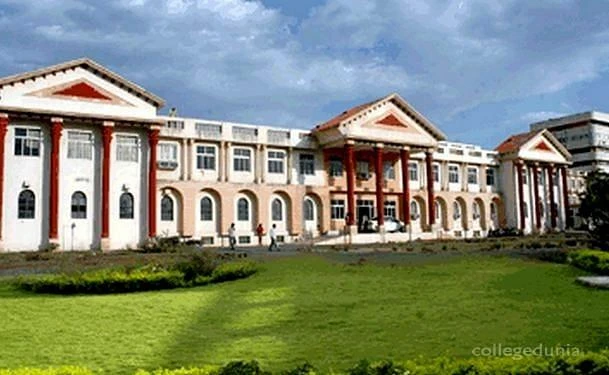
In this preview: 1 photo · 0 videos
Dr Panjabrao Deshmukh Memorial Medical College (PDMMC) in Amravati is a private medical college. It is run by the Shri Shivaji Education Society, which is a trust.
For the General category under the State Quota, the MBBS cutoff at PDMMC Amravati typically ranges around 545 to 555 marks.
Yes, hostel stay is usually mandatory for all admitted students at Dr Panjabrao Deshmukh Memorial Medical College as per the college mandate.
The patient flow at PDMMC Hospital is excellent. It is considered one of the busiest hospitals in the Vidarbha region, providing students with high clinical exposure.
For an Open category student, the total tuition cost for the 4.5-year MBBS program at PDMMC is approximately ₹46 to 50 Lakhs. This cost does not include hostel and mess charges.
Share what future students should know about Dr Panjabrao Deshmukh Memorial Medical College.
Student voices are not rewritten by colleges. We remove spam and abuse.
Wider admission question? Community PulseWhat should future students know?
Tell us which course you're considering. We'll help you work out the next step.
Get instant Partner access after mobile verification. Your public edits are reviewed before they go live.
Claim this college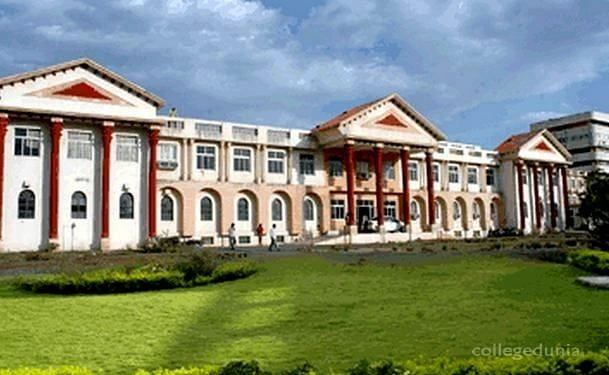
 Auditorium
 Computer Labs
 Hostel
 Medical
 Science Labs
 Sports Complex
 Study Library