Loading Admission Guardian content
Loading Admission Guardian content

1 programme · 1 institution. Check the admission year and requirements.
1 programme · 1 institution. Check the admission year and requirements.
The Indian Institute of Technology Jodhpur is a public institute on the Karwar campus along NH 62, outside Jodhpur city. Its campus supports a residential, research and teaching environment.
IIT Jodhpur’s profile is shaped by engineering and interdisciplinary study. Its official undergraduate catalogue spans established engineering disciplines as well as newer areas such as Artificial Intelligence and Data Science, while postgraduate and research admissions are organised through separate programme notices. This breadth makes it important to compare the specific department, curriculum and admission route rather than treating the institute as one uniform course.
The institute’s B.Tech catalogue includes Bioscience and Bioengineering, Chemical Engineering, Civil and Infrastructure Engineering, Computer Science and Engineering, Electrical Engineering, Mechanical Engineering, Materials Engineering, Artificial Intelligence and Data Science, Electronics Engineering and Aerospace Engineering. IIT Jodhpur describes its undergraduate curriculum as combining foundations in basic and engineering sciences with co-curricular opportunities, design work, interdisciplinary learning and industry-linked projects. These are institute-wide curricular features; the subjects, electives and project options available to an individual student depend on the programme and its curriculum.
Before choosing a branch, compare its current curriculum and programme structure, not only its name. IIT Jodhpur’s catalogue points applicants to programme-specific curriculum materials, and its admissions pages separate undergraduate, postgraduate and other routes. The current admission notice remains the authority for which programmes and seats are open in a particular intake.
For B.Tech, IIT Jodhpur’s admission links identify JEE (Advanced). The 2026 JoSAA opening-and-closing-rank resource is the relevant official route for that cycle’s seat allocation, but its online rank table is dynamically selected by programme, category, quota, round and gender. Do not use one cutoff as a universal admission threshold. Postgraduate and other applicants should use the institute’s programme-specific admission pages and the national test named for their chosen route. Dates and eligibility for a future intake should be taken from its own notice.
IIT Jodhpur’s published 2026-27 fee schedule distinguishes tuition by category and family-income band and lists separate institutional, hostel and other charges. For example, the schedule shows B.Tech tuition of ₹1,00,000 per semester in the highest family-income band, with different tuition for other listed bands. A semester bill also depends on programme, student category, hostel status and one-time charges, so this figure is not the total cost of attendance. Read the current schedule and the applicable admission offer before budgeting; do not carry the 2026-27 figures forward as a 2027-28 quote.
In NIRF India Rankings 2025, IIT Jodhpur placed 27th in Engineering and 66th in Overall. These are separate institute-level categories, not global or branch rankings. The institute’s 2026 B.Tech/B.S. and M.Tech placement report presents results by programme and cohort, with registered and placed counts alongside average and median compensation. Outcomes vary by programme and cohort; they should be read from the relevant row rather than reduced to a single promise for every student.
The Office of Students lists hostel, dining, sports and transport facilities, and the Health Centre describes round-the-clock medical and nursing support. Accommodation type and availability depend on student group and allocation; transport, hostel and health-service details should be confirmed from current institute instructions. These services add practical context to the academic choice, but do not establish a guaranteed room, placement, salary or admission result.
IIT Jodhpur’s 2026-27 catalogue shows a wide range of academic levels. Its undergraduate list includes B.Tech and B.S. programmes, and its postgraduate offerings span M.Sc., M.Tech, MBA, Master of Design and medical technology study. The catalogue also includes Ph.D. fields across engineering, science, management, design and interdisciplinary centres. That breadth matters because an IIT Jodhpur admission decision is really a decision about a specific programme, department, degree structure and selection process, not a single generic “IIT” experience.
The timing of programme launches can help applicants interpret how mature a curriculum may be, but it is not by itself a measure of teaching quality or career outcomes. The institute lists Computer Science and Engineering, Electrical Engineering and Mechanical Engineering B.Tech programmes as starting in 2008; Bioscience and Bioengineering in 2017; and Artificial Intelligence and Data Science, Materials Engineering, Civil and Infrastructure Engineering and Chemical Engineering in 2020. Electronics Engineering is listed as starting in 2025 and Aerospace Engineering in 2026. Newer disciplines may have shorter graduate histories, so a long-run alumni record or placement trend may not yet be comparable with older branches.
For any shortlisted option, examine the current programme structure, required courses, electives, laboratory or project components and progression rules. The B.Tech page describes a foundation in basic and engineering sciences, design exposure, co-curricular work and interdisciplinary options, but the institute’s broad curricular philosophy does not mean each student can take every elective or pursue every minor. Ask the department how choice is constrained by prerequisites, timetable and seat availability. If you are comparing a B.Tech with a B.S. or a postgraduate programme, compare qualification level, academic length, entry requirements and intended next step separately. A programme’s title alone cannot settle those differences.
IIT Jodhpur’s admission links list JEE (Advanced) for its undergraduate engineering route. For 2026, JoSAA published an opening-and-closing-rank resource. A rank is meaningful only with its programme, category, seat type, quota, gender and counselling round attached; ranks from different rows cannot be treated as interchangeable thresholds. The 2026 table interface did not yield a static complete series in the saved official snapshot, so this profile does not quote a cutoff. Use the official counselling result for the exact row you need, and treat a past rank as a historical reference rather than a prediction or guarantee.
Postgraduate routes are organised separately. IIT Jodhpur’s PG admissions page lists M.Tech, M.Sc., M.S. by Research, M.Des and Ph.D. programmes and posts admission information through programme notices. This page is a useful directory of fields, not a single common eligibility rule. Each notice may specify a different qualifying degree, entrance score, written test, interview, shortlisting condition and application schedule. Check the individual programme’s current notice before assuming that a test or qualification applies universally. MBA and other specialised programmes also require their own entry information.
A practical application sequence is to identify the exact degree and intake; open its latest institute notice; verify the qualifying education and any required national examination; note the application or counselling authority; and then confirm document, category and fee instructions for your own case. For an undergraduate seat, track JoSAA and any later officially announced allocation process. For a postgraduate offer, use the department or admissions page named by IIT Jodhpur. The official PG page displayed July 2026 reporting dates when captured, but those dates belong to that reported cycle and should not be reused for 2027-28.
IIT Jodhpur’s Office of Academic Affairs published a regular fee schedule for academic year 2026-27. The PDF separates tuition from admission, convocation, semester and refundable deposit charges. For new students, its listed hosteller grand total before tuition is ₹48,050 per semester, while the day-scholar figure is ₹35,800; these totals include one-time admission, convocation and deposit components, so they are not the recurring semester bill for every later term. The schedule identifies semester charges of ₹32,250 for hostellers and ₹20,000 for day scholars and notes that those components are under revision and subject to change. It also lists a separate ₹2,000 experimental and professional development fee for B.Sc.-B.Ed. students.
Tuition depends on programme and, for B.Tech/B.S., family-income band. The 2026-27 schedule lists ₹0 per semester below ₹1 lakh family income, ₹33,333 between ₹1 lakh and ₹5 lakh, and ₹1,00,000 above ₹5 lakh. Other listed programmes have their own tuition amounts. These are schedule values for the stated academic year, not a complete cost-of-attendance figure: accommodation, dining, travel, personal expenses and any later revisions need separate verification. Check whether the quoted total includes the same student category, programme, residence choice and one-time charges as your offer.
The Office of Students describes its role as communicating and assisting with state and central scholarship schemes, including listed categories such as SC/ST Top Class scholarships and B.Tech fee remission under Ministry of Education guidelines. The page also contains links to older 2023-24 notices. That evidence supports checking eligibility and current notices, but not assuming that a particular student will receive an award or that past conditions and amounts remain current. Ask about deadlines, documents, renewal criteria and whether aid is applied before or after fee payment.
The latest saved published NIRF results are from the 2025 edition: IIT Jodhpur ranked 27th in Engineering with a score of 61.31 and 66th Overall with a score of 53.17. Engineering and Overall are distinct categories. These figures are neither a global position nor the rank of Computer Science, Aerospace or another individual programme. IIT Jodhpur’s repository also contains 2026 NIRF submission files, but a submitted data collection is not a published 2026 result. Use each edition as a dated comparison point and inspect category definitions before comparing institutions.
The institute’s B.Tech/B.S. and M.Tech placement report describes the 2026 passing-out batch by programme. It distinguishes students registered for placement from those placed and lists average and median CTC. For instance, its B.Tech Computer Science and Engineering row reports 87 registered, 85 placed, average CTC of ₹28.73 lakh and median CTC of ₹26.76 lakh. That is one programme’s 2026 cohort, not the expected salary for every CSE student or a result for all institute graduates. Other programmes have different counts and outcomes; small cohorts can make a mean especially sensitive to individual offers. CTC is also not the same as take-home salary.
When comparing career results, use the same cohort, degree, metric and reporting method across institutions. Check the number eligible or registered, whether continuing studies or non-participation affect the denominator, and whether the report includes all offers or only a defined placement process. A published outcome is useful evidence about a past cohort, but it cannot guarantee that a future applicant will secure a role or salary. For branch selection, combine outcome data with the curriculum, your interests and the work you hope to pursue.
IIT Jodhpur describes its model as residential, with 17 hostels on campus: five for women and 12 for men. Hostel allocation depends on institute policy, eligibility, programme, year and availability. The hostel page says first-year UG, PG and Ph.D. students receive double-occupancy rooms; other room allocation varies by programme and residence year. This is relevant to privacy, routine and budgeting, but applicants should not infer a guaranteed room type from general campus descriptions. Confirm the accommodation instructions attached to your offer.
The Office of Students lists dining, sports grounds, gyms, indoor recreation and a daily bus service between campus and Jodhpur city. Its facilities page does not fix current fares, routes or times, so students who expect to travel regularly should ask for the live timetable and stops. The Health Centre lists round-the-clock medical and nursing officers, a diagnostic laboratory, physiotherapy, an in-house pharmacy and emergency/day-care rooms. These are campus service descriptions; applicants should separately check current eligibility, referral, hospital and charge rules rather than treating them as an insurance policy.
The practical fit depends on what you value. A residential campus can keep study, labs and student services close together, while a location outside the city means that access to urban errands and activities may require transport planning. Programme structure, shared accommodation, fee category, campus services and the time needed to travel should all enter your decision. Before accepting an offer, confirm the exact curriculum and academic calendar, current fee and aid rules, your hostel allocation, essential-health arrangements and transport information. These details may be updated independently of the broad descriptions in institute webpages.
Programme information: Official source · Source as of: 2026-10-31
Each route applies only to this named programme and the stated year.
JEE-Advanced: Joint Entrance Examination Advanced · 2026-27
Admission-route evidence: Official source · Source as of: 2026-10-31
1 recorded programme · 1 institution. Admission years and conditions apply to the named programme.
Selected ranking categories, with the recorded year beside each result. Open all records for the complete history.
13 published records · Lower numeric ranks are stronger
NIRF
B.Tech
#302022
IIRF
Engineering · public
#322022
IIRF
B.Tech · public
#342022
Find a program, read its fee details and explore the admission requirements.
Summary of the programs shown below. See each program's fee period below.
| Course | Stream | Fees |
|---|---|---|
| Ph.D | Medical | 71800 |
| Master of Technology [M.Tech] | Engineering | 77800 |
| Bachelor of Technology [B.Tech] | Engineering | 251800 |
| Post Graduate Diploma in Data Analytics and Cloud Computing | Engineering | 299000 |
| Master of Business Administration [MBA] | Management | 400000 |
Specializations
Eligibility: Post Graduation
Specializations
All accepted exams
Eligibility: Graduation + GATE
Specializations
All accepted exams
Eligibility: 10+2 with 75% + JEE
Specializations
Eligibility: Graduation with 50%
Specializations
All accepted exams
Eligibility: Graduation with 60%
4 exams with cutoff data available - showing recent entries
 Accenture
 Adobe
 Amazon
 Arista Networks
 Bank of India
 Bharat Petroleum Corporation Limited (BPCL)
 Cairn
 Capgemini
 Cisco
 Cognizant
 DRDO
 Flipkart
 Google
 Hewlett-Packard (HP)
 Hindustan Unilever Limited
 Honda
 IBM
 Indian Oil Corporation Ltd (IOCL)
 Infosys
 Intel
 KPMG India
 Larsen & Toubro Ltd.
 Microsoft
 Morgan Stanley
 National Instruments
 NTPC Limited
 Nucleus Software
 Oil & Natural Gas Corp.
 Panasonic India
 Qualcomm India Pvt. Ltd.
 Renault Nissan
 Samsung
 ST Micro Electronics
 Tata Power
 TCS
 Trident
 Unilever
 United Health Group
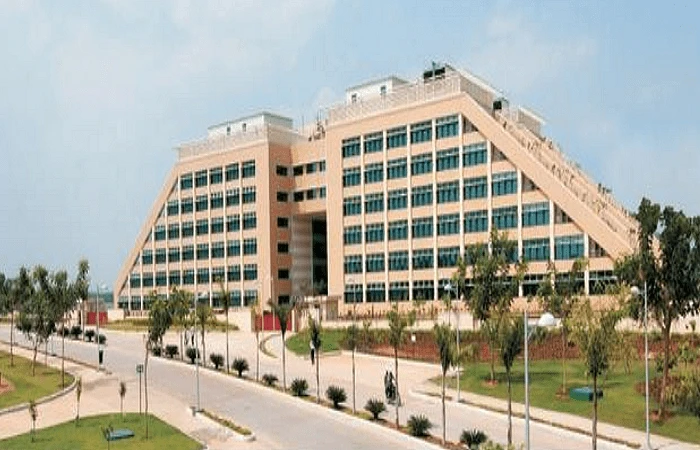
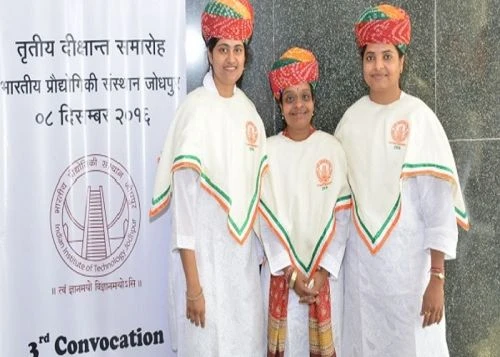
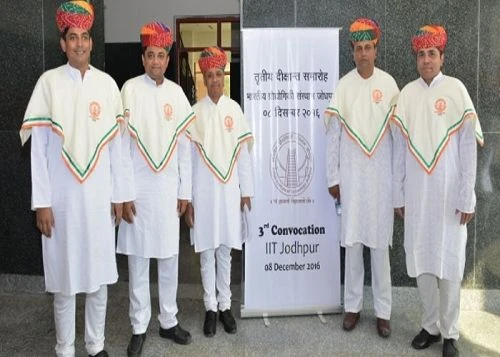
In this preview: 5 photos · 0 videos
Yes, IIT Jodhpur is considered one of the best among the second-generation IITs for CSE. The department has a strong placement record, with an average package of ₹26+ LPA and a placement rate exceeding 98%.
Yes, IIT Jodhpur is well-known for providing single-occupancy, air-conditioned rooms to its students, ensuring a comfortable living environment on campus.
The IIT Jodhpur campus is located approximately 24-30 kilometers from the main city. To facilitate student travel, the institute operates a regular bus service.
IIT Jodhpur maintains a very strict anti-ragging policy. The institute has a dedicated Student Wellbeing Committee (SWC) to ensure a safe and welcoming environment for all students.
Yes, branch changes are possible at IIT Jodhpur. Eligible students, typically those with a high CGPA (usually 9.0 or above), can apply for a branch change after completing their first year.
About IIT Jodhpur.
Colleges cannot rewrite published reviews. We remove spam and abuse.
Ask the communityWhat should future students know?
Tell us which course you're considering. We'll help you work out the next step.
Get instant Partner access after mobile verification. Your public edits are reviewed before they go live.
Claim this college
 Auditorium
 Cafeteria
 Computer Labs
 Hostel
 Medical
 Science Labs
 Sports Complex
 Study Library