Loading Admission Guardian content
Loading Admission Guardian content

Provisional score based on available data. It may change as more information is verified.
Selected ranking categories, with the recorded year beside each result. Open all records for the complete history.
39 published records · Lower numeric ranks are stronger
NIRF
B.Tech
#192021
IIRF
Engineering · public
#122024
Outlook
Engineering · public
#92020
THE
Overall
#5012023
IIRF
B.Tech · public
#142023
Find a program, read its fee details and explore the admission requirements.
Summary of the programs shown below. First-year fee. Check the note beside each amount for inclusions and exclusions.
| Course | Stream | Fees |
|---|---|---|
| Ph.D | Engineering | 24800 |
| Ph.D. | Engineering | 24800 |
| Master of Science [M.Sc] | Science | 36870 |
| Master of Technology [M.Tech] | Engineering | 56050 |
| Bachelor of Technology [B.Tech] | Engineering | 222300 |
Specializations
Eligibility: Post Graduation
Specializations
Eligibility: Post Graduation
Specializations
All accepted exams
Eligibility: Graduation with 55% + IIT JAM
Specializations
All accepted exams
Eligibility: Pass in Graduation + GATE
Specializations
All accepted exams
Eligibility: 10+2 with 75% + JEE
3 exams with cutoff data available - showing recent entries
 Bharat Heavy Electricals Ltd. (BHEL)
 Deutsche Bank
 DRDO
DRDO Ericsson India Pvt Ltd
 Expedia
 Facebook
 Flipkart
 Gemini solutions
 Goldman Sachs
 Google
 Innoplexus
 ITC
ITC JCB
JCB Larsen & Toubro Ltd.
 Lucid Software Ltd
 Microsoft
 Philips
 TCS
TCS Texas Instrument
 Videocon
 Yodlee
If you're looking at the newer IITs, IIT Ropar consistently pops up as a serious contender. Established in 2008, it's shed its 'new IIT' growing pains faster than most. The 525-acre permanent campus on the banks of the Sutlej is a stunner—modern, green, and purpose-built. But the real story isn't just the scenery. It's the academic agility and a research culture that punches above its weight, reflected in a steady climb in the NIRF Rankings. For students who land a seat here, especially in CSE or the unique Mathematics & Computing program, the return on investment is clear: a median package pushing ₹18 LPA and a brand name that opens doors. Just be ready for Punjab's intense summer heat and a campus life that's more serene than metropolitan.
IIT Ropar's academic model feels less rigid than some of the older institutes. The curriculum, revised in 2017, is built for flexibility. For B.Tech students, there are four distinct pathways: the standard degree, a B.Tech with a Minor in another discipline, a B.Tech with a specialized Concentration, or an Honors track for high-fliers. That's a decent amount of choice for an undergraduate program. You can even swap out 15 credits for an extended industry internship, which is a smart nod to real-world experience.
The branch list is modern and expanding. Alongside the standard CSE, Electrical, Mechanical, and Civil Engineering, you have programs like Engineering Physics, Metallurgical & Materials Engineering, and the increasingly popular Artificial Intelligence & Data Engineering. Mathematics & Computing remains a unique and highly competitive blend. New programs like Digital Agriculture and Integrated Circuit Design are slated for 2025, showing the institute is tracking industry trends.
Faculty quality is a strong suit. All 179 permanent faculty hold PhDs, many from top global institutions like MIT and Caltech or premier Indian ones like the older IITs and IISc. The teaching leans towards continuous evaluation—quizzes and assignments can make up 40-50% of your grade, so you can't just cram at semester's end. It's a system that rewards consistency.
The placement reports tell a story of solid, if not stratospheric, outcomes. For the 2025 batch, the highest package stood at ₹65.76 LPA, a new institute record. More importantly, the average CTC was ₹23.91 LPA, with the median at ₹18 LPA. That median figure is a reliable indicator of what a typical student can expect. The placement percentage, however, has seen some fluctuation, sitting around 71-73% for the last two cycles after a stronger 82% in 2023. This is a point students discuss online—the gap between the top and middle of the class can feel pronounced.
Recruiters are top-tier. The usual tech giants—Google, Microsoft, Amazon, Uber, Adobe—regularly visit. So do finance and consulting firms like Goldman Sachs and JP Morgan, and core companies like Intel, Texas Instruments, and L&T. The sector split is what you'd expect: IT/Software dominates, but core engineering and analytics roles are there.
Here's the reality check students give: if you're in CSE, MnC, or Electrical Engineering, you're in a very good position. The internship scene is strong here, with companies like Google and Microsoft offering Pre-Placement Offers (PPOs). For core branches like Civil or Mechanical, the process is more challenging, though alumni note outcomes are still better than at most private colleges. Postgraduate placements average around ₹13 LPA, which is respectable but underscores the premium on the B.Tech tag.
The total cost for a four-year B.Tech for a General or OBC category student is estimated between ₹9.5 to ₹10.5 lakhs. That breaks down to ₹2 lakhs in annual tuition, plus hostel and mess fees that run about ₹36,260 in the first semester and around ₹25,260 thereafter. There's a one-time admission fee of roughly ₹15,000.
Financial aid is comprehensive and based on need. The Merit-cum-Means (MCM) scholarship provides a full tuition waiver plus a ₹1,000 monthly stipend for General/OBC students with a family income below ₹5 lakhs. SC/ST and physically challenged students get a 100% tuition fee waiver. There's also a sliding scale: a two-thirds waiver for incomes between ₹1-5 lakhs, and a full waiver for those below ₹1 lakh. In practice, this system ensures that financial background isn't a barrier to attendance.
Admission to the B.Tech program is strictly through the national Joint Entrance Examination (JEE) Advanced, coordinated by the JoSAA counseling body. There is no management quota. The cutoffs are competitive and define the institute's pecking order among the IITs.
For the 2024 academic session, the closing ranks (General category) in the later counseling rounds were:
These ranks place IIT Ropar firmly in the upper tier of the newer IITs, often competing directly with IIT Mandi and IIT Jodhpur. For M.Tech, the gateway is the GATE exam via COAP. M.Sc admissions are through the IIT JAM, and PhD programs require GATE/NET or a JRF qualification.
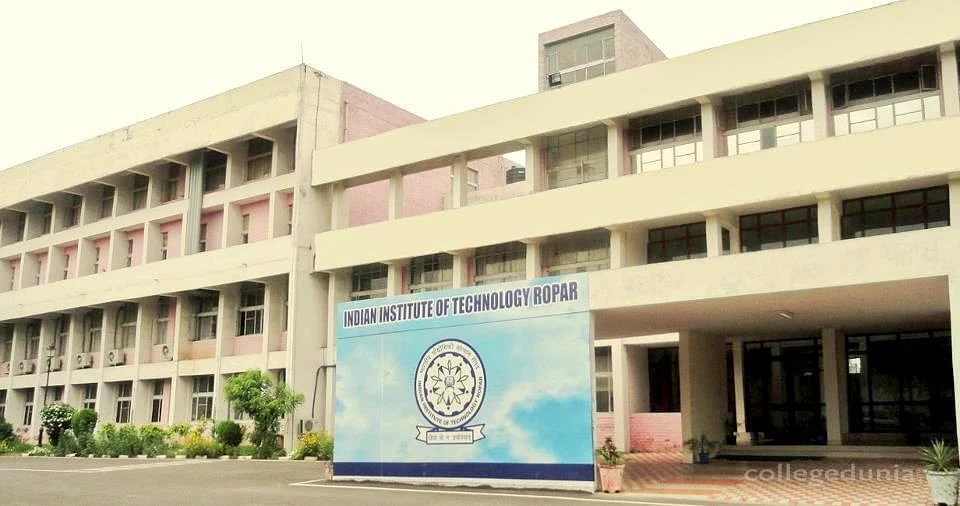
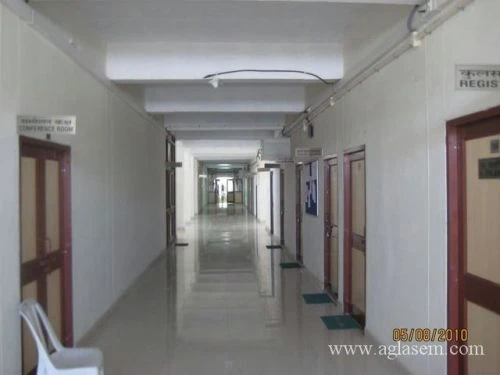
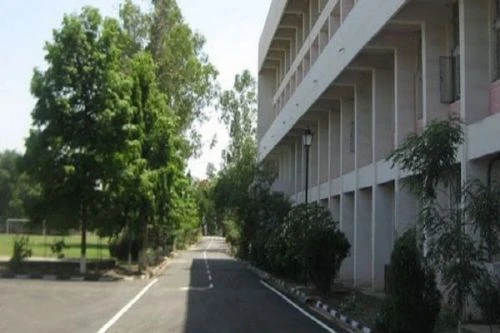
The campus is arguably IIT Ropar's biggest physical asset. It's a 5-Star GRIHA-rated green campus, which means it's designed with sustainability in mind. Everything is new, from the 24/7 AC library to the state-of-the-art academic blocks and labs, which include a supercomputing facility (Param Sanganak). The high-speed 1 Gbps Wi-Fi is reliable across the entire campus, a detail students genuinely appreciate.
Hostel life is comfortable. There are seven hostels, with separate blocks for boys and girls. They're modern and clean, typically with double-sharing for first and second years and single rooms for seniors. But there's one major caveat everyone talks about: no air conditioning. Ropar summers can hit 45°C+, and students universally advise budgeting for a personal air cooler, for which the institute charges a nominal electricity fee.
Social life is what you make of it. The fests—Zeitgeist (cultural) and Advitiya (technical)—are well-organized and growing. Clubs for coding, robotics, aeromodelling, and music are active. The catch is location. Ropar is a quiet town. For any major city entertainment, shopping, or even a multiplex, you're looking at a 1.5-hour drive to Chandigarh. That makes the campus insular, which can be a pro for focus or a con for those craving urban energy.
Sports facilities are excellent: full-sized cricket and football grounds, hockey, basketball, tennis, and a well-equipped gym. The 24/7 medical center adds a layer of security. The mess food gets the typical IIT review: hygienic, varied enough, but ultimately "mess food"—you'll likely get tired of it.
Scouring forums like CollegeDunia, Quora, and Reddit reveals a consistent narrative. The overwhelming positive is the infrastructure and research culture. Phrases like "campus looks like a resort" and "professors are young, accessible, and research-driven" come up constantly. The peace and quiet is a double-edged sword; praised by some, lamented by others who find the town too secluded.
The lack of AC in hostels is the universal complaint. It's not a minor gripe—it's a significant quality-of-life issue for several months of the year. Placement feedback is nuanced. Most agree the official numbers are accurate for the top branches, but there's a clear acknowledgement that the journey is tougher for core disciplines. The teaching is generally rated highly, though with the occasional note that some older professors stick to more traditional methods.
The coding culture is specifically highlighted as strong, with an active club and good performances in competitive programming. The gender ratio is improving but still sits around 20% for B.Tech, which is an issue common to most engineering colleges.
IIT Ropar has carved out a definitive identity. It's not trying to be an old IIT; it's leveraging its newness with a flexible curriculum, modern infrastructure, and a sharp focus on undergraduate research. For a student with a JEE Advanced rank between 2,500 and 8,000, it presents a compelling option, especially for computer science, electrical, or mathematics-related branches. The placement outcomes justify the effort, and the financial aid system works.
But it's not for everyone. If you thrive on the chaos and opportunities of a big city, the isolation of Ropar will feel like a constraint. You must be prepared to handle the extreme summer heat proactively. And while the IIT tag is powerful, you should enter core branches with a clear understanding that you may need to hustle more for top-tier placements. Ultimately, IIT Ropar is a premium engineering education with a specific, quieter setting. For the right student, it's an excellent launchpad.
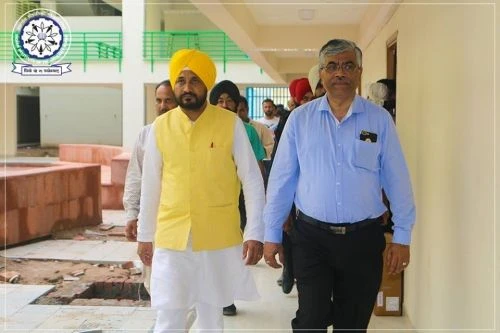
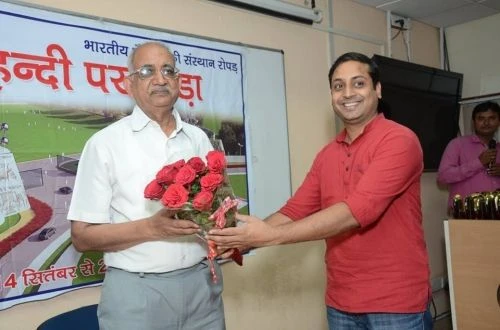
In this preview: 5 photos · 0 videos
IIT Ropar is often ranked higher in the NIRF rankings and generally has a slight edge in average placement packages for core branches like Computer Science and Electrical Engineering. This advantage is partly attributed to its proximity to the major tech hubs of Chandigarh and Delhi.
Yes, IIT Ropar has a very active coding culture. The institute's Coding Club is one of its most prominent student clubs, and students from the Mathematics and Computing (MnC) and Computer Science (CSE) branches consistently perform well in prestigious global competitions like Google Summer of Code (GSoC) and the International Collegiate Programming Contest (ICPC).
No, the hostels at IIT Ropar are not air-conditioned. However, students are permitted to use personal air coolers in their rooms by paying a nominal additional electricity fee to the institute.
The gender ratio at IIT Ropar is improving and is currently around 20% female students in the B.Tech programs. This positive trend is a result of the institute's implementation of supernumerary seats specifically for female candidates.
Yes, IIT Ropar is fully operational from its permanent campus. All academic and residential operations were moved to the new 525-acre permanent campus in 2018, and the older transit campuses are now closed.
Share what future students should know about IIT Ropar.
Student voices are not rewritten by colleges. We remove spam and abuse.
Wider admission question? Community PulseWhat should future students know?
Tell us which course you're considering. We'll help you work out the next step.
Get instant Partner access after mobile verification. Your public edits are reviewed before they go live.
Claim this college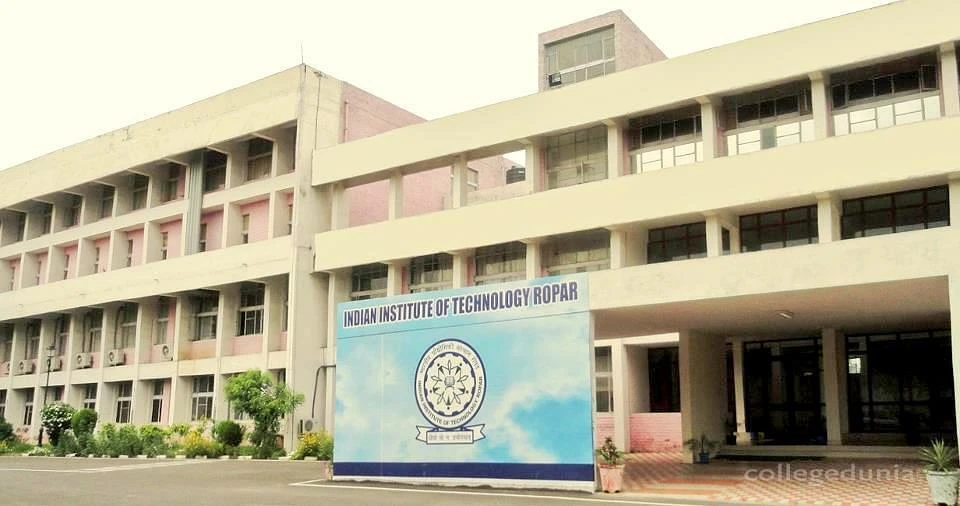
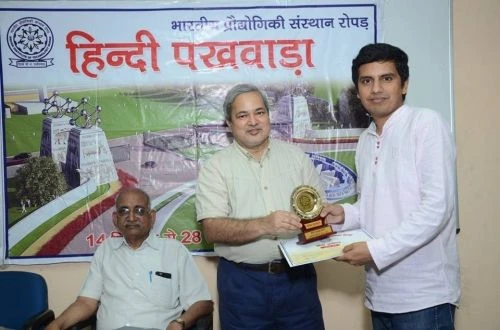
 Auditorium
 Cafeteria
 Campus Shuttle
 Computer Labs
 Gym
Gym Hostel
 Medical
 Science Labs
 Sports Complex
 Study Library