Loading Admission Guardian content
Loading Admission Guardian content

1 programme · 1 institution. Check the admission year and requirements.
1 programme · 1 institution. Check the admission year and requirements.
Indian Institute of Technology Tirupati is a public institute in Andhra Pradesh, established in 2015 as part of the third phase of IITs. The useful question for an applicant is not simply whether the institute carries the IIT name. It is whether the programme, campus stage, fee plan and support available fit the applicant’s goals. IIT Tirupati is still expanding its academic offer, but its permanent campus is operational and it now publishes a broad set of undergraduate, postgraduate and research routes.
The institute’s 2026 Convocation Director’s Report says it offers six B.Tech programmes, 14 M.Tech programmes, four M.Sc programmes and the Master of Public Policy. It also records additions for 2025-26: cross-disciplinary M.Tech in Data Science and Artificial Intelligence in regular and self-sponsored modes, M.Sc Mathematics, and an industry-sponsored hybrid M.Tech in Advanced Energy Storage Technology. The report separately describes an interdisciplinary B.Tech-to-M.Tech Data Science dual degree for undergraduate students. These are distinct formats and should not be collapsed into a single “AI course” label. Confirm the active entry route and mode for the particular programme you want.
The institute’s 2024-25 Annual Report gives a useful snapshot of scale: 1,667 enrolled students across B.Tech, M.Tech, M.Sc, MPP, M.S. (Research) and Ph.D. programmes. That is a dated reporting-year total, not a current headcount. The same report describes nine academic departments spanning engineering, sciences, mathematics and statistics, and humanities and social sciences. For a student, this means the academic environment is not limited to engineering, though programme availability and admission requirements differ by department.
IIT Tirupati is best assessed programme by programme. A B.Tech applicant should compare branch curriculum, JoSAA seat-allocation history, current fees and living arrangements. A postgraduate applicant should verify whether the desired course is regular, self-sponsored, industry-sponsored or hybrid, and whether its selection process uses GATE, another examination or an institute application. A research applicant should look at the relevant department’s faculty and current call rather than infer research fit from the institute’s general profile.
The institute’s B.Tech page lists Chemical Engineering, Civil Engineering, Computer Science and Engineering, Electrical Engineering, Engineering Physics and Mechanical Engineering. It says these programmes follow a credit-based curriculum across eight semesters, with course evaluation on a ten-point grading system and CGPA calculated each semester. Treat that list as the institute’s published programme catalogue; the seat matrix and counselling choices determine which specific branch appears in a given admission year.
There is meaningful variation beyond the undergraduate list. The 2026 Convocation Director’s Report records 14 M.Tech offerings and names newly introduced options for 2025-26, including the cross-disciplinary M.Tech in Data Science and Artificial Intelligence and an industry-sponsored hybrid M.Tech in Advanced Energy Storage Technology. It also records an M.Sc Mathematics addition and a dual-degree route through which B.Tech students may earn an M.Tech in Data Science within five years. A prospective applicant should confirm the latest programme page, eligibility, mode, funding category and application notice for the intended intake; a report of a programme’s introduction does not by itself confirm that applications are currently open.
Use the department page as a second level of comparison. For example, Electrical Engineering describes a four-year B.Tech and two-year M.Tech specialisations including Signal Processing and Communication, Microelectronics and VLSI, and Radio Frequency and Microwave Engineering. Its list of laboratories includes power systems, semiconductor devices, signal processing, wireless communications and 5G. Departmental facilities and research themes can help an applicant test whether a branch has the subject areas they want, but a laboratory list is not a promise of an individual project, elective seat or immediate access.
When comparing branches, look beyond the title. Read the current curriculum, first-year common coursework, later electives, project expectations and any programme-specific admission condition. Check whether a dual-degree route is an option available after joining or a separately selected intake. Ask the department how specialisations are allocated and whether the stated course list is current. These steps are especially important when an institute is adding programmes: the opportunity may be attractive, but the details that affect an applicant’s decision are the exact year, mode, eligibility and selection process.
For B.Tech, IIT Tirupati’s published undergraduate admissions information describes entry through JEE Advanced followed by JoSAA counselling. The institute’s 2026 B.Tech arrival page addresses students joining in 2026, while the JEE Advanced and JoSAA documents also belong to the 2026 cycle. Those sources support a 2026-27 reference, not a forecast of 2027-28 dates, eligibility or seat availability. Applicants for a later intake should use the newly issued brochure and current JoSAA notices when published.
The route has several separate decision points. A candidate first needs to meet the applicable JEE Advanced eligibility conditions, then obtain a qualifying result, register and fill choices through JoSAA, receive an allotment, complete the required reporting and document steps, and meet the institute’s joining instructions. A rank is not a seat offer. A JoSAA opening or closing rank belongs to one programme, round, seat category, quota and gender pool; it is not a universal admissions threshold. The institute’s 2026 orientation page also says new B.Tech students should report in person for biometric and certificate verification on the specified date, which illustrates why post-allotment instructions matter as much as the examination route.
Postgraduate and research applicants should not transfer the B.Tech route to other courses. M.Tech, M.Sc, MPP, M.S. (Research) and Ph.D admissions have programme-specific eligibility and selection processes. The published programme list describes types of degrees but does not substitute for each current call. Before applying, identify the exact department, degree, study mode and intake, then check the current programme notice for accepted test scores, qualifying degree, minimum marks, interview or written-test requirements, and document deadlines.
For planning, keep a small record of the source date and edition alongside each requirement. A prior-cycle document can help you understand the sequence and gather documents, but it cannot confirm the next cycle’s age limits, attempt rules, dates, category conditions or fees. Use the official JEE Advanced site for exam rules and JoSAA for counselling choices, seat matrices, business rules and live allotment instructions. Confirm institute reporting details on the current admissions page after allotment.
IIT Tirupati publishes batch- and semester-specific fee documents, and the categories can change the amount substantially. Its B.Tech fee schedule for the 2025-26 batch labels the January-June 2026 semester and separates SC/ST/PwD from GEN/OBC-NCL/EWS students by annual family-income bands. In that schedule, tuition for the semester is listed as ₹0 for SC/ST/PwD and for GEN/OBC-NCL/EWS below ₹1 lakh, ₹33,334 for the ₹1-5 lakh band, and ₹1,00,000 above ₹5 lakh. Those figures describe that particular schedule and semester; they should not be presented as a 2027-28 bill.
The same schedule separately lists examination, registration, medical, hostel seat rent, electricity/water/SWD, student-affairs, hostel allotment, advanced dining and insurance charges. Some lines depend on whether a student is a hosteller or has a valid day-scholar certificate; the dining charge is based on existing rates and the number of days in the academic calendar. A headline “tuition fee” therefore does not equal the amount payable at registration. Before accepting an allotment, open the current schedule and check the student category, income band, semester, refundable deposits, hostel status, mess amount and payment deadline.
The institute’s B.Tech scholarship page lists Merit-cum-Means (MCM), Institute Free Studentship and Institute SC/ST Scholarship. It states that MCM is available for up to 25% of admitted students and Institute Free Studentship for up to 10%, both subject to the stated parent-income limit and semester renewal condition of at least 5.0 GPA in the previous semester. The listed MCM benefit is a monthly amount plus tuition exemption; the free studentship is tuition exemption. The SC/ST scheme page lists mess-charge rebate, hostel-seat-rent exemption and a pocket allowance subject to its stated conditions. These are scheme descriptions and coverage caps, not a guarantee that each eligible applicant will be awarded support.
Build a budget from current official notices rather than extrapolating the old semester table. Include travel, laptop and books where relevant, meals, personal expenses, deposits and any programme-specific costs. Ask the institute how a waiver interacts with each bill line, whether a scholarship is renewed automatically or by application, and when disbursement occurs. If family income or category documentation is material, verify the required certificate format and deadline before counselling rather than relying on informal summaries.
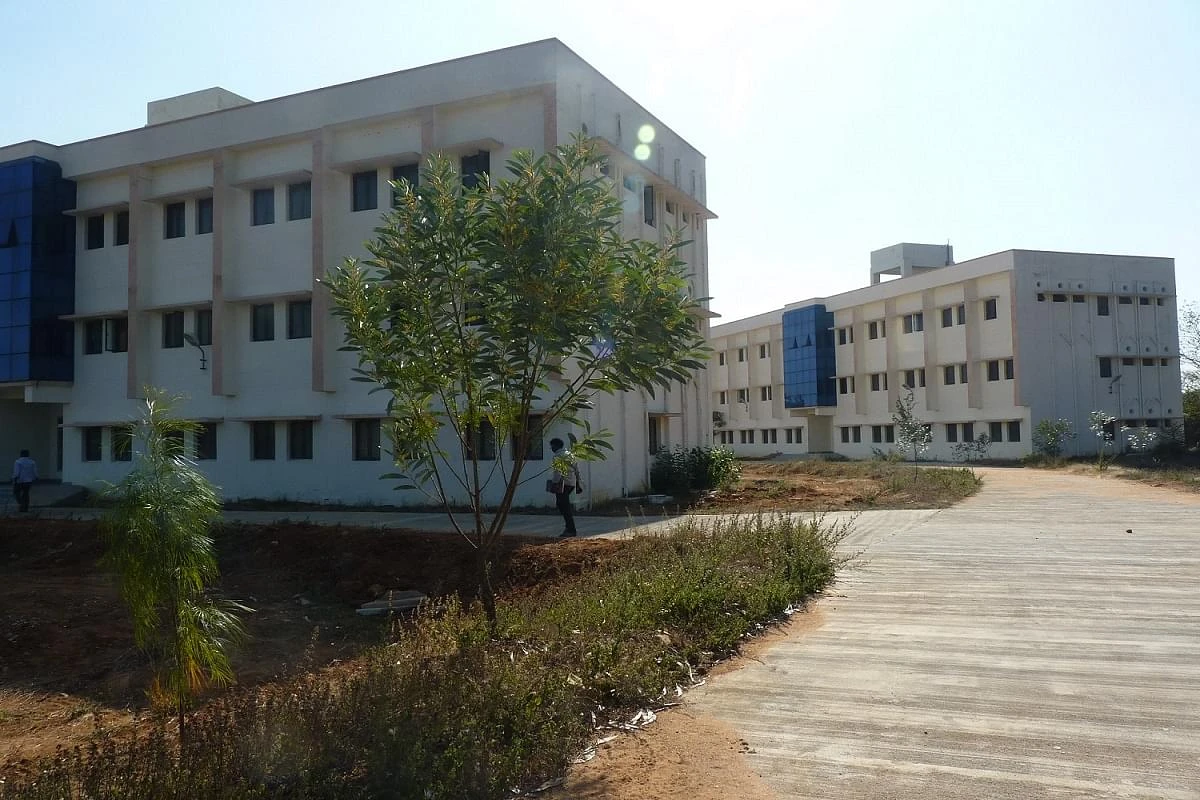
The institute describes a permanent campus of 548.11 acres, with Phase A completed in 2023 and a built-up area of 131,500 square metres. Its 2024-25 Annual Report says the South Campus, formerly called the Transit Campus, began supporting the first batch during 2017-18. The institute’s current hostel pages list facilities and services connected to different campus locations, so readers should not assume that every address, room or service refers to one site or that all older students remain on the temporary campus.
This transition has practical consequences. An official HoME services page identifies a health centre at the transit campus, gives the staff and service description on that page, and lists transport between campuses plus shuttles to Yerpedu Circle and Lakshmi Nagar. The information is useful for understanding the support model, but it is location-specific and should be rechecked for the current batch. The institute’s Director’s Report also names the permanent campus as fully residential in its vision; a vision statement is not a guarantee of present room availability, assignment, transport frequency or access rules.
The hostel and mess establishment (HoME) is the administrative unit for hostel and mess management. It publishes forms, rules, hostel fees, mess charges, menus and contact information. Applicants who need accommodation should confirm the assigned campus, reporting date, room allotment, mess schedule and current charges through the instructions for their own intake. Parents should not assume that student housing includes visitor accommodation; the 2026 joining notice specifically limits parent accommodation due to limited rooms.
For travel, use the address and route in the latest admission and hostel communication, not a map pin selected from an old brochure. Confirm whether orientation, biometric verification, hostel check-in and classes are at the same campus. Ask about shuttle timing and the practical route to the city before relying on weekend access. The institute provides a location and support structure, but those logistics can differ by student year and campus assignment.
IIT Tirupati’s academic scale is still developing. The 2024-25 Annual Report records student enrolment across six programme groups, while the 2026 Director’s Report describes expansion in programme offerings, minors and interdisciplinary study. This can suit a student who values a growing academic environment and wants to explore emerging options. It also means the best evidence for a particular course is the current department curriculum and its teaching plan, not a broad claim that every new specialisation is already mature or available in every semester.
The institute’s reporting describes a broad student activity structure: approximately 28 active clubs and nine councils in the 2026 Director’s Report. It also describes a Guidance and Counselling Unit called Sarathi and access to the YourDOST online counselling team, reported as available around the clock through text, voice and video. These are useful indicators of listed support services; students should verify current contact channels, confidentiality, eligibility and in-person arrangements if they anticipate using them.
The campus decision also involves routine logistics. HoME publishes hostel rules, check-in and check-out forms, a mess menu, charges and service contacts. The services page lists a health centre, inter-campus transport and other amenities, but some descriptions specifically name the transit campus. Ask where the relevant service operates, what hours apply, how emergencies are handled at the student’s assigned site, and which transport options run on weekends. A service list is not evidence that a particular service is available at every campus building or at all hours.
For students choosing among institutions, the useful comparison is concrete: does the branch curriculum fit; is the campus location acceptable; does the current fee schedule fit the family budget; and can you confirm the support and transport you need? Speak with the department and admissions offices about unresolved points. Treat official pages as the starting evidence, then ask for current written answers where the decision depends on availability, accommodation, accessibility or a programme-specific arrangement.
NIRF’s India Rankings 2025 places IIT Tirupati at rank 57 in the Engineering category. This is a discipline-specific Indian ranking, not a global position or a claim about the whole institution in every category. The institute’s 2024-25 Annual Report refers to its Engineering rank 61 in NIRF 2024. The movement between two published annual positions is a ranking comparison; by itself it does not show why the position changed or predict a future result. Check the named ranking edition and category before comparing colleges.
Placement figures also require their labels. The 2026 Convocation Director’s Report says that around 195 companies participated in the placement process during Academic Year 2025-26 and reports an overall placement rate of 81%. The page does not provide the denominator, programme split, cohort completion status or salary distribution next to that figure. It should not be converted into a claim that 81% of every programme or graduating class received a job.
NIRF 2025 institutional data provides a different, older view: for B.Tech students graduating in 2023-24, it reports 205 graduates, 114 placed, 72 selected for higher studies and a median salary of ₹11 lakh per annum. For 2022-23 it reports 189 graduates, 120 placed and a median of ₹16 lakh; for 2021-22 it reports 167 graduates, 142 placed and a median of ₹12.1 lakh. NIRF’s two-year postgraduate category is separate: its 2023-24 row reports 78 graduates, 55 placed, 11 in higher studies and an ₹8 lakh median. These are historical programme-level entries, not the same metric as the 2025-26 overall rate.
When assessing outcomes, compare the same graduating year, programme group, denominator and salary measure. A median is not an average or highest package. A placement rate is incomplete without its cohort definition, and company participation is not a count of offers or placed students. Ask the Career Development Centre for current branch-wise reports, higher-studies counts, eligible-student denominators, internship data and salary definitions. Until those details are available, use the official numbers as bounded context rather than a promise.
Before choosing IIT Tirupati, write down the exact programme and intake you are considering. For B.Tech, use JEE Advanced and JoSAA documents for the applicable year; compare prior cutoff rows only when the programme, round, quota, seat type and rank list match. For postgraduate options, confirm the programme’s study mode and current admission notice. Do not use a 2026 rule or seat row as a 2027-28 guarantee.
Next, compare the real cost. Open the latest fee document for your batch and category, then separate tuition from semester charges, deposits, hostel and dining. Check scholarship eligibility, application steps, renewal criteria and coverage limits. Use written answers for any waiver or fee question that changes your decision.
Then check academic and campus fit. Read the relevant department curriculum, verify the programme’s mode and duration, and ask how electives, projects and interdisciplinary routes work. Confirm which campus hosts your year, the arrival address, hostel assignment, transport and the location of support services. If you need a specific accessibility, medical or counselling arrangement, ask for current written confirmation rather than relying on a general facilities list.
Finally, evaluate rankings and placements by their source, year and measure. NIRF rank 57 is Engineering 2025. The 81% placement figure is an overall AY 2025-26 institute statement with no denominator shown on the cited page; the NIRF 2025 salary and placement rows refer to earlier B.Tech and PG graduating cohorts. Keep those facts separate. IIT Tirupati may be a strong fit for a student whose branch and campus preferences align with the published offer, but the decision should rest on the exact programme and current terms rather than a single institutional label.
Loading programmes and admission routes.
Selected ranking categories, with the recorded year beside each result. Open all records for the complete history.
7 published records · Lower numeric ranks are stronger
NIRF
B.Tech
#562022
IIRF
Engineering · public
#532023
Find a program, read its fee details and explore the admission requirements.
Summary of the programs shown below. First-year fee
Showing 5 courses
Specializations
Eligibility: Pass in Post Graduation
Specializations
Listed entrance exams
Eligibility: Pass in Graduation + GATE
Specializations
Listed entrance exams
Eligibility: Pass in Graduation + GATE
Eligibility: Graduation with 55%
Specializations
Listed entrance exams
Eligibility: 10+2 with 75% + JEE
3 exams with cutoff data available - showing recent entries
 Cogent E Services
 Fincare Small Finance Bank
 NCDEX


In this preview: 5 photos · 0 videos
The comparison depends on the branch of study. For Computer Science (CSE) and Electrical Engineering (EE), the IIT brand and research focus at IIT Tirupati are often considered advantageous. However, for core engineering branches, established top NITs currently have a stronger track record in terms of placement records.
The permanent campus in Yerpedu is operational. Phase 1 construction is complete, and all academic and residential activities were shifted to the new campus in 2022. Phase 2 of the campus development is currently under construction and ongoing.
The coding culture at IIT Tirupati is growing rapidly. It is supported by active student clubs like the Programming and Finance Club (PFC). Students from the institute regularly perform well in prestigious events like Google Summer of Code (GSOC) and Inter-IIT Tech meets.
In late 2024, the institute experienced a water shortage due to a turbidity issue at its water treatment plant. In response, the institute has been working on constructing a new water treatment facility to address the problem.
Yes, admission to the Computer Science and Engineering (CSE) program is possible with a rank around 5000. For the 2024 admission cycle, the closing rank for the General Gender-Neutral category was 5024, making it a highly competitive branch at the institute.
About IIT Tirupati.
Colleges cannot rewrite published reviews. We remove spam and abuse.
Ask the communityWhat should future students know?
Tell us which course you're considering. We'll help you work out the next step.
Get instant Partner access after mobile verification. Your public edits are reviewed before they go live.
Claim this collegeProgramme information: Official source · Source as of: 2026-10-31
Each route applies only to this named programme and the stated year.
JEE-Advanced: Joint Entrance Examination Advanced · 2026-27
Admission-route evidence: Official source · Source as of: 2026-10-31
1 recorded programme · 1 institution. Admission years and conditions apply to the named programme.
 Bank & ATM
 Cafeteria
 Campus Wi-Fi
 Computer Labs
 Gym
 Hostel
 Medical
 Science Labs
 Smart Classrooms
 Sports Complex
 Study Library