Loading Admission Guardian content
Loading Admission Guardian content
3 programmes · 1 institution. Check the admission year and requirements.
3 programmes · 1 institution. Check the admission year and requirements.
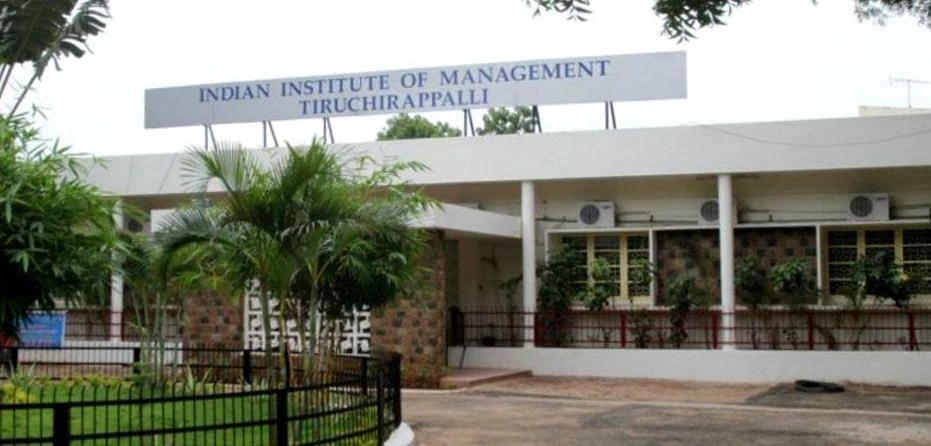
Indian Institute of Management Tiruchirappalli (IIMT), commonly called IIM Trichy, is an autonomous management institute on Pudukkottai Main Road in Tiruchirappalli, Tamil Nadu. Its applicant choices are not one interchangeable “MBA”: the two-year full-time PGPM, the two-year full-time PGPM-HR and the weekend PGPBM for working executives differ in delivery, admission cycle, fee basis and career context. For a 2027 applicant, the most current full-time PGPM and PGPM-HR policy reviewed here is for the 2026-28 batch and the portal shows that cycle closed. The current announced route is PGPBM 2027-29 at the Chennai Campus. No later full-time PGPM/PGPM-HR policy or fee schedule for a 2027-29 batch was found on the official pages reviewed, so do not carry forward older thresholds or prices as current.
The PGPM is the institute’s broad, two-year full-time management programme. Its published curriculum starts with common management foundations and then offers a pool of second-year electives. The Institute describes a 96-credit structure for PGPM: 54 credits in the first year and 42 in the second. Listed core subjects include Business Statistics, Financial Reporting and Analysis, Managerial Economics, Marketing Management, Corporate Finance, Operations Management, Strategy and Management Accounting. Electives span finance, marketing, operations, analytics and information systems, organisational behaviour and HR, strategy, entrepreneurship, general management and public policy. Recent course examples include Business Analytics for Decision Making, Digital Product Management, Artificial Intelligence for Managers, Supply Chain Management, Valuation and Digital Marketing. The institute says the elective menu depends on the interests of each cohort, so examples are not a promise that a particular course will run in your year.
The curriculum is not limited to lectures. IIMT says a three-credit course represents about 100 hours of work across classes, preparation and assignments. PGPM students complete an eight-to-ten-week summer internship between years one and two, with an organisational evaluation, and a team-based Make a Difference project. Applicants deciding between full-time management programmes should assess the intensive academic load alongside the second-year elective flexibility; a course catalogue alone does not establish a placement outcome or a guaranteed specialization.
PGPM-HR is a two-year full-time residential programme that awards an MBA in Human Resources. Its curriculum combines core business study with HR specialisation. Course examples listed by the institute include HR Planning, Recruitment and Selection, HR Metrics and Analytics, Industrial Relations, Learning and Development, Compensation and Benefits, Diversity and Inclusion, Labour Laws, Performance Management, and International HRM and Cross-Cultural Management. The programme page also describes a summer internship, industry project and electives. A credit table on the HR page is labelled for the 2023-25 batch; applicants should use the live curriculum and their batch documents for current credit requirements rather than treating that historical table as current.
PGPBM is a distinct executive route for working professionals. The 2027-29 admissions page describes a 21-month, in-class, non-residential programme at the Chennai Campus, delivered on weekends. Classes in the first year are scheduled Saturday and Sunday from 1:30 PM to 9:00 PM; the second year may include morning weekend sessions depending on elective choices. PGPBM requires in-person participation and should not be mistaken for an online degree. The Institute says it does not provide formal placement assistance for this programme, so working executives should evaluate the course against their own employer support and career plan.
For the full-time PGPM and PGPM-HR, the latest policy reviewed is PGPM 2026-28 and uses CAT 2025 within the JAP 2026 process. IIMT’s published category thresholds are screening minimums for consideration for PI and WAT, not an interview call or an offer guarantee. The policy says that meeting the minimum percentile does not automatically shortlist a candidate. It also lays out final selection weights and work-experience scoring for that specific batch. These rules belong to that cycle and should not be applied to a later CAT year unless a new policy repeats them. The admission portal marks PGPM and PGPM-HR 2026-28 admissions closed.
IIMT’s currently announced application is PGPBM 2027-29. The page sets a 31 January 2027 application deadline and requires a bachelor’s degree or equivalent with at least 50% marks, or 45% for SC, ST and DAP candidates. Applicants also need at least three years of full-time work experience after their first bachelor’s degree, measured on the closing date. Recognised professional qualifications listed by the Institute include CA, CS, CMA/ICWA and FIAI. The stated application fee is ₹2,000, or ₹1,000 for SC, ST and DAP applicants; the latter must attach the relevant certificate.
Eligible applicants with complete PGPBM forms are called to an Aptitude Test and Personal Interview at the Chennai Campus. The Institute’s test lasts 60 minutes and covers Quantitative Ability, Verbal Ability, Data Interpretation and Logical Reasoning. A valid CAT score from 2024, 2025 or 2026, or a valid GMAT or GRE score, can exempt a candidate from its own aptitude test; GMAT and GRE scores must be valid on interview day and have a five-year validity window. Candidates using an external score still apply and pay the fee. Final selection weights the aptitude or accepted test score at 40%, interview at 30%, work experience at 15% and undergraduate performance at 15%. Sponsorship does not replace the selection process. Confirm the current form, accepted score validity and dates on the official PGPBM page before applying.
For PGPM and PGPM-HR, the latest fee schedule reviewed applies to the 2026-28 batch. It lists a ₹19.5 lakh programme fee, excluding a ₹30,000 refundable caution deposit and ₹24,000 mess advance per term. The six-term schedule lists ₹1 lakh acceptance fee plus ₹2.25 lakh tuition in Term I, with the deposit and mess advance, for a stated Term I payable amount of ₹3.79 lakh. Terms II to VI list ₹3.25 lakh tuition plus ₹24,000 mess advance each, or ₹3.49 lakh per term. The deposit is refundable on leaving the Institute subject to adjustment, and the fee notice says mess advances may be revised for later terms. These figures are not a quote for an unannounced 2027-29 full-time batch.
The PGPBM 2027-29 page lists a ₹14.5 lakh non-refundable course fee for the full programme plus a ₹10,000 refundable caution deposit. The fee is scheduled as ₹2.5 lakh at admission followed by six ₹2 lakh instalments every three months. IIMT says the course fee applies to the full programme rather than being calculated by term; the caution deposit is separate and refundable on graduation or withdrawal according to the page. The full-time and PGPBM figures describe different programmes and intakes, so do not compare the totals without their payment basis and delivery differences. Neither schedule establishes personal living costs or travel expenses.
The Institute lists government scholarship routes for ST and SC students, students with disabilities, minority communities, OBC/EBC/DNT students and eligible ST applicants under the National Overseas Scholarship Scheme. Scheme names are not an award decision: the relevant Ministry or sponsor controls eligibility, benefit amount, documents, renewal and dates. IIMT’s scholarship page shows a 2025-26 ST higher-education scholarship milestone schedule, whose dates have passed; it does not give a 2027-28 application calendar or award amounts for each scheme.
IIMT separately describes an Academic Fee Waiver Scheme (AFWS), introduced in 2025-26 and applicable to 2% of students registering for PGPM and PGPM-HR. It says a 50% waiver of academic fees is granted to financially needy students selected under Institute criteria. The published description does not state a household income cutoff, application procedure, 2027-28 allocation, exact fee components waived or whether AFWS can be combined with outside aid. Do not halve the programme total in a budget: the waiver is described as applying to academic fees and a full programme bill contains separately named components. Use the full confirmed fee as your planning baseline until you receive written aid approval. IIMT asks recipients to inform the PGPM Office immediately if they receive another scholarship or financial aid from outside the Institute.
The latest placement document linked under IIMT’s 2025-26 placement page is an interim update for the 2024-26 batch, with figures marked unaudited as of 20 April 2026. It says the numbers may change after final audit. It counts accepted offers and excludes students still participating from final-outcome metrics, so the interim snapshot is not a final placement result or a guarantee for applicants.
At that cutoff, the interim report lists 407 PGPM students, of whom 398 registered for placements, 357 were placed and 41 were still in process; nine opted out. PGPM-HR lists 48 students, 46 registered, 30 placed and 16 still in process; two opted out. Combined, that is 455 students, 444 registered, 387 placed and 57 in process. The in-process group must not be described as placed or as a final unplaced count. The document records 373 PGPM offers received and 357 accepted, and 32 PGPM-HR offers received and 30 accepted; it includes second and revoked offers, so offer totals differ from student totals.
For PGPM, the interim report gives a median CTC of ₹16.75 lakh and mean CTC of ₹18,00,374 including ESOPs across 357 accepted offers. Excluding ESOPs, it gives the same median and a mean of ₹17,49,784. The report says 23 of the PGPM offers included ESOPs. For PGPM-HR, the reported median CTC is ₹14.5 lakh and mean ₹15,18,315 across 30 offers, with no ESOPs shown. These are CTC measures, not take-home pay or guaranteed fixed salary. Some company breakups were unavailable at report preparation and the report says certain CTC components used previous years’ data. Read the denominator and reporting caveat before focusing on the highest package; a mean, median and maximum answer different questions.
The same interim report classifies 405 offers across five sectors, including 103 in IT/IT Analytics, 102 in BFSI, 90 in manufacturing, pharma, hospitality and logistics, and 72 in consulting/media services; those category counts include second and revoked offers. Use sector mix as context for the reported offers, not as a forecast of a particular student’s role. The final 2024-25 report is a separate audited period and should not be blended into this interim table.
IIMT’s NIRF page identifies a rank of 16th among Management institutions in India in NIRF 2025. The same page lists 2026 Management data submissions; a submitted data file is not a ranking result. Until a published 2026 result names the Institute and category, 2025 remains the latest published position shown in the page reviewed. This is an institution-level Management category rank, not an overall university rank or a rank for PGPM or PGPM-HR individually.
The 2025 NIRF Management method assigns 30% each to Teaching, Learning and Resources and Research and Professional Practice, 20% to Graduation Outcomes, and 10% each to Outreach and Inclusivity and Perception. Those weights explain the framework, not IIMT’s marks or the distance between institutions. Compare ranks only within the same year and category, and pair the ranking with programme-specific curriculum, fee and placement evidence. A category position does not tell you the salary, admission probability or fit of an individual course.
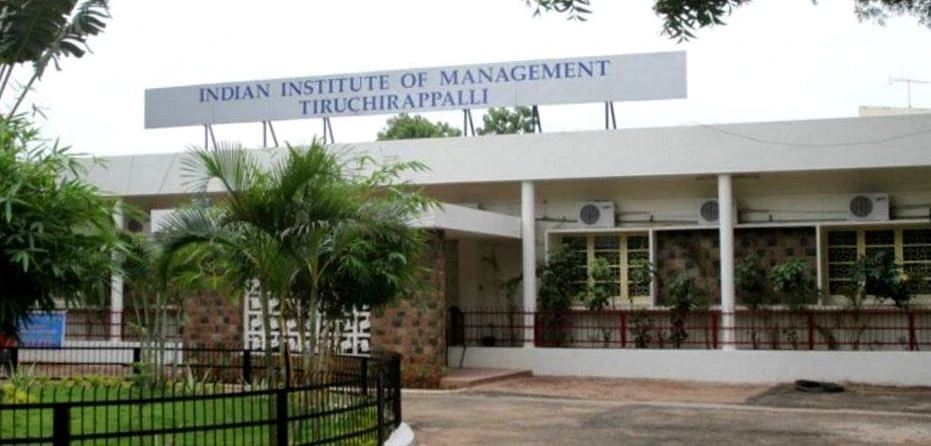
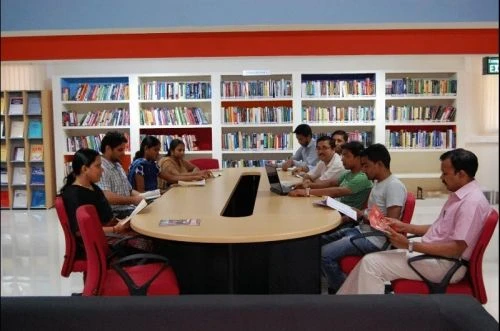
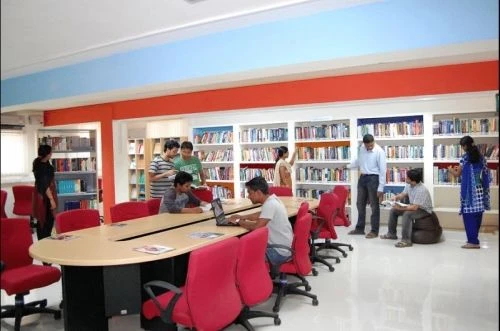
The Tiruchirappalli campus brings together the LRC, academic and computing spaces, hostels and sports block. The Institute’s facilities page links the LRC, computing resources, hostels and sports facility as separate parts of the campus. That catalogue identifies what to investigate, but a list of facilities does not establish current capacity, access hours, charges or service quality. IIMT’s hostel page describes eight hostel blocks, dedicated blocks for female students, and ground-floor rooms with attached bathrooms for students with disabilities. It also says an additional 11-storey building with more than 400 rooms is under construction; applicants should verify its completion and allocation status for their own intake. The page lists Wi-Fi/LAN and a nearby mess and canteen block, but does not state current room-allocation rules or hostel and mess charges.
The public pages reviewed do not provide current medical-centre hours, transport schedules, a consolidated accessibility statement or all facility costs. Applicants with specific accommodation or access needs should get programme-specific written answers before accepting an offer. The PGPBM FAQ explicitly says its participants may use the Tiruchirappalli campus library, computer facilities, digital resources and databases, but that statement should not be generalized to every programme’s accommodation or schedule.
IIM Tiruchirappalli merits consideration if the programme structure matches your circumstances: PGPM for full-time broad management study, PGPM-HR for a dedicated HR curriculum, or PGPBM for an employed candidate who can attend weekend classes and scheduled campus immersions. Compare course and batch before looking at the brand or a single outcome statistic. A 2026-28 CAT policy cannot determine a later full-time cycle; an interim placement update cannot promise a future offer; and a scholarship list cannot be counted as money until the sponsor and Institute confirm a specific award.
For a decision, verify five items against your own offer year: the current admissions policy and dates, the full fee schedule and payment basis, programme-specific course requirements, the latest placement report’s denominator and status, and accommodation or access arrangements that matter to you. The published pages support meaningful comparison, but several 2027-29 full-time details remain unannounced. Keep those values unknown rather than filling a budget or application plan with an older batch’s rules.
Programme information: Official source · Source as of: 2026-11-04
Each route applies only to this named programme and the stated year.
CAT: Common Admission Test · 2027-28
Admission-route evidence: Official source · Source as of: 2026-11-04
GMAT: Graduate Management Admission Test · 2027-28
Admission-route evidence: Official source · Source as of: 2026-11-04
GRE: Graduate Record Examinations · 2027-28
Admission-route evidence: Official source · Source as of: 2026-11-04
Programme information: Official source · Source as of: 2026-11-04
Each route applies only to this named programme and the stated year.
CAT: Common Admission Test · 2026-27
Admission-route evidence: Official source · Source as of: 2026-11-04
Programme information: Official source · Source as of: 2026-11-04
Each route applies only to this named programme and the stated year.
CAT: Common Admission Test · 2026-27
Admission-route evidence: Official source · Source as of: 2026-11-04
3 recorded programmes · 1 institution. Admission years and conditions apply to the named programme.
Selected ranking categories, with the recorded year beside each result. Open all records for the complete history.
32 published records · Lower numeric ranks are stronger
IIRF
Management · public
#172023
Find a program, read its fee details and explore the admission requirements.
Summary of the programs shown below. Total course fee
Eligibility: Post Graduation
Specializations
Listed entrance exams
Eligibility: Graduation
Specializations
Listed entrance exams
Eligibility: Graduation with 50% + CAT
Listed entrance exams
Eligibility: Graduation with 50% + CAT
Specializations
Eligibility: Post Graduation with 60%
1 exam with cutoff data available
 Aditya Birla Capital
 Adobe
 Apollo Tyres
 ArcelorMittal
 Avalon Consulting
 BNY Mellon
 Bosch Ltd
 CISCO
 Cognizant
 Crisil
 Cyient
 Dabur India Ltd.
 Dalmia Bharat
 Dell
 Deloitte
 Directi
 Finolex Industries
 HCL
 HDFC Bank
 Hero Group
 Hindustan Petroleum
 HSBC
 ICICI Bank
 Infosys
 JP Morgan
 Larsen & Toubro Limited
 MAQ Software
 McKinsey & Co
 Microsoft
 Mphasis
 Mu Sigma
 Optum
 Raam Group
 Reliance Jio
 Safari Industries
 Saint-Gobain
 Samsung
 SBI
 Schindler Ltd.
 TAFE
 TVS Motors
 UltraTech Cement
 Yes Bank

In this preview: 5 photos · 0 videos
The qualifying CAT cutoff for the General category at IIM Trichy is 94 percentile. However, the actual percentile required to receive a call for an interview typically ranges from 97 to 99+ percentile, depending on the candidate's overall academic and professional profile.
Yes, all students enrolled in the flagship PGPM and PGPM-HR programs at IIM Trichy are provided with single occupancy rooms, ensuring privacy and a dedicated study environment.
IIM Trichy and IIM Udaipur are considered closely ranked. The choice often depends on career specialization: IIM Udaipur is frequently preferred for careers in Consulting and Strategy, while IIM Trichy is generally viewed as stronger for specializations in Finance and Operations.
Yes, the PGPM-HR program at IIM Trichy is highly regarded. It is one of the few Indian Institutes of Management to offer a dedicated Human Resources program, though it is smaller in scale compared to specialized institutions like XLRI or TISS.
The DCP system at IIM Trichy stands for Disciplinary Committee Points. It is a strict internal governance system enforced by the placement committee to ensure professional conduct and discipline among students during the campus recruitment season.
About IIM Trichy.
Colleges cannot rewrite published reviews. We remove spam and abuse.
Ask the communityWhat should future students know?
Tell us which course you're considering. We'll help you work out the next step.
Get instant Partner access after mobile verification. Your public edits are reviewed before they go live.
Claim this college
 Auditorium
 Cafeteria
 Campus Security
 Campus Wi-Fi
 Computer Labs
 Gym
 Hostel
 Medical
 Sports Complex
 Study Library