Loading Admission Guardian content
Loading Admission Guardian content

8 programmes · 1 institution. Check the admission year and requirements.
8 programmes · 1 institution. Check the admission year and requirements.
IIIT Bangalore is a specialist technology institute in Electronics City, Bengaluru. Its programme range covers undergraduate computing and electronics, postgraduate engineering, management, and research degrees. That concentration matters when comparing it with a broad university: applicants are choosing a technology-focused curriculum and a compact residential campus, not a large multi-faculty college experience. The practical decision is whether the programme, admission route, total cost and campus arrangement fit your goals. The most recent admissions evidence reviewed here is for 2026-27; it does not establish 2027-28 dates, cutoffs, fees or campus assignments.
At undergraduate level, the institute offers four-year B.Tech degrees in Computer Science and Engineering, Electronics and Communication Engineering, and Artificial Intelligence and Data Science, alongside five-year Integrated M.Tech degrees in CSE and ECE. These are distinct award paths. The B.Tech degrees allow a student to complete an undergraduate programme in four years; the integrated route continues for a fifth year and awards an integrated postgraduate qualification. Compare the degree title and length, not just the subject label. Applicants interested in data science should also compare the curriculum and degree structure of B.Tech AI&DS with the CSE degree rather than assuming the two are interchangeable.
For 2026 admissions, the institute said that first-year B.Tech and Integrated M.Tech students would study at its Hosa Road Extension Campus. The main Electronics City campus remains the institute’s principal residential setting, but the 2026 location notice means first-year students should not assume every class or hostel is at the main site. No 2027-28 location allocation was present in the source reviewed. Confirm the campus and transport arrangement in the notice for your own entry year before accepting an offer.
At postgraduate level, IIIT-B offers M.Tech programmes in CSE, ECE and AI&DS. The programme pages describe different qualifying degrees and GATE papers: CSE applicants need a four-year engineering degree in the listed branches and GATE CS; ECE accepts the listed engineering branches with GATE EC or EE; AI&DS accepts eligible engineering graduates across branches and specified MSc applicants, with GATE DSAI. These are not one common M.Tech eligibility rule. Read the relevant programme page before applying, especially if your degree title or branch is not an exact match.
Management and interdisciplinary offerings broaden the catalogue beyond engineering. The pages reviewed include an MBA in Digital Business and a postgraduate diploma in Digital Product Design and Management, as well as an M.Sc. in Digital Society. Their existence does not make them equivalent to the engineering degrees, and their application windows and qualifications are programme-specific. The PGD-DPDM page reviewed described a July 2025 cohort, so it should not be treated as proof of a current intake. Applicants should verify whether a new cohort is announced and whether the credential, duration and delivery format match their objective.
Research routes include M.S. by Research, Ph.D. and Integrated Ph.D. in named research domains. The official research page states minimum durations of two years for M.S. by Research, three years for Ph.D. and four years for Integrated Ph.D.; these are minimum programme durations, not a promise of completion by that date. It lists full-time and part-time registration for Ph.D. and Integrated Ph.D., while M.S. by Research is full-time only. Research admission follows its own calls and interview or written-test schedule. For example, the Term 2 2026-27 call set an application deadline of 9 November 2026 and listed later interview and joining milestones. That is a dated call, not a standing annual calendar.
The 2026 undergraduate notice required a first-class 10+2 or equivalent with Mathematics and a valid 2026 JEE Main score. It described selection using the candidate’s best All India Rank from JEE Main or JEE Advanced and a separate institute-run process. The institute does not route these applications through JoSAA. Its 2026 seat-allocation document describes live online rounds ordered by Best JEE Rank, followed by an off-campus allocation process using rank and preferences. Read the current cycle’s detailed process before ranking options; application preference and the live allocation rules may work differently from centralized counselling.
Historical cutoffs are useful for context but should not be read as guarantees. The institute’s 2025 best-rank table lists 6,942 for B.Tech CSE, 8,432 for B.Tech AI&DS, 8,844 for B.Tech ECE, 7,357 for Integrated M.Tech CSE and 9,101 for Integrated M.Tech ECE. These are programme-specific best JEE ranks from that cycle, not a 2027 prediction or a single closing-rank threshold. The institute’s current notice and any counselling round data for the applicant’s own year should control.
M.Tech admission also varies by programme. The 2026 pages require at least 65% in the relevant four-year engineering qualification, with branch rules that differ across CSE, ECE and AI&DS. The published 2026 process used GATE papers aligned to each programme. IIIT-B states there is no fixed GATE cutoff for admission; previous offer scores and a round’s eligibility score are not interchangeable. For example, 2025 CSE offers reached a GATE score of 635, while a 2026 live-round eligibility threshold of 613 and an offer cutoff of 625 were separately listed. Those figures describe different stages and years. They are useful for understanding competition, not a safe score promise.
The latest undergraduate fee schedule reviewed was for 2026-27. It lists tuition by programme and year, with rates increasing across the B.Tech or five-year Integrated M.Tech period. Because the schedule is cohort-specific and charges change, applicants should calculate the full programme total from the official year-by-year table rather than multiply one semester’s rate across the degree. Hostel, mess, deposits, insurance and personal spending are separate budget lines. The official schedule does not present one guaranteed all-in cost that applies to every student.
The 2026-27 B.Tech and Integrated M.Tech schedule should not be carried forward as a 2027-28 quote. For postgraduate applicants, the M.Tech CSE page labelled its fee information M.Tech 2026 and listed tuition of ₹2.76 lakh per semester. It separately describes hostel accommodation as mandatory and lists refundable admission deposits and annual insurance charges. Use that page to understand the billed components, but confirm the current intake’s fee notice before deciding that the amount is unchanged.
Other offerings have different billing structures. The M.Sc. Digital Society page listed tuition of ₹1.92 lakh per semester and four semesters. Multiplying those figures gives ₹7.68 lakh in tuition arithmetic, but the page did not label that rate for a particular new intake or state the product as an official total. The PGD-DPDM page reviewed described a July 2025 cohort without a tuition schedule. Do not compare either amount directly with an engineering programme’s complete cost until the programme’s current fee notice and additional charges are available.
Scholarships can reduce the bill, but eligibility is specific. For 2026, the Utkarsha scheme described a full tuition waiver for the highest-ranked admitted B.Tech or Integrated M.Tech student whose JEE Main or Advanced NTA Common Rank List position falls from 1 to 999. The waiver duration differs by degree: three B.Tech years or four Integrated M.Tech years. The Dean’s Merit List scheme automatically considers students by CGPA and requires at least 3.6 CGPA for B.Tech and Integrated M.Tech students to be listed, with awards for the top ten percent. Prerna’s 2026-27 page lists programme-specific awards for women entering CSE, ECE and B.Tech AI&DS. These awards are not universal discounts; read the eligibility and continuation conditions for the exact programme and year.
The Student Benevolent Fund page names a different need-based test: parents’ or guardians’ annual income below ₹11 lakh and inability to obtain a student loan from a bank, supported by the latest income certificate. Meanwhile, the Institute Industry Interaction Cell and individual M.Tech admission pages describe AICTE scholarship coverage differently. The cell says all M.Tech students receive support for both years, while the admission pages specify GATE-qualified Integrated M.Tech students in the final year. Applicants should obtain programme-specific confirmation rather than budget around the broader statement.
Placement information is strongest when the graduating programme, cohort, participation denominator and measure are stated together. IIIT-B publishes programme and cohort-specific reports, and its current placements page should be checked directly for the relevant graduating class. Do not transfer an older year’s salary or placement percentage to a new intake, and do not compare the highest offer with a median or average. The institute’s concentration in computing and engineering makes technology roles particularly relevant, but a programme title alone does not establish an individual outcome.
Rankings answer a different question. The 2025 NIRF Engineering result and the institute’s other listed ranking categories are category- and edition-specific. A national rank is not a placement measure, and one subject or category result should not be generalized to every programme. Check the ranking publisher, category, year and methodology before using a rank to decide between offers. The latest results reviewed here are historical evidence; they do not establish a 2026 or 2027 rank.
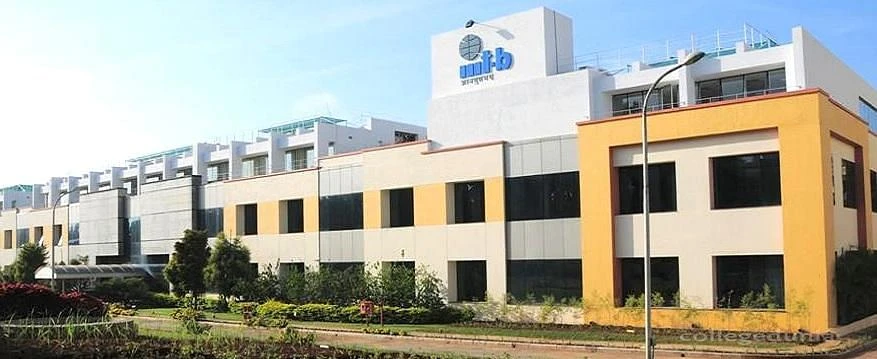
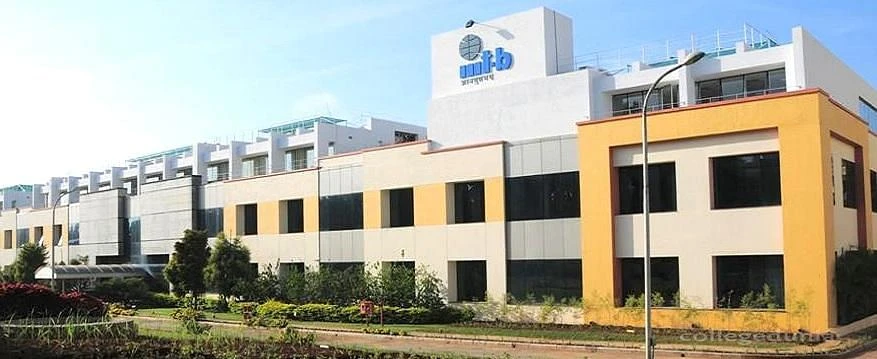
IIIT-B describes its Electronics City campus as fully residential. The official campus page identifies Lilavati as the girls’ hostel and Bhaskara and Visveshwara as boys’ hostel blocks, and lists room arrangements, Wi-Fi and round-the-clock security. This gives applicants a concrete starting point for asking about residence, but availability and assignment should be confirmed for the specific programme and entry year.
The Hosa Road Extension Campus is an important practical distinction for newer cohorts. The institute’s page describes classrooms, laboratories, separate hostels, dining and student support there, and its 2026 notice assigns first-year B.Tech, Integrated M.Tech and M.Tech students to that site for the stated academic year. Applicants should verify where teaching, housing and student services will operate for their year and how they will travel between sites if needed. A page describing facilities at the main campus does not prove that every first-year class or service is located there.
The institute also lists recreation and sports facilities and a cafeteria. These pages describe available infrastructure, but they do not establish how often a particular team, club or activity operates. Students who prioritize a broad range of non-technical majors or a large multi-campus social scene should compare the lived campus model directly with other offers. Students seeking a residential technology-focused environment may value the tighter academic setting, but that is a fit judgment, not a guarantee about workload or student experience.
Start with the exact award and its duration. A four-year B.Tech, five-year Integrated M.Tech, a two-year M.Tech, a management programme and a research degree serve different academic and career purposes. Then check the programme’s current entry route, eligibility, curriculum, campus assignment and fee schedule. Use historical ranks and offer scores as context only, and compare placement outcomes only when the cohort and denominator match.
Build a budget from tuition by semester or year plus residence, meals, deposits, insurance, travel and personal costs. Treat scholarships as conditional until you confirm that your programme, rank, income circumstances and continuation status meet the current rules. If the financial choice depends on an unannounced 2027-28 fee, cutoff or campus assignment, wait for the official notice or ask the institute for written clarification rather than filling the gap with a previous year’s figure.
IIIT-B is a focused option for applicants whose aims align with computing, electronics, data science, technology management or research and who are comfortable with its programme-specific admissions and cost structure. It is less directly comparable with institutions offering a broad undergraduate subject mix. The best comparison is therefore not a reputation label: line up the exact degree, curriculum, total cost, campus plan and verified outcomes for the alternatives you can actually enter.
Loading programmes and admission routes.
Selected ranking categories, with the recorded year beside each result. Open all records for the complete history.
16 published records · Lower numeric ranks are stronger
NIRF
Engineering
#692025
IIRF
B.Tech · public
#872022
IIRF
Engineering · public
#822022
NIRF
B.Tech
#622020
Find a program, read its fee details and explore the admission requirements.
Summary of the programs shown below. See each program's fee period below.
Showing 5 courses
Specializations
Eligibility: Graduation with 50%
Specializations
Listed entrance exams
Eligibility: Graduation
Specializations
Eligibility: Graduation
Specializations
Listed entrance exams
Eligibility: 10+2 + JEE Main
Specializations
Listed entrance exams
Eligibility: Graduation with 65% + GATE
2 exams with cutoff data available
 Accenture
 Accolite
 Amazon
 AMD India Pvt.Ltd
 American Express
 Analog Devices
 ANZ-IT
 Arista Networks
 BNY Mellon
 Bosch Ltd
 Carl Zeiss
 Cerner
 Chai Point
 Cisco
 Cleartax
 Coviam Technologies
 Cyient
 Cypress
 Dell
 Directi
 DreamWorks Animation
 Endurance
 Flipkart
 Honeywell
 HP Enterprise
 HSBC
 IBM
 Infosys
 InMobi
 Intel
 Intuit
 Ittiam Systems
 Johnson & Johnson
 Linked In
 Maas360
 Mathworks
 McAfee
 Mediatek
 Microsemi
 Microsoft
 Morgan Stanley
 Mphasis
 Mu Sigma
 National Instruments
 NetApp
 Nvidia
 NXP
 Paytm
 Qualcomm India Pvt. Ltd.
 Samsung
 SAP
 Sasken Communications
 Schindler Ltd.
 Symantec
 Tata Power
 Tech Mahindra
 Tejas Networks
 Texas Instrument
 Thorogood Associates
 VMware
 Walmart
 Wipro
 Xerox
 ZIVAME
64 named recruiters in the recorded data. Company names are deduplicated.
In this preview: 5 photos · 0 videos
For Computer Science (CSE) and Electronics & Communication (ECE), IIIT-B often has higher average placement packages and a more modern, industry-aligned curriculum compared to most National Institutes of Technology (NITs). However, it typically lacks the large campus and traditional "college life" experience found at an NIT.
IIIT-B admissions are conducted 100% based on All India Merit. There is no reservation policy. Selections for undergraduate programs are made through JEE Main ranks, and for postgraduate programs through GATE scores.
The iMTech is a 5-year integrated dual-degree program that awards both a B.Tech and an M.Tech. A standalone B.Tech is a 4-year program. The curriculum for the first four years of both programs is largely identical.
The 4.0-point CGPA system at IIIT-B is considered rigorous and challenging. A score of 3.5 out of 4.0 is regarded as excellent, which is a higher benchmark compared to aiming for a 9.0+ in a more common 10-point grading system.
For the General category, admission with a 95 percentile in JEE Main is highly unlikely. The closing rank cutoff typically remains above the 99.2 percentile, which corresponds to a rank range of approximately 8,000 to 10,000.
About IIIT Bangalore.
Colleges cannot rewrite published reviews. We remove spam and abuse.
Ask the communityWhat should future students know?
Tell us which course you're considering. We'll help you work out the next step.
Get instant Partner access after mobile verification. Your public edits are reviewed before they go live.
Claim this collegeProgramme information: Official source · Source as of: 2026-11-05
Each route applies only to this named programme and the stated year.
JEE-Advanced: Joint Entrance Examination Advanced · 2026-27
Admission-route evidence: Official source · Source as of: 2026-11-05
JEE-Main: Joint Entrance Exam Main · 2026-27
Admission-route evidence: Official source · Source as of: 2026-11-05
Programme information: Official source · Source as of: 2026-11-05
Programme information: Official source · Source as of: 2026-11-05
Each route applies only to this named programme and the stated year.
GATE CSE: Graduate Aptitude Test in Engineering - Computer Science Engineering · 2026-27
Admission-route evidence: Official source · Source as of: 2026-11-05
Programme information: Official source · Source as of: 2026-11-05
Each route applies only to this named programme and the stated year.
GATE ECE: Graduate Aptitude Test in Engineering - Electronics and Communication Engineering · 2026-27
Admission-route evidence: Official source · Source as of: 2026-11-05
GATE Electrical: Graduate Aptitude Test in Engineering - Electrical Engineering · 2026-27
Admission-route evidence: Official source · Source as of: 2026-11-05
8 recorded programmes · 1 institution. Admission years and conditions apply to the named programme.
 Auditorium
 Cafeteria
 Computer Labs
 Hostel
 Medical
 Science Labs
 Sports Complex
 Study Library