A JEE Advanced score is not a universal college application credential. For the 2026-27 cycle, the confirmed central route was IIT undergraduate seat allocation through JoSAA using JEE Advanced rank; IISc Bengaluru also announced that its BTech programmes would join JoSAA 2026 using JEE Advanced 2026 ranks. A few other institutes appear in the 2026 JEE Advanced brochure only as institutions that had used the rank in the past, with candidates directed to contact them directly. That historical list does not confirm a current admission route.
As of 27 October 2026, JEE Advanced 2027 participating programmes and outside-IIT score-use arrangements have not been announced in the official materials reviewed here. Use the 2026-27 information below as a route map, then verify each programme on the relevant authority’s 2027 portal before applying. “Accepts JEE Advanced” means the score or rank is used in a defined selection process; it does not by itself establish eligibility, a seat, or admission.
Confirmed 2026-27 route: IITs through JoSAA
The JEE Advanced brochure says candidates who secure a rank in JEE Advanced 2026 are eligible to participate in JoSAA for a seat at an IIT, subject to the admission conditions. Candidates must separately register and fill programme and institute preferences in JoSAA. The JEE exam registration is not a course application, and a result does not automatically create a counselling choice list.
The 2026 JoSAA business rules govern choice filling and allocation. The seat pool is programme-specific: the actual programme list and seat matrix are shown in the current JoSAA process. Do not assume every IIT offers every course, that every course accepts the same rank list, or that a rank guarantees the preferred campus. Compare the rank type, category, gender pool, programme restrictions and round for each choice. The result may make a candidate eligible to enter the process, but allocation depends on rank, preferences, available seats and applicable eligibility conditions.
A second condition is easy to miss: admission to an IIT is subject to Class XII performance criteria. In the 2026 brochure, a candidate had to satisfy either the published minimum aggregate marks criterion or the board-specific top-20-percentile criterion, with a lower minimum aggregate for SC, ST and PwD candidates. The five-subject aggregate and qualifying board conditions are detailed in that cycle’s brochure. A JEE Advanced rank alone is therefore not proof that all IIT admission requirements are met. Confirm the corresponding 2027 condition and the documents JoSAA requires.
IISc Bengaluru: a specific BTech use in 2026-27
IISc Bengaluru is a confirmed additional JEE Advanced score user for the 2026-27 cycle, but the scope is precise. On 26 January 2026, the JEE Advanced official site announced that admission to IISc BTech programmes for academic year 2026-27 would be through JoSAA 2026 using JEE Advanced 2026 ranks. The JEE Advanced brochure’s older “other institutes” section separately mentions IISc as an institution that had used the rank in the past, but the dated 2026 notice supplies the current-cycle confirmation for BTech.
For a candidate, the practical consequence is to include the relevant IISc BTech programme in JoSAA choices if it appears in the current programme list and the candidate meets its admission requirements. Do not generalise this notice to every IISc degree or to later years. Verify the exact programme name, eligibility, seat pool and choice option in the current JoSAA portal. The 2027-28 route is unannounced as of the date of this guide.
IIT architecture: JEE Advanced plus AAT
For B.Arch at IIT (BHU) Varanasi, IIT Kharagpur and IIT Roorkee, the 2026 brochure required candidates first to qualify JEE Advanced and then pass the Architecture Aptitude Test (AAT). AAT does not replace the JEE Advanced rank: the brochure says B.Arch seat allotment is based on category-wise JEE Advanced AIR, and the programme is offered only to candidates declared PASS in AAT. The Class XII admission criteria also continue to apply.
This is a separate action after the JEE Advanced result. A candidate interested in these programmes must register for AAT within the cycle window, sit the test and include the programme in JoSAA choices. Passing AAT is necessary but does not guarantee the seat. Check the current-year brochure and JoSAA rules for the participating IITs, registration dates and programme availability before planning around the route.
Institutions listed as past users: verify directly
The JEE Advanced 2026 brochure includes a section titled “Other Institutes admitting using JEE (Advanced) rank”. Its wording is expressly historical: it says certain institutes “in the past” used the rank, and then directs candidates to contact those institutes for additional admission information. The named institutions are:
- IISER campuses at Berhampur, Bhopal, Kolkata, Mohali, Pune, Thiruvananthapuram and Tirupati
- Indian Institute of Space Science and Technology (IIST), Thiruvananthapuram
- Rajiv Gandhi Institute of Petroleum Technology (RGIPT), Rae Bareli
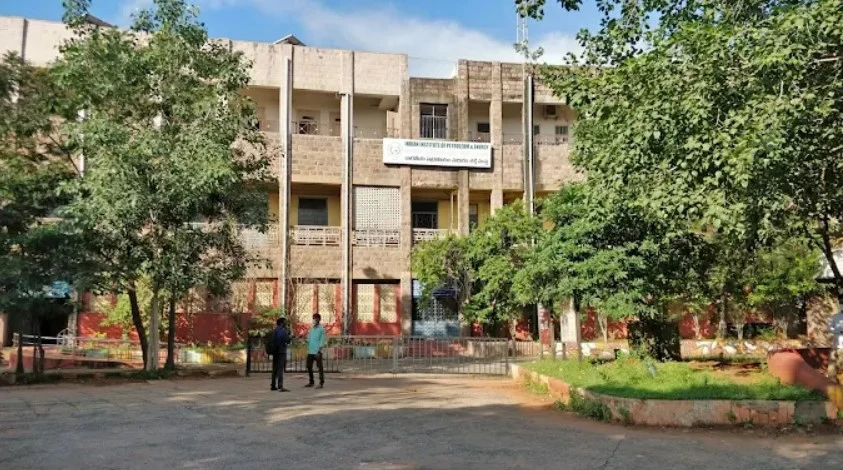
- Indian Institute of Petroleum & Energy (IIPE), Visakhapatnam
- IISc Bengaluru, also separately confirmed for BTech through JoSAA in 2026-27
This list is a lead for checking institutional notices, not a list of confirmed 2026-27 offers. The official brochure does not establish that IISERs, IIST, RGIPT or IIPE used a JEE Advanced rank for admissions in 2026-27. Do not infer current acceptance from a prior-year pathway, a search snippet, a coaching list or an institution being named in the brochure. Some may use another entrance route or require a separate application; the current institution prospectus must answer that question. If a current official notice does not explicitly identify JEE Advanced rank as an input for the exact programme and intake, treat the route as unconfirmed and contact the admissions office before paying an application fee.
Do not confuse JEE Advanced with JEE Main use
JEE Advanced qualification itself relies on the standard Indian route through the JEE Main shortlist, but that does not mean any college using JEE Main also accepts an Advanced score. The 2026 JoSAA process covers IITs through JEE Advanced ranks and NITs, IIITs and other GFTIs through JEE Main ranks, with distinct seat-allocation rules. If a college page says “JEE score”, confirm whether it means Main or Advanced, which programme it refers to, and whether the route is counselling-based or a separate application.
The reverse distinction matters too. A candidate with a JEE Advanced rank should not assume that rank replaces a separate exam, portfolio, aptitude test or application that a non-IIT institution requires. Only use the score in the way stated in the authority’s current admission notice.
A route-check before applying
- Start with the exact programme and intake year. Find the programme in the 2027-28 prospectus or official counselling choice list, not only on an institute overview page.
- Confirm the score type. The notice should explicitly say JEE Advanced and specify whether it uses rank, a qualifying result or another score measure. Do not substitute JEE Main.
- Check the application channel. IIT and IISc BTech seats in 2026-27 were through JoSAA. An outside institute may have a separate application and deadlines; the old brochure directs candidates to contact those institutions.
- Read eligibility beyond the rank. Check Class XII subject and marks requirements, nationality/citizenship route, category certificate, programme restrictions and any additional test such as AAT.
- Use the correct rank and seat category. Compare the candidate’s rank with the matching JoSAA category and programme row, and follow the official choice-filling and fee deadlines.
- Recheck the notice before payment. A prior-year route, cached page or third-party list can be stale. Save the official prospectus or notice that confirms score use and conditions.
What is confirmed for 2027
The latest confirmed evidence here covers the 2026-27 cycle. The JEE Advanced 2027-28 programme list, JoSAA score-use notice and any outside-institute admissions routes were not announced as of 27 October 2026. IITs and IISc BTech were confirmed for 2026-27 via JoSAA; the named IISERs, IIST, RGIPT and IIPE appear in the brochure as past JEE Advanced rank users and must be verified individually for 2027. Wait for current-year notices rather than treating historical use as a current admission promise.
FAQs
Which institutions are confirmed to use JEE Advanced rank in 2026-27? IIT undergraduate admissions through JoSAA and IISc Bengaluru BTech admissions through JoSAA 2026 were explicitly confirmed in official 2026 materials. Programme-specific eligibility and seat availability still apply.
Do IISERs accept JEE Advanced for 2027 admission? The JEE Advanced 2026 brochure names IISERs in a list of institutes that had used the rank in the past, and says candidates should contact the institutes directly. That is not confirmation of a current or 2027 route.
Can I use a JEE Main rank as proof that an institute accepts JEE Advanced? No. Main and Advanced are distinct score routes. Verify the exact exam and programme in the current official notice.
Does an IIT rank guarantee an IIT seat? No. Candidates must satisfy admission conditions, register and fill choices through JoSAA, and receive an allotment based on rank, preferences and seat availability.